Smog
“Toxic Smog” in China, India, and….Utah
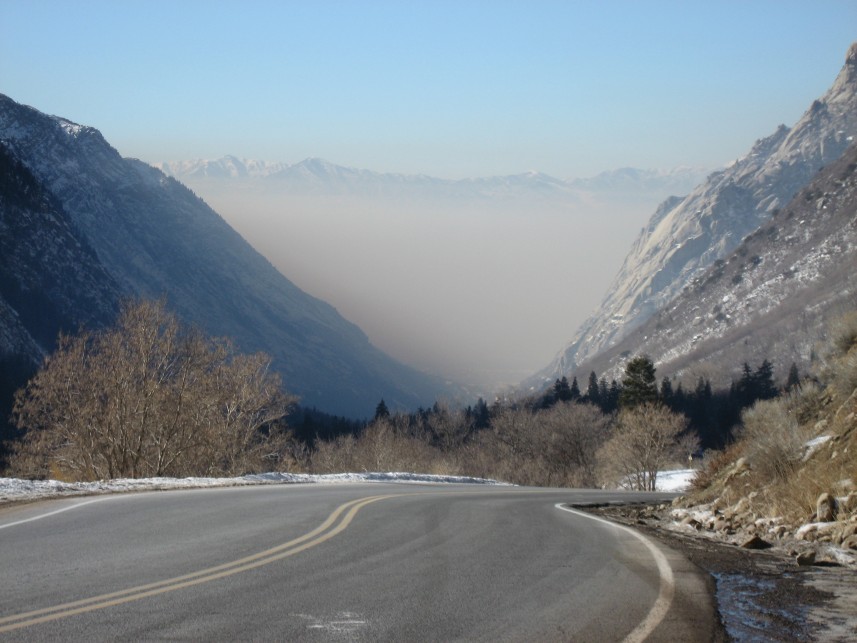 Air pollution so bad that local doctors are telling prospective parents to wait to conceive children. Beijing? No. New Deli? No? Try Salt Lake City.
"Try to conceive in mid- to late-spring, after the inversion is over. That probably gives [a woman] the best window of opportunity for the critical first three months [for the fetus] to develop under the least amount of pollution," said physician Brian Moench, an anesthesiologist and president of Utah Physicians for a Healthy Environment. Better yet, he says, "get out of Salt Lake City to conceive."
Because of their geography and growth, some western US cities suffer significant smog problems in the wintertime when cold air inversions trap pollution and cause concentrations of pollutants to skyrocket. But this has been a particularly rough year for Utah. Northern Utah valleys have been choked in winter smog almost every day since Christmas. Soon after a storm covered the valley floors with snow two weekends ago, pollution climbed to levels considered "unhealthy" even for the general population. Things are so bad a group of doctors has asked the Governor to declare a medical emergency.
Remember Those East Texas Coal Plants?
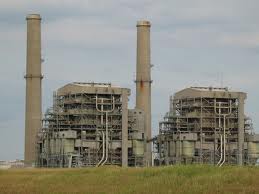 The Sierra Club does. Funded by a $50 million donation from New York Mayor Michael Bloomberg, its Beyond Coal campaign is coming to Dallas-Ft. Worth to take on the old TXU, the operator of some of the most polluting coal plants in the nation, including Martin Lake, the third largest stationary source of Greenhouse Gas pollution in the nation.
Hoping to persuade customers to switch electricity providers, as well as hit the plants as contributors to the chronic regional smog problem, the Club is sending at least two organizers up to North Texas from Austin on a regular basis. They'll be supervised by former Downwinder technical adviser and EPA Regional Administrator Dr. Al Armendariz, who's now heading up the Texas franchise of Beyond Coal.
Although some might argue that gas mining in the Barnett Shale has replaced the threat the coal plants represented seven years ago when Governor Perry attempted to fast track the permitting of over a dozen new ones, the old TXU ones still release formidable amounts of pollution because they're so old. A new Texas Tribune interview with Dr. Armendariz lays out the campaign's strategy for taking them on.
A Dallas Drilling Scandal Primer
 Thanks to everyone who turned out last Thursday for the (abbreviated) public hearing on the Trinity East "zombie" gas permits before the City Plan Commission. Our apologies to those of you who were not allowed to speak by the arbitrary too-soon ending of the hearing. It was one more example of a process gone off the rails when it comes to these permits.
It's now clear that what began as a neighborhood-based effort to fight off irresponsible urban gas drilling three years ago has now grown into not only a turning point for the entire Dallas environmental movement, but as of last week, into the largest Dallas City Hall scandal in years as well. There are suddenly lots of moving parts. Here's a quick summary of what we know as of today.
On Thursday morning, the Dallas Observer broke the story that in 2008 Dallas City Manager Mary Suhm signed a secret side agreement with Trinity East that essentially turned City Hall into a lobbying machine for the company's gas permits. The first impact of that lobbying was a reversal of the no drill policy in Dallas parks. Only six months after city staff had told the Council and Park Board there would be no surface drilling in Dallas parks allowed, the side agreement Suhm negotiated with Trinity East assured the company that she and her staff were "reasonably confident" they could win permission to drill in parks for the company.
Many Dallas activists have speculated about such an agreement as the only way to explain why city staff seemed to be going out of its way to push through the Trinity East permits, including abruptly re-defining the current gas ordinance on the fly, ignoring or flouting precedents, and declining to bring the usual level of official scrutiny to bear. Suhm and city attorneys kept this document from public view even after years of opposition from neighborhood groups to drilling sites, including Trinity East's. At a time when every city staffer had an obligation to wear the Trinity East agreement on their sleeves, City Hall hid the fact they were working for the company to win its permit. Dallas Councilwoman Angela Hunt has prepared a detailed timeline of Suhm's deception.
Suhm declined to talk directly to the Observer, but instead issued a statement to the Morning News that said, in essence, she was shocked, shocked that anyone could think this side agreement with Trinity was a "back room" deal. Mayor Rawlings is standing by Suhm so far, issuing a statement of support late Thursday that emphasized the "non-binding" nature of the side deal that was "cut," as the Mayor so eloquently put it back in November. The Observer's Jim Schutze had a take down of both of their official statements on Friday, saying "some stuff just won't spin."
A growing chorus of groups and individuals are calling for Suhm to resign, as are some Council members like Hunt, and Scott Griggs. Her fate now seems linked to that of the Trinity East permits, since both seem tainted beyond redemption by the disclosure of the side deal. How can any resident or Council member trust what city staff says about the permits? How can any resident or Council member trust that Suhm won't sell them out again?
Meanwhile, the Observer has raised the possibility of Open Records Act violations by the City because it's pretty sure it asked for ALL documents related to the Trinity East permits. Citizens groups and individuals that have been turning in a constant flow of Open Records Act requests for the last three to four years might also have the same gripe.
But they'd have to take a number because four people, including Downwinders Director Jim Schermbeck, Zac Trahan of the Texas Campaign for the Environment, Raymond Crawford of Dallas Residents for Responsible Drilling, and Marc McCord of frackDallas went down to the District Attorney's office and filed a criminal complaint against the City Plan Commission Chair on Wednesday, alleging a violation of the Open Meetings Act prior to the January 10th vote to "reconsider" the Commission's denial of the permits. According to the complaint, Chair Joe Alcantar called members and lobbied them to vote for reconsideration in a practice called "daisy-chaining a quorum" that is explicitly against the law. If the charge is substantiated by an investigation, all subsequent decisions about the permits by the Commission could be invalidated. That would mean reverting back to the original December denial of the permits.
On the political front, John Carona, the Republican State Senator whose district includes the Elm Fork Soccer Complex, sent a letter to Mayor Rawlings, urging him to withdraw his support for the Gas Refinery and Compressor Station proposed for only 600 feet west of the Complex. Democrat State Representative Rep. Lon Burnam of Ft. Worth sent a similar letter, further isolating the Mayor politically.
In all, quite the "goat (act of procreation)", as the Observer's Brantley Hargrove labeled the whole Trinity East controversy last month.
What happens now?
Officially, the City Plan Commission put off any (legitimate or not) vote on the permits until its March 21st meeting. They have now specifically requested the Council deal with changing the current prohibitions against parkland and floodplain drilling before they're asked again to violate the law. So theoretically, the show now moves to the whole City Council, which has scheduled a 1:00 pm Wednesday, February 27th state-mandated public hearing on the city permanently removing park land from the city park system for drilling.
This same hearing has been scheduled twice before however, only to be canceled when the City Plan Commission didn't get around to doing what the Council couldn't bring itself to do first. Up to now the Mayor's strategy was to push the permits through the Plan Commission and Park Board to provide a cover for Council approval of drilling activity in parks and flood plains that's still not allowed. Apparently there's enough resentment about that among Plan Commission members for them to toss the hot potato back to the Mayor and Council. But it does so exactly as the Suhm memo hits and makes political support for the permits more tenuous.
We'll know soon whether the February 27th City Council hearing on turning over park lands to drilling is really on or not. Stay tuned.
Time to Push Back and Make Some History
 Dallas Plan Commission Public Hearings on Trinity East Gas Permits, including the "Rawlings Refinery"
Thursday, 1:00 pm
6th Floor Dallas City Hall, City Council Chambers
When the Dallas Plan Commission held its January 10th vote to "reconsider" the denial of gas permits to Trinity East, it didn't allow any public testimony at all about the dangers posed by these proposed drilling and production sites.
Tomorrow it will. And we need you to come and add your body and your voice to this fight.
When the Mayor and City Manager first cooked up this scheme to ram through the last three gas permits in Dallas, they didn't expect to have any roadblocks. They scheduled a meeting five days before Christmas and thought they had it locked up.
They were wrong. You showed up anyway and the Plan Commission voted to deny the permits based on your impassioned pleas for public health and safety.
When City Hall didn't like the results of that vote, and pulled the "reconsideration" stunt in January, 100 of you showed up on a work day to shame the CPC publicly in a meeting that received a huge amount of media coverage.
Now they're holding the second public hearing on these gas permits. We need a larger show of strength to demonstrate we're gaining momentum
We need you to personally come and tell the Plan Commission why it's a bad idea to allow drilling in floodplains and parks and build a refinery next to the city's largest soccer complex where thousands of kids will be playing every weekend.
We know it's getting tiresome, but when you show up at these meetings and hearings, you're helping us win this fight.
Slowly, but surely, your concerns and questions about these Trinity East permits are weighing them down and making it harder for them to get rammed through.
For example, because of your work, we're about to see a bi-partisan call for the Mayor to reject the refinery permit near the Elm Fork Soccer complex. That news will be announced at tomorrow's press conference starting at 1:00 pm.
There's also more in the works challenging the process the City is using to keep these "zombie" permits alive.
The tide is turning. But you have to keep showing up.
Nothing can take the place of a room full of angry citizens. Tomorrow, don't just watch history on TV or read about it the next day. Make history. Thanks.
Zombie Gas Permits on the March Again
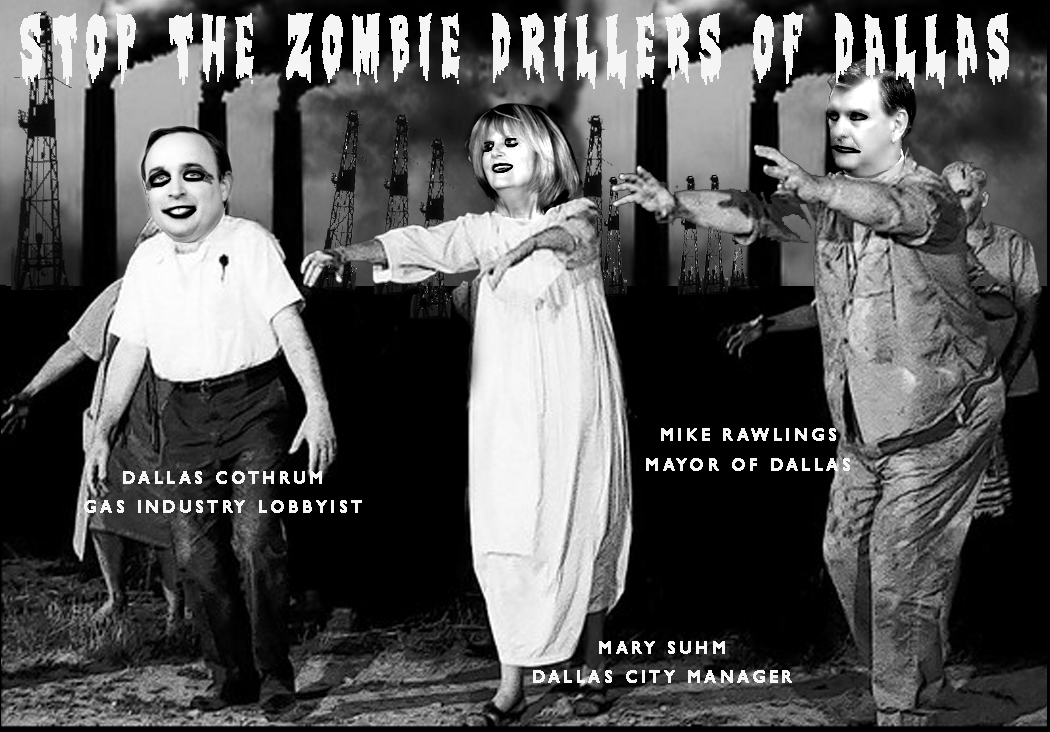
Public (re)-Hearing on the Last Three Dallas Gas Sites.……including the newly-discovered "Rawlings Gas Refinery"
This Thursday
1:00 pm
Dallas City Hall
6th Floor
City Council Chambers
Press Conference followed by City Plan Commission Mtg
This is the "do-over" hearing demanded by the Mayor in order to win approval of these permits – after the first one in December resulted in denial.
Come and defend this victory or they'll steal it away from us.
Dallas Residents at Risk, the alliance of groups that we work with on this issue, will be holding a press conference at 1:00 pm – just like we did before the much-publicized January 10th reconsideration vote – and then heading into the CPC meeting at 1:30. Show up early because we'll be talking about a surprising new development in this fight and bringing you up to date with the latest information.
It's important to demonstrate that opposition to these permits is growing, so if you haven't made it down to City Hall before, Thursday is the day to come.
If you're a regular, then you know how much warm bodies in the audience mean to the moment.
They would have been no news coverage on the 10th without all of us standing up and publicly "shaming" the CPC over its "reconsideration vote" in person. You can't do that by e-mail or petition. We need you there. We need you clapping for the good guys. We need you hissing the bad guys. We need you. There is no substitute.
Looking for material for your testimony? Here are some things we know now about these sites that we didn't when the CPC turned them down in December…..
* Neither the Park Board nor City Council ever voted to allow surface drilling in parks. In fact, city staff assured the City Council in 2008 that would be NO surface drilling in parks. So where did Trinity East get the idea it could have two of its drill sites on city park land (The newly-named Luna Vista Golf Course and near-by gun range)? That's a really good question that nobody at Dallas City Hall has attempted to answer.
* One of the Trinity East sites now contains a large gas refinery and compressor station in addition to a pad site for 20 wells. This facility will become the 10th largest air polluter in Dallas the moment it comes on line, releasing 75-100 tons of air pollution every year only 600 feet away from the City's new Elm Fork Soccer Complex on Walnut Hill.
* Last September, the City of Dallas denied a new permit to a rock crushing facility near the Elm Fork Soccer Complex because its 17 tons of annual air pollution was deemed too threatening for children's health. However, five months later, the city is advocating allowing the operation of a gas refinery and compressor station that is estimated to release some 75-100 tons of air pollution a year. Why is 17 tons of air pollution a health threat but 100 tons is OK? Another great question nobody at Dallas City Hall has answered.
* Trinity East knew when it signed its leases with the City that drilling in parkland and the floodplains was prohibited. So why is the City of Dallas still saying its afraid of a lawsuit by Trinity for backing out of the deal if the permits are denied?
We can win if we keep showing up and asking questions.
Please show up this Thursday.
Guess What? That “Drilling” Permit is Really for a Refinery
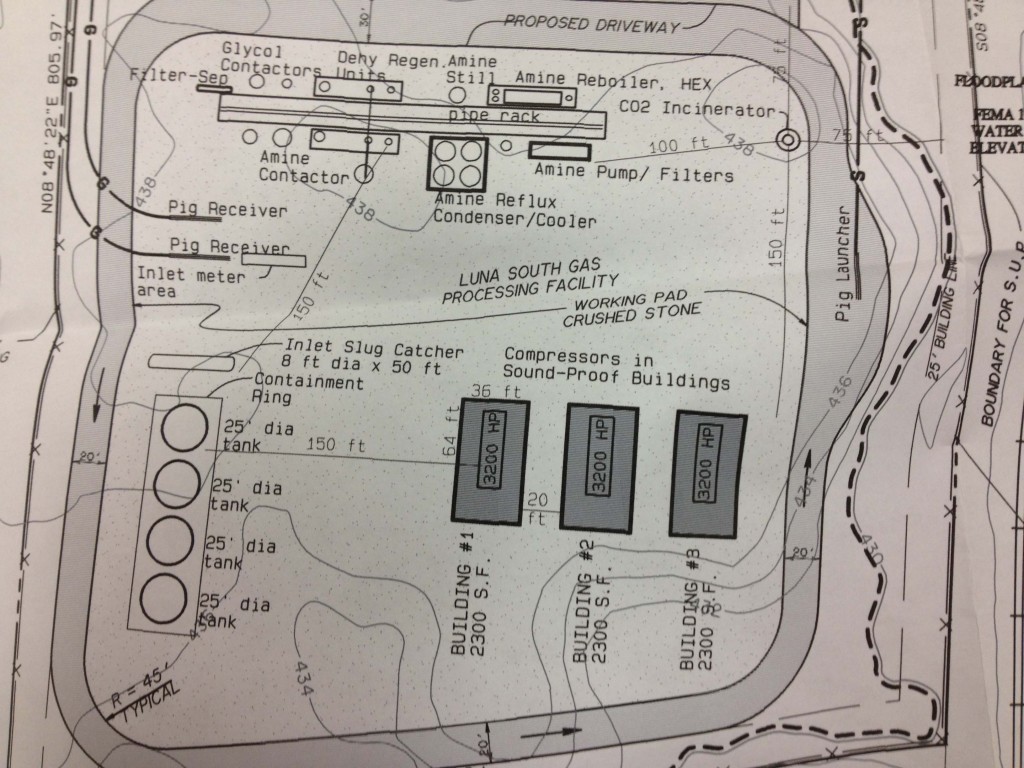 Under the guise of "gas drilling," Dallas City Hall and industry are pressing for approval of a permit that would locate a gas refinery only 600 feet from the new Elm Fork soccer complex, and immediately give birth to one of the ten largest air polluters in the City of Dallas, as well as one of its most toxic.
"There's a huge toxic Trojan Horse hiding in what the City and Trinity East describe as just a gas drilling permit," charged clean air activist Jim Schermbeck of Downwinders at Risk. "In fact, the Elm Fork permit allows for the building of a gas refinery that houses at least three giant compressors as well as an entire acid gas removal unit that strips off hydrogen sulfide, one of the most dangerous substances in the gas patch."
A motion to "reconsider" the Dallas City Plan Commission's 7-5 December 20th rejection of the Elm Fork permit and two other Trinity East gas sites is being advocated by CPC Chair and Mayoral appointee Joe Alcantar at this Thursday's meeting. If successful, the "reconsideration" would require the CPC to hold a second hearing and re-vote on the permits less than a month after denying them.
Opponents say the move is an act of desperation on the part of the Mayor and City Manager to protect a secret deal that was made between the City and Trinity East when the company first paid for mineral rights leases on city owned land. In interviews, the Mayor himself has said that a "deal was cut." Residents say the public was left out of that deal.
But after making calls to City Hall, Schermbeck is convinced that no one in Dallas city government is aware that the "gas drilling permit" being proposed by Trinity East is actually a permit to build a large gas refinery in the Trinity River floodplains.
"They're in way over their heads. City attorneys are still describing this as a drilling permit, but that's not what takes up most of the acreage on this site – it's all about the refinery."
During the December 20th City Plan Commission hearing on the permit, Trinity East representatives stated that the three proposed compressors alone – huge locomotive sized diesel-powered engines that produce thousands of horsepower in order to move gas through pipelines – would release 25 tons of air pollution each every year for an annual total of 75 tons.
That number would immediately place the facility among the city's ten largest air polluters according to the latest state emission totals from 2010. It would join power plants, asphalt and roofing materials manufacturers, and chemical plants as one of the city's biggest "stationary sources" of pollution.
However, Schermbeck thinks Trinity is low-balling their total air pollution impacts by not including other on-site refinery sources like its battery of storage tanks and "acid gas removal" operation that's designed to strip dangerous hydrogen sulfide off of natural gas streams through a series of acid baths and heat.
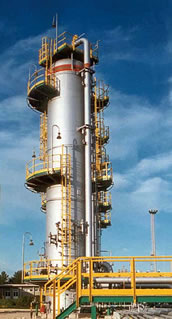
Hydrogen Sulfide is a harmful and toxic compound. It is a colorless, flammable gas that can be identified by its "rotten egg" odor. This invisible gas is heavier than air, travels easily along the ground, and builds up in low-lying, confined, and poorly ventilated areas. It acts as a chemical asphyxiant through inhalation exposure and its effects are similar to cyanide and carbon monoxide, which prevent the use of oxygen.
The equipment to strip off Hydrogen Sulfide from raw gas is large, complicated and dangerous. Site plans show a 200 foot long "pipe rack" with at least 20 "point sources" or stacks, apart from the compressors, where pollution could be released into the atmosphere.
"This isn’t a facility you want near parks or kids," said Schermbeck. "Yet, the City of Dallas seeks to put it just 600 feet away from its new huge soccer complex that’s meant to attract thousands of kids for hours every week."
Such a gas facility also challenges regional smog goals. A 2012 study from the Houston Advanced Research Center found that "routine emissions from a single gas compressor station can raise ozone levels by 3 parts per billion (ppb) as far as five miles downwind, and sometimes by 10 ppb or more as far as 10 miles downwind."
The Trinity East numbers don't reflect the release of greenhouse gas pollution either, which could be enormous from a facility the size of the refinery being proposed. Gas processing plants can release 20 to 80,000 tons of greenhouse gases a year. By comparison, the entire inventory of greenhouse pollution from all Dallas industrial sources in 2005 was 25,000 tons a year.
None of this information was brought up at the December 20th CPC hearing on the Elm Fork permit because the permit request in its current form was only a couple of weeks old when it went to the CPC and the compressors were a last-minute addition to an older, pending request.
Citizens were lucky to get a crowd to even show up five days prior to Christmas, and Schermbeck believes no one at Dallas City Hall bothered to notice that one of the so-called drilling permits was a refinery permit.
"Because it had no expertise of its own, and it was ignoring citizens, City Hall was completely reliant on the company's version of what the permit was for, and Trinity East probably didn't want to admit they were stuffing one kind of permit inside of another. The City didn't perform its due diligence. The result is that it's been completely played by the company."
Schermbeck recounted that he could find no one at City Hall who had any idea of how Trinity East arrived at their "25 tons a year" air pollution figure, knew what kind of specific pollutants that tonnage included, or, most importantly, thought it would be good to know this information before the city handed the company a permit to operate an inner-city gas refinery.
"Mayor Rawlings and the City Manager seem content to give Trinity East a blank check to pollute Dallas air," he said.
A closer look at the refinery site plans also reveals equipment that is fundamentally at odds with the way Trinity East and the gas industry has been portraying what kind of gas Dallas has underneath it.
Up to now, gas operators have been saying Dallas gas is "dry" and without a lot of extra hydrocarbons found in "wet gas" further west. But the acid gas removal units and Glycol conductors proposed for the Elm Fork refinery are built for wet gas.
Schermbeck suggests that perhaps either the City has been mislead about the nature of the gas it owns or the nature of the Trinity East site. He theorized that instead of the Dallas refinery being built for dry Dallas gas, it might be aimed at wet gas coming from the west.
"Dallas would get none of the royalties, but all of the pollution."
Mad? Go to this link now and send an e-mail to the Dallas City Council and City Plan Commission that says you oppose these gas permits and the "reconsideration" of their denial by the Commission:
https://www.downwindersatrisk.org/featured-citizen-action
Do it Now.
Another Win for Your Lake of Air
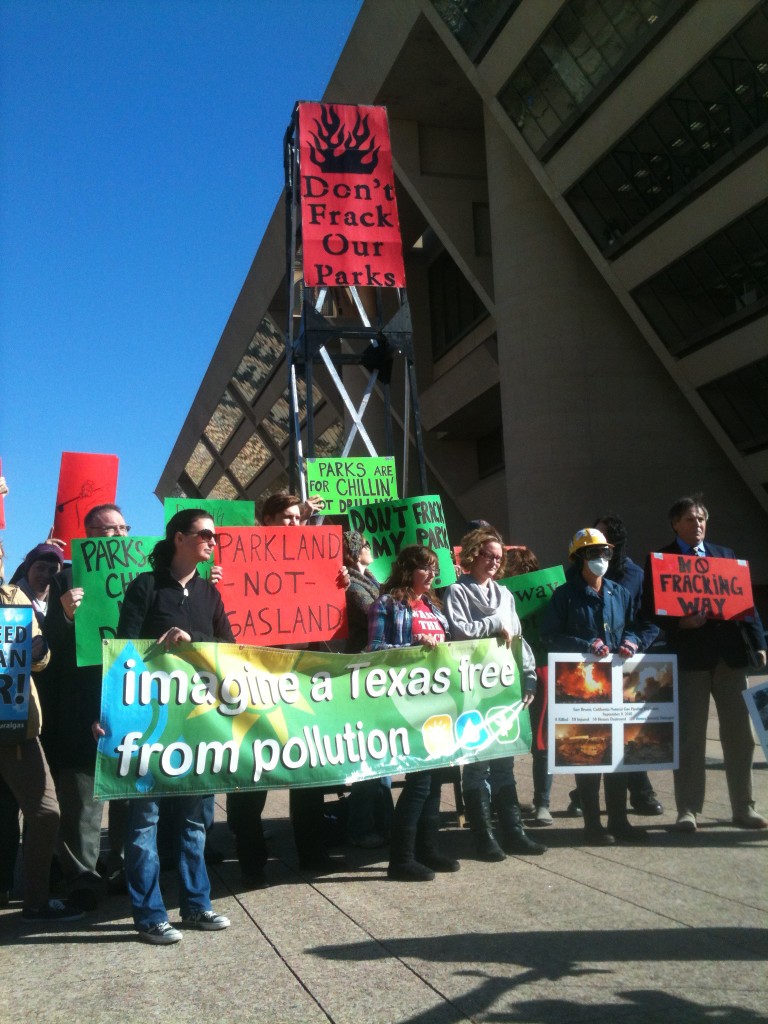 Late Thursday night Downwinders at Risk, as part of the Dallas Residents at Risk alliance, won a victory that citizens weren't supposed to win. Late Thursday night Downwinders at Risk, as part of the Dallas Residents at Risk alliance, won a victory that citizens weren't supposed to win.
Immediately after Thanksgiving, Dallas Mayor Mike Rawlings and City Manger Mary Suhm had plotted to speed the approval of the first gas drilling permit in Dallas. One left over from 2008 that would be exempt from the new drilling ordinance now in the works. One that included a compressor station and allowed for the drilling in city parks and flood plains. City Hall believed it had greased the tracks with threats of gas company lawsuits and given the City Plan Commission no choice but to approve the permit. Just to be sure, they scheduled the Plan Commission vote for December 20th, a time guaranteed to result in smaller crowds of opposition at City Hall. But something happened to make things go a little off-script. Responding to calls for help, enough Dallas residents showed up to articulately speak against the permit for more than an hour. They represented hundreds of neighborhood groups, the environmental community and public interest organizations like the League of Women Voters. If the raw numbers didn't match earlier attendance, the people that did show up represented real constituencies numbering in the thousands. When the vote was finally called at 7:30 pm Thursday evening, we won 7 to 5. The "grandfathered" gas drilling permit would not be approved by the Plan commission. To overturn this decision, the City Council must find 12 votes – a super majority – in favor of the permit at its mid-January meeting. This was not the result Dallas City Hall was counting on the Thursday night before Christmas. But thanks to supporters like you, it was the result that happened. Just as we mobilized opposition to Midlothian cement plant pollution, and helped organize Frisco residents to close down an obsolete and dangerous lead smelter, Downwinders is drawing a line in the Shale in Dallas and leading a push back against irresponsible urban drilling. And, against very long odds, we're winning….again. We do this to protect your lake of air. You ingest an average of 200 gallons of water every year, or about five bathtubs' worth. But you inhale approximately two million gallons of air every year – your own small lake of air.
In DFW, chances are your lake of air is going to have smog in it, along with some soot, some Sulfur Dioxide, Volatile Organic Compounds, as well as an assortment of other manufactured If your tap water was dirty brown and had lots of particles in it, you'd probably choose to drink bottled water. But when the air is dirty brown and has lots of particles in it, your lungs don't have a choice about the air they can use. Downwinders at Risk is here for one reason and one reason only: to defend your lake of air. Whether your air is threatened by smelters, gas rigs, cement plants or too-common smog, we're working to clean it up. For our efforts, Downwinders was proud to receive the first-ever GreenSource DFW award for Outstanding Grassroots Group in 2012. Looking ahead to 2013, your lake of air faces new threats, including worsening new permits by the Midlothian cement plants to burn large volumes of industrial garbage, and indiscriminate aerial spraying of pesticides by local governments. Downwinders at Risk will fight these threats with the combination of good science and citizen activism that's made us the foremost clean air group in DFW. But we need your help to do it. Our work depends on contributions from folks like you who appreciate what we do. Our annual budget is usually only around $30-50,000. We do all the work we do with an amount of money larger groups spend annually on office furniture or travel. We don't get money from a parent group in Washington or New York. Our board members are all from DFW. They're ordinary citizens like you, not rich patrons. Small donations make up a very large percentage of what we take in every year. We couldn't do what we do without you. In the time it took you to read this message, you've inhaled a couple of more gallons of air. Don't you think it should be clean air? You keep supporting us; we keep working for you – and surprising the opposition with victories that citizens in Texas just aren't supposed to be able to pull-off. That's our promise. Thanks for your consideration and Please click here to safely and securely donate online, or send checks to Downwinders at Risk, PO Box 763844, Dallas, TX 75376. Your donation is greatly appreciated and will be wisely spent. Thanks.
|

Cuts in Methane and PM Pollution Can Slow Climate Change
 In an opinion piece in The Daily Climate, Michael MacCraken, the chief scientist for the DC-based Climate Institute advocates an end-run strategy to avoid the political logjam over large CO2 cuts as a way to fight global warming. He suggests concentrating on reducing Methane and Particulate Matter pollution as a way to "appreciably slow the rate of warming over the next several decades." He cites an earlier UN study that concluded:
"…a moderately aggressive international emissions control program focused on the short-lived compounds could roughly halve the projected warming between the present and 2050. While slowing the warming through this approach might seem to also offer additional time for cutting CO2 emissions, this is not the case. Instead, these actions are more appropriately viewed as partially making up for earlier policy delays.
For the United States to do its share, aggressive limits on CO2 emissions must be complemented by aggressive limits of emissions of short-lived species. In particular, the Environmental Protection Agency will need to be more aggressive in cutting short-lived emissions, particularly of methane from the oil and gas industry, and making its voluntary methane and black carbon programs mandatory.
With climate change so far along, the question now is no longer whether impacts can be avoided, but rather how bad they will become. What we do with respect to both mitigation and adaptation will control that outcome. The longer we wait, the worse the impacts and sharper the required energy transition."
While methane gradually breaks down in the atmosphere, forming carbon dioxide, it has 100 times the warming potential of carbon dioxide for the first 20 years it’s exposed to the environment. A study by Cornell University Environmental Biology Professor Robert Howarth found between four and eight percent of the methane produced by a fracking well is leaked into the atmosphere during the well’s lifetime. For all the immediate environmental benefits of natural gas, the methods used for its extraction could create a larger greenhouse footprint than oil or coal over time.
EPA is considering a new national PM pollution standard because of its public health impacts and should use the opportunity to win deeper cuts that offer so many "co-benefits." Every reduction in soot is now doubly important. Cars, cement kilns, coal plants, and just about any industrial boiler or furnace spews out PM. They all need to be targeted as part of a larger effort to bring this kind of pollution under better control.
This impact on global warming is also one more reason why Dallas residents should be demanding that the city incorporate some kind of "off-sets" policy regarding new oil and gas air pollution as part of a new City drilling ordinance. Not only can it hep reduce smog and some of the toxins released by the drilling and processing of natural gas; it can also provide some needed help for climate change at a time when the city is just squeaking by its own greenhouse gas reduction goals.
Hell Freezes Over: Why the New Federal Report on Midlothian Matters
Everything in italics and "quotation marks" below is a direct quote from the latest chapter of the ATSDR's (Agency for Disease Registry and Toxic Substances) "health consultation" on the impact of certain kinds of industrial air pollution on the local population.
You should take five minutes to glance over the sentences. They've taken a better part of a decade and a great deal of citizen persistence to make it to print. You can read them now only because of a petition to ATSDR by local Midlothian residents, spearheaded by Sal and Grace Mier in 2005, prompted the Agency to get involved.
They're also rarer than hen's teeth. Because the words actually come together in sentences to conclude human health was likely harmed by the pollution from Midlothian's three cement plants and steel mill, as well as recommend decreasing that pollution.
Among grassroots activists, ATSDR has a notorious reputation for issuing reports that are "inconclusive by design." The joke is that the agency never met a facility it couldn't learn to live with. And sure enough, previous chapters in this saga have disappointed. Just two years ago, ASTDR's shoddy work in investigating health impacts in Midlothian and elsewhere across the country was the subject of a Congressional hearing.
These ATSDR reports generate no new data. Instead, they are retrospective looks back at the available sampling/monitoring information and a piecing together of possible exposure paths and levels. As such, they're only as good as the data they can digest. In Midlothian's case, that means they're completely dependent on state monitoring – criticized by citizens for years as being inadequate. Nevertheless, with this latest report, citizens have been somewhat vindicated because of what even that inferior sampling revealed.
The health impacts described in this latest report are also limited to what are called "Criteria Pollutants" – old school substances like lead, soot, sulfur dioxide, and ozone that have been regulated by the Clean Air Act for decades. They do not apply to more exotic kinds of air pollution like endocrine disruptors, which there's little or no monitoring for at all.
So there are a lot of missing pieces, but the ATSDR's conclusions and recommendations have an impact on your lungs and maybe your own local fight, even if you don't have a Midlothian zip code. For the first time a federal agency known to avoid coming to any conclusion about anything was forced to say that human health was adversely affected by the operations of industry in Midlothian.
There's a public meeting on this report on December 6th from 7 to 8:30 pm at the Midlothian Conference Center.
Health Consultation/Assessing the Public Health Implications of the Criteria (NAAQS) Air Pollutants and Hydrogen Sulfide MIDLOTHIAN AREA AIR QUALITY MIDLOTHIAN, ELLIS COUNTY, TEXAS
NOVEMBER 16, 2012 U.S. DEPARTMENT OF HEALTH AND HUMAN SERVICES
Agency for Toxic Substances and Disease Registry
Division of Community Health Investigations
Recommendations:
"Texas Commission on Environmental Quality (TCEQ) should take actions to reduce future SO2 emissions from TXI to prevent harmful exposures."
"TCEQ should take actions to reduce future PM2.5 emissions from TXI and Gerdau to prevent harmful exposures."
"TCEQ should continue efforts to reduce regional ozone exposures."
"TCEQ should insure that levels of these air pollutants do not increase to levels of concern in the future."
"TCEQ should conduct ambient air monitoring to characterize exposures to persons located downwind of the Ash Grove and Holcim facilities and take actions to reduce SO2 emissions from these facilities if harmful exposures are indicated."
"TCEQ should conduct appropriate ambient air monitoring to characterize exposures to persons located downwind of the Ash Grove and Holcim facilities and take actions to reduce PM2.5 emissions from these facilities if harmful exposures are indicated. In addition, particulate matter monitoring is needed in residential areas that are in immediate proximity to the facilities’ limestone quarries."
"In ATSDR’s judgment, one notable gap in monitor placement is the lack of monitoring data for residential neighborhoods in immediate proximity to the four industrial facilities, where fugitive emissions (those not accounted for in stack emissions) likely have the greatest air quality impacts."
Human health was likely harmed, and is still threatened by industrial pollution from Midlothian
From Sulfur Dioxide:
"Breathing air contaminated with sulfur dioxide (downwind of TXI's cement plant and the Ameristeel steel mill) for short periods could have harmed the health of sensitive individuals.…ATSDR cannot determine if harmful exposures to SO2 have been occurring downwind of the Holcim and Ash Grove facilities."
"All 24-hour values in Midlothian were lower than EPA’s former standard. However, the World Health Organization’s health comparable guideline is 8 ppb (WHO, 2006). This value was exceeded at both the Midlothian Tower and Old Fort Worth Road stations in most years of monitoring through 2008…"
"Overall, in the years 1999 to 2001, Old Fort Worth Road (monitoring site north of TXI) ranked among the stations with the highest 24-hour average sulfur dioxide concentrations in the state. As sulfur dioxide emissions from TXI Operations decreased in following years, so did the measured concentrations at this station."
From Particulate Matter, or Soot:
"Public health concern is warranted for adverse health effects from long-term exposure to PM 2.5 in Cement Valley"
"In the past (1996–2008), annual average PM 2.5 levels measured were just below the range of concentration proposed by EPA for lowering the annual average standard…Moreover, many of the annual average PM 2.5 concentrations were above the more conservative WHO health guideline (10 μg/m3)."
"No PM 2.5 monitoring data are available to evaluate exposures downwind of the Ash Grove facility. Furthermore, although annual average PM2.5 levels detected at the Holcim monitor indicate possible harmful levels…."
"We estimated that annual average PM2.5 levels in the vicinity of the Gerdau Ameristeel monitor, from 1996 to 1998, could have ranged from about 22.6 to 26.4 μg/m3, which is above both the current and proposed EPA standard. Using EPA’s approach, the 3-year average level might have been above the NAAQS standard of 15 μg/m3 for these years in the vicinity of the Gerdau Ameristeel monitor. Applying this same approach to annual average PM10 data from other monitors suggests that PM 2.5 levels could have been close to the current and proposed PM2.5 standard, especially for the Wyatt Road, Old Fort Worth Road, Gorman Road, and Midlothian Tower monitors."
"Consistent with the other pollutants discussed earlier, the estimated annual PM 2.5 emissions listed for these facilities are among the highest for Ellis County and also rank high among industrial sources statewide."
From Lead:
"Past lead air exposures during the period 1993 to 1998, in a localized area just north of the Gerdau Ameristeel fence line, could have harmed the health of children who resided or frequently played in this area….In the mid-1990s, the lead levels measured in this area ranked among the highest lead concentrations measured statewide."
From Smog:
"Scientific studies indicate that breathing air containing ozone at concentrations similar to those detected in Midlothian can reduce lung function and increase respiratory symptoms, thereby aggravating asthma or other respiratory conditions. Ozone exposure also has been associated with increased susceptibility to respiratory infections, medication use by persons with asthma, doctor’s visits, and emergency department and hospital admissions for individuals with respiratory disease. Ozone exposure also might contribute to premature death, especially in people with heart and lung disease. School absenteeism and cardiac-related effects may occur, and persons with asthma might experience greater and more serious responses to ozone that last longer than responses among people without asthma."
"The Midlothian Tower site recorded ozone concentrations above the level of the NAAQS for several years (TCEQ, 2011b), and the Old Fort Worth Road site has been measuring ozone concentrations close to the level of the NAAQS. Based on the data from both monitors, from August 1997 to September 2011, the 8-hour EPA ozone standard has been exceeded 236 times."
From Breathing Multiple Pollutants:
"ATSDR believes that sufficient information exists to warrant concern for multiple air pollutant exposures to sensitive individuals, especially in the past….The ability of the scientific community to fully and quantitatively evaluate the health effects from the mixture of air pollutants people are exposed to is at least ten years away (Mauderly et al., 2010)……The current state of the science limits our ability to make definitive conclusions on the significance of simultaneous exposures to multiple criteria air pollutants. ATSDR’s conclusions are based on our best professional judgment related to our understanding of the possible harmful effects of air pollutant exposures in Midlothian and our interpretation of the current scientific literature; therefore, these conclusions are presented with some uncertainty."
From New Production:
"Reductions in SO2 levels in Cement Valley have occurred since late 2008 resulting in exposures to both sensitive individuals and the general public that are not expected to be harmful. These reductions may be caused, in part, by declining production levels at local industrial facilities. Future harmful exposures in Cement Valley could occur if production rises to at least previous levels and actions are not taken to reduce SO2 emissions."
Regulatory "Safe Levels" Very Often Aren't
"Past SO2 exposures were not above the Environmental Protection Agency (EPA) standard in place at that time but were above the current standard."
"Past lead air exposures were not above the EPA standard at that time but were above the current standard.…The scientific community now believes that the current standard (15 μg/m3) for fine PM (measured by PM2.5) is a better indicator of possible long-term health effects from PM exposures than was the former EPA annual average standard for PM10 (EPA, 2006b)."
An Idea Worthy of Our Consideration
 Under current law, EPA can designate states to enforce federal environmental laws if they, in fact, actually enforce the law and run competent programs. Once given by the EPA, rarely is this power taken away from a state.
But when a state doesn't do a good job of enforcing the law or runs a program ineptly, the EPA considers taking back responsibility.That's happened recently in Iowa with the enforcement of the Clean Water Act. The Iowa Department of Natural Resources had been heavily criticized by state environmental groups for allowing huge CAFOs – Concentrated Animal and Feeding Operations to pollute the state's waterways. Beginning five years ago, they petitioned the EPA to take direct control of enforcing the Clean Water Act in Iowa. Their petition prompted an EPA investigation. The results confirmed the criticisms of the environmentalists and now the EPA is seriously thinking about stepping in.
Texas environmental groups should take note.
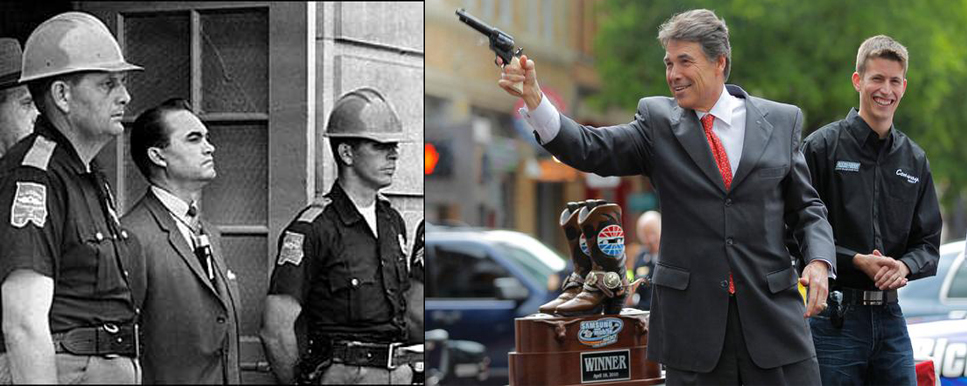
There is plenty of evidence on the public record to suggest Governor Perry and his Texas Commission on Environmental Quality are engaged in an active campaign of "nullification" of federal environmental laws just as Alabama Governor George Wallace was intent on negating federal civil rights legislation and rulings in the 1960's. But instead of standing in the schoolhouse door, Perry is using the world's second largest environmental agency to slow and obfuscate enforcement of the law in the name of his own over-the-top pro-industry agenda. The penalty for this kind of behavior 50 years ago was having the National Guard and Federal Marshals come into Alabama and make sure the law was followed. All we need in 2012 is for EPA to re-establish competent control over half a dozen federal environmental laws.
And if you don't think our Governor and his environmental agency are so nefarious as to construct a strategy to frustrate federal environmental law enforcement, what about stripping them of their responsibilities strictly because of their incompetence at administrating the federal programs. Take the last DFW air plan.…please. TCEQ kept insisting that the turnover of new cars on the road would almost singe-handedly produce the cleanest air in 25 years in North Texas. Not only was that forecast epically wrong – and off by a larger margin than the TCEQ's last clean air plan failure in 2007 – the plan actually left the region with dirtier air than when it began. It was bad science. Call this incompetence or call it incompetence by design. Either way, the result is the same. The Clean Air Act is not being effectively enforced by the state of Texas.
There are excellent reasons to believe that as long as Governor Perry and his TCEQ acolytes are making the decisions, DFW residents won't be able to breathe safe and legal air. It was obvious to many observers that needed pollution controls for industry didn't get included in the state's 2011 air plan for DFW because it would hinder the Governor's ability to raise money from this sector and it might appear to contradict his anti-regulatory political message. Rumor has it that Perry will run for Governor again in 2014 in order to re-position himself for another try at the Presidency in 2016. DFW's next clean air plan is due from the Perry TCEQ in….2015. As long as Perry has ambitions for higher office, your lungs are doomed
Along with trying to mobilize public opinion and rally local officials, maybe one thing DFW residents should be doing by way of self-defense is preparing a petition to EPA requesting it take over Texas' enforcement of the Clean Air Act.