Smog
More Gas Drilling Smog in Rural Wyoming Leads To More Doctor Visits
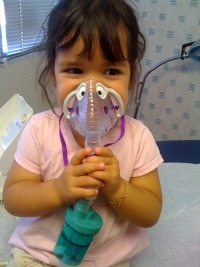 The higher the smog levels in Sublette County Wyoming, the more people go to see doctors. Sounds about right. Unless you know we're talking about a very rural area in the middle of the wintertime. Thanks to waves of new gas drilling, lots of ozone is now created by the winter sunlight reflecting off snow and photochemically changing the voluminous Nitrogen Oxide and Volatile Organic Compounds into ozone, or smog.
According to a new study from 2008 to 2011, for every 10 parts per billion ozone rose in Sublette County, respiratory-based visits by residents to doctors rose 3 percent.
Kerry Pride, a Centers for Disease Control epidemiologist assigned to the Wyoming Department of Health, said the study’s results are in line with what the department expected. Similar studies around the country and internationally have indicated similar trends.
Wyoming's Department of Environmental Quality has rolled out a plan to reduce the pollution with a deadline of 2015.
Can Obama’s EPA Save Us From TCEQ’s “Clean Air Plans”?
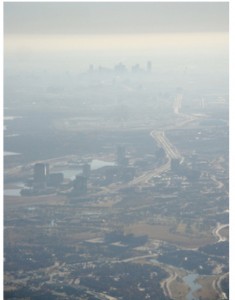 It's only a proposal, but the Obama Administration's plan to cut sulfur in gasoline is aimed primarily at drastically reducing smog-forming Nitrogen Oxide, Volatile Organic compounds and Particulate Matter, the major pollutants that causes DFW to have such bad "ozone seasons." Would it reduce it enough to finally put the region in compliance with the Clean Air Act? Good question.
Sulfur content in gasoline would drop from the current standard of 30 ppm to 10 ppm by 2017 – one year before the compliance deadline for the tougher 75 parts per billion national ambient air ozone standard. That's not a coincidence. The EPA hopes that this initiative is going to drive urban ozone clean-up throughout the country, even in stubborn dirty air hot spots like DFW, which hasn't been in compliance with a smog standard since it was created over 20 years ago.
Along with new stricter emission standards for cars that have already been implemented, the pollution from cars will be coming down over the next decade to historic-per-vehicle lows. Since forever, the state of Texas and local officials have put almost all the blame for DFW's poor air quality on cars. So does this mean that we might actually have a chance to breathe safe and cleaner air, by say, 2020?
Maybe.
First, there's the question of continued growth. If per-car emissions go down, but you're importing 120,000 more cars every year into North Texas, the decreases in emissions are being canceled out to some degree. In this respect, DFW has been its own worst clean air enemy. By attracting new residents year after year and, for the most part, not creating successful transportation options other than private vehicles, the Metromess dooms itself to more total car pollution.
Then there's the climate. Everyone knows how unbearably hot it can get in DFW during July, August and September. That heat and sunlight is one reason we have a smog problem – it chemically transforms the Nitrogen Oxides (NOx) and Volatile Organic Compounds (VOCs) into ozone. What if it gets hotter, and drier? When the ground can't cool off at night and you start out with high morning temperatures that will only get worse by 5 pm, you know it's going to be a bad air day. The more days like that, the harder it's going to be to have safe and legal air despite the changes in engine design and fuel specs. So climate change could rob us of some of those automobile reductions.
If the last couple of years are any indication, you also have to wonder how much of those vehicle changes will be lost on DFW because we live in the Barnett Shale. 16,000 gas wells that are relatively short-term air polluters are being supplemented with more processing infrastructure like compressors, refineries, and pipelines that are year round polluters. Last year's Houston Advanced Research Consortium study estimated the impact of even a single compressor or flare to be as much as 3-10 ppm within five to ten miles, something it would take thousands of cars to accomplish. Even if those cars aren't there anymore, or their emissions make them less of a clean air threat, you have these decentralized major sources taking up the slack. This is one reason why the state itself told EPA that last year there was more VOC air pollution coming from oil an gas sources in North Texas than all the area's on-road cars and trucks, and a large contributing cause to why air quality has been getting worse in DFW over the last two years.
It's not just the number of these facilities but their physical location as well. The more the gas industry moves eastward, the more of the DFW core urban area is "downwind" of these sources, the more the pollution from these facilities combines with car emissions and other urban sources, and the longer they take to leave the now 10-county "non-attainment area," meaning they linger, exposed to sunlight and heat, and have more opportunity to create high levels of ozone. If you have more flares and compressors within 1 to 3 miles of one of 18 or so state air monitors – you will probably begin to see higher ozone readings as a result of their operation – as you have the last couple of years. Most of these pipelines and processing facilities have come online only since 2006.
And that's just in the North Texas area. There's evidence to suggest that the gas industry's building-out to the southeast – or upwind – of DFW is also affecting our air quality. In the same way that Houston's air pollution is said to make our initial "background" ozone levels higher, so too the 60-100 compressors in Freestone County, about 90 miles southeast of Dallas also feed their under-regulated "Standard Permit" pollution into the DFW urban mix. As does the Haynesville Shale gas play itself, as do the remaining east and central Texas coal plants and so forth. If sources to the south and east continue to increase their emissions, it means DFW starts from further and further behind, so that even if cars get cleaner, they might not get so clean so fast as to compensate for this imbalance.
Then there's the "fire hose" effect of the three Midlothian cement plants sitting so close to one another as to create one large super plume that's usually pointed toward the DFW urban core most of "ozone season." Because of citizen efforts, those cement kilns are substantially cleaner in 2013 than they were as recently as 2008. All but one wet kiln is closed, and that one is due to shut down next year. None are burning hazardous waste. But they're still the largest stationary sources of pollution in North Texas – including emitting copious amounts of NOx and VOCs – and they can still impact monitor readings miles and miles away. It's unclear what impact the burning of newly-permitted "non-hazardous" industrial wastes like car parts and plastics in the Midlothian kilns will have on the formation of smog-forming pollution.
EPA estimates an 80% drop in VOC and NOX pollution from cars as a result of its new low-sulfur fuel rule. That's steep. Remove that amount of pollution from all DFW's cars and trucks, and you'd expect to see a substantial improvement in air quality. That's what you'd expect. But, depending on a lot of other variables the state and federal government may or may not be interested in fixing, it could take more than this proposal to bring DFW into compliance with the new 75 ppb ozone standard that is now the federal definition of safe and legal air.
It’s April 1st: Merry Ozone Season!
 We're off to a better start this year than last, if only because we didn't have any "exceedences" of the old 85 ppb ozone standard in March. But there's still six months left – ozone season is the longest season we have now – and plenty of time to rack the violations up. Stay tuned.
Study: Car Traffic As Bad As Second Hand Smoke in Causing Asthma
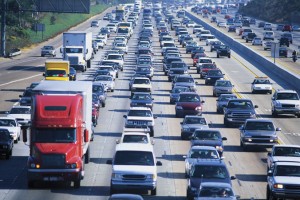 A large new European study released this week found that as much as 14% of chronic children's asthma in the Continent's urban areas could be due to traffic pollution. That would put it on par with the effects of second-hand smoke, linked to anywhere from 4 to 18% of all childhood asthma.
"Air pollution has previously been seen to trigger symptoms but this is the first time we have estimated the percentage of cases that might not have occurred if Europeans had not been exposed to road traffic pollution," lead author Dr. Laura Perez, at the Swiss Tropical and Public Health Institute, said in a press release. "In light of all the existing epidemiological studies showing that road-traffic contributes to the onset of the disease in children, we must consider these results to improve policy making and urban planning."
Although the idea of getting cars off the road as a benefit of mass transit isn't new, this study and others that have been published recently flesh out a new public health concern about the immediate impacts of such reductions in the neighborhoods adjacent to highways. Often these neighborhoods are already low and moderate income, and/or minority-majority with higher-than-average asthma rates already institutionalized because of lack to access to care, poverty or other factors. Highway plannning has yet to take this kind of localized impact into account, especially in Texas and DFW, where regional highway builders are still salivating to build the Trinity Toll Road straight through the middle of Dallas or criss-cross Ft. Worth neighborhoods with the new "Chisholm Freeway."
Asthma affects one in 12 people, or 8 percent of the U.S. population, according to 2009 data from the Centers for Disease Control and Prevention. The number has increased since 2001, when one in 14 people were affected.
State Budget Writers Vote to Keep Raiding Anti-Smog Funds
 Today brings news of the first skirmish in this year's state Legislative session over using anti-smog funds collected in DFW and other EPA "non-attainment" areas to ease budget gaps in general revenue.
The Dallas Morning News has an account of local Dallas State Representative Helen Giddings teaming up with Houston Rep. Turner Sylvester during a House Appropriations Committeee meeting on Tuesday to make the case that the funds are desperately needed to help reduce air pollution in Texas' largest cities where unhealthy air is still the norm during "ozone season."
Everyone who gets their car inspected in North Texas pays an extra $6 that goes to the "Low-Income Repair and Replacement Assistance Program," (LIRAP). The money is supposed to be used to help low-income car owners upgrade their vehicles so they'll run cleaner. Because they can't afford to buy new vehicles as often, low income owners usually drive older cars. Older cars are dirtier cars. Fix them or upgrade them to newer cars and you reduce air pollution.
According to the folks that wear the green shades, the LIRAP fund will have approximately $77 million in unspent money at the end of August. Another $80 million is expected to be collected in the state's "non-attainment areas" over the next two years. That's a lot of car repair money. But as it turns out, state budget writers are proposing to only spend a little over $11 million in the next two years to be split up between Houston, DFW, Austin and San Antonio.
The size of the diversion has publicly angered elected officials in DFW and the other urban areas who are facing compliance with a new, stricter EPA smog standard by 2018 even as they annually fail to meet the old standard. In DFW and Houston LIRAP funding is traditionally used to build the clean air plans that must get approved by EPA. Without sufficient funds, local officials are telling the state that its next plan, due in 2015, might not get approved by EPA. You can imagine the disappointment in Austin of hearing that news.
Austin and San Antonio officials have actually threatened to pull out of the fee system all together unless they get more back of what their residents are putting in. That huffing and puffing paid off a bit Tuesday, as the Republican-led committee voted to approve an additional, but token, $1.4 million to those cities. Still, perhaps that lesson will not be lost on DFW officials, who have a long history of suffering silently as the state increasingly robs the region of its ability to control it's own air quality fate.
This was only the opening round of votes, and the House is more conservative than the Senate. But it's probably not a good sign that Rep. Giddings was the only one of at least five DFW-based members of the House Appropriations Committee quoted in News as leading the charge. Missing in Action was former Arlington City Council member and previous sometime-clean air supporter Diane Patrick, and oh yeah, the Chair of the Committee that hails from non-attainment Ellis County, Representative Jim Pitts. If the local North Texas clean air establishment can't get more help from its own players in the Lege, they're unlikely to see more money flowing their way.
Another Study Links Autism to Air Pollution
 The more Ozone and Particulate Matter pollution a baby in the womb is exposed to, the more likely he or she will be born with autism according to a new UCLA study published March 1st in Environmental Health Perspectives, a peer-reviewed journal published by the National Institute of Environmental Health Sciences. It's the largest study of its kind to date and is the first to link autism with ozone, or smog, levels.
Researchers compared levels of air pollutants, mostly related to vehicle traffic, during pregnancy gestation periods of 7,603 children with autism and 75,635 children without autism, born from 1995 to 2006 in Los Angeles. Babies at the 75th percentile of exposure to toxins had a 8 percent to 10 percent higher risk of autism than babies at the bottom 25th percentile, the study said. Ozone and fine particulates had the strongest association with autism.
Using government air monitoring stations, researchers estimated average exposures during pregnancy to carbon monoxide, nitrogen dioxide, nitric oxide, ozone and particulate matter. The study adjusted for factors that include maternal age, birthplace, race and education. Using birth certificates, researchers compared control children with non-control children who had matching birth year, sex and gestational age at birth.
"These findings are of concern, since traffic-related air pollution is ubiquitous," said Dr. Beate Ritz, chair of UCLA's Department of Epidemiology and the study's senior author. She said she was reluctant to advise expectant mothers to leave LA or polluted cities, because that's not an option for many. "We can't tell them to not breathe or not go outside or not go to work," she said. She did recommend avoiding sitting in traffic, when pollutant exposure is worst."
Autism is a spectrum of disorders ranging from a profound inability to communicate and mental retardation to milder symptoms seen in Asperger's syndrome. The Centers for Disease Control and Prevention estimates that autism affects one in every 88 children born in the U.S., a 25 percent increase from 2006.
Research on autism and exposure to chemicals has been limited. Studies from 2006 and 2010 found an association between autism and air pollutants from industries and other sources.
A study in 2010 was the first to look at autism and toxins specifically from auto exhaust. The study, based in California, reported that children born to mothers living within 9/10 mile of a freeway during pregnancy were more likely to be diagnosed with autism than children whose mothers lived more than 1/4 mile from a freeway. However, the sample size — 304 autism cases and 259 controls — was much smaller than the just-published UCLA study.
Most policy discussions concerning air pollution in DFW surround the damage done to lungs, or maybe hearts and lungs. Rarely are the other, now well-known associations between air pollution and birth defects, or air pollution and brain function mentioned. And even rarer is the fact mentioned that these harms are often occurring at levels of pollution considered to be officially "safe" or at least legal. We really have no idea what the assault on our bodies by chemicals we involuntarily breathe actually can do to our health over the long term. That's why we should minimize exposure to them as much as possible. And that means limiting the chemicals' movements, not those of expectant moms.
Most Anti-Smog Money in Texas Doesn’t Go to Fight Smog
 Only 12 cents out of every dollar collected in DFW to pay for anti-smog initiatives actually goes toward cleaning the air, according to representatives of the North Central Texas Council of Governments quoted in a new Texas Observer article. Most of the money collected goes into the State's general fund to pay for other state programs.
Texas residents pay a small fee whenever they transfer a vehicle title or get their car emissions tested. Those fees are add up into big money every year – an estimated $772 million over the next two years. That funding is supposed to assist low-income families to get their cars repaired, and to help businesses purchase cleaner on and off-road engines. But only about $134 million is actually targeted for those clean air measures in the state's smoggiest areas – DFW, Houston and Austin-San Antonio. Everything else will be diverted according to a proposed state budget.
It's not like we don't need the money. For the last two years, DFW smog has gotten worse, and we're in our second full decade of failing to meet the Clinton-era smog standard even as we're looking at a 2018 compliance date for a much more stringent one implemented by the EPA last year. That means we have to have to go three years without exceeding that standard at any one monitor – beginning in 2015. That's not very long from now and that's why that money is needed now. Not surprisingly, local government officials are a little upset.
“Our local and elected officials see it as county money that’s not coming back to the county,” said Shannon Stevenson, program manager at the North Central Texas Council of Governments.
The Capital Area Council of Governments, an association of ten Austin-area counties, has considered a plan to opt out of the program altogether, said Adele Noel, air quality project manager for Travis County.
“Honestly, we cannot operate if they do not give us more money,” Noel said.
So the North Central Texas COG is teaming up with other local governments in the state's largest urban areas and trying to redirect the anti-pollution funds back to their original purpose. With so many members of the legislature from districts affected by the funding shortfall, you might think they stand a good chance. But those other programs that get the money now also have their advocates, and not every member of the Lege from an urban county is necessarily sympathetic to clean air concerns. Stay tuned.
Study: Gas Drilling Cause of Wintertime Smog in Utah Basin
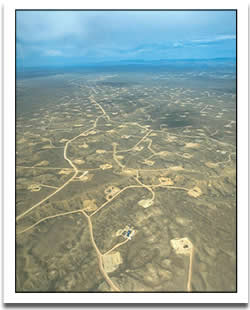 98 to 99 percent of the Volatile Organic Compounds (VOCs) and 57 to 61 percent of the Nitrogen Oxide (NOx) found in Utah's Uninta's Basin are emitted by gas drilling or production sources, and are responsible for worsening smog there, according to a new Utah Department of Environmental Quality study of air quality there.
The Basin is one of several large rural Western areas of the country that also includes stretches of Colorado and Wyoming where gas drilling has caused the phenomena of "wintertime ozone," creating smog as bad or worse than Los Anageles or Houston.
Despite low snowfall this year, the Basin has still seen more than a dozen episodes of high ozone so far. The ozone readings can reach nearly twice the limit considered safe by the EPA and last for weeks at a time. In 2011, levels reached 139 parts per billion, nearly double the federal health standard. About 1,100 wells were drilled that year.
Leaks from pipes and tanks and fumes from pumps, dryers and compressors were major sources of volatile organics. Drill rigs and fracking were sources of nitrogen oxides and methane, according to the study.
While making no recommendations,the report did say that reductions in certain kinds of volatile organic compounds, including benzene and toluene, “could be particularly effective since they are not only a direct health concern but are more active in ozone production than many other” VOCs.
New Texas Study Confirms That Smog is Bad For Your Heart
 Heart attacks are more common within just hours of high ozone and/or particulate matter levels according to a new large study of air pollution health effects that was sponsored by Rice University.
Evidence already links airborne particles with heart disease and lung problems but the new findings are the first to show that high ozone may immediately raise the risk that a person's heart will stop beating.
"Heart patients should consider when there are high ozone levels that they should take extra care of themselves," lead author Katherine Ensor of Rice University in Houston told Reuters Health.
Ensor and her colleagues looked at Houston hospital records from 2004 to 2011 and compared them with records from hospitals outside the city.
Cardiac arrest risk went up by 4.4 percent for every 20 parts per billion of ozone above average (50-60 ppb) within the previous three hours. For every increase by 6 micrograms of fine particulates per cubic meter of air in the prior two days, cardiac arrests rose by 4.6 percent. In the summer, it's not unuual for DFW monitors to record 1-hour ozone levels of over 100 ppb or more, and 8-hur averages in the 80 to 90 ppb range. There are only two urban monitors for PM pollution, but those have been trending up over the last few years as ozone levels have been rising as well.
Because there are many risk factors for cardiac arrest, an additional link to ozone could have big implications for people with chronic medical conditions living in urban areas, according to Dr. Comilla Sasson of the University of Colorado, who was not involved in the new study.
Perry’s Coal Rush Ends With a Whimper, not a Bang
 In 2006, Governor Perry announced that he was going to fast track over a dozen new coal plant permits in East and Central Texas. There was an instant hue and cry. Not only citizens but cities protested. Believe it or not, the same Dallas City Hall now prostituting itself for gas refineries was actually out organizing a multi-municipality alliance with Houston against the coal plants and Perry. Downwinders launched its now infamous "Smokestack Love" cross-state tour, complete with a 16-foot long parade-quality float with a smokestack-inhaling Perry.
Unfortunately, opponents weren't able to stop all the plants. A leftover 1980's permit for the Oak Grove lignite plant north of College Station did get approved over the objections of local landowners. But most were derailed by fierce resistance or lower natural gas prices brought on by the heavy exploitation of the Barnett and Eagle Ford Shale plays.
Last Thursday, the final domino of that proposed 2006 wave of new coal plants fell with the announcement that the White Stallion plant near Bay City was being canceled.
"The news marks a victory for opponents of coal in Texas, notably the Environmental Defense Fund and the Sierra Club, who have worked for years to oppose the White Stallion and other coal power projects in the state. At this point, there are no longer any major new traditional coal power plants planned in Texas. All of the new projects are primarily natural gas and wind power, with some solar."
Congratulations to all those who worked so hard to see these bad ideas finished off for good. But remember there are still older coal plants in East and Central Texas that are among the largest point sources of pollution in the state, and the nation. Having now eliminated new potential clean air threats from the last of the Perry-proposed coal rush, the Sierra Club is turning its attention to the existing plants that are long past their prime and need to be replaced with cleaner sources of energy.