Nitrogen Oxides
Can Obama’s EPA Save Us From TCEQ’s “Clean Air Plans”?
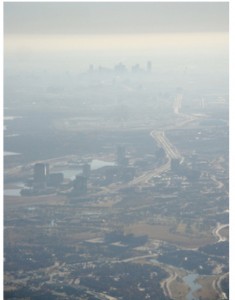 It's only a proposal, but the Obama Administration's plan to cut sulfur in gasoline is aimed primarily at drastically reducing smog-forming Nitrogen Oxide, Volatile Organic compounds and Particulate Matter, the major pollutants that causes DFW to have such bad "ozone seasons." Would it reduce it enough to finally put the region in compliance with the Clean Air Act? Good question.
Sulfur content in gasoline would drop from the current standard of 30 ppm to 10 ppm by 2017 – one year before the compliance deadline for the tougher 75 parts per billion national ambient air ozone standard. That's not a coincidence. The EPA hopes that this initiative is going to drive urban ozone clean-up throughout the country, even in stubborn dirty air hot spots like DFW, which hasn't been in compliance with a smog standard since it was created over 20 years ago.
Along with new stricter emission standards for cars that have already been implemented, the pollution from cars will be coming down over the next decade to historic-per-vehicle lows. Since forever, the state of Texas and local officials have put almost all the blame for DFW's poor air quality on cars. So does this mean that we might actually have a chance to breathe safe and cleaner air, by say, 2020?
Maybe.
First, there's the question of continued growth. If per-car emissions go down, but you're importing 120,000 more cars every year into North Texas, the decreases in emissions are being canceled out to some degree. In this respect, DFW has been its own worst clean air enemy. By attracting new residents year after year and, for the most part, not creating successful transportation options other than private vehicles, the Metromess dooms itself to more total car pollution.
Then there's the climate. Everyone knows how unbearably hot it can get in DFW during July, August and September. That heat and sunlight is one reason we have a smog problem – it chemically transforms the Nitrogen Oxides (NOx) and Volatile Organic Compounds (VOCs) into ozone. What if it gets hotter, and drier? When the ground can't cool off at night and you start out with high morning temperatures that will only get worse by 5 pm, you know it's going to be a bad air day. The more days like that, the harder it's going to be to have safe and legal air despite the changes in engine design and fuel specs. So climate change could rob us of some of those automobile reductions.
If the last couple of years are any indication, you also have to wonder how much of those vehicle changes will be lost on DFW because we live in the Barnett Shale. 16,000 gas wells that are relatively short-term air polluters are being supplemented with more processing infrastructure like compressors, refineries, and pipelines that are year round polluters. Last year's Houston Advanced Research Consortium study estimated the impact of even a single compressor or flare to be as much as 3-10 ppm within five to ten miles, something it would take thousands of cars to accomplish. Even if those cars aren't there anymore, or their emissions make them less of a clean air threat, you have these decentralized major sources taking up the slack. This is one reason why the state itself told EPA that last year there was more VOC air pollution coming from oil an gas sources in North Texas than all the area's on-road cars and trucks, and a large contributing cause to why air quality has been getting worse in DFW over the last two years.
It's not just the number of these facilities but their physical location as well. The more the gas industry moves eastward, the more of the DFW core urban area is "downwind" of these sources, the more the pollution from these facilities combines with car emissions and other urban sources, and the longer they take to leave the now 10-county "non-attainment area," meaning they linger, exposed to sunlight and heat, and have more opportunity to create high levels of ozone. If you have more flares and compressors within 1 to 3 miles of one of 18 or so state air monitors – you will probably begin to see higher ozone readings as a result of their operation – as you have the last couple of years. Most of these pipelines and processing facilities have come online only since 2006.
And that's just in the North Texas area. There's evidence to suggest that the gas industry's building-out to the southeast – or upwind – of DFW is also affecting our air quality. In the same way that Houston's air pollution is said to make our initial "background" ozone levels higher, so too the 60-100 compressors in Freestone County, about 90 miles southeast of Dallas also feed their under-regulated "Standard Permit" pollution into the DFW urban mix. As does the Haynesville Shale gas play itself, as do the remaining east and central Texas coal plants and so forth. If sources to the south and east continue to increase their emissions, it means DFW starts from further and further behind, so that even if cars get cleaner, they might not get so clean so fast as to compensate for this imbalance.
Then there's the "fire hose" effect of the three Midlothian cement plants sitting so close to one another as to create one large super plume that's usually pointed toward the DFW urban core most of "ozone season." Because of citizen efforts, those cement kilns are substantially cleaner in 2013 than they were as recently as 2008. All but one wet kiln is closed, and that one is due to shut down next year. None are burning hazardous waste. But they're still the largest stationary sources of pollution in North Texas – including emitting copious amounts of NOx and VOCs – and they can still impact monitor readings miles and miles away. It's unclear what impact the burning of newly-permitted "non-hazardous" industrial wastes like car parts and plastics in the Midlothian kilns will have on the formation of smog-forming pollution.
EPA estimates an 80% drop in VOC and NOX pollution from cars as a result of its new low-sulfur fuel rule. That's steep. Remove that amount of pollution from all DFW's cars and trucks, and you'd expect to see a substantial improvement in air quality. That's what you'd expect. But, depending on a lot of other variables the state and federal government may or may not be interested in fixing, it could take more than this proposal to bring DFW into compliance with the new 75 ppb ozone standard that is now the federal definition of safe and legal air.
Groups Call for Full Open Public Hearing for Dallas Gas Permits Vote on Thursday
 Here's the full text of a letter that was sent to all Dallas City Plan Commission members last week:
Commissioners and Chair,
Despite the request to the City Council made by members of the Commission on February 7th to change city policy in order to accommodate the Trinity East gas permits by your March 21st meeting, there has been no effort to do so.
For this reason alone, we urge you to take no action on these permits next week, or uphold your December 20th denial. These permits would allow surface drilling on park land and in floodplains, contrary to current city policy.
However, information and circumstances that have come to light since the December 20th vote to deny these permits make them even more objectionable.
We know that the proposed Trinity East processing facility and compressor station will be at least the 10th largest source of air pollution in the city, with a strong probability that emissions would grow to be much greater, out of the regulatory reach of the City of Dallas as they grow.
We know that city staff is working to locate this large air polluter next to the new Elm Fork Athletic Complex, in direct contradiction to recent city staff and City Council actions to protect the area around the Complex from lesser air pollution threats.
We know that, despite the title of the facility itself, the scale of operations, and the equipment it proposes to install, city staff refuses to classify Trinity East’s “Luna South Gas Processing Facility” as a gas processing facility under current City of Dallas zoning law.
We know that Trinity East misled the CPC at your February 7th meeting when its representative told you that gas well casings always protect underground aquifers. In fact, Trinity East had a casing failure at a previously undisclosed well in Irving, only a few miles away from the proposed Dallas sites, and with the City of Dallas participating in the lease agreement.
We know that on January 10th, Trinity East representatives told the Commission that its processing facility and compressor station would handle only the gas from its three Dallas sites—despite its Manager stating in published interviews that it was the centerpiece of a larger regional plan that incorporated Trinity East wells in at least two other cities.
We know that the city staff has a conflict of interest in performing an unbiased due diligence of the Trinity East permits because the City Manager had already pledged to support approval of the permits in a previously-undisclosed 2008 agreement. This is the reason there has not been a comprehensive review of the environmental and public health impacts of these permits by the City of Dallas staff, as there have been for other proposed polluting facilities in the same area as the Trinity East sites.
We know that a complaint has been filed with the Dallas County District Attorney’s Office alleging possible Open Meetings Act violations leading up to the January 10th CPC meeting that could make a second, “reconsidered” vote on the Trinity East permits illegal.
We know that a vote to approve these Trinity East permits is a vote condoning five years of the public, the Commission, the Park Board, and the City Council being intentionally mislead by the City Manager concerning the circumstances of these specific sites. It is perhaps the most important vote you will cast as a City of Dallas Plan Commissioner.
If you do decide to take a second vote on the Trinity East permits at your March 21st meeting, we request that you adopt special public hearing procedures that will guarantee a Dallas resident’s right to speak.
Based on the experience of the Commission’s February 7th meeting, the CPC format of 15-minutes per-side is clearly not adequate to allow everyone who wishes to give testimony on this high profile and controversial issue to be heard.
Because the CPC only meets during weekdays, many of us take off from our jobs or home responsibilities to attend. Our time should be respected. When a government entity announces a public hearing, it should be willing to listen to everyone who makes the effort to attend and speak. You owe us that courtesy.
The only time citizens have become angry during CPC meetings has been when they were completely shut-out of any opportunity to provide public comment (January 10th), and when public comment was shut down prematurely with many dozens of speakers still lined up to give testimony (February 7th). We make no apology in standing up for our right to speak out.
To avoid future frustrations, any definitive vote on the Trinity East permits taken on March 21st should be preceded by an inclusive, open-ended public hearing that gives each person their say. Toward that end, we propose that the CPC adopt the City Council rules for public hearing and allow everyone who wants to testify a total of 3 minutes each. The hearing would remain open until the last person spoke. Commission members would still be able to ask questions of specific presenters. This offers freedom of speech without sacrificing any of your tools to elicit further information from the participants.
We know that some of you must be as frustrated as ourselves in having to revisit this issue time and again, but there is a way to definitely put it to rest. Let the December 20th denial of the Trinity East permits stand.
Thank you for your consideration.
Raymond Crawford
Dallas Area Residents for Responsible Drilling
Jim Schermbeck
Downwinders at Risk
Sharon Wilson
Earthworks’ Oil & Gas Accountability Project
Marc McCord
FracDallas
Ed Meyer
Mountain Creek Neighborhood Alliance
Molly Rooke
Greater Dallas Chapter, Sierra Club
Zac Trahan
Texas Campaign for the Environment
Dallas Drilling Scandal Gets Its Very Own SLAPP Suit Threat
 Let's see, so far the Great Dallas Drilling Scandal™ includes illegal drilling sites, a secret agreement, secret wells….in Irving, citizen protests, allegations of Open Meetings violations, likely Open Records violations, a surprise refinery, comparisons to Christ, and at least one grassroots city council candidacy. Missing until now was it's very own SLAPP suit (Strategic Lawsuit Aimed at Public Participation).
Check.
Monday saw the announcement that lawyers for the company behind the three controversial Dallas gas permits had sent a nasty letter to one Zac Trahan of the Texas Environmental Campaign telling him to cease and desist in handing out flyers telling people that a casing failure at one of the company's wells in Irving could have harmed groundwater. Since it happened deep underground and there has been no public disclosure of post-failure testing, it's impossible to say whether it caused harm to groundwater or not. But that didn't keep Trinity East from wanting full exoneration. According to a letter from the law firm representing Trinity East,
"That statement is absolutely false. Trinity East's prior well did not contaminate any underground water aquifers. In fact, any casing failure on that well could not have caused or produced aquifer contamination because surface casing was set and cemented at required depths (per Texas Commission on Environmental Quality rules) to protect all fresh water aquifers. TCE's actions are unlawful, and constitute, at a minimum, defamation under Texas law. There is no question that TCE fabricated this fiction and then disseminated it with the specific intent of interfering with Trinity East's rights under its lease with the City of Dallas."
That would be the previously undisclosed lease(s) with the City of Dallas over at the University of Dallas, in Irving (it's complicated) that have only recently come to light after citizen investigation and published reports in the Dallas Observer and Morning News.
The flyers in question were from Dallas Residents at Risk and only claimed that the casing failure may have contaminated groundwater. There's no way that Trinity East's lawyers could prove there was no contamination. We'll probably never know for sure. But the primary point of the letter is not to dispute the statement. It's to scare Zac, TCE and Dallas Residents at Risk into not saying stuff like this again, or they'll sue. Or at least talk a lot like they're going to sue. They'll really mean it. Sort of. Honest.
The tip-off about what this letter is really about is that it didn't come from the law firm representing Trinity East in the permitting process but from a firm (Kelly Hart and Hallman) that apparently makes targeting environmental groups a specialty. Only a short while ago, it actually sued TCE over a landfill expansion dispute. In this case however, Trinity East probably dreads actually taking Zac and Co. to court because then all documents about the (previously undisclosed) well could be reviewed by TCE and the public.
Although it's a sideshow to the on-going scandal over approving permits to do things that aren't legal, Trinity East's letter shows citizens hit a nerve by pulling back the curtain on the company's current operations. Representatives of Trinity East never fail to mention how many wells the company has drilled in the Barnett Shale, but as far as we can tell, nobody at Dallas City Hall has ever researched the company's environmental and safety track record. Once again, it was citizens performing the minimum due diligence that first came across the information on the existence of the Irving wells themselves, much less the casing failure.
Oh that. On February 7, 2013 Trinity East Energy's Tom Blanton told the City Plan Commission that "Trinity East Energy has never had a casing failure." Was he forgetting about the Irving well? Was he fudging a bit because it was done by the "Expro Energy" part of Trinity East? Or was he just not telling the truth? No matter, Dallas City Hall took the claim at face value and never checked. Why not? Maybe because they knew that doing so would reveal a long-standing prior relationship between the City and Trinity that included a well with a casing failure. Wow. That would be embarrassing.
Study: Gas Drilling Cause of Wintertime Smog in Utah Basin
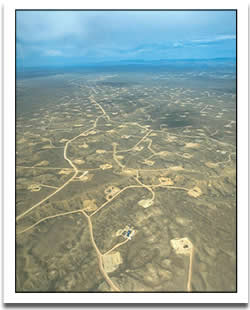 98 to 99 percent of the Volatile Organic Compounds (VOCs) and 57 to 61 percent of the Nitrogen Oxide (NOx) found in Utah's Uninta's Basin are emitted by gas drilling or production sources, and are responsible for worsening smog there, according to a new Utah Department of Environmental Quality study of air quality there.
The Basin is one of several large rural Western areas of the country that also includes stretches of Colorado and Wyoming where gas drilling has caused the phenomena of "wintertime ozone," creating smog as bad or worse than Los Anageles or Houston.
Despite low snowfall this year, the Basin has still seen more than a dozen episodes of high ozone so far. The ozone readings can reach nearly twice the limit considered safe by the EPA and last for weeks at a time. In 2011, levels reached 139 parts per billion, nearly double the federal health standard. About 1,100 wells were drilled that year.
Leaks from pipes and tanks and fumes from pumps, dryers and compressors were major sources of volatile organics. Drill rigs and fracking were sources of nitrogen oxides and methane, according to the study.
While making no recommendations,the report did say that reductions in certain kinds of volatile organic compounds, including benzene and toluene, “could be particularly effective since they are not only a direct health concern but are more active in ozone production than many other” VOCs.
New Texas Study Confirms That Smog is Bad For Your Heart
 Heart attacks are more common within just hours of high ozone and/or particulate matter levels according to a new large study of air pollution health effects that was sponsored by Rice University.
Evidence already links airborne particles with heart disease and lung problems but the new findings are the first to show that high ozone may immediately raise the risk that a person's heart will stop beating.
"Heart patients should consider when there are high ozone levels that they should take extra care of themselves," lead author Katherine Ensor of Rice University in Houston told Reuters Health.
Ensor and her colleagues looked at Houston hospital records from 2004 to 2011 and compared them with records from hospitals outside the city.
Cardiac arrest risk went up by 4.4 percent for every 20 parts per billion of ozone above average (50-60 ppb) within the previous three hours. For every increase by 6 micrograms of fine particulates per cubic meter of air in the prior two days, cardiac arrests rose by 4.6 percent. In the summer, it's not unuual for DFW monitors to record 1-hour ozone levels of over 100 ppb or more, and 8-hur averages in the 80 to 90 ppb range. There are only two urban monitors for PM pollution, but those have been trending up over the last few years as ozone levels have been rising as well.
Because there are many risk factors for cardiac arrest, an additional link to ozone could have big implications for people with chronic medical conditions living in urban areas, according to Dr. Comilla Sasson of the University of Colorado, who was not involved in the new study.
Perry’s Coal Rush Ends With a Whimper, not a Bang
 In 2006, Governor Perry announced that he was going to fast track over a dozen new coal plant permits in East and Central Texas. There was an instant hue and cry. Not only citizens but cities protested. Believe it or not, the same Dallas City Hall now prostituting itself for gas refineries was actually out organizing a multi-municipality alliance with Houston against the coal plants and Perry. Downwinders launched its now infamous "Smokestack Love" cross-state tour, complete with a 16-foot long parade-quality float with a smokestack-inhaling Perry.
Unfortunately, opponents weren't able to stop all the plants. A leftover 1980's permit for the Oak Grove lignite plant north of College Station did get approved over the objections of local landowners. But most were derailed by fierce resistance or lower natural gas prices brought on by the heavy exploitation of the Barnett and Eagle Ford Shale plays.
Last Thursday, the final domino of that proposed 2006 wave of new coal plants fell with the announcement that the White Stallion plant near Bay City was being canceled.
"The news marks a victory for opponents of coal in Texas, notably the Environmental Defense Fund and the Sierra Club, who have worked for years to oppose the White Stallion and other coal power projects in the state. At this point, there are no longer any major new traditional coal power plants planned in Texas. All of the new projects are primarily natural gas and wind power, with some solar."
Congratulations to all those who worked so hard to see these bad ideas finished off for good. But remember there are still older coal plants in East and Central Texas that are among the largest point sources of pollution in the state, and the nation. Having now eliminated new potential clean air threats from the last of the Perry-proposed coal rush, the Sierra Club is turning its attention to the existing plants that are long past their prime and need to be replaced with cleaner sources of energy.
Remember Those East Texas Coal Plants?
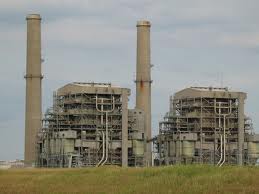 The Sierra Club does. Funded by a $50 million donation from New York Mayor Michael Bloomberg, its Beyond Coal campaign is coming to Dallas-Ft. Worth to take on the old TXU, the operator of some of the most polluting coal plants in the nation, including Martin Lake, the third largest stationary source of Greenhouse Gas pollution in the nation.
Hoping to persuade customers to switch electricity providers, as well as hit the plants as contributors to the chronic regional smog problem, the Club is sending at least two organizers up to North Texas from Austin on a regular basis. They'll be supervised by former Downwinder technical adviser and EPA Regional Administrator Dr. Al Armendariz, who's now heading up the Texas franchise of Beyond Coal.
Although some might argue that gas mining in the Barnett Shale has replaced the threat the coal plants represented seven years ago when Governor Perry attempted to fast track the permitting of over a dozen new ones, the old TXU ones still release formidable amounts of pollution because they're so old. A new Texas Tribune interview with Dr. Armendariz lays out the campaign's strategy for taking them on.
A Dallas Drilling Scandal Primer
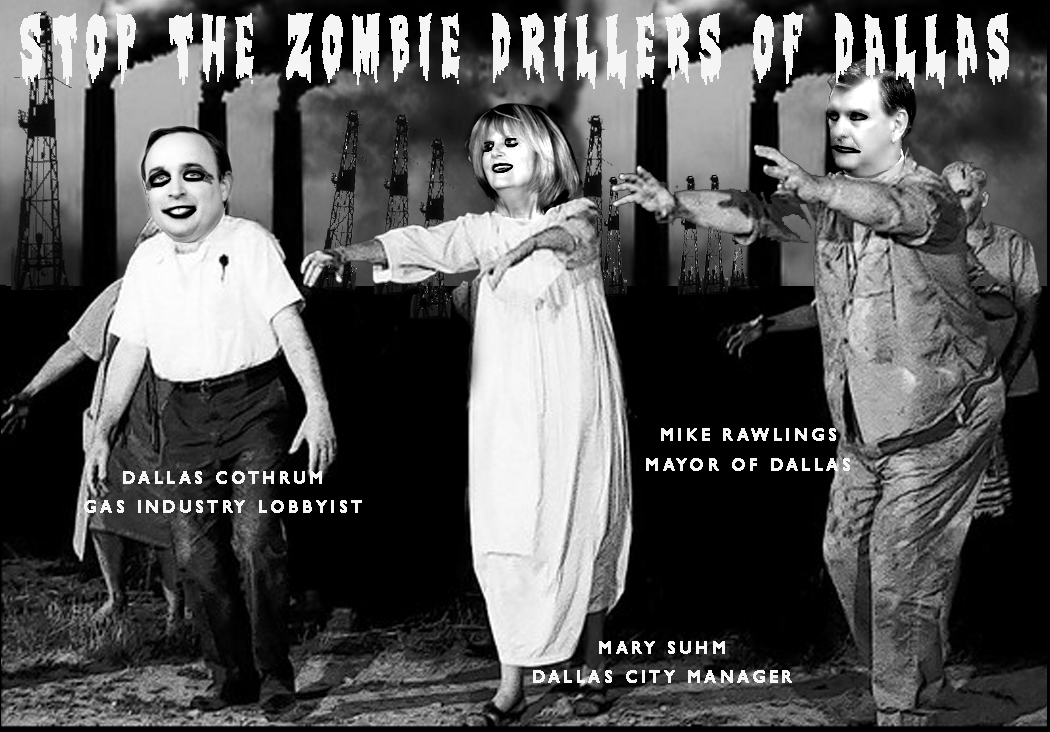
 Thanks to everyone who turned out last Thursday for the (abbreviated) public hearing on the Trinity East "zombie" gas permits before the City Plan Commission. Our apologies to those of you who were not allowed to speak by the arbitrary too-soon ending of the hearing. It was one more example of a process gone off the rails when it comes to these permits.
It's now clear that what began as a neighborhood-based effort to fight off irresponsible urban gas drilling three years ago has now grown into not only a turning point for the entire Dallas environmental movement, but as of last week, into the largest Dallas City Hall scandal in years as well. There are suddenly lots of moving parts. Here's a quick summary of what we know as of today.
On Thursday morning, the Dallas Observer broke the story that in 2008 Dallas City Manager Mary Suhm signed a secret side agreement with Trinity East that essentially turned City Hall into a lobbying machine for the company's gas permits. The first impact of that lobbying was a reversal of the no drill policy in Dallas parks. Only six months after city staff had told the Council and Park Board there would be no surface drilling in Dallas parks allowed, the side agreement Suhm negotiated with Trinity East assured the company that she and her staff were "reasonably confident" they could win permission to drill in parks for the company.
Many Dallas activists have speculated about such an agreement as the only way to explain why city staff seemed to be going out of its way to push through the Trinity East permits, including abruptly re-defining the current gas ordinance on the fly, ignoring or flouting precedents, and declining to bring the usual level of official scrutiny to bear. Suhm and city attorneys kept this document from public view even after years of opposition from neighborhood groups to drilling sites, including Trinity East's. At a time when every city staffer had an obligation to wear the Trinity East agreement on their sleeves, City Hall hid the fact they were working for the company to win its permit. Dallas Councilwoman Angela Hunt has prepared a detailed timeline of Suhm's deception.
Suhm declined to talk directly to the Observer, but instead issued a statement to the Morning News that said, in essence, she was shocked, shocked that anyone could think this side agreement with Trinity was a "back room" deal. Mayor Rawlings is standing by Suhm so far, issuing a statement of support late Thursday that emphasized the "non-binding" nature of the side deal that was "cut," as the Mayor so eloquently put it back in November. The Observer's Jim Schutze had a take down of both of their official statements on Friday, saying "some stuff just won't spin."
A growing chorus of groups and individuals are calling for Suhm to resign, as are some Council members like Hunt, and Scott Griggs. Her fate now seems linked to that of the Trinity East permits, since both seem tainted beyond redemption by the disclosure of the side deal. How can any resident or Council member trust what city staff says about the permits? How can any resident or Council member trust that Suhm won't sell them out again?
Meanwhile, the Observer has raised the possibility of Open Records Act violations by the City because it's pretty sure it asked for ALL documents related to the Trinity East permits. Citizens groups and individuals that have been turning in a constant flow of Open Records Act requests for the last three to four years might also have the same gripe.
But they'd have to take a number because four people, including Downwinders Director Jim Schermbeck, Zac Trahan of the Texas Campaign for the Environment, Raymond Crawford of Dallas Residents for Responsible Drilling, and Marc McCord of frackDallas went down to the District Attorney's office and filed a criminal complaint against the City Plan Commission Chair on Wednesday, alleging a violation of the Open Meetings Act prior to the January 10th vote to "reconsider" the Commission's denial of the permits. According to the complaint, Chair Joe Alcantar called members and lobbied them to vote for reconsideration in a practice called "daisy-chaining a quorum" that is explicitly against the law. If the charge is substantiated by an investigation, all subsequent decisions about the permits by the Commission could be invalidated. That would mean reverting back to the original December denial of the permits.
On the political front, John Carona, the Republican State Senator whose district includes the Elm Fork Soccer Complex, sent a letter to Mayor Rawlings, urging him to withdraw his support for the Gas Refinery and Compressor Station proposed for only 600 feet west of the Complex. Democrat State Representative Rep. Lon Burnam of Ft. Worth sent a similar letter, further isolating the Mayor politically.
In all, quite the "goat (act of procreation)", as the Observer's Brantley Hargrove labeled the whole Trinity East controversy last month.
What happens now?
Officially, the City Plan Commission put off any (legitimate or not) vote on the permits until its March 21st meeting. They have now specifically requested the Council deal with changing the current prohibitions against parkland and floodplain drilling before they're asked again to violate the law. So theoretically, the show now moves to the whole City Council, which has scheduled a 1:00 pm Wednesday, February 27th state-mandated public hearing on the city permanently removing park land from the city park system for drilling.
This same hearing has been scheduled twice before however, only to be canceled when the City Plan Commission didn't get around to doing what the Council couldn't bring itself to do first. Up to now the Mayor's strategy was to push the permits through the Plan Commission and Park Board to provide a cover for Council approval of drilling activity in parks and flood plains that's still not allowed. Apparently there's enough resentment about that among Plan Commission members for them to toss the hot potato back to the Mayor and Council. But it does so exactly as the Suhm memo hits and makes political support for the permits more tenuous.
We'll know soon whether the February 27th City Council hearing on turning over park lands to drilling is really on or not. Stay tuned.
Open Meetings Act Violation Filed Against Dallas Plan Commission Chair
( (This release was sent out Wednesday afternoon…..)
(Dallas)—In the latest twist over the ordeal of what to do with old gas leases in Dallas, citizens have accused the Mayor’s appointee to the City Plan Commission of taking actions that may have resulted in a violation of the Texas Open Meetings Act while trying to reverse a denial of gas drilling permits for the last of those leases.
A group of four individuals representing themselves and various citizen and environmental organizations filed an official complaint with the District Attorney’s office alleging that CPC Chair Joe Alcantar individually lobbied Plan Commissioners over the phone prior to the CPC’s January 10th meeting in order to win a rare “reconsideration” vote to grant permits for Trinity East’s three controversial gas drilling and production sites in Northwest Dallas.
Lawyers familiar with the statute say if that’s what happened, it could be a violation of the Texas Open Meetings Act known as “daisy-chaining.” Not only would the January 10th reconsideration vote itself be illegal, but any action resulting from that vote – like Thursday’s scheduled public hearing on the reconsideration – could also be illegal.
In a letter to Dallas Mayor Mike Rawlings, City Manager Mary Suhm and City Attorney Tom Perkins, the group referred to the complaint, noting that at least three different Commissioners had independently confirmed that Mr. Alcantar, appointed by the Mayor, systematically called each of them to lobby for the favorable reconsideration vote.
“In this instance, we believe there’s a prima facie case that Mr. Alcantar met (via telephone) with members of the Plan Commission in number more than a quorum to discuss public business in private, the letter reads. “We believe this may constitute a criminal violation of the Open Meetings Act.”
The letter asks Mayor Rawlings to join the group in requesting a full investigation by the District Attorney’s office of the circumstances surrounding the January 10th vote.
“As a result of our concerns, an official complaint, enclosed, has been filed with the Dallas County District Attorney’s Office. We want this matter fully investigated by an objective and independent third party. We ask that you join us in that call for a full investigation by the District Attorney.”
Members of the groups said that while they don’t know for certain if illegal activity took place, the allegations fit the profile of a City Hall that’s twisting the machinery of municipal government in order to get the result it wants.
“There’s no question that someone at City Hall has been tightening the screws on the City Plan Commission,” said Jim Schermbeck of the local clean air group Downwinders at Risk. “Whether that degenerated into the criminal behavior outlined in our complaint is for the District Attorney to discover.”
Besides Schermbeck, Zac Trahan of the Texas Campaign for the Environment, Raymond Crawford of Dallas Residents for Responsible Drilling, and Marc McCord of FracDallas all signed the complaint and the letter. They also all criticized the lack of transparency that has marked Dallas City Hall’s push for gas permits.
“Ever since the original gas leases were signed in Dallas, City officials have retreated behind closed doors,” said Molly Rooke of the Dallas Sierra Club. “This is just another example of a ‘back-room deal’ that affects every Dallas resident, but that no one sees until after the fact.”
Others in the group cited recent legal backflips by the City in what to call a proposed gas processing and compressor station facility just a few hundred feet from the new Elm Fork Soccer Complex. Last year it was a processing plant that would have required a special zoning district. This year, city attorneys say it’s only routine drilling equipment.
“The City is desperately pulling out all the stops in trying to get Trinity East’s gas permits approved,” said Zac Trahan of Texas Campaign for the Environment. “They’ve taken ridiculous positions and attempted parliamentary trickery, but this time their tactics may have gone too far.
——————————————————————————————————————————
Addendum:
Reporters have asked why we're not naming the Commissioners who described the Chair's actions. Here's why:
We don't believe anyone but the Chair is responsible for the illegal conduct and we don't want anyone else implicated. We'll talk about what we know under oath as part of an official investigation. If individual Commissioners want to speak to reporters on their own, that's their business, but we're not going to drag them into this just for publicity's sake.
Time to Push Back and Make Some History
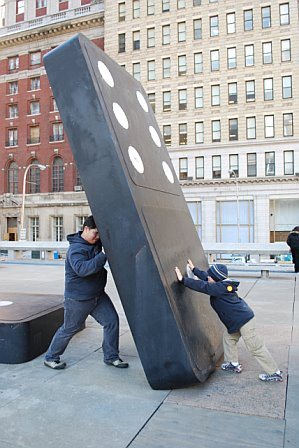 Dallas Plan Commission Public Hearings on Trinity East Gas Permits, including the "Rawlings Refinery"
Thursday, 1:00 pm
6th Floor Dallas City Hall, City Council Chambers
When the Dallas Plan Commission held its January 10th vote to "reconsider" the denial of gas permits to Trinity East, it didn't allow any public testimony at all about the dangers posed by these proposed drilling and production sites.
Tomorrow it will. And we need you to come and add your body and your voice to this fight.
When the Mayor and City Manager first cooked up this scheme to ram through the last three gas permits in Dallas, they didn't expect to have any roadblocks. They scheduled a meeting five days before Christmas and thought they had it locked up.
They were wrong. You showed up anyway and the Plan Commission voted to deny the permits based on your impassioned pleas for public health and safety.
When City Hall didn't like the results of that vote, and pulled the "reconsideration" stunt in January, 100 of you showed up on a work day to shame the CPC publicly in a meeting that received a huge amount of media coverage.
Now they're holding the second public hearing on these gas permits. We need a larger show of strength to demonstrate we're gaining momentum
We need you to personally come and tell the Plan Commission why it's a bad idea to allow drilling in floodplains and parks and build a refinery next to the city's largest soccer complex where thousands of kids will be playing every weekend.
We know it's getting tiresome, but when you show up at these meetings and hearings, you're helping us win this fight.
Slowly, but surely, your concerns and questions about these Trinity East permits are weighing them down and making it harder for them to get rammed through.
For example, because of your work, we're about to see a bi-partisan call for the Mayor to reject the refinery permit near the Elm Fork Soccer complex. That news will be announced at tomorrow's press conference starting at 1:00 pm.
There's also more in the works challenging the process the City is using to keep these "zombie" permits alive.
The tide is turning. But you have to keep showing up.
Nothing can take the place of a room full of angry citizens. Tomorrow, don't just watch history on TV or read about it the next day. Make history. Thanks.