Smog
City Hall Apparatchiks Rewrite History, Now Say 1500-Foot Setback Vote Never Happened
 Any doubt that Dallas City Hall is more interested in protecting the Trinity East gas leases than Dallas residents as it writes a new gas drilling ordinance was surely removed yesterday when City Attorney Tammy Palomino flatly lied and told City Plan Commission members that they had not decided on a 1500-foot setback, or buffer zone, between homes and other "protected uses," even though they had done precisely that at their June 20th meeting.
Employing the Orwellian language of a Soviet history writer, Palomino simply choose to ignore the results of a decision she didn't like and pretend the vote never happened. She argued that there was "no consensus" on the CPC for a 1500-foot setback – even though that very word was used to describe the results of June 20th meeting by CPC members themselves, as well as the media.
Instead, she handed out an official "summary" of CPC drilling recommendations to-date that not only only didn't include ANY mention of the 1500-foot setback decision, but instead listed a 1000-foot setback limit that had specifically been rejected by the Commission!
That missing footage is critical. 1000-foot setbacks, with a variance (or exception) up to 500-feet, were recommended by the city's gas drilling task force, but we now know those recommendations were tailored to fit the circumstances of the Trinity East lease sites along the Trinity River in northwest Dallas. That is, with a variance that could put wells 500 feet from homes, the Trinity East sites could be approved. With the CPC's 1500 foot-setback, there's only a variance to 1000 feet. That makes it impossible for Trinity East to set up shop where they want. And that's why Palomino deliberately, but unethically, left the 1500 setback out of her "summary."
The problem for Palomino in trying to pull this kind of disappearing act is that there were way too many witnesses to the original vote, including reporters. According to KERA's account "One of the first changes that grabbed consensus of the Plan Commission was an increase to the buffer zone or setback between gas wells and homes, businesses, schools, and recreational areas. Plan Commissioners want 1500 feet, not the 1,000 recommended by the task force." Channel 4 reported the same thing. There's also the fact that the city archives audio tapes of every CPC meeting, and citizens have have begun to videotape the meetings to catch this kind of bullying by staff.
What all of this will show is that on June 20th CPC member Paul Ridley took great pains to clarify that the CPC had indeed reached a consensus that they wanted a 1500 foot setback – considered the most protective setback currently used by any North Texas city. He even asked the question, "Do we have consensus on this?" and heads all nodded and not one verbal objection can be heard – other than from Tammy Palomino – who is stuttering that the city attorneys are going to have to make sure they can do this (no explanation of why Dallas can't). There's no question about what happened.
Which is why even the most cynical observers were shocked at the clumsy effort by Palomino to erase the decision from history by way of her "summary." It's like the City can't pass up an opportunity to create an ethical crisis whenever it deals with the Trinity East leases.
All the video and audio tape is being assembled into a nice neat package for the public and media. The case against Tammy Palomino will be devastating. As a result of her premeditated misrepresentations, Palomino should resign, or at the very least be re-assigned away from work on the new gas ordinance. She's representing Trinity East in these proceedings, not the citizens of Dallas.
Yesterday's episode was but the most extreme example of the kind of bullying and steamrolling that staff is employing against the CPC to end up with an ordinance that is Trinity East-friendly. As they have for the past three years or so, they're contorting the system to make it fit Trinity East's permits.
Besides the setbacks issue, staff really wants the CPC to OK gas drilling in parks, and a majority of CPC members today were willing to say out loud they supported that goal. That's right – after 7 months of crowds filling city hall to protest drilling in parks, Official Dallas is still moving toward approval of that idea. It's based on the idea of "unused" park land – a concept that has never been defined by the city or anyone else.
Trying to further this goal, staff actually came to Thursday's meeting with a US Parks Department definition of "active" and "passive" park land with the idea that Dallas could adopt something similar and allow drilling on the "passive" acreage. According to the list, "passive" park land is defined as land used for hiking, rock climbing, horseback riding, mountain biking, and camping, among others activities. Sounds pretty "active" doesn't it? Despite their propensity to allow park drilling it struck the CPC the same way and they firmly rejected staff's approach. Still, just like the 1500 foot setback issue, staff won't be satisfied until they get Trinity East what it wants.
Which brings us to a hard truth that the media and the public need to absorb. As bad and blatant as it is, Tammy Palomino's unethical behavior is only a symptom of a much larger rotten problem with this entire gas drilling ordinance process that has been present from before the task force was created right up until now. It's impossible for staff to both be advocates for the Trinity East leases in the writing of a new gas ordinance and give objective counsel to the CPC and Council on how to write the most protective ordinance. They cannot serve two masters.
Palomino and others have been told they need to find a way to make sure Trinity East gets what it wants in this new gas drilling ordinance. That makes city staff just another lobbying arm of Trinity East, not honest brokers trying to produce the best and most protective policy for Dallas residents. Every piece of advice they give is meant to further the leases, not the public good.
Because of this fact, an independent counsel needs to be brought in for the purpose of helping draft this new gas drilling ordinance. Policymakers need to have the best information, the most objective information, if they're going to make good policy. They're not getting it from city staff when it comes to drilling.
It's time to quit pretending this isn't a big problem. When city attorneys start trying to erase public policy decisions because they conflict with a private interest they're serving, the system is no longer working. It's corrupt and must be replaced before that corruption is allowed to spread.
Stay tuned. You're going to be hearing a lot more about this.
Scheduling Note: Although the CPC released a schedule for its work on the drilling ordinance only last week, including three public hearings, things may be changing quickly with additional workshop times and different dates and times for hearings. There was a lot of talk about schedule changes on Thursday, but nothing was decided. Right now the first opportunity for you to express outrage at this latest development is a public hearing slated for August 15th, 4 to 6 pm, at City Hall but stay tuned to make sure.
It’s Official: Trinity East Zombie Permits Coming Back; Dallas Gas Ordinance Rewrite Schedule Released – 1st Public Hearing August 15th
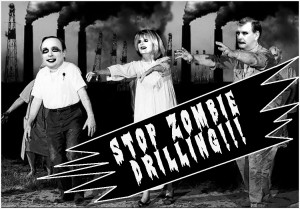 They just won't take a big fat public "No!",
 or two, or three, for an answer.
We've learned form sources inside City Hall that Trinity East – with a big assist from City of Dallas staff and Mayor Mike Rawlings – is preparing to once again attempt to permit its three proposed drilling and refinery/compressor station sites along the Trinity River.
While the company and city staff keep trying to win support for a weaker new gas drilling ordinance than citizens have repeatedly requested, a deal is being wheeled that would have Trinity East trading its lease on park land for another piece of city-owned property in northeast Dallas. Meanwhile, the City is also working feverishly to firm up support for its official position that it can't possibly turn down Trinity East without losing a lawsuit – an opinion no one outside of City Hall, save Trinity East, shares so far.
Yeah, the secret gas deal that the Observer uncovered in February got City Manger Mary Suhm to finally leave the building come December, but she's not going until she gets those Trinity East sites permitted the way she promised behind closed doors.
All of which makes the writing of a brand new Dallas gas drilling ordinance even more important now. And last week the City Plan Commission released its two-month schedule of how that's going to be done (see below), complete with three (daytime) public hearings with an ETA to the City Council by October.
There will be just six more meetings of the Plan Commission to review the almost two-year old Dallas Gas Drilling Task Force recommendations and decide to take them at face value, strengthen them, or weaken them. Scatted among these will be three public hearings – the first one in a little over two weeks on August 15th from 4 to 6 pm. The Commission goal is to get a new drilling ordinance to the City Council by October, when the terms of current members expire.
That's the official agenda. The unofficial one is trying to find ways to weaken the new ordinance enough to allow Trinity East to be able to get their proposed sites permitted. There's already been plenty of evidence at previous meetings indicating how desperate staff is in trying to give their departing boss a going-away gift.
We know most of you can't come to the Plan Commission workshops on Thursday mornings to follow the nitty-gritty of how this plays out. We'll be there reporting that to you, no problem. But what we can't do is manufacture warm bodies to put in seats for those three public hearings. Please make it a point to show up at one or more of these – and in particular, the very last one on September 26th as it rolls into the City Council.
Trinity East lobbyist Dallas Cothrum is on record as saying the company's three previously proposed sites on parkland, flood plains and near a new soccer complex that have now been rejected twice by this same CPC were the "best possible" places the company could have chosen for drilling and processing. So now the battle is over the less-than-best possible places. We can't wait to see what part of town the City and Trinity will decide to sacrifice for that designation as part of their possible land-swap deal.
Making sure a new drilling ordinance is the most protective it can possibly be is the only way left to finally drive a stake through the heart of the Trinity East gas permits. You have no idea how much we hate to ring the alarm about these damn permits again, but the stakes are very high and we're on the verge of winning one of the Barnett Shale's biggest citizen victories – if we can just keep the pedal to the metal. Bring your lead feet to the first hearing on August 15th.
Schedule for the City Plan Commission's Workshops and Public Hearings on the New Gas Drilling Ordinance
(All workshop meetings start at 9 am and take place on the 5th floor at 5ES in City Hall unless otherwise indicated. Specific Room locations for the Public Hearings at City Hall will be announced. Topic #’s refer to the Dallas Gas Drilling Task Force Recommendations Matrix.)
THURSDAY, JULY 25
9:00 am – 12 Noon CPC Workshop
• Topic 4 – Pad Site Operations
THURSDAY, AUGUST 8
9:00 am -12 Noon CPC Workshop
• Topic 9 – Gas Drilling/Well Permit
• Topic 14 – Bonding Requirements
• Topic 15 – Site Monitoring and Review of Permit Application
THURSDAY, AUGUST 15
1:30 pm – 3:30 pm Workshop
• Topic 13 – Required Plans
THURSDAY, AUGUST 15th PUBLIC HEARING: 4:00 – 6:00 pm
THURSDAY, AUGUST 22
9:00 am to 12 Noon CPC Workshop
• Topic 1 – Air Quality
• Topic 2 – Water
THURSDAY AUGUST 29
9:00 am – 10:45 am CPC Workshop
• Topic 3 – Physical Pad Site
• Topic 16 – Emergency Response
• Topic 5 – Abandonment and Restoration
THURSDAY, AUGUST 29th PUBLIC HEARING: 11:00 AM -12:00 NOON
THURSDAY, SEPTEMBER 12
9:00 – 12 Noon CPC Workshop
• Topic 10 – Seismic Permits
• Topics 6 – Pipelines and Compressors
THURSDAY, SEPTEMBER 26th PUBLIC HEARING 1:30 PM -?
(Agenda: What to recommend to City Council)
TCEQ: Eagle Ford Gas Pollution Making San Antonio Smog Worse
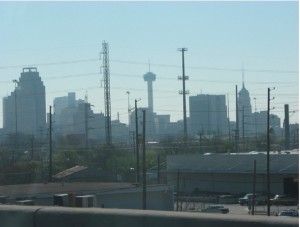 According to a new study from the Texas Commission on Environmental Quality and the Alamo Area Council of Governments, air pollution from the Eagle Ford gas play in South Texas will increase smog levels in San Antonio by 3 to 7 parts ber billion by 2018, the year the nation's metro areas are supposed to be in compliance with a new tougher federal standard.
Because San Antonio's air is already in violation of federal standards, a rise in ozone levels of even 1 ppb matters. San Antonio's ozone average is at 80 ppb and the federal standard is at 75 ppb.
Since it relied on TCEQ engineers and TCEQ computer models, one can safely assume this study is underestimating the problem of this pollution.
On the otheFrom the beginning of the fracking boom, it's been the contention of Rick Perry's TCEQ that gas industry pollution from the Barnett Shale has no significant effect on DFW smog. "All the wells are west of central DFW" goes the rationale, even as Dallas debates new drilling and refinery permits. A lot of us, including atmospheric scientists who study this sort of thing, beleive differently.
For two years in a row, air quality in DFW has gotten worse, not better, They've been more violations and they've moved further east. While 2013 has the potential to be the best year for smog in DFW this decade, it may have much more to do with the cooler, wetter weather than any large decreases in pollution inventories. However, given the impacts outlined
Study: 2 Million Air Pollution Deaths Annually Worldwide, 77,000 in US
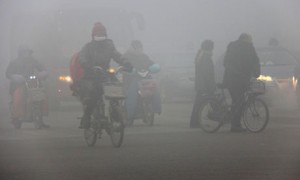 We're a bit behind the curve in reporting on this, but scientists at the University of North Carolina just published a study in "Environmetnal Research Letters" that estimates Particulate Matter and Ozone pollution in the air is responsible for approximately 2.2 million deaths worldwide every year.
Long-timers already know about how insidious Particulate Matter can be, but this only chronicles the hardcore fatal respiratory and cardiovascular impacts, concluding the tiny particles of soot cause at least 2.1 million deaths every year while ozone pollution shortens another 500,000 lives.
"East Asia," aka China, accounts for fully have of both those figures. India for another third. In North America, the casualties include 43,000 premature deaths from PM pollution and 33,000 from ozone.
Jason West, co-author of the study said: "Outdoor air pollution is an important problem and among the most important environmental risk factors for health."
Although alarming, these numbers are all underestimates of the health impacts of both of these pollutants, since they exclude anything other than fatalities. Besides making it harder to breathe, PM pollution has been linked to brain disorders and immune system disruptions.
Colorado: Oil and Gas Now the Main Source of Smog-Forming VOCs and Third Largest Source of Nitrogen Oxides
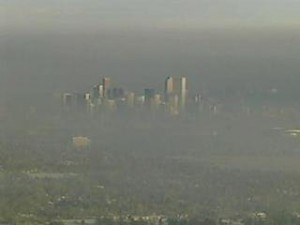 At least 600 tons of air pollution a day caused by the oil and gas industry in Colorado is causing a lot of consternation, especially in the Denver Metro area, which, like DFW, is currently out of compliance with the Clean Air Act for ozone, or smog.
Oil and gas emissions now are the main source of volatile organic compounds in Colorado and the third-largest source of nitrogen oxides, at a time when a nine-county area around metro Denver is already failing to meet federal clean-air standards, state data show.
New Studies Link Air Pollution to Cancer, Heart Failure and…Appendicitis?
 According to CBS News
"A new study published July 10 in The Lancet showed that even breathing low levels of air pollution for a prolonged period of time could raise risk for the often-deadly lung disease. Another study released on the same date showed that short-term exposure to most major air pollutants could increase the risks of hospitalization and death from heart failure."
Lung cancer risks went up 18% with each increase of 5 migrograms of PM 2.5. Researchers noted that they did not find a level of pollution for where there was no risk, and the results indicated "the more the worse, the less the better" when it came to pollution.
"At this stage, we might have to add air pollution, even at current concentrations, to the list of causes of lung cancer and recognize that air pollution has large effects on public health," Takashi Yorifuji from the Okayama University Graduate School of Environmental and Life Science and Saori Kashima from Hiroshima University in Japan…."
A second study shows the risk of dying or going to the hospital because of heart failure increased by 3.52 percent for every 1 part per million increase of carbon monoxide levels; 2.36 percent for every increase of 10 parts per billion of sulfur dioxide; 1.7 percent for ever 10 parts per billion increase in nitrogen dioxide; and about 2 percent for every 10 micrograms per cubic meter increase of particulate matter. Surprisingly, increases in ozone were not linked to heart failure. Unsurprisingly, you're breahting in all of these kinds of air pollution if you live in DFW.
All of that is kind of old news – put stuff in air, see stuff harm your lungs and heart. But here's a new "adverse health effect" being linked to air pollution – appendicitis. While not as lethal as lung cancers and heart attacks, anyone who's had their appendix rupture can tell you it's not a pleasant experience.
And while ozone may not have been linked to heart problems in that previous study, the New York Times reports a Canadian one links it to a slight increase in your chances of having appendicitis.
High ozone levels were associated with an increased number of hospitalizations for appendicitis and were even more strongly associated with cases of burst appendix. For each 16 parts per billion increase in ozone concentration the scientists found an 11 to 22 percent increase in ruptured appendix cases. The study was published in Environmental Health Perspectives. The associations persisted after controlling for age, sex, season of the year and the presence of other air pollutants, like nitrogen dioxide and particulate matter. The reason for the association is unclear, but studies in mice have shown that air pollution can alter the animals’ abdominal bacteria.
Who knew?
Take Another Hit – It Was the Best June for DFW Breathing Since 2007
 If this unseasonable cooler weather is making it seem like you're spending summer someplace other than DFW, it's also been the best "ozone season" in the region in seven years.
In the month that just ended, we only had four monitors on four days that violated the new 75 parts per billion smog standard that takes effect in 2018, and zero violations of the obsolete 1997 85 ppb standard. The maximum 8-hour reading was an 83 at the Denton Airport on June 3rd. Contrast that with last June: 54 violations of the 75 ppb standard and 27 violations of the 85 ppb standard over 9 days. Or 2011 – 24 violations of the 75 ppb standard, 7 violations of the 85 standard.
In fact, you have to go back all the way to 2007 when we had five violations of the 75 ppb standard but no "exceedences" of the 85 ppb, to find as good a June for air quality as we just had. And there are only a couple of other Junes – in 2010 and 2000 that even come close to being as full of safe and legal air. That's the good news.
The bad news is that these years were all followed by worsening air quality trends, that is, they turned out to be aberrations. So if this pattern holds, we'll have to wait until next summer to put it in context. As always, weather has a lot to do with how bad or good our ozone season is. The cooler and wetter, the better. The dryer and hotter, the worse. Just as this summer's cooler temps seem like they're out of place, by next June we could be thinking the same thing about our reprieve from smog.
The good news is that there's no questions that declining emissions in almost every category (we're looking at you oil and gas) have had a positive impact on the numbers. That's your doing. After 20 years of citizen effort, there's a lot less pollution from the cement plant complex in Midlothian, the coal plant belt in East Texas, and the millions of vehicles on and off the road.
For the EPA and the state, 2013 comes a year too late to help them recover from a terrible 2011 "clean air plan" that was supposed to get us down below 85 ppb by watching people purchase new cars. The clock officially ran out on that plan June 15th. Sales of new vehicles are dramatically up, so there's real displacement as old gas guzzlers get traded in for more efficient models. Whether those trade-ins are enough to cancel out the still-exploding growth rate of the area and rising gas and oil activity remains to be seen. That's why the EPA uses a three-year rolling average to determine transgressions against the Clean Air Act, to minimize the impact of anomalies.
You're just going to have to stay tuned to find out whether the summer of 2013 is the exception to the rule, or the re-writing of the rules.
Behind Last Week’s Ash Grove Headlines: “The Rest of the (20 year) Story”
 There was a great deal of official news fluttering last Thursday when the EPA and Department of Justice announced a national settlement with Kansas-City based Ash Grove Cement that confirmed the company's Midlothian plant, site of The Last Wet Kilns in Texas™, would shut down and covert to one large dry process kiln by September of next year. Both dailies reported like it was 1999, with front page headlines and lots of column inches (ask your parents).
But the newsworthy part of last week's developments was not that Ash Grove was converting its wet kilns to a dry kiln. In February of last year, Downwinders at Risk reported that the company was seeking a permit from the Texas Commission on Environmental Quality to do just that. The Star-Telegram, bless their hearts, even wrote a story about it. Ash Grove's planned conversion was so widely-known that it was the subject of Midlothian Rotary Club meeting speeches this last Spring. So, you know, not news.
It wasn't news because those new national EPA air pollution rules for cement plants that we all drove out to DFW Airport in 2009 to testify in favor of and then to Arlington last year to defend, were expected to put the final nail in the coffin of Ash Grove's wet kilns by the time they took effect in September 2013. TCEQ granted the company a lame one-year extension to the 2013 deadline, but by September 2014, it was pretty clear that Ash Grove's Midlothian wet kilns would have to be converted or replaced to meet those new EPA standards coming down the pike. That's why last year's permit application for the conversion wasn't a surprise, but a confirmation.
And then the Obama Administration decided to stop the standards from coming down the pike. Just as those rules and that 2013 deadline was about to be signed into law, the President changed his mind and put them on hold. His EPA weakened the air pollution standards as proposed and delayed the deadline until 2015 or later – against overwhelming public opposition. All of a sudden, that 2014 deadline for an Ash Grove conversion looked to be in trouble. Would The Last Wet kilns in Texas™ just keep chugging along?
But what do you know? As part of that national settlement announced last Thursday, Ash Grove committed to the government to make the conversion and run the new dry kiln starting in….September 2014, or the original date of dry kiln conversion before the Obama u-turn on the new rules. What a coincidence!
So what was REALLY newsworthy about last week's announcement was that the national EPA managed not to screw-up a very good thing that its now-abandoned tougher rules were already putting in motion on the ground in Midlothian. Lucky us, huh?
The luck had some help from Downwinders. We knew the EPA was looking at Ash Grove for the kind of national enforcement settlement it had cut with LaFarge and other cement companies as part of its multi-year spotlight on the industry. We knew that the former Regional Counsel for the EPA office in Dallas, Larry Starfield, who spent decades dealing with all three Midlothian cement plants, was now in DC as EPA Deputy Enforcement Director, and probably in line to sign-off on any agreement. And we knew the original 2014 deadline for Ash Grove's conversion was in trouble with the Administration's reversal on the new air pollution standards.
We made inquiries, We made pitches. If Ash Grove were the subject of such a national enforcement effort, would it be possible for EPA to please consider requiring Ash Grove's Midlothian plant to firmly commit to its 2014 conversion deadline as part of any settlement? Turns out, it was possible.
How likely would it have been without our intervention? Best not to ask. But if you think, as we do, that our showing-up and making the case made a difference in securing progress that was in danger of being further delayed, here's the tip jar.
So yea for our side, although the victory seems a little less satisfying than what it should be when you know it's simply maintaining the status quo. Still, it's better than another couple of years of pollution from the area's dirtiest smokestacks.
$2.5 million in fines plays well in headlines until you realize how small it is compared to company's annual profits (almost $900 million n 2010). Beside the fines, nine Ash Grove plants will have to better control their smog-causing Nitrogen Oxide, Particulate Matter and Sulfur Dioxide pollution better, including the installation of Selective Non-Catalytic Reduction, or SNCR technology. The Midlothian plant was already scheduled to have this included in its conversion in order to meet those now-abandoned new air pollution standards. There's also a strong possibility that Ash Grove's other wet kilns will follow Midlothian's lead and also be converted to dry kiln technology.
Unfortunately, EPA didn't require any new testing of Selective Catalytic Reduction Technology, as it had in previously announced cement company settlements. SCR is twice as effective at cutting cement plant pollution as SNCR and has been used on kilns in Europe for over a decade. It's state of the art. But it's still not required in the US, although the results from two EPA-mandated pilot tests on kilns in the Midwest are due this year. One good thing about Ash Grove's conversion is that the plants can no longer use their continued operation of obsolete wet kilns as an excuse not to install modern equipment like SCR as it has in the past – although we know they'll find a new excuse now.
Here's the consent decree if you want to read all the details of the settlement. And here's the original complaint, which chronicles the alleged misdeeds of the company, plant by plant, including the sins of the Midlothian facility. A lot of the legal case depends on parts of the Clean Air Act that says any "major modification" to a plant must not increase pollution. Ash Grove ignored this law. Repeatedly. Over the last 20 years. According to the complaint, the violations in Midlothian originally occurred in 1995. That's right, it's taken almost 20 years for EPA to enforce a basic Clean Air Act violation.
"Kilns 1, 2, and 3 at Ash Grove's facility in Midlothian, Texas: 1) in or around 1995, Ash Grove performed a project to re-route ductwork that transports hot air from Midlothian Kiln 1 to the coal mill and performed a project to enable Kiln 1 to burn waste whole tires as a fuel source; 2) in or around 1995, Ash Grove performed a project to re-route ductwork that transports hot air from Midlothian Kiln 2 to the coal mill and performed a project to enable Kiln 2 to burn waste whole tires as a fuel source; and 3) in or around 1995, Ash Grove performed a project to re-route ductwork that transports hot air from Midlothian Kiln 3 to the coal mill and performed a project to enable Kiln 3 to burn waste whole tires as a fuel source."
Downwinders has always argued that tire-burning increases emissions, not decreases them as the industry maintains. We were saying this in 1995 as these illegal changes were taking place and Ash Grove officials were saying what a great air pollution control strategy it was to burn whole tires.
The implications of these kind of very common violations hang heavy over the current industry transition to new and more exotic industrial wastes being burned in kilns, some of which make tires look like Grade-A fuel oil. Plastics, shingles, car parts. All of the Midlothian cement plant are now burning things that they shouldn't be with no more assurance they aren't breaking the law than there was in 1995 when they were changing fuels then. But don't worry, EPA's on the case and you can expect any such violations to be prosecuted in….2033.
Notice Something Missing So Far This Summer? Smog Alerts.
 Along with cooler weather in general and a little more rain this Spring has come some relief from really dirty air in DFW.
Last year at this time, we'd already had 6 "exceedences" of the old 1997 85 parts per billion ozone standard in May, and countless exceedences of the tougher new 75 ppb standard that is supposed to be attained by 2018. As of today, we haven't had one even one monitor reading above 85 ppb and only a handful in the 75 to 85 ppb range.
For the last two years in a row, DFW has seen a decrease in air quality, and an increase in smog. Could 2013 be the year that trend is halted?
Weather takes a lot, or even most of the credit. Cooler temperatures and more moisture are not conducive to ozone creation. But unlike during the recession, new car sales seem to be taking off the way the Rick Perry-approved engineers at the Texas Commission on Environmental Quality wanted them to two to three years ago. It's possible that the replacement of older dirtier vehicles with newer, cleaner ones by the thousands has finally made a difference you can't see. There's also the impact of cleaner operations at the Midlothian cement plants thanks to citizen victories over the last decade, (although the kilns are rapidly turning back into garbage burners), fewer coal burning plants downwind, and other improvements up and down the southeast to northwest axis that carries our predominant winds from Houston to here.
On the other hand, last June was pretty quiet until the 24th, and then all hell broke loose, with ozone levels into the triple digits. 2012 turned out to be a very bad year for safe and legal air.
And there's the unknowns that nobody's really examining closely – at least not in public. How much ozone pollution is being caused by the natural gas infrastructure in the Barnett Shale that's been built over the last decade and gets bigger every week? How much is the gas industry polluting upwind of us in places like Freestone County between here and Houston? Does the continuing boomtown growth in DFW population cancel out the improvement in individual vehicle emissions?
From a regulatory point of view, no matter how good or bad this summer is, we don't get credit for it either way. Another bad year wouldn't be held against us. Likewise, no violations this entire year wouldn't buy us any more goodwill from EPA. We're in a limbo period, where everyone is just waiting around for the average readings from 2015 -2018 to accumulate and tell us what category of compliance with the new 75 ppb standard we're in. While it would certainly help the cause if the region had some forward momentum in lowering the levels of smog going into 2015, officially, it makes no difference at all – unless you're breathing air. Then, according to EPA's own scientists, anything above 65-70 ppb is damaging to human health.
Theoretically, the TCEQ is supposed to be putting together yet another "DFW clean air plan" to reach that 75ppb standard, to be implemented sometime between now and 2015. The last time it tried to reach such a regulatory goal – the 85 ppb standard – it ended up with a plan that worsened air quality here by starting way too late and basically doing nothing but watching as new cars were going to clean up the air in the middle of a recession. (By the way, the "official" regulatory date of that failure is coming up next week even though the failure was certain last summer. Stay tuned to see if TCEQ acknowledges it in any way).
It's the summer of 2013. Any big changes that need to be in a summer of 2015 clean air plan should be being discussed and set in motion now, especially if they need 2015 state legislative approval, or lead times for industry to adapt. However, state or regional officials have yet to call a meeting of the local advisory group that's supposed to be monitoring the development of that plan. No date is set for such a meeting.
We can hope that a confluence of circumstances is making it possible to have cleaner air in DFW, but as long as Rick Perry is Governor, it's unlikely such an important public health goal will override political agendas.
No It Isn’t.
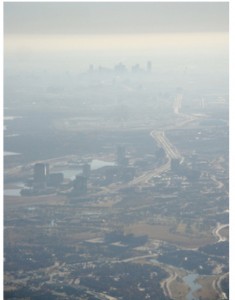 It's unfortunate the Dallas Morning News chose to drink the Kool-Aid and say, that despite DFW once again getting an "F" from the American Lung Association for its smog levels, it "isn't as bad as it looks" because the air is "getting cleaner" than it was in…1999.
And 20 years ago too probably, but what about compared to, say, 2010? In that more relevant comparison, the answer would be no, the air is not cleaner, it's in fact dirtier. The average concentration of smog has inched up over the past two years and the number of monitors in violation of the old 85 parts per billion ozone standard has increased from 2 to 7 in 2011 and 6 last year. That's not progress.
The DMN story also doesn't mention that the state has tried and failed twice with its "clean air plans" to reach the obsolete 1997 standard, and it forget to say we face a 2018 deadline to meet the new 75 ppb standard. But don't worry because the air is cleaner than it was in…1999! Even if it's still not safe or legal.