Air Quality
Dallas Drilling Scandal Gets Its Very Own SLAPP Suit Threat
 Let's see, so far the Great Dallas Drilling Scandal™ includes illegal drilling sites, a secret agreement, secret wells….in Irving, citizen protests, allegations of Open Meetings violations, likely Open Records violations, a surprise refinery, comparisons to Christ, and at least one grassroots city council candidacy. Missing until now was it's very own SLAPP suit (Strategic Lawsuit Aimed at Public Participation).
Check.
Monday saw the announcement that lawyers for the company behind the three controversial Dallas gas permits had sent a nasty letter to one Zac Trahan of the Texas Environmental Campaign telling him to cease and desist in handing out flyers telling people that a casing failure at one of the company's wells in Irving could have harmed groundwater. Since it happened deep underground and there has been no public disclosure of post-failure testing, it's impossible to say whether it caused harm to groundwater or not. But that didn't keep Trinity East from wanting full exoneration. According to a letter from the law firm representing Trinity East,
"That statement is absolutely false. Trinity East's prior well did not contaminate any underground water aquifers. In fact, any casing failure on that well could not have caused or produced aquifer contamination because surface casing was set and cemented at required depths (per Texas Commission on Environmental Quality rules) to protect all fresh water aquifers. TCE's actions are unlawful, and constitute, at a minimum, defamation under Texas law. There is no question that TCE fabricated this fiction and then disseminated it with the specific intent of interfering with Trinity East's rights under its lease with the City of Dallas."
That would be the previously undisclosed lease(s) with the City of Dallas over at the University of Dallas, in Irving (it's complicated) that have only recently come to light after citizen investigation and published reports in the Dallas Observer and Morning News.
The flyers in question were from Dallas Residents at Risk and only claimed that the casing failure may have contaminated groundwater. There's no way that Trinity East's lawyers could prove there was no contamination. We'll probably never know for sure. But the primary point of the letter is not to dispute the statement. It's to scare Zac, TCE and Dallas Residents at Risk into not saying stuff like this again, or they'll sue. Or at least talk a lot like they're going to sue. They'll really mean it. Sort of. Honest.
The tip-off about what this letter is really about is that it didn't come from the law firm representing Trinity East in the permitting process but from a firm (Kelly Hart and Hallman) that apparently makes targeting environmental groups a specialty. Only a short while ago, it actually sued TCE over a landfill expansion dispute. In this case however, Trinity East probably dreads actually taking Zac and Co. to court because then all documents about the (previously undisclosed) well could be reviewed by TCE and the public.
Although it's a sideshow to the on-going scandal over approving permits to do things that aren't legal, Trinity East's letter shows citizens hit a nerve by pulling back the curtain on the company's current operations. Representatives of Trinity East never fail to mention how many wells the company has drilled in the Barnett Shale, but as far as we can tell, nobody at Dallas City Hall has ever researched the company's environmental and safety track record. Once again, it was citizens performing the minimum due diligence that first came across the information on the existence of the Irving wells themselves, much less the casing failure.
Oh that. On February 7, 2013 Trinity East Energy's Tom Blanton told the City Plan Commission that "Trinity East Energy has never had a casing failure." Was he forgetting about the Irving well? Was he fudging a bit because it was done by the "Expro Energy" part of Trinity East? Or was he just not telling the truth? No matter, Dallas City Hall took the claim at face value and never checked. Why not? Maybe because they knew that doing so would reveal a long-standing prior relationship between the City and Trinity that included a well with a casing failure. Wow. That would be embarrassing.
Science Outpacing EPA Lead Contamination Standards
 People who don't know any better expect agencies that are charged with removing environmental threats to public health to be on top of the best and most recent science. However, because of the glacial pace of government environmental oversight, that's hardly ever true. It takes years, and sometimes decades for "safe standards" to be updated or created. When they are, they're sometimes instantly obsolete because a new generation of studies has shown harm at even lower levels of exposure. This is why impacted citizens have to have a DIY philosophy to seek out the most recent science themselves – you can't depend on government to have already incorporated it or be using it as a guide.
A particularly depressing example is the way the US EPA is dealing with lead contamination and its soil and dust standards. The last time these were updated, Bill Clinton was President. There's been a lot of science produced on lead poisoning since then and all of it points to lower and lower levels of exposure causing harm. In fact, there's a consensus among researchers that there is NO safe level of exposure to lead. It's not that every exposure will harm you, it's that every exposure is capable of doing harm – especially to children.
There's also overwhelming public policy consensus that exposures to lead should be minimized as much as possible. Reducing exposure to lead is now linked, not just to better physical health, i.e. less cancer, liver disease, etc., but to higher IQs and test scores in schools, less anti-social behavior, and even less crime. In California, the lead standard for soil has been reduced to 80 parts per million, compared to the circa-2000 EPA standard still in place of 400 ppm.
Acting in recognition of these facts, for the first time in over 20 years the federal Centers for Disease Control revised its lead-in-blood standard for children in 2012, cutting in half the amount it said should trigger a response from parent and doctor. As a consequence, the EPA's own Children's Health Protection Advisory Committee sent a letter to then-Administrator Lisa Jackson calling for the agency's "immediate and urgent attention" to revise the nation's lead dust and soil standards because they had been based on the previous, now-obsolete CDC standard.
But in the latest installment of her year long award-winning series of articles on the topic, USA TODAY's Allison Young quotes EPA officials as saying they have no current plans to update those standards to reflect the new CDC lead in blood action level. This, despite studying the issue since 2009. What difference does it make?
In places like Frisco, Texas that experienced decades of lead contamination from a poorly and often illegally-operated lead smelter, it means the EPA will allow what it knows to be dangerous levels of lead to remain in soil and dust that otherwise would have to be cleaned-up.
This is Exhibit A why citizens cannot leave environmental protection to government agencies alone. This is why Frisco residents, organized by Frisco Unleaded, are trying to intervene directly in the closure and clean-up of the Exide lead smelter. If you leave it up to the state or EPA, you won't have the best science, or the most protective clean-up. You will have settled for whatever government standard was in place at the time, no matter how outdated or unsafe. If you're a parent in Frisco, that shouldn't be YOUR standard.
New Report Says Burning Coal in Europe Costs Billions in Health Care
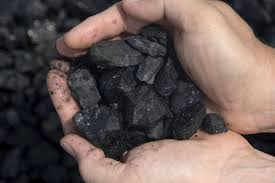 Many of you are aware that former EPA Regional Administrator Al Armendariz is now heading-up a Sierra Club effort to close the remaining old coal plants in East and Central Texas that have plagued downwind communities, including DFW, for decades. One big reason is the direct connection between the kinds of pollution these plants release, like Particulate Matter, and their known health effects. Based on past studies, scientists are able to determine what levels of air pollution cause what level of medical responses.
Last week, something called the Health and Environmental Alliance released a report that used that methodology to add up what it said was all the early deaths, hospitalizations, medications and reduced productivity caused by breathing coal plant pollution in Europe and came up with a total of $55 billion a year. It's the first-ever calculation of the effects of coal-fired power generation on chronic lung disease and some heart conditions for the entire continent.
Significantly, it has found that the effects of the pollution which coal incineration causes are not confined to people living close to power stations, but can affect entire populations in varying degrees.
Burning coal to generate electricity worsens a group of conditions known as chronic obstructive pulmonary diseases, the report said. These include emphysema, breathing obstructions and bronchitis. It also aggravates asthma and worsens heart disease.
HEAL says the elderly and the young are at particular risk, with lung damage sustained in childhood reducing the chances of achieving maximum lung function in adult life.
We haven't seen any similar studies of the costs of breathing coal plant pollution in Texas or DFW, but they could be large since we're directly downwind of the state's "lignite belt" where almost all the older, dirtier coal plants are located.
Scientists: Classify Plastic As Hazardous Waste
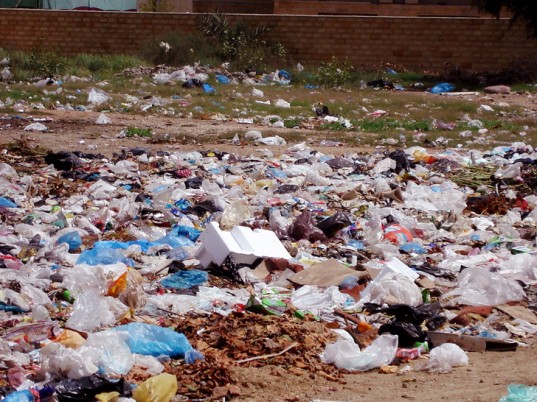 We missed this the first time around, so we're glad that "Living on Earth" caught it again. A group of scientists, including marine biologist Chelsea Rochman, recently signed an article in the magazine Nature that called for classifying plastic as a hazardous waste.
What's the rationale? It turns out to be pretty solid and based on current regulations. As Rochman described it,
Waste is basically separated into two categories, those that are non-hazardous like grass clippings, and those that are considered a hazard, which are often based upon this long list of priority pollutants, or substances that the government deems are hazardous to organisms. And we found that plastics are associated with 78 percent of these priority pollutants listed by the US EPA and 61 percent listed by the European Union, either as a chemical ingredient of the plastic itself or when the plastic ends up in the aquatic environment; they absorb these contaminants from the water. And so from that perspective we thought maybe plastic as a waste product should also be considered as a hazardous substance.
Rochman cites styrene in Styrofoam as an example of a well-known pollutant that's incorproated into plastic. Another is vinyl chloride that's used to make PVC.
Plastics' threat to marine life has been well-documented, but it's also a threat to those living downwind of places that burn plastic wastes – like an increasing number of cement plants, including TXI's huge Midlothian Kiln #5. Besides being assaulted by the leftovers of the ingredients in the original plastic, downwind neighbors are also subjected to entirely new pollutants that are made ONLY when plastics are burned. The most notorious of these is Dioxin, one of the most potent poisons ever tested. Dioxin is what made Agent Orange so toxic to Vietnamese and veterans alike. It's why Times Beach Missouri is a Superfund Site. And it's what's released every time plastics are burned.
Incineration of plastics is dramatically increasing despite producing this kind of pollution. Classifying this waste as "hazardous" might be the only way to limit their use as "fuel" in cement kilns that weren't built to be garbage incinerators.
Take a Tour of Dallas Gas Sites and Decide for Yourself if They’re Wasteland
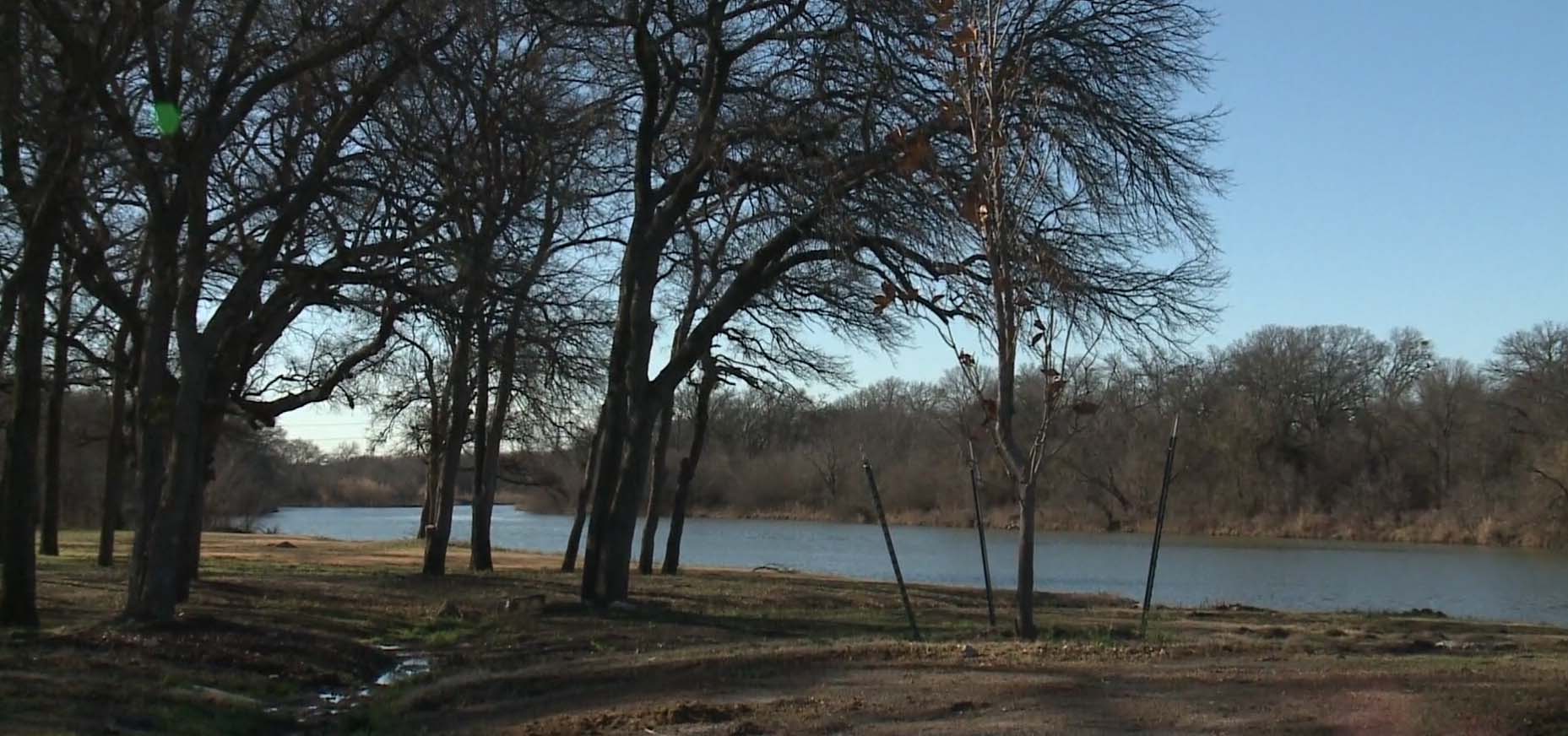
(Dallas)—-A local clean air group released a short film of an official Dallas City Plan Commission tour of controversial gas drilling and production sites that it says rebuts the claims made by City Council members during last Wednesday's City Manager’s briefing on parkland drilling that the land is "desolate" and a "wasteland.”
Downwinders at Risk posted "Dallas Fracking Mystery Tour” early Tuesday morning for public viewing on its own website. It's a fast-paced four minute journal of a January 31st City Plan Dallas City Plan Commission bus tour of all three proposed Trinity East gas permit sites in Dallas: The Gun Club and the LB Houston/Luna Vista Golf Course drilling sites, both on city parkland, as well as the Luna Vista Processing Plant site, aka, "The Rawlings Refinery and Compressor Station," located only a short distance away from the City of Dallas' new Elm Fork Athletic Complex.
The group hired a local professional filmmaker to accompany the 15 Plan Commissioners, various city staff and members of the public on the half-day outing from the time they boarded two buses at City Hall to the last site visit, including question and answer sessions between Commissioners and David Cossum, the City of Dallas Assistant Director of Sustainable Development and Construction. The result is a quick take on each of the sites through the eyes of the tour participants.
“Contrary to claims by Council members who’ve never visited the sites they want to condemn, the Trinity River bottoms are not “wasteland,” said Jim Schermbeck, Director of Downwinders. “Even a quick look like this tour offered shows its never going to be mistaken for a Midland-Odessa oil patch.”
During last Wednesday’s briefing, Council member Sheffie Kadane compared the park land sites at the Gun Club and the Golf Course to West Texas oilfields, Council member Jerry Allen called them a “wasteland,” and Council member Dwaine Caraway said they didn’t represent “quality park land.” But looking at it the sites from the perspective of the Plan Commission tour, one sees expanses of hardwood forests, sculpted fairways, and a peacefully flowing Trinity River close-by.
Besides offering a striking visual counterpoint, the tour’s on-site Q&As between Plan Commission and City staff reveal other mistakes in drilling proponents’ claims about the sites. For example, Kadane has insisted there would never be drilling equipment in the actual flood plain, but as Cossum explains to an inquiring Commissioner, there will be.
Another Q&A at the refinery and compressor station site reveals City staff’s contradictory stances on sources of pollution surrounding the Elm Fork Athletic Complex – a new recreation facility expected to attract hundreds or thousands of children and their families on weekends.
The city is opposing a new permit from a near-by rock crushing facility permit because of concerns about its 17 tons of annual air pollution so close to the Complex, but supporting the construction of a gas refinery and compressor station that will admittedly release at least 75 tons a year of air pollution only 50 feet further away.
Using the Beatles’ “Magical Mystery Tour” as a recurring soundtrack, the short film uses no voice over narration, relying only on the comments of tour participants and text. It repeatedly asks why the city would contradict its own current policy, answering that “It was a Mystery” at the time of the tour.
However in a postscript, it adds the February 7th Dallas Observer publication of the 2008 “secret agreement” between Dallas City Manager and Trinity East to exchange funds for leases on city land for city staff help in approving drilling and production permits. “Suddenly, it wasn’t a mystery anymore.”
Schermbeck says his group hopes the film will put “a face on the sites” they haven’t had before, and offer a short, entertaining way to get educated about the controversy. “There’s been a lot of misinformation about these sites perpetrated by people who’ve never visited them. People can now see them the way the Plan Commission did and decide for themselves.“
Former Exide Smelter Employee: It WAS as Crappy As You Thought
 Although the Great Dallas Drilling Scandal has kept our heads spinning lately, we did mange to take note of a rather big story in a small paper that should get a lot more coverage.
On February 21st, the Frisco Enterprise-Plano Star community newspaper published an article about the Exide lead smelter in Frisco using an unnamed ex-Exide employee as the sole source. The sole source's anonymity probably kept major outlets from offering the same coverage, but in this case the specifics are so compelling that we're glad the suburban chain took the chance.
Although he never gives his name, the Star says the employee "served in a managerial position at the plant." From the workday scenarios he describes he appears to have been directly involved in Exide's production line. Taken together, all of the accounts he gives the paper would seem to confirm residents' impression that the circa- mid 1960's Frisco facility was a mobile home park with a lead smelter in the middle of it.
"I guess we were probably producing $200,000 worth of product every shift — $600,000 worth of product every day," he said. "Yet [one time] we had six people working on [maintenance when the plant lost power]. We had one flashlight and one set of tools. What I needed was six flashlights and six sets of tools, but they wouldn't even give me that."
If Exide wouldn't open up the corporate wallet for flashlights, no wonder the company balked for so long about adding multi-million pollution controls to reduce lead emissions to legal levels.
And, according to the Star's source, those lead (and cadmium and arsenic) emissions could be many times what's been officially estimated by government agencies, or even citizens' own air modeling results published last year.
Power being knocked out was a particular issue, the source said, as vapors resulting from the lead-acid recycling system were no longer captured. Those vapors include lead particles, and long periods of lead exposure result in chronic lead poisoning, which in turn can result in physical defects such as kidney damage.
The former employee doesn't say how often this kind of outage occurred, but he makes it clear it wasn't infrequent. It wouldn't take too many such incidents to significantly raise the exposure level of those residents living downwind. Of course, when the state and EPA are calculating what constitutes "safe" levels of exposure to a facility's pollution, they never take into account these kind of "upsets" or accidents that can balloon the chances of inhaling harmful poisons.
Among the other allegations made by the ex-employee:
Only 1/5 of the violations Exide received "for a lack of federal compliance or unsafe working conditions" were forwarded to the Texas Commission on Environmental Quality.
Incident reports submitted to the state about violations represented "a great difference in the truth" between what was being claimed by Exide, and what really happened.
These incidents were as frequent as every other week.
Prior to the announced visits of TCEQ or EPA inspectors, "employees were paid overtime to clean the plant extensively. The same initiative was made before visits by non-plant employees, such as trips by corporate managers. Outside of those events, however, the plant was rarely cleaned."
Carbon dioxide monitors were constantly beeping, indicating dangerous CO2 levels. "The environment of operations was poisoning us."
Ah, but all of that is in the past, right? Not with Exide planning to leave over 9 million pounds of lead smelter waste behind on 90 acres in the middle of central Frisco, with another hundred acres or so outside of that donut hole" being purchased by the city for rehabilitation.
When asked if he would feel comfortable visiting the land Frisco purchased from Exide when it's remediated to federally compliant levels, the former employee said he wouldn't.
"With the way it's going right now, I'll never take my children or my dog to that area," he said. "I studied petroleum engineering and geology in college, and I know the bad stuff sinks to the bottom. I will never [go there]. It'll be nice to have it gone, but I don't know how you patch that up. You have to pull up everything, wrap it up and get it gone."
Official reaction was predictable:
"An Exide Technologies spokeswoman said the company "does not comment on unsubstantiated hearsay"…"A TCEQ spokeswoman said she could not comment on whether or not an employee signing an incident report with false information would be illegal without being told what reports are in question."
It'd be better if former employees like this came completely forward and were willing to cooperate with the EPA in exchange for immunity, but we're grateful for the peak inside Exide. It confirms not only what we already suspected about the way this company and this plant did business, it also once again confirms the way all bad acting polluters behave when it comes to hiding their real identity from the public and regulators.
Big Day in Big D Drilling Fight: DMN Comes Out Swinging, and Claudia Meyer Will Take On Vonciel Hill for Council Seat
 It's hard to put Wednesday's Dallas City Council meeting into words. The level of aggressive ignorance reached heretofore unknown oxygen-gasping altitudes, as a City Manager who intentionally deceived the Council and public for at least five years was compared to Jesus, and meddlesome residents were castigated for being impediments to the real job at hand – draining city "wasteland" of its gas resources.
Save for a Perry Mason-worthy cross-examination of City Manager Mary Suhm by Council member Angela Hunt with back-up by Scott Griggs and Sandy Greyson, citizens looking for some accountability for the lack of disclosure over a side deal with industry, or how parkland that was never slated for drilling suddenly landed on a list of drill sites, were left very disappointed.
But professional journalists are paid to write about such things no matter how hard it is to capture the depth of obliviousness, shallowness, and empty-headedness. And If you haven't already, you need to read two published accounts that will send you reeling. One is Jim Schutze's take in the Dallas Observer. The other is today's surprisingly strong Dallas Morning News editorial. We urge you to leave an online comment in support of this editorial, as it's one of the most remarkable the News has ever published. That in itself should indicate how bad Wednesday was – even the Morning News, defender of the Dallas Establishment, was appalled.
As Schutze points out, the most over-the-top and vicious diatribe belonged to current Council member Vonciel Hill, who wrapped herself in self-righteous religious language in condemning fellow council member Angela Hunt and praising the City Manager. From her skewed point of view, it was Mary Suhm who had been outrageously wronged, and Hunt who was at fault for even questioning the integrity of a person who would engage in obviously unimportant things like secret agreements with industry, and misleading statements.
That's why we're very encouraged to hear the news this morning that longtime neighborhood advocate and clean air supporter Claudia Meyer is filing to run against Vonciel Hill in the newly-created District 3 that covers southwest Dallas. Claudia is a former Assisted Living facility director and medical social worker who's lived with her husband in the same Mountain Creek home for over 30 years. She’s been a well-known neighborhood advocate as a board member of both the Fox Hollow Homeowners Association and Mountain Creek Neighborhood Alliance. She also has a long history of volunteer public service on behalf of the community including membership on the boards of the Friends of Mountain Creek Library, Friends of Fox Hollow Park, and the Dallas Municipal Library Board.
But most people reading this will instantly recognize her as the motherly-figure that has guided Dallas neighborhood resistance to irresponsible gas drilling for the last four years. She and her husband Ed have been a fixture at every official meeting where gas permits have been discussed since 2009. They also happen to be longtime Downwinders, having come on board during the 1990's TXI hazardous waste burning fight.
 Given the tone of the Dallas City Council on Wednesday, symbolized by Vonciel Hill's speechifying, electing Claudia Meyer may be that the most important thing any Dallas area person who calls him or herself an environmentalist can do for the local biosphere between now and June. Why? Defeat of Hill would strike at the heart of the drilling-at-all-costs faction of the Council, and just might provide a one-vote margin for denying all three Trinity East gas permits, including the refinery/compressor station that will become Dallas' 10th largest air polluter in Dallas the moment it comes online. Moreover, along with Scott Griggs and Sandy Greyson, Claudia could be a strong voice for a greener, more citizen-friendly Dallas in general. That's why the North Dallas-based Citizens Council will probably be spending a lot of money trying to re-elect Hill.
We'll continue to try and help you educate yourselves about candidate choices, so that you'll when you step into the booth and pull the lever, you'll know who best answers the question: "In your opinion, If Jesus was the City Manager of Dallas, would he make secret deals with gas companies and be hankering to drill on park land?"
Finally, today folks begin arriving for the national fracking conference taking place on Saturday and Sunday at the Best Western Plus Dallas Hotel & Conference Center at 8051 Lyndon B Johnson Freeway just east of Coit (map). The line-up for speakers on Sunday is particularly stellar, as we wrote about last week – three national speakers you don't get to hear in the same place on the same day very often.
And if you want the Dallas City Council to know exactly how you feel about its performance on Wednesday, you can join members of the nationally known "Light Brigade" for an evening protest on Saturday beginning at 6:30 at the hotel. These folks use LED lights to make short "freeway blogger" type messages that thousands of people end up seeing. Very effective use of new technology. Saturday's message will be "No Fracking" and they'll be close enough to LBJ to make an impact. You can learn more about them here at their Facebook page.
What Wednesday made clear is that we have a lot of work left to do, and that this is now a defining moment in Dallas civic history. We have the power to shape it, but we all must now commit to not only talking the talk, but walking the walk – block by block.
Most Anti-Smog Money in Texas Doesn’t Go to Fight Smog
 Only 12 cents out of every dollar collected in DFW to pay for anti-smog initiatives actually goes toward cleaning the air, according to representatives of the North Central Texas Council of Governments quoted in a new Texas Observer article. Most of the money collected goes into the State's general fund to pay for other state programs.
Texas residents pay a small fee whenever they transfer a vehicle title or get their car emissions tested. Those fees are add up into big money every year – an estimated $772 million over the next two years. That funding is supposed to assist low-income families to get their cars repaired, and to help businesses purchase cleaner on and off-road engines. But only about $134 million is actually targeted for those clean air measures in the state's smoggiest areas – DFW, Houston and Austin-San Antonio. Everything else will be diverted according to a proposed state budget.
It's not like we don't need the money. For the last two years, DFW smog has gotten worse, and we're in our second full decade of failing to meet the Clinton-era smog standard even as we're looking at a 2018 compliance date for a much more stringent one implemented by the EPA last year. That means we have to have to go three years without exceeding that standard at any one monitor – beginning in 2015. That's not very long from now and that's why that money is needed now. Not surprisingly, local government officials are a little upset.
“Our local and elected officials see it as county money that’s not coming back to the county,” said Shannon Stevenson, program manager at the North Central Texas Council of Governments.
The Capital Area Council of Governments, an association of ten Austin-area counties, has considered a plan to opt out of the program altogether, said Adele Noel, air quality project manager for Travis County.
“Honestly, we cannot operate if they do not give us more money,” Noel said.
So the North Central Texas COG is teaming up with other local governments in the state's largest urban areas and trying to redirect the anti-pollution funds back to their original purpose. With so many members of the legislature from districts affected by the funding shortfall, you might think they stand a good chance. But those other programs that get the money now also have their advocates, and not every member of the Lege from an urban county is necessarily sympathetic to clean air concerns. Stay tuned.
Timing is Everything: National Fracking Conference Coming to Dallas
 When it fracks, it pours.
Just as the long-running fight over gas drilling in Dallas explodes into a full-fledged City Hall scandal, here comes a national fracking conference to spotlight how the rush to drill can create more problems than it solves.
On Saturday March 2nd, and Sunday March 3rd, DFW residents have a great opportunity to take a break in the fight and see superstars of the citizens movement in person when the "Stop the Frack Attack" conference settles in for a two-day run at the Best Western Plus Dallas Hotel & Conference Center at 8051 Lyndon B Johnson Freeway just east of Coit (map).
You can look at a full schedule of speakers and workshops here, but there are some events that stand out:
SUNDAY, MARCH 3rd
9:00 am – 9:45 am: Morning Plenary: "Health Impacts of Fracking" with Wilma Subra and Nadia Steinzor. Dr. Subra was a 1999 MacArthur "genius" award winner for helping “ordinary citizens understand, cope with and combat environmental issues.” She's one of the leading scientific voices in the grassroots environmental health movement. Nadia Steinzor is the Marcellus Shale organizer for national group Earthworks. You you only see one presentation, you might want to make it this one.
SUNDAY, MARCH 3rd
2:50 pm -3:45 pm : "Connecting Fracking, Climate Change, and Clean Energy" with Dr. Tony Ingraffea. Dr. Ingaffea was the Cornell University scientist who first called BS on the gas industry's claims of being 100% climate friendly. As his presentation points out, the mining and production of gas is not climate friendly at all and makes it a worse choice than coal in some respects.
SUNDAY, MARCH 3rd
4:15 pm – 5:30 pm: Closing Plenary with Deborah Rogers.
Deborah Rogers is a Ft. Worth based economic analyst whose own family property was put under siege by fracking in Cowtown. She just released a new report on the "bubble economics" of the gas industry and will close out the weekend with a presentation on the real economics behind the shale boom.
You don't get to see these three headliners at the same gig very often outside of either coast, so take advantage of them showing up at your front door just as we're about to start another chapter in the Dallas Drilling Scandal, with a City Plan Commission vote scheduled for March 21st. Be prepared.
Besides these great speakers, there are also lots of workshops:
Fracking 101
Community Organizing & Leadership Development
Pipelines, Compressor Stations and Other Infrastructure
Spokesperson training
Nonviolent Direct Action
A full two days. Nationally-known speakers. A bunch of workshops where you'll learn the things you need to know and meet people like yourself. All for only $50 bucks – and that includes lunch both days. Register here now. See you there.
Study: Gas Drilling Cause of Wintertime Smog in Utah Basin
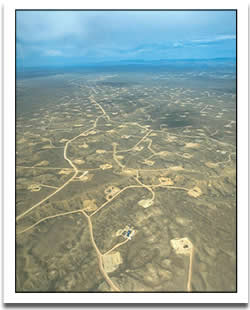 98 to 99 percent of the Volatile Organic Compounds (VOCs) and 57 to 61 percent of the Nitrogen Oxide (NOx) found in Utah's Uninta's Basin are emitted by gas drilling or production sources, and are responsible for worsening smog there, according to a new Utah Department of Environmental Quality study of air quality there.
The Basin is one of several large rural Western areas of the country that also includes stretches of Colorado and Wyoming where gas drilling has caused the phenomena of "wintertime ozone," creating smog as bad or worse than Los Anageles or Houston.
Despite low snowfall this year, the Basin has still seen more than a dozen episodes of high ozone so far. The ozone readings can reach nearly twice the limit considered safe by the EPA and last for weeks at a time. In 2011, levels reached 139 parts per billion, nearly double the federal health standard. About 1,100 wells were drilled that year.
Leaks from pipes and tanks and fumes from pumps, dryers and compressors were major sources of volatile organics. Drill rigs and fracking were sources of nitrogen oxides and methane, according to the study.
While making no recommendations,the report did say that reductions in certain kinds of volatile organic compounds, including benzene and toluene, “could be particularly effective since they are not only a direct health concern but are more active in ozone production than many other” VOCs.