Air Quality
TCEQ: Eagle Ford Gas Pollution Making San Antonio Smog Worse
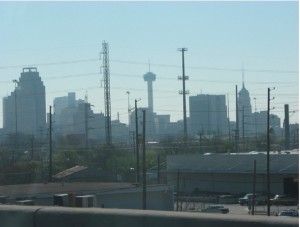 According to a new study from the Texas Commission on Environmental Quality and the Alamo Area Council of Governments, air pollution from the Eagle Ford gas play in South Texas will increase smog levels in San Antonio by 3 to 7 parts ber billion by 2018, the year the nation's metro areas are supposed to be in compliance with a new tougher federal standard.
Because San Antonio's air is already in violation of federal standards, a rise in ozone levels of even 1 ppb matters. San Antonio's ozone average is at 80 ppb and the federal standard is at 75 ppb.
Since it relied on TCEQ engineers and TCEQ computer models, one can safely assume this study is underestimating the problem of this pollution.
On the otheFrom the beginning of the fracking boom, it's been the contention of Rick Perry's TCEQ that gas industry pollution from the Barnett Shale has no significant effect on DFW smog. "All the wells are west of central DFW" goes the rationale, even as Dallas debates new drilling and refinery permits. A lot of us, including atmospheric scientists who study this sort of thing, beleive differently.
For two years in a row, air quality in DFW has gotten worse, not better, They've been more violations and they've moved further east. While 2013 has the potential to be the best year for smog in DFW this decade, it may have much more to do with the cooler, wetter weather than any large decreases in pollution inventories. However, given the impacts outlined
Study: 2 Million Air Pollution Deaths Annually Worldwide, 77,000 in US
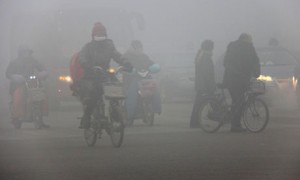 We're a bit behind the curve in reporting on this, but scientists at the University of North Carolina just published a study in "Environmetnal Research Letters" that estimates Particulate Matter and Ozone pollution in the air is responsible for approximately 2.2 million deaths worldwide every year.
Long-timers already know about how insidious Particulate Matter can be, but this only chronicles the hardcore fatal respiratory and cardiovascular impacts, concluding the tiny particles of soot cause at least 2.1 million deaths every year while ozone pollution shortens another 500,000 lives.
"East Asia," aka China, accounts for fully have of both those figures. India for another third. In North America, the casualties include 43,000 premature deaths from PM pollution and 33,000 from ozone.
Jason West, co-author of the study said: "Outdoor air pollution is an important problem and among the most important environmental risk factors for health."
Although alarming, these numbers are all underestimates of the health impacts of both of these pollutants, since they exclude anything other than fatalities. Besides making it harder to breathe, PM pollution has been linked to brain disorders and immune system disruptions.
Morning News on Frisco: City Must Come Clean
 This editorial ran in Today's Dallas Morning News:
"Environmentalists and Frisco residents have long wondered whether contamination existed beyond the borders of Exide Technologies’ shuttered Frisco plant.
Now they know, thanks to recent open records requests from Frisco Unleaded and Downwinders at Risk to state environmental officials. Waste materials from battery recycling processes exist in the 340-acre Grand Park area, the proposed site of an elaborate regional park.
If you live in Frisco, you should be perturbed that you didn’t hear this sobering news sooner — or hear it from the city, which has known of these findings for a couple of months. Instead, the information comes from environmental groups that stumbled across the test results in the Texas Commission on Environmental Quality’s response to their records request.
Given the lingering controversy over the extent and pace of the cleanup of Exide’s plant site, city officials owed it to residents to disclose everything they knew as soon as they learned it. Governmental transparency and communication are important, especially when health, safety, property values and the credibility of cleanup efforts are at stake. This is important because the new reports detail problems on land outside of Exide’s property that need to be cleaned up.
City officials contend they’ve been open with residents and last Monday filed an application to include the Grand Park area in a state voluntary cleanup program.
The city has done itself no favors by sitting on information. Frustrated with the pace of the cleanup, environmental groups want the Environmental Protection Agency to issue an imminent and substantial endangerment order and take over cleanup from TCEQ, which they allege is moving too slowly. While that is unlikely, the complaint underscores the desire of residents and environmental groups to make sure the cleanup is done properly.
What Frisco residents want is what any resident of any community wants — assurances that land that could house levels of lead, cadmium and arsenic in excess of state benchmarks will be cleaned up. The best way to do that is for Frisco to make sure residents know what’s going on — even steps the city might think are minor and procedural. And if subsequent testing definitively links the broader contamination to Exide, then Frisco has to make sure the battery company, now in bankruptcy proceedings, will pay for the cleanup.
More than a year has passed since Exide and Frisco struck a landmark deal to shutter the battery recycler, a major step toward Frisco reclaiming industrial land for a cleaner environment and recreational purposes. Now Frisco must make sure that the area is free of potentially deadly contaminants and that residents are fully aware of the extent of contamination.
Frisco has an opportunity to use land for a grand community vision, but it has to deal openly and transparently with residents and make sure those responsible for the contamination clean up the mess they’ve made."
Colorado: Oil and Gas Now the Main Source of Smog-Forming VOCs and Third Largest Source of Nitrogen Oxides
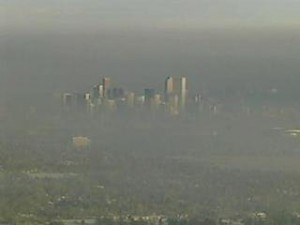 At least 600 tons of air pollution a day caused by the oil and gas industry in Colorado is causing a lot of consternation, especially in the Denver Metro area, which, like DFW, is currently out of compliance with the Clean Air Act for ozone, or smog.
Oil and gas emissions now are the main source of volatile organic compounds in Colorado and the third-largest source of nitrogen oxides, at a time when a nine-county area around metro Denver is already failing to meet federal clean-air standards, state data show.
New Studies Link Air Pollution to Cancer, Heart Failure and…Appendicitis?
 According to CBS News
"A new study published July 10 in The Lancet showed that even breathing low levels of air pollution for a prolonged period of time could raise risk for the often-deadly lung disease. Another study released on the same date showed that short-term exposure to most major air pollutants could increase the risks of hospitalization and death from heart failure."
Lung cancer risks went up 18% with each increase of 5 migrograms of PM 2.5. Researchers noted that they did not find a level of pollution for where there was no risk, and the results indicated "the more the worse, the less the better" when it came to pollution.
"At this stage, we might have to add air pollution, even at current concentrations, to the list of causes of lung cancer and recognize that air pollution has large effects on public health," Takashi Yorifuji from the Okayama University Graduate School of Environmental and Life Science and Saori Kashima from Hiroshima University in Japan…."
A second study shows the risk of dying or going to the hospital because of heart failure increased by 3.52 percent for every 1 part per million increase of carbon monoxide levels; 2.36 percent for every increase of 10 parts per billion of sulfur dioxide; 1.7 percent for ever 10 parts per billion increase in nitrogen dioxide; and about 2 percent for every 10 micrograms per cubic meter increase of particulate matter. Surprisingly, increases in ozone were not linked to heart failure. Unsurprisingly, you're breahting in all of these kinds of air pollution if you live in DFW.
All of that is kind of old news – put stuff in air, see stuff harm your lungs and heart. But here's a new "adverse health effect" being linked to air pollution – appendicitis. While not as lethal as lung cancers and heart attacks, anyone who's had their appendix rupture can tell you it's not a pleasant experience.
And while ozone may not have been linked to heart problems in that previous study, the New York Times reports a Canadian one links it to a slight increase in your chances of having appendicitis.
High ozone levels were associated with an increased number of hospitalizations for appendicitis and were even more strongly associated with cases of burst appendix. For each 16 parts per billion increase in ozone concentration the scientists found an 11 to 22 percent increase in ruptured appendix cases. The study was published in Environmental Health Perspectives. The associations persisted after controlling for age, sex, season of the year and the presence of other air pollutants, like nitrogen dioxide and particulate matter. The reason for the association is unclear, but studies in mice have shown that air pollution can alter the animals’ abdominal bacteria.
Who knew?
What Did Senator Vitter Get for Holding Gina McCarthy Hostage?
 That's the question that Politico poses and, as some of you might already suspect, the answer is: too much.
PM Pollution From Coal Shortens Lives by 5 Years in China
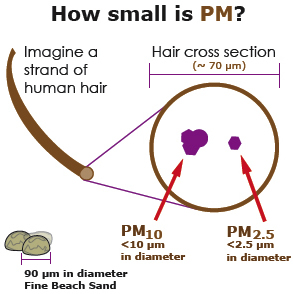 It's all over the place on the net, but just in case you missed it, it turns out that increasing the amount of Particulate Matter pollution results in more people getting killed or injured by that pollution. Shocking.
Sources of PM pollution include your car, your local gas well operation, cement plants, and in this particular case in Northern China, coal plants. Northern provinces that got free coal for heating had an average of 55% higher PM concentrations than those living in warmer climes and burning less coal. That resulted in a dramatic loss of life span tha averages just over 5 years, mostly due to cardio-circulatory problems.
This isn't all that hard to understand is it. You breathe air that goes into your lungs. Fill the air with soot, and you fill your lungs with it too. Fill your lungs with soot and your body has a hard time coping with extra crap in your lungs that isn't supposed to be there. When that happens your heart works overtime to compensate. Cause and effect.
Scientists keep telling us that, like lead, ANY exposure to this very fine soot that can lodge in your lungs is potentially harmful. There's no "safe" level of PM. Yet the EPA and the states still issue permits for the release of large quantities of this poison as if that weren't true. It's another depressing example of the science being far ahead of the regulations.
The Most Toxic Place in Frisco? City Hall
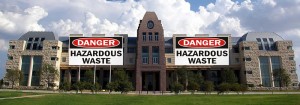 There have been times and places when Frisco's official municipal insularity has undoubtedly worked in its favor. It's focused, "go-our-own-way" style is probably a big reason why the city has carved such a high-profile niche among DFW suburbs.
But the last two years of wrestling with the Exide lead smelter has revealed all of the vices of such an approach when it comes to environmental hazards and public health.
Given the rapidity of events, it's easy to forget that only two years ago, the same city officials now in charge of pursuing a clean-up of the Exide site were lauding the smelter as a valuable member of the local business establishment and trying to find ways to keep it operating. Having a lead smelter spewing tons of toxic air pollution near the High School in the middle of town was OK with these folks. They'd overlooked decades of state and federal environmental violations by the smelter. They overlooked the destruction of a city water treatment plant by the smelter. Hey, Exide employed 100 people. And "what could the city do anyway?"
Only the intervention of citizens, campaigning with the well-known idea of the city being able amortize the facility out of existence, forced the city to finally confront the incongruity of the smelter's operation with its 2013 Frisco surroundings.
Frisco parents didn't sign their mortgages in blood to gain entry in a prized school district only to have their kids IQ suffer because of an obsolete lead smelter. To their credit city officials sensed that the curtain had been pulled back too far on their pretense to go on. They did a 180 and got the smelter out of town. But they did it the Frisco Way: the city manager and city attorney wrote a secret, complicated, $45 buy-out agreement with Exide that was passed by the Council without any public hearing and no debate.
After the unanimous vote, when someone asked Frisco Councilman John Keating if he'd support a community oversight committee to make sure we got the best clean-up of he smelter site, his response was "We're it." And just like that, it was supposed to all go away. Containment.
But lead smelters are messy places, especially outlaw operations like the one Frisco hosted for so long. Especially when they operate decades before most of the regulations governing them now were implemented or enforced. They're hard to contain unless you know what you're doing. And nobody could tell Frisco it didn't know what it was doing. It was Frisco!
The city didn't feel any obligation to let its residents know how it would handle the clean-up, how extensive the clean-up would be, what kind of technologies or strategies might be used. Perhaps most importantly of all though, city officials never asked themselves or their constituents the most basic of planning questions, "What's going to happen to the Exide site?"
The City's de facto answer seems to be: a toxic waste dump. It appears to be fine with letting Exide hold on to the core of the smelter property, where all the worst contamination is, where tons and tons of lead waste are buried or piled or dumped, all uphill from Stewart Creek that still runs right through the site. So amidst all the million-dollar homes and exclusive shopping malls there will be this large toxic no-man's land with scary warning signs and the need for continued monitoring for decades. City officials meet any skepticism of this plan with a shrug of their shoulders. "What can the City do?" For a town with a reputation for being "can-do." Frisco City Hall has lacked the imagination to see anything but the need for an extensive cover-up – literally and figuratively – when it comes to the Exide situation.
Instead of dealing straight-on with the challenge, officials decided to play a game of misdirection by emphasizing what a great new regional park it was building…..directly downstream of the still-contaminated smelter site. But please, mention of any current or potential contamination problems at these presentations by any city official is strictly prohibited. It's just so uncouth to keep bringing that up.
If you lived outside the bubble of Frisco City Hall, you could see the absurdity in this strategy. Putting a park downstream of a dirty Exide site is like putting puppies on the rail at the end of a roller coaster ride. You're just waiting for disaster to strike.
And it turns out those city officials knew it too. They just didn't want to tell their residents.
Six months before they signed that complicated $45 million secret deal, officials were aware there was extensive contamination of the Grand Park area by Exide. Maybe that's one reason they wanted to keep the agreement secret.
We've been told by more than one engineer that the City had a responsibility to turn over that information to the EPA and state when it got the results in November 2011. Instead it just sat on it. How many Frisco children have been needlessly exposed to hazardous material in and around Stewart Creek in the intervening 18 months? How could any Frisco official in good conscience keep this kind of thing from the public?
It took another year and a half for the City to follow-up with its "visual survey" of the entire 5-mile course of Stewart Creek, from the smelter to Lake Lewisville. Then, instead of taking equipment with them on that trip up the Creek that would be able to identify lead waste and give you some idea about its toxicity, including stuff you couldn't necessarily see at first glance, it was merely a sightseeing affair where "suspected" slag and chips that were out in the open were inventoried.
However, even that expedition was enough to confirm that the Creek had been acting as a sluice for Exide waste into the Lake. The City had those results three months ago.
All of this information was known in early June when Frisco Unleaded and Downwinders released a small report on the threat to Frisco's Grand Park from the smelter site. We did it at one of those Council presentations about the park where all of its virtues are discussed, but none of its environmental problems.
Not one city official spoke to the contamination problems facing the park. And it was clear that most were furious at citizens for once again raining on their Grand Park parade. It's as if Frisco city officials really believe that if you just don't mention the Exide toxic waste problem out loud, it can't hurt you.
It's one thing to apply that kind of magical thinking in denying Open Records Act requests and fluffing-up park presentations, but when it infects your ability to protect public health, it becomes a more serious matter.
Not only has the city hid information about hazardous materials that it had a duty to make public. It's been caught trying to actually hide the hazardous materials. When a TCEQ inspector advises the city in 2012 that there's a new pile of battery chips that's washed up, the city's response is to cover it up with "geo-membrane fabric" – even when the TCEQ inspector says that's not going to be sufficient. They don't want to dig it up. They don't want to do more testing to see the extent of contamination. They don't want to actually remove it. They want to cover it up. That's the city's entire M.O. when it comes to Exide these days. And that's what must change.
Had the city been up front with its own residents in real time about the smelter contamination, there would have been no press in June about how the smelter will impact Grand Park. The public would have already known. There would have been no wave of coverage about these City reports and TCEQ memo all of this last week. It would have been out in the open already. By trying to hide information from the public the city only insures it will always be in a reactive mode and behind the curve. It automatically gives more power to curious citizens to write the narrative, as this past month has shown. When your residents are finding this stuff out from us, instead of the local government that insists it's got everything under control, it's a sure sign that they don't have every thing under control
So far, only Frisco Unleaded and Downwinders have offered anything like a long-term answer to the most important question – what's going to happen to the Exide site? And we're even on the planning department's payroll.
But the City Manager, City Attorney and Mayor would all rather drink lye than admit they've been wrong about this problem, or that Frisco Unleaded might have a good idea or two. It's the toxic mix of arrogance, lack of vision, and conflict of interest that's doing the most to poison Frisco right now. Exide's messy waste problem is only a symptom of this kind of mind-set. Before the definitive clean-up can happen at Exide, there's got to be one at City Hall.
See North Texas Gas Problems Explode on Screen! GASLAND Part II Premieres on Monday
Most of you probably are already aware that Josh Fox's follow-up to "Gasland" will be premiering on HBO Monday night. What you might not know about "Gasland II" is that it heavily features North Texas. Former DISH Mayor Calvin Tillman, Earthworks organizer Sharon Wilson, and Parker County resident Steve Lipsky are all in there, and Lipsky's fight for his well water is a major story thread.
Like it or not, the Barnett Shale is where folks from the rest of the country and the rest of the world come to see what kind of damage fracking can leave in its wake.
Hard to believe it's been 3 years since Downwinders hosted the theatrical premiere of the original in October of 2010 with Fox showing up for a panel discussion that also featured former city councilwoman Angela Hunt afterwards at the Angelica. It was the first citywide show of opposition to gas drilling in Dallas and a full year before the packed Texas Theater showing where Mayor Mike Rawlings made his now famous pledge "to never put neighborhoods at Risk over money." But that was all so pre-secret deal ago.
This summer the City Plan Commission is meeting every two weeks to draft a new gas drilling ordinance for Dallas. By late August or early September, they're expected to be finished and have said they will then hold public hearings on the draft they'll submit to the City Council for a vote. Plans are under way to try and bring Josh Fox to Dallas for a theatrical premiere of his sequel as these public hearings kick-off. Nobody's sure if this can happen with Josh himself – he's become a genuine celeb since the first time around – but we're working on producing our own "sequel" to that very successful first showing. Stay tuned.
Meanwhile, you can send a quick e-mail to the Plan Commission members telling them what you'd like to see in a new gas drilling ordinance for Dallas by clicking here.
Another Study Links Autism to Air Pollution
 Women living in high air pollution areas while pregnant are up to twice as likely to have a child with autism as those living in low pollution areas, according to a study released June 18 by the National Institute of Environmental Health Sciences.
"What you see is the mothers with the 20 percent least exposure to pollutants, their children are least likely to have autism," lead researcher Dr. Andrea Roberts of the Harvard School of Public Health told The Standard-Times. "With each percentile of pollutant exposure, the presence of autism increased."
The study surveyed more than 300 women about the health of their children and compared the results to federal data on air pollution levels during the time and location of each mother's pregnancy. It's at least the second major study since March confirming a link between airborne pollution, but the evidence has been accumulating since 2006.
Autism is a disorder of brain development characterized by difficulty in social interaction, verbal and nonverbal communication and repetitive behaviors. Nationwide, 1 in 88 children have an autism spectrum disorder, according to the Center for Disease Control.