Air Quality
Take Another Hit – It Was the Best June for DFW Breathing Since 2007
 If this unseasonable cooler weather is making it seem like you're spending summer someplace other than DFW, it's also been the best "ozone season" in the region in seven years.
In the month that just ended, we only had four monitors on four days that violated the new 75 parts per billion smog standard that takes effect in 2018, and zero violations of the obsolete 1997 85 ppb standard. The maximum 8-hour reading was an 83 at the Denton Airport on June 3rd. Contrast that with last June: 54 violations of the 75 ppb standard and 27 violations of the 85 ppb standard over 9 days. Or 2011 – 24 violations of the 75 ppb standard, 7 violations of the 85 standard.
In fact, you have to go back all the way to 2007 when we had five violations of the 75 ppb standard but no "exceedences" of the 85 ppb, to find as good a June for air quality as we just had. And there are only a couple of other Junes – in 2010 and 2000 that even come close to being as full of safe and legal air. That's the good news.
The bad news is that these years were all followed by worsening air quality trends, that is, they turned out to be aberrations. So if this pattern holds, we'll have to wait until next summer to put it in context. As always, weather has a lot to do with how bad or good our ozone season is. The cooler and wetter, the better. The dryer and hotter, the worse. Just as this summer's cooler temps seem like they're out of place, by next June we could be thinking the same thing about our reprieve from smog.
The good news is that there's no questions that declining emissions in almost every category (we're looking at you oil and gas) have had a positive impact on the numbers. That's your doing. After 20 years of citizen effort, there's a lot less pollution from the cement plant complex in Midlothian, the coal plant belt in East Texas, and the millions of vehicles on and off the road.
For the EPA and the state, 2013 comes a year too late to help them recover from a terrible 2011 "clean air plan" that was supposed to get us down below 85 ppb by watching people purchase new cars. The clock officially ran out on that plan June 15th. Sales of new vehicles are dramatically up, so there's real displacement as old gas guzzlers get traded in for more efficient models. Whether those trade-ins are enough to cancel out the still-exploding growth rate of the area and rising gas and oil activity remains to be seen. That's why the EPA uses a three-year rolling average to determine transgressions against the Clean Air Act, to minimize the impact of anomalies.
You're just going to have to stay tuned to find out whether the summer of 2013 is the exception to the rule, or the re-writing of the rules.
Dallas Morning News Editorial On New Gas Ordinance
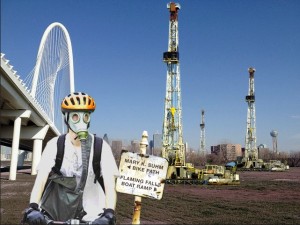 Gets a lot of things right, but also leaves out a lot, like floodplains, air pollution, compressor stations, and full disclosure.
The next City Plan Commission meeting on the drafting of the new ordinance is at 9 am,Thursday July 11th at Dallas City Hall in 5ES on the fifth floor. They're due to talk about operational conditions, i.e., hours, dust, noise, chemical disclosures, landscaping, monitoting an baseline testing.
Seems like a good time to mention that you can send the City Plan Commission a quick e-mail about what the new gas ordinance should contain by going to our "Featured Citizen Action of the Week."
Obama’s Speech Fracked Open
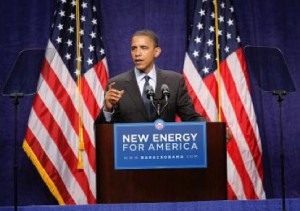 The San Fransicso Chronicle has a take on how the Obama climate change speech jives with the reality in the country's Shale Gas fields – like the one you live in.

Robert Howarth, a Cornell University professor who argues that methane leaks from drilling negate other climate benefits of gas, said in an email to The Associated Press that he is "extremely disappointed in the President's position" and said the support for natural gas "is very likely to do more to aggravate global change than to help solve it."
Not so, Obama said.
Advances in drilling, the president said, have "helped drive our carbon pollution to its lowest levels in nearly 20 years," and "we'll keep working with the industry to make drilling safer and cleaner, to make sure that we're not seeing methane emissions."
Nation’s First Commercial-Sized Carbon Capture Plant Uses San Antonio Cement Kiln For Source
 On the same day President Obama was making news in launching his climate change initiatives aimed at power plants, a company called Skyonic was announcing it had obtained financing to build America's first full-size carbon capture facility adjacent to the Capital Aggregates cement plant in San Antonio.
If all goes as planned the technology will be retrofitted to the kiln and capture carbon dioxide, acid gases, and heavy metals from the kiln's pollution plume and turn them into products such as baking soda and hydrochloric acid.
The company recently raised over $120 million to complete the project. Investors include Canadian oil giant Cenovus Energy, ConocoPhillips, BP Ventures, Energy Technology Ventures, BlueCap Partners, Toyo-Thai Corporation Public Company Limited, Berg & Berg Enterprises, Northwater Capital Management, PVS Chemicals, and Zachry Corporation, owner of the kiln.
Skyonic had been operating two pilot projects in Texas, including one at the same kiln. but this new facility is a large upgrade, able to remove more than 300,000 tons of carbon dioxide annually. It hopes to make a profit in three years.
Cement plants are among the largest sources of greenhouse gases on the planet, and there are a variety of start-ups and established firms competing to find a low-CO2 way of making the product. Some are concentrating on changing the manufacturing process itself, and others, like Skyonics, are looking at end-of-pipe treatment or recovery.
It's a shame there's zero interest among local Midlothian cement plant operators to bring any of this new technology to North Texas. We have the largest concentration of cement manufacturing in the country, and so we're also likely to have the largest concentration of cement-generated greenhouse gas pollution in the country as well. There's also the fact that DFW is the largest urban area in the nation downwind of so many kilns, and any reductions in pollution among those kilns, especially in metals and acid gases, would be welcome.
The Pipeline in the Room
 Let's just say upfront that it's a good thing the President will finally be taking action on climate change that doesn't require Congressional action. We won't linger on the fact that the changes he'll be implementing tonight round up (at least in computer modeling) to precisely the 17% cut below 2005 greenhouse gas pollution levels that he promised the world at the little-remembered Copenhagen climate summit in 2009. Apparently, Obama is concerned about his legacy concerning what the New York Times called "the defining environmental and economic challenge of the 21st century" and wants to be able to say he at least did what he said he would.
But how do you give a major address on climate change in 2013 without also at least mentioning the Keystone Pipeline, a project that more than one scientist believes could eventually lead to cancelling out all the reductions being promised in tonight's presidential address, and the pending decision for which has been the primary rallying point for climate change activists in America? From a political point of view, you really can't. But as has been pointed out before, Obama is among the least "political" of modern presidents. Funny how a guy who's done more to raise the profile of community organizing than anyone since Saul Alinsky seems to have never absorbed any of the basic principles of the profession.
Tonight's initiatives include a September deadline for greenhouse pollution limits for new power plants, a June 2014 deadline for regulating greenhouse emissions from existing power plants, a bevy of energy-efficiency measures for buildings and appliances and some token foreign aid to countries suffering the effects of climate change. But one can't help get the feeling that this is all just a prelude to approving the Keystone in three or four months. Let's hope that the President's desire for an worthwhile legacy on this issue gives him second-thoughts.
UPDATED, POST-SPEECH: Well, at least he did mention it. Here's the NYT's on the President's passing reference ot the Keystone Pipeline:
"He briefly addressed the pending decision on whether to allow the construction of a 1,200-mile pipeline from oil sands formations in Alberta to refineries in the Midwest and the Gulf Coast. Mr. Obama, who has been under heavy political pressure from opponents and supporters of the $7 billion project, said the pipeline should be built only if it did not have a major effect on the climate.
“Our national interest will be served only if this project does not significantly exacerbate the problem of climate change,” Mr. Obama said in a statement that cheered pipeline opponents. “The net effect on our climate will be absolutely critical to determining whether this project will be allowed to go forward.”
He did not lay out the criteria for measuring the project’s effect on the climate or say how big an impact he was willing to accept. Those decisions are still months away, White House officials said."
Behind Last Week’s Ash Grove Headlines: “The Rest of the (20 year) Story”
 There was a great deal of official news fluttering last Thursday when the EPA and Department of Justice announced a national settlement with Kansas-City based Ash Grove Cement that confirmed the company's Midlothian plant, site of The Last Wet Kilns in Texas™, would shut down and covert to one large dry process kiln by September of next year. Both dailies reported like it was 1999, with front page headlines and lots of column inches (ask your parents).
But the newsworthy part of last week's developments was not that Ash Grove was converting its wet kilns to a dry kiln. In February of last year, Downwinders at Risk reported that the company was seeking a permit from the Texas Commission on Environmental Quality to do just that. The Star-Telegram, bless their hearts, even wrote a story about it. Ash Grove's planned conversion was so widely-known that it was the subject of Midlothian Rotary Club meeting speeches this last Spring. So, you know, not news.
It wasn't news because those new national EPA air pollution rules for cement plants that we all drove out to DFW Airport in 2009 to testify in favor of and then to Arlington last year to defend, were expected to put the final nail in the coffin of Ash Grove's wet kilns by the time they took effect in September 2013. TCEQ granted the company a lame one-year extension to the 2013 deadline, but by September 2014, it was pretty clear that Ash Grove's Midlothian wet kilns would have to be converted or replaced to meet those new EPA standards coming down the pike. That's why last year's permit application for the conversion wasn't a surprise, but a confirmation.
And then the Obama Administration decided to stop the standards from coming down the pike. Just as those rules and that 2013 deadline was about to be signed into law, the President changed his mind and put them on hold. His EPA weakened the air pollution standards as proposed and delayed the deadline until 2015 or later – against overwhelming public opposition. All of a sudden, that 2014 deadline for an Ash Grove conversion looked to be in trouble. Would The Last Wet kilns in Texas™ just keep chugging along?
But what do you know? As part of that national settlement announced last Thursday, Ash Grove committed to the government to make the conversion and run the new dry kiln starting in….September 2014, or the original date of dry kiln conversion before the Obama u-turn on the new rules. What a coincidence!
So what was REALLY newsworthy about last week's announcement was that the national EPA managed not to screw-up a very good thing that its now-abandoned tougher rules were already putting in motion on the ground in Midlothian. Lucky us, huh?
The luck had some help from Downwinders. We knew the EPA was looking at Ash Grove for the kind of national enforcement settlement it had cut with LaFarge and other cement companies as part of its multi-year spotlight on the industry. We knew that the former Regional Counsel for the EPA office in Dallas, Larry Starfield, who spent decades dealing with all three Midlothian cement plants, was now in DC as EPA Deputy Enforcement Director, and probably in line to sign-off on any agreement. And we knew the original 2014 deadline for Ash Grove's conversion was in trouble with the Administration's reversal on the new air pollution standards.
We made inquiries, We made pitches. If Ash Grove were the subject of such a national enforcement effort, would it be possible for EPA to please consider requiring Ash Grove's Midlothian plant to firmly commit to its 2014 conversion deadline as part of any settlement? Turns out, it was possible.
How likely would it have been without our intervention? Best not to ask. But if you think, as we do, that our showing-up and making the case made a difference in securing progress that was in danger of being further delayed, here's the tip jar.
So yea for our side, although the victory seems a little less satisfying than what it should be when you know it's simply maintaining the status quo. Still, it's better than another couple of years of pollution from the area's dirtiest smokestacks.
$2.5 million in fines plays well in headlines until you realize how small it is compared to company's annual profits (almost $900 million n 2010). Beside the fines, nine Ash Grove plants will have to better control their smog-causing Nitrogen Oxide, Particulate Matter and Sulfur Dioxide pollution better, including the installation of Selective Non-Catalytic Reduction, or SNCR technology. The Midlothian plant was already scheduled to have this included in its conversion in order to meet those now-abandoned new air pollution standards. There's also a strong possibility that Ash Grove's other wet kilns will follow Midlothian's lead and also be converted to dry kiln technology.
Unfortunately, EPA didn't require any new testing of Selective Catalytic Reduction Technology, as it had in previously announced cement company settlements. SCR is twice as effective at cutting cement plant pollution as SNCR and has been used on kilns in Europe for over a decade. It's state of the art. But it's still not required in the US, although the results from two EPA-mandated pilot tests on kilns in the Midwest are due this year. One good thing about Ash Grove's conversion is that the plants can no longer use their continued operation of obsolete wet kilns as an excuse not to install modern equipment like SCR as it has in the past – although we know they'll find a new excuse now.
Here's the consent decree if you want to read all the details of the settlement. And here's the original complaint, which chronicles the alleged misdeeds of the company, plant by plant, including the sins of the Midlothian facility. A lot of the legal case depends on parts of the Clean Air Act that says any "major modification" to a plant must not increase pollution. Ash Grove ignored this law. Repeatedly. Over the last 20 years. According to the complaint, the violations in Midlothian originally occurred in 1995. That's right, it's taken almost 20 years for EPA to enforce a basic Clean Air Act violation.
"Kilns 1, 2, and 3 at Ash Grove's facility in Midlothian, Texas: 1) in or around 1995, Ash Grove performed a project to re-route ductwork that transports hot air from Midlothian Kiln 1 to the coal mill and performed a project to enable Kiln 1 to burn waste whole tires as a fuel source; 2) in or around 1995, Ash Grove performed a project to re-route ductwork that transports hot air from Midlothian Kiln 2 to the coal mill and performed a project to enable Kiln 2 to burn waste whole tires as a fuel source; and 3) in or around 1995, Ash Grove performed a project to re-route ductwork that transports hot air from Midlothian Kiln 3 to the coal mill and performed a project to enable Kiln 3 to burn waste whole tires as a fuel source."
Downwinders has always argued that tire-burning increases emissions, not decreases them as the industry maintains. We were saying this in 1995 as these illegal changes were taking place and Ash Grove officials were saying what a great air pollution control strategy it was to burn whole tires.
The implications of these kind of very common violations hang heavy over the current industry transition to new and more exotic industrial wastes being burned in kilns, some of which make tires look like Grade-A fuel oil. Plastics, shingles, car parts. All of the Midlothian cement plant are now burning things that they shouldn't be with no more assurance they aren't breaking the law than there was in 1995 when they were changing fuels then. But don't worry, EPA's on the case and you can expect any such violations to be prosecuted in….2033.
Despite Staff Riding Roughshod, Dallas Plan Commission EXTENDS Gas Well Setbacks to 1500 Feet
 Rebuking city attorneys, the Dallas City Plan Commission agreed on Thursday to require 1500 foot setbacks, or buffer zones from gas wells to "protected uses" such as homes, businesses, hospitals, schools, recreation areas, and parks. A waiver to get as close as 1000 feet would have to come with a three-fourths vote by the City Council. No well could be closer than 1000 feet.
City staff was pushing hard to retain the 2012 gas task force recommendations of 1000 feet, with a waiver to as close as 500 feet, something even the Dallas Morning News said was unacceptable. Those less-protective distances are seen as a way to get the twice-rejected Trinity East permits approved under a new ordinance.
Plan commission members also agreed to include more kinds of businesses in the protected use category, such as laundry services and vehicle pool operations, somewhat erasing the blue collar/white collar double-standard of protection sanctioned by the task force.
Left pending, and full of skullduggery potential for city attorneys, is where to begin and end that 1500 feet. Most citizens would probably go from property line to property line to ensure the entire protection of the "protected use." But city attorneys want to begin at the well bore hole itself and go to the "structure" of the protected use – not your front yard, but your front door; not the soccer field itself, but the recreation center next to it. This will be the next big battle over how to define these setbacks.
Also left pending were what, if any, exceptions for park drilling there should be in the new ordinance. Even more important to the Trinity East permits than the residential setback requirement is the current prohibition on drilling in parks. Here, city staff also was lobbying very, very hard to retain the special loophole for the Trinity East permits the task force abruptly voted to make at their very last meeting and without any public comment. Preservation of this loophole – you can drill on "unused" park land despite there being no legal definition supporting that term – means that Trinity East would have a fighting chance to come back and re-file.
Although seemingly rejecting the task force recommendations, Plan Commission members still expressed desire to carve out some kinds of exceptions for park land that was perhaps not publicly or readily accessible, but had trouble articulating the definition of "unused." Under the law, park land is park land; there is no A to F park grading system. That's why the easiest and most protetive thing to do is ban drilling from parks all together.
The devil will be in the details, but in the first real test vote for a more protective gas drilling ordinance, citizens won. And it drove city attorney Tammy Palomino crazy. As Plan Commission members got more and more independent over the course of the two-hour briefing, you expected her to start reaching for the cattle prod. After calling for a reconsideration not once, not twice, but three times after she got beat bad on the vote for the 15000 ft setback she announced that staff would return at the next meeting with a "presentation" on the 1500 foot setback. No doubt it will focus entirely on why it's a bad idea for all kinds of reasons other than it'll make it harder for Trinity East to get their permits.
Make no mistake, the City Manager's office, through staff like Palomino, is still fighting on behalf of those Trinity East permits, and the permits she expects to come after those. She's trying to minimize the number of protected uses and the spaces between them and your house, school or playground.
If you want to fight back but can't show up in person to tell the Commission what you think, please consider sending a qucik click N send e-mail message to the members via our "Featured Action of the Week."
The Plan Commission will be getting briefings from staff on different parts of the new ordinance every two weeks throughout the summer (July 11 and 25 August 8 and 22) with at least one or two public hearings on the finished product after that. All meetings begin at 9 am and are conducted at Room 5ES on the fifth floor of Dallas City Hall downtown. The next meeting is supposed to focus on the operations of a well site, i.e. hours of operation, noise, dust, plus the all-important landscaping requirements. Stay tuned.
Post Election Dallas Drilling Update – 7 For, 6 Against, 2 Wild Cards
 With the election of Philp Kingston and Rick Callihan, the new edition of the Dallas City Council is complete. The good news is that the last six months of hand-to-hand civil combat over the Trinity East gas permits seems to have paid-off in expanding the number of gas drilling opponents to at least six members
The bad news is that hard-core supporters still retain seven seats, with two new members hard to read given their campaign answers.
Supports Drilling
Mayor Mike Rawlings
Dwaine Caraway
Vonciel Hill
Terrell Atkins
Sheffe Kadane
Jerry Allen
Rick Callihan (new)
Opposes Drilling
Scott Griggs
Philip Kingston (new)
Sandy Greyson
Carolyn Davis
Monica Alonzo
Adam Medrano (new)
?
Lee Kleinman (new)
Kleinman's DMN questionnaire answer: "I will not take a position at this time because the issue is far to complex to evaluate in the midst of a campaign. The Task force spent 9 months on this issue and I personally know and respect a number of its members. The Council has yet to adopt its recommendations and it will take a much deeper study of the facts before I can take a formal position."
DMN campaign debate coverage: "(He didn't take) firm positions on hydraulic fracturing in Dallas, but said drilling probably shouldn’t occur around residential areas or kids’ soccer fields."
Jennifer Stabach-Gates (new)
Stabach-Gates' Dallas Real Estae News questionnaire answer: "I am opposed to fracking in neighborhoods or near public spaces. There are limited areas in Dallas where fracking would be considered, and these should be addressed on a case by case basis. But as a rule, I will always place a higher priority on protecting neighborhoods and the health of our residents."
Hard to tell when the first vote to test these categories will occur. Officially, the council has yet to take a vote on the Trinity East permits. But rumor has it that the City Plan Commission will be getting briefed by Mary Suhm's legal staff on what a new drilling ordinance should look like this coming Thursday at City Hall, so maybe we won't have to wait that long to see how much the same or different this council is from the last when it comes to the most important environmental fight in Dallas in the last 20 years.
A Fort Worth Gas Backlash at The Voting Booth?
 For the last couple of years Dallas has gotten all the headlines over gas permit fights. It's because the Barnett Shale play took its time to roll eastward while evidence was mounting about the adverse effects of fracking. There was still a large precedent to be set when the play met the new evidence in Dallas. Citizens groups with professional staffs, like Downwinders, made a stand over a new Big D drilling ordinance (still) in progress.
But whereas Dallas has been the reluctant and controversial wallflower to the gas suitors, Fort Worth has been the region's floozie, stumbling over itself to offer up all of its goodies to the highest bidder. In Cowtown, no cultural, political, or social institution has been left unaffected by the smell of gas money. Officials who were preaching about clean air and regional responsibility in the 1990's took the money and ran…right over to Chesapeake HQ. Now, fights over gas permits there are considered a kind of fifth column exercise by the rest of us. But of course, that's the way most people view being an environmentalist in Texas.
However, this last election cycle saw some signs of Fort Worth waking-up from its ten-year party. This Star-Telegram article points to opposition to a large compressor station as being a factor in the District 5 City Council run-off race there between incumbent Frank Moss and challenger Gyna Bivens. Bivens actually garnered more votes in the general election back in May.
"Bivens, who lives in Ramey Place near Dunbar High School and won her precinct by a wide margin, put up her strongest results in neighborhoods north of Interstate 30 and east of Loop 820. Those neighborhoods – new to the district in a redraw of council maps – are seeing new development and fighting attempts by the natural gas industry to place gas compressors on agriculturally zoned land in the bucolic area."
Coming out of this same neighborhood and leading the fight against that compressor is recent Tarrant Regional Water District winner Mary Kelleher, who was the only one of three challengers to win against entrenched incumbents of this usually staid entity.
As far as we can tell, these are the first successful races to spotlight gas industry problems in Fort Worth. Considering the amount of wheeling and dealing over the last decade, surely they won't be the last.
Illegal Border Crossings
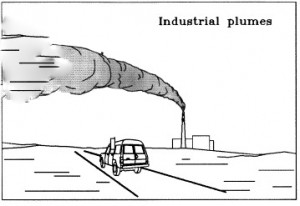 If you live downwind of a state line in the US, you're more likely to breathe the wastings heaved out by heavy industrial air polluters according to a new study reported on by the Washington Post today.
University of Georgia, Georgetown, and University of South Carolina political scientists collaborated on the findings, which document "State Line Syndrome, i.e. when large air polluters are disproportionately likely to be located near downwind borders instead of sharing the burden with more interior locales.
This is not a new phenomena. Lots of case law has been made by one state suing another over cross-border pollution issues. About a decade ago, the Midlothian cement plants were cited by Oklahoma and Tribal Authorities as a statistically significant contributor to haze problems at the Wichita Mountains Wilflife Refuge in the western part of he Sooner state. However, what the new study shows is despite the lack of no logistical reason for many large air polluters to be located near a border, that's where they're concentrated anyway. The result?
"…the farther a location is from a downwind border, the lower the odds that it will host an air polluter. For instance, being about 100 miles upwind of a state line reduces the odds of an air polluter locating there (compared to a hazardous waste facility) by around 6 percent.
The effect is also strongest among the biggest polluters. The facilities that release the most toxic emissions (measured by number of pounds) are the most likely to locate near a downwind border."
But what's at least as interesting to citizens as the confirmation of concentrations, are the motives the professors hypothesize for allowing or designing these concentrations by state government:
"One is that state policy makers encourage it. For instance, Texas would surely want the economic development and tax revenue that would come from a new manufacturing plant. But the state could probably do without the resulting toxic emissions. So one option would be to encourage a manufacturer to locate on Texas’ northern border, where the wind tends to blow across the Red River into Oklahoma.
Alternatively, companies might decide on their own to build a facility in a location where pollution would be carried across state lines. Doing so might reduce the effectiveness of NIMBY, or not-in-my-backyard, activism. If the citizens who feel threatened by a plant live across the border, they may have a hard time persuading lawmakers in the facility’s state – who have little incentive to attend to the concerns of out-of-state residents – to oppose its construction or operation."
That's sounds like the paranoid ranting of a angry housewife or two we've met over the years. And it probably gives Texas officials too much credit for caring about their own airshed. But it does once again show the impossibility of trying to solve air pollution on a piecemeal basis rather than taking a firm and aggressive federalist approach to the problem. What if we dealt with infectious diseases the way we do air pollution – refusing to recognize the transport of the harmful virus across local or state lines? Science has amply demonstrated that we do all indeed live downwind. Time for policy to catch-up.