air toxics
Good Friday: Exide Smelter Closing Today
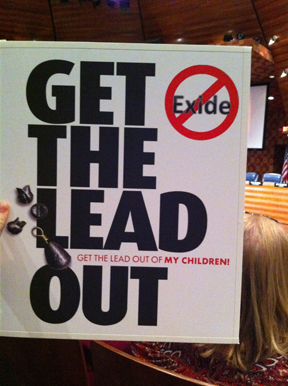 Sometimes, all it takes is the slightest push of an index finger, or a focused exhaling of breath.
Sometimes the house of cards is so precarious, so unstable, that any challenge, no matter how slight, can send the established structure to the ground.
A year ago a small, newly-formed citizens group that had just staged its first action was struggling to convince the City of Frisco to quit supporting co-existence with an outlaw lead smelter and instead kick it out of town.
Today, that smelter will stop operating.
Community activism rarely pays off as quickly or as spectacularly as it has with the curious case of the Exide lead smelter. But when it does, it's reason to pause and give thanks and remind ourselves that such things are still possible.
Because truth be told, this historic effort was directed by a group of Frisco residents that was never larger than 10 people strong. Please just think about that. Less than a dozen people challenging their local status quo are responsible for this huge victory for public health.
Downwinders' often tells its supporters that, like the Woody Allen quote about life, 90% of social change is about just showing up. The system so often goes completely unchallenged, that you'd often be surprised what happens when you just show up and start asking embarrassing questions. When you start poking at the house of cards.
As their campaign proceeded, this small group of committed people attracted the support of hundreds, and then thousands of their fellow residents. They forced the city to see the contradiction between the continued operation of a circa-1960's smelter and the reality of 2012 Frisco. They held up a mirror and re-framed the relationship between smelter and town. And the contradiction was so great, so at odds with the new perception of Frisco, that the established political support the smelter had enjoyed in town for decades dried up. Young couples with kids concerned about a lead smelter they never heard of before outnumbered Good Ol Boys in City Hall and the Chamber of Commerce. The old establishment was undone by the very demographics of change they'd unleashed a decade or so earlier.
There is still much work to do. A half-century of contamination blankets the smelter site, as well as an undetermined number of off-site "hotspots." Exide wants to leave a permanent landfill behind in the middle of Central Frisco, while the City is breezing along with plans to turn a piece of land right across the street from the smelter site into the city's largest park. Downwinders will be helping citizens monitor the cleaning-up of the smelter site for at least the next two years.
But as of today there is no more lead pollution coming out of the Exide smokestacks. No more daily fallout of poison. No more new layers of lead being laid down in the topsoil of Frisco. That is a pretty remarkable thing considering where we were 365 days ago.
So raise your glasses tonight to the hardy folks of Frisco Unleaded and the improbability of the impossible happening in record time. Here's to Colette McCadden, Henrik Ax, Shiby Matthew, Matt Vonderahe, Jeannette Sandin, Meghan Green, and Eileen Canavan, all residents who decided they would stick their neck out and start showing up and asking questions, much to the consternation of the Powers That Be. May they all have Frisco parks, and schools, and streets named after them.
It's not always this easy, but the fact that it was this time should give us hope about the power of pushing back.
Traffic Pollution Linked to Autism
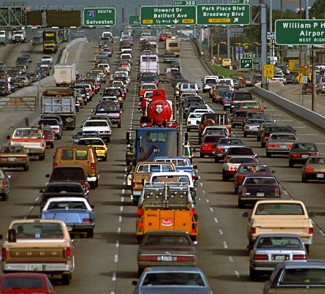 Along with a higher risk of asthma, children who are born and live their first year closer to major freeways also suffer a significantly elevated risk of autism. That's the conclusion of a new study by the Keck School of Medicine of the University of Southern California in Los Angeles.
"Compared to 245 California children who were not autistic, the researchers found that 279 autistic children were almost twice as likely to have been exposed to the highest levels of pollution while in the womb, and about three times as likely to have been exposed to that level during their first year of life.
They found that children exposed to the highest amount of "particulate matter' – a mixture of acids, metals, soil and dust – had about a two-fold increase in autism risk. That type of regional pollution is tracked by the Environmental Protection Agency.
Volk and her colleagues also saw a similar link between autism and nitrogen dioxide, which is in car, truck and other vehicle emissions.
'This is a risk factor that we can modify and potentially reduce the risk for autism,' wrote Dawson in an email to Reuters Health."
It's been estimated by the Centers for Disease Control that autism affects one in every 88 children born in the United States.
A new federal Particulate Matter standard is under consideration by the EPA and could be announced this year. It's been linked to other neurological diseases such as Parkinson's and Alzheimers.
UTSW Gulf War Research Yields More Evidence of Cumulative Chemical Harm
 The story is behind the DMN's paywall, but there's a new piece of the Gulf War Illness puzzle that's been provided by UT-Southwestern researchers lead by Dr. Robert Haley, and it has some relevance to those who think their own health problems can be traced back to chemical exposure.
Originally dismissed by many to be only a psychological condition, scientists now suspect that the multiple and varied symptoms reported under the Gulf War Illness category are from exposure to one or more toxins at levels that were supposed to be safe. Dr. Haley and his colleagues at UTSW recently published the results of a study that proves that nerve damage is the common denominator that impacts breathing, heart rate, sexual function, perspiration and other body functions associated with the diagnosis.
For the Chemically-Sensitive among you, or those of you living downwind of a polluting facility, see if this doesn't sound familiar:
“Many of these veterans have been told that there is nothing wrong with them,' Haley said Monday in an interview. “
"There can't possibly be anything wrong with you because the levels of poison you were exposed to were so low, we don't estimate that you'd be harmed by them at all." That's the mantra of the State's environmental and health agencies every time someone from Midlothian calls and says cement plant pollution made them sick. Same thing if you live around a gas well or compressor. They start from the smokestack or flare and work their way back to the person.
It's not an epidemiological argument. It's a lazy calculation based on laboratory science that's either old or doesn't exist. As the recent federal ATSDR report on Midlothian air pollution admits, science is still at least a decade away from being able to recreate the effects of being exposed to a multitude of pollutants at the same time, as so many of us are subjected to these days. We don't know, and we still can't calculate what it's like to live in a toxic soup.
Haley's studies and others start with the person and work their way back to the chemicals. They find "physical disorders" in a much higher proportion than a random sampling and seek to explain the cause. In this case, there is a match between those who have Gulf War Illness and a certain kind of pervasive nerve damage that can affect a wide range of bodily functions.
Having established that the symptoms of the Illness are indeed physiological, and not just in the Vet's heads, Haley sounds as if he is on the verge of releasing a much larger, longer-term study on the actual trigger mechanisms that produce the nerve damage he's identified.
"Haley suggested that he may soon address the cause, or causes, of Gulf War illness. 'We’re going to show proof of what causes this,” he said. “It will be a huge study with convincing evidence.”
That will be the headline-maker, because as the DMN article points out, Dr. Haley and the UTSW team have been narrowing the suspects down over the years and have a theory:
"He and other medical experts have repeatedly said they believe Gulf War syndrome was caused by exposure to pesticides and other chemicals in the Persian Gulf."
It's very possible that in the next 12 months we'll see the best study ever done on Gulf War Illness reveal that exposure to a variety of different kinds of environmental contaminants at supposedly "safe" levels has left 200,000 service men and women medically damaged. If that's the case, then it could turn out to be one of the most profound challenges to the toxicology of the status quo in the last 50 years. Stay tuned.
Red Alert for Dec 20th: Dallas Wants to Drill Like It’s 2009
 This is a heads-up to all Dallas residents: Dallas City Hall – the building, the people, everything – has climbed into a time machine and traveled all the way back to 2010.
This has allowed the City council and staff to ignore citizen demands for a more protective gas drilling ordinance, the defeat of a council member who advocated drilling, the creation and conclusion of a task force for helping write a new ordinance, and a bunch of public hearings over the last two years – all so that Dallas City Hall can now just go ahead and do what the gas operators originally asked it to do at the beginning.
The first Special Use Permit request from a gas well operator to allow drilling in Dallas since 2010 will be on the agenda at the December 20th Dallas Plan Commission meeting at City Hall. It concerns a new request to drill by XTO (Exxon-Mobil) at the old Navel Air Station in southwest Dallas, near the Grand Prairie line, that was submitted on November 16th.
Time it's taken the City of Dallas to write a new drilling ordinance in Dallas: 24 months and counting
Time it took XTO to get its new drilling request heard despite not having that new ordinance yet: 20 days
You can read about the sudden jump into municipal action here behind the DMN paywall.
"XTO’s latest requests are apparently on a fast track, headed to the City Plan Commission….
A new, tougher Dallas drilling ordinance is in the works but has not been approved or even published for review, so the existing ordinance would govern the XTO applications, based on the city’s legal view that one set of rules should apply throughout the process."
Every Dallas City Council member appoints a representative to the City Plan Commission. Dallas residents should call their own City Council member (info here), or their Plan Commission appointee (download a list and contact info here) and tell them to reject this XTO request and any others that try to get processed before a new drilling ordinance is in place.
Here's the media release that Dallas Residents at Risk put out this morning about the sudden turn around:
Dallas Officials Consider Throwing Away Years of Work on New Gas Drilling Ordinance and Simply Let Fracking Begin
Have Mayor Rawlings and the Dallas City Council made a decision to move ahead with existing, pending and even new gas drilling applications without taking any action on the new “fracking” ordinance that has been in the works since 2010?
Two weeks ago, Exxon-owned gas company XTO filed a new gas drilling application—because their previous bid to drill at Hensley Field was denied by the Dallas City Plan Commission two years ago. Then the City Council appointed a special Gas Drilling Task Force, whose members met every week for eight months to consider proposals for a new ordinance. They finished their work in February of this year and issued their official recommendations, yet the City Council has not even begun drafting a new ordinance. The only rumored exception: City officials may consider simply changing the existing ordinance to allow fracking in floodplains, which would be necessary for gas company Trinity East to move ahead with its plans to drill in floodplain areas along the Trinity River. Neighborhood groups and environmental advocates say that’s unacceptable.
"This is the largest retreat of leadership that I can ever remember on such an important public health and environmental issue,” said Jim Schermbeck, Downwinders at Risk. “After three years of citizen complaints, a task force created, convened and concluded, expert and public testimony, and all Dallas residents get is a pair of shrugged shoulders from Mayor Rawlings and the Council? It's a bad joke."
There have been several major scientific studies surrounding the risks of fracking since Dallas officials began debating the new ordinance. Community leaders worry that new evidence pointing to health and safety risks for residents living near drilling sites will simply be ignored.
“So what if there's a 66% higher cancer risk within a half mile of a gas well; so what if already bad Dallas smog is made worse; so what if we still have no idea what chemicals will be used for fracking in Dallas,” said Claudia Meyer of the Mountain Creek Neighborhood Alliance. “It's as if the Mayor and Council are closing their eyes, plugging their ears, and desperately hoping to make all these new facts go away by just pretending they never happened.”
The new drilling applications leave Dallas officials exactly where they started, with the City Plan Commission being asked to shoulder the responsibility of deciding on whether to allow fracking to go forward. Advocates say the Commission should decline this offer and let the City Council do what it said it was going to do: Draft and pass a new gas drilling ordinance first.
“If we were only going to end up where we started, what was the point of a task force, or public hearings or anything that's happened since permitting stopped because the City wanted a new drilling ordinance,” said Zac Trahan with Texas Campaign for the Environment. “This is complete and utter dereliction of duty and public trust by the elected officials of this city on one of the most important public health and environmental questions to face Dallas in decades."
Cuts in Methane and PM Pollution Can Slow Climate Change
 In an opinion piece in The Daily Climate, Michael MacCraken, the chief scientist for the DC-based Climate Institute advocates an end-run strategy to avoid the political logjam over large CO2 cuts as a way to fight global warming. He suggests concentrating on reducing Methane and Particulate Matter pollution as a way to "appreciably slow the rate of warming over the next several decades." He cites an earlier UN study that concluded:
"…a moderately aggressive international emissions control program focused on the short-lived compounds could roughly halve the projected warming between the present and 2050. While slowing the warming through this approach might seem to also offer additional time for cutting CO2 emissions, this is not the case. Instead, these actions are more appropriately viewed as partially making up for earlier policy delays.
For the United States to do its share, aggressive limits on CO2 emissions must be complemented by aggressive limits of emissions of short-lived species. In particular, the Environmental Protection Agency will need to be more aggressive in cutting short-lived emissions, particularly of methane from the oil and gas industry, and making its voluntary methane and black carbon programs mandatory.
With climate change so far along, the question now is no longer whether impacts can be avoided, but rather how bad they will become. What we do with respect to both mitigation and adaptation will control that outcome. The longer we wait, the worse the impacts and sharper the required energy transition."
While methane gradually breaks down in the atmosphere, forming carbon dioxide, it has 100 times the warming potential of carbon dioxide for the first 20 years it’s exposed to the environment. A study by Cornell University Environmental Biology Professor Robert Howarth found between four and eight percent of the methane produced by a fracking well is leaked into the atmosphere during the well’s lifetime. For all the immediate environmental benefits of natural gas, the methods used for its extraction could create a larger greenhouse footprint than oil or coal over time.
EPA is considering a new national PM pollution standard because of its public health impacts and should use the opportunity to win deeper cuts that offer so many "co-benefits." Every reduction in soot is now doubly important. Cars, cement kilns, coal plants, and just about any industrial boiler or furnace spews out PM. They all need to be targeted as part of a larger effort to bring this kind of pollution under better control.
This impact on global warming is also one more reason why Dallas residents should be demanding that the city incorporate some kind of "off-sets" policy regarding new oil and gas air pollution as part of a new City drilling ordinance. Not only can it hep reduce smog and some of the toxins released by the drilling and processing of natural gas; it can also provide some needed help for climate change at a time when the city is just squeaking by its own greenhouse gas reduction goals.
“Statistically Significant Increase” in Risk of Dying from Cancer in Towns Near Incinerators
 You know that argument you sometimes hear about how those ecologically-minded Europeans are burning everything in incinerators and cement plants, so it must be OK to do it here? Maybe not so much.
In one of the most ambitious and far-ranging efforts of its kind ever attempted, the newly-published results of a 10-year study from Spain's national Center for Epidemiology looked for 33 different kinds of cancer in dozens of Spanish communities that hosted "waste incinerators and installations for the recovery or disposal of hazardous waste." They found "a significant higher risk from all cancers in towns near these industries."
Cancer impacts were greater around waste incinerators and scrap metal operations – you know like the three giant Midlothian cement plants upwind of DFW that are burning larger and larger amounts of industrial wastes and the steel mill across the street from them melting scrap cars.
Researchers used standard computer modeling to estimate what cancer rates should be in the host communities and then compared them to what they actually were.
"Excess cancer mortality was detected in the total population residing in the vicinity of these installations as a whole and, principally, in the vicinity of incinerators and scrap metal/end-of-life vehicle handling facilities, in particular. Special mention should be made of the results for tumors of the pleura, stomach, liver, kidney, ovary, lung, leukemia, colon–rectum, and bladder in the vicinity of all such installations. Our results support the hypothesis of a statistically significant increase in the risk of dying from cancer in towns near incinerators and installations for the recovery or disposal of hazardous waste."
There has never been any kind of systematic study of cancer rates around and downwind of the Midlothian cement plants. From the Texas birth defect registry we know that certain reproductive organ birth defects that are associated with pollutants known to have been released from the plants are higher than the state average in Ellis County.
This study, as well as the recent warnings of the federal Agency for Toxic Substances and Disease Registry about the public health dangers of the pollution coming from the Midlothian cement plants arrives at a time when the plants are gearing up to add plastics, car interiors, and other kinds of garbage to their lists of "fuels" that will be burned. After losing the fight to be able to burn hazardous wastes willy-nilly in cement plants, the industry is turning to industrial and municipal garbage that can produce many of the same worrisome kinds of pollution. This is what makes the EPA rules governing the emissions of the nation's cement plants – rules that are still in play – so very important.
Hell Freezes Over: Why the New Federal Report on Midlothian Matters
Everything in italics and "quotation marks" below is a direct quote from the latest chapter of the ATSDR's (Agency for Disease Registry and Toxic Substances) "health consultation" on the impact of certain kinds of industrial air pollution on the local population.
You should take five minutes to glance over the sentences. They've taken a better part of a decade and a great deal of citizen persistence to make it to print. You can read them now only because of a petition to ATSDR by local Midlothian residents, spearheaded by Sal and Grace Mier in 2005, prompted the Agency to get involved.
They're also rarer than hen's teeth. Because the words actually come together in sentences to conclude human health was likely harmed by the pollution from Midlothian's three cement plants and steel mill, as well as recommend decreasing that pollution.
Among grassroots activists, ATSDR has a notorious reputation for issuing reports that are "inconclusive by design." The joke is that the agency never met a facility it couldn't learn to live with. And sure enough, previous chapters in this saga have disappointed. Just two years ago, ASTDR's shoddy work in investigating health impacts in Midlothian and elsewhere across the country was the subject of a Congressional hearing.
These ATSDR reports generate no new data. Instead, they are retrospective looks back at the available sampling/monitoring information and a piecing together of possible exposure paths and levels. As such, they're only as good as the data they can digest. In Midlothian's case, that means they're completely dependent on state monitoring – criticized by citizens for years as being inadequate. Nevertheless, with this latest report, citizens have been somewhat vindicated because of what even that inferior sampling revealed.
The health impacts described in this latest report are also limited to what are called "Criteria Pollutants" – old school substances like lead, soot, sulfur dioxide, and ozone that have been regulated by the Clean Air Act for decades. They do not apply to more exotic kinds of air pollution like endocrine disruptors, which there's little or no monitoring for at all.
So there are a lot of missing pieces, but the ATSDR's conclusions and recommendations have an impact on your lungs and maybe your own local fight, even if you don't have a Midlothian zip code. For the first time a federal agency known to avoid coming to any conclusion about anything was forced to say that human health was adversely affected by the operations of industry in Midlothian.
There's a public meeting on this report on December 6th from 7 to 8:30 pm at the Midlothian Conference Center.
Health Consultation/Assessing the Public Health Implications of the Criteria (NAAQS) Air Pollutants and Hydrogen Sulfide MIDLOTHIAN AREA AIR QUALITY MIDLOTHIAN, ELLIS COUNTY, TEXAS
NOVEMBER 16, 2012 U.S. DEPARTMENT OF HEALTH AND HUMAN SERVICES
Agency for Toxic Substances and Disease Registry
Division of Community Health Investigations
Recommendations:
"Texas Commission on Environmental Quality (TCEQ) should take actions to reduce future SO2 emissions from TXI to prevent harmful exposures."
"TCEQ should take actions to reduce future PM2.5 emissions from TXI and Gerdau to prevent harmful exposures."
"TCEQ should continue efforts to reduce regional ozone exposures."
"TCEQ should insure that levels of these air pollutants do not increase to levels of concern in the future."
"TCEQ should conduct ambient air monitoring to characterize exposures to persons located downwind of the Ash Grove and Holcim facilities and take actions to reduce SO2 emissions from these facilities if harmful exposures are indicated."
"TCEQ should conduct appropriate ambient air monitoring to characterize exposures to persons located downwind of the Ash Grove and Holcim facilities and take actions to reduce PM2.5 emissions from these facilities if harmful exposures are indicated. In addition, particulate matter monitoring is needed in residential areas that are in immediate proximity to the facilities’ limestone quarries."
"In ATSDR’s judgment, one notable gap in monitor placement is the lack of monitoring data for residential neighborhoods in immediate proximity to the four industrial facilities, where fugitive emissions (those not accounted for in stack emissions) likely have the greatest air quality impacts."
Human health was likely harmed, and is still threatened by industrial pollution from Midlothian
From Sulfur Dioxide:
"Breathing air contaminated with sulfur dioxide (downwind of TXI's cement plant and the Ameristeel steel mill) for short periods could have harmed the health of sensitive individuals.…ATSDR cannot determine if harmful exposures to SO2 have been occurring downwind of the Holcim and Ash Grove facilities."
"All 24-hour values in Midlothian were lower than EPA’s former standard. However, the World Health Organization’s health comparable guideline is 8 ppb (WHO, 2006). This value was exceeded at both the Midlothian Tower and Old Fort Worth Road stations in most years of monitoring through 2008…"
"Overall, in the years 1999 to 2001, Old Fort Worth Road (monitoring site north of TXI) ranked among the stations with the highest 24-hour average sulfur dioxide concentrations in the state. As sulfur dioxide emissions from TXI Operations decreased in following years, so did the measured concentrations at this station."
From Particulate Matter, or Soot:
"Public health concern is warranted for adverse health effects from long-term exposure to PM 2.5 in Cement Valley"
"In the past (1996–2008), annual average PM 2.5 levels measured were just below the range of concentration proposed by EPA for lowering the annual average standard…Moreover, many of the annual average PM 2.5 concentrations were above the more conservative WHO health guideline (10 μg/m3)."
"No PM 2.5 monitoring data are available to evaluate exposures downwind of the Ash Grove facility. Furthermore, although annual average PM2.5 levels detected at the Holcim monitor indicate possible harmful levels…."
"We estimated that annual average PM2.5 levels in the vicinity of the Gerdau Ameristeel monitor, from 1996 to 1998, could have ranged from about 22.6 to 26.4 μg/m3, which is above both the current and proposed EPA standard. Using EPA’s approach, the 3-year average level might have been above the NAAQS standard of 15 μg/m3 for these years in the vicinity of the Gerdau Ameristeel monitor. Applying this same approach to annual average PM10 data from other monitors suggests that PM 2.5 levels could have been close to the current and proposed PM2.5 standard, especially for the Wyatt Road, Old Fort Worth Road, Gorman Road, and Midlothian Tower monitors."
"Consistent with the other pollutants discussed earlier, the estimated annual PM 2.5 emissions listed for these facilities are among the highest for Ellis County and also rank high among industrial sources statewide."
From Lead:
"Past lead air exposures during the period 1993 to 1998, in a localized area just north of the Gerdau Ameristeel fence line, could have harmed the health of children who resided or frequently played in this area….In the mid-1990s, the lead levels measured in this area ranked among the highest lead concentrations measured statewide."
From Smog:
"Scientific studies indicate that breathing air containing ozone at concentrations similar to those detected in Midlothian can reduce lung function and increase respiratory symptoms, thereby aggravating asthma or other respiratory conditions. Ozone exposure also has been associated with increased susceptibility to respiratory infections, medication use by persons with asthma, doctor’s visits, and emergency department and hospital admissions for individuals with respiratory disease. Ozone exposure also might contribute to premature death, especially in people with heart and lung disease. School absenteeism and cardiac-related effects may occur, and persons with asthma might experience greater and more serious responses to ozone that last longer than responses among people without asthma."
"The Midlothian Tower site recorded ozone concentrations above the level of the NAAQS for several years (TCEQ, 2011b), and the Old Fort Worth Road site has been measuring ozone concentrations close to the level of the NAAQS. Based on the data from both monitors, from August 1997 to September 2011, the 8-hour EPA ozone standard has been exceeded 236 times."
From Breathing Multiple Pollutants:
"ATSDR believes that sufficient information exists to warrant concern for multiple air pollutant exposures to sensitive individuals, especially in the past….The ability of the scientific community to fully and quantitatively evaluate the health effects from the mixture of air pollutants people are exposed to is at least ten years away (Mauderly et al., 2010)……The current state of the science limits our ability to make definitive conclusions on the significance of simultaneous exposures to multiple criteria air pollutants. ATSDR’s conclusions are based on our best professional judgment related to our understanding of the possible harmful effects of air pollutant exposures in Midlothian and our interpretation of the current scientific literature; therefore, these conclusions are presented with some uncertainty."
From New Production:
"Reductions in SO2 levels in Cement Valley have occurred since late 2008 resulting in exposures to both sensitive individuals and the general public that are not expected to be harmful. These reductions may be caused, in part, by declining production levels at local industrial facilities. Future harmful exposures in Cement Valley could occur if production rises to at least previous levels and actions are not taken to reduce SO2 emissions."
Regulatory "Safe Levels" Very Often Aren't
"Past SO2 exposures were not above the Environmental Protection Agency (EPA) standard in place at that time but were above the current standard."
"Past lead air exposures were not above the EPA standard at that time but were above the current standard.…The scientific community now believes that the current standard (15 μg/m3) for fine PM (measured by PM2.5) is a better indicator of possible long-term health effects from PM exposures than was the former EPA annual average standard for PM10 (EPA, 2006b)."
30 Years After They’re Banned, PCB’s Still Making It Hard to Have Kids – In Texas
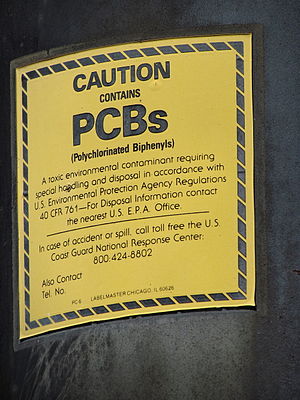 Another argument for the implementation of the Precautionary Principle.
 Exposure to these pollutants is known to have a number of effects on human health, but their effects on human fertility — and the likelihood of couples achieving pregnancy– have not been extensively studied."Our findings suggest that persistent organochlorine pollutants may play a role in pregnancy delay," said the study's first author, Germaine Buck Louis, Ph.D., director of the Division of Epidemiology, Statistics, and Prevention Research at the Eunice Kennedy Shriver National Institute of Child Health and Human Development (NICHD) at NIH.Dr. Buck Louis added that individuals may limit their exposure by removing and avoiding the fat of meat and fish, and by limiting the consumption of animal products.
Even Low-Level Cadmium Exposure in Womb Can Lead to Lower IQ
 By way of the Environmental Health News comes word of a new study looking at the effects on low-level, "ambient" levels of the toxic metal Cadmium on 5 year-olds in Bangladesh.
Although the exposure pathway in the study assumes the Cadmium is coming primarily from a diet of food grown in contaminated soil, the results speak to the possible effects of any kind of risk – inhalation or ingestion.
"Prenatal exposures to the metal cadmium — even at low levels common in most countries — can have long-lasting effects on children's IQ. A study from Bangladesh found that 5-year-olds who were exposed through their mothers to higher levels had IQs that were 2 to 3 points lower than less-exposed children. The new evidence suggests that even low-level exposures before birth may have continued effects on children's brain function.On average, scores dropped by 2 to 3 points in children with the highest exposures when compared to those with the lowest exposures. Even small drops in IQ may affect a child’s ability to succeed at school and work later in life. Lower IQ's across the population also have large impacts on society."
Cadmium is a naturally-occurring metal contaminant found at low levels in the environment. Industry uses it to make batteries, coat and plate plastics and other metals, and make paint (remember Cadmium Red?). It's also emitted by car exhaust, the burning of industrial wastes, coal, and oil. When spread on fields, fertilizers and sewage sludge contaminated with cadmium can increase levels in cropland soils.
What are some possible local sources of cadmium in the air? The Midlothian cement plants that are now increasingly burning industrial wastes. Steel mills – like the Ameristeel one in Midlothian. Lead smelters like the one Exide is closing up at the end of the month in Frisco, along with the slag and battery chips the smelter "landfarmed" in Frisco for decades. These are all in addition to the Cadmium you may be ingesting through your diet or by sucking on that cute charm bracelet you bought that was made in China.
2011 Toxic Release Inventory Numbers Out from EPA, Still Plenty of Poison for Everyone
 After the devastating 1984 Bhopal Union Carbide chemical plant disaster in India that killed thousands, US policymakers decided it might be a good idea to keep track of where toxic and hazardous chemicals were stored and released. Thus was born the EPA's annual Toxic Release Inventory data base, wherein every company that keeps a certain amount of dangerous material on-site or releases it into the environment is required to submit an estimate to the agency.
Now the numbers for 2011 are out and available for your perusal via the EPA's own TRI Explorer tool, where with a little effort, you can find out what kind of threat you face in your state, county, city or zip code. We haven't had time yet to look at Texas or DFW facilities as a whole to see what's up or down but according to the this Bloomberg article from Monday, the national total is up from 2010, which is what you'd expect given the pace of economic recovery. In 2010, there were 3.8 billion pounds of chemicals listed, this year, 4. 1 billion pounds, or almost 13 pounds for every man, woman and child in these United Sates. Maybe some of you are feeling like you're getting more than your share. Now you can confirm or put to rest those suspicions.
This year's TRI included numbers for 16 previously unreported chemicals that have been classified as carcinogenic by the National Institute of Health's National Toxicology Program: 1-amino-2,4-dibromoanthraquinone; 2,2-bis(bromomethyl)-1,3-propanediol; furan; glycidol; isoprene; methyleugenol; 1,6-dinitropyrene; 1,8-dinitropyrene; 6-nitrochrysene; 4-nitropyrene; o-nitroanisole; nitromethane; phenolphthalein; tetrafluoroethylene, tetranitromethane; and vinyl fluoride.
EPA says total releases of reported carcinogens have doubled since 2008, while those of persistent, bio-accumulative, and toxic compounds have risen by about one-third. The agency will have its own national analysis in a month
Not included in any TRI yet are all the toxic and hazardous chemicals used in gas and oil drilling. Sixteen groups from around the country are petitioning EPA to officially include them in future inventories.