Particulate Matter
EPA Interpretation of Soot Regs Under Fire
 In an important challenge to the way EPA has gone about regulating the tiniest and most harmful forms of soot, or "Particulate Matter" pollution, attorneys for environmental groups seem to making some headway in the courts.
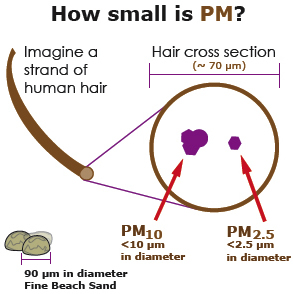
Currently, EPA is about to recommend new PM pollution rules that will reportedly lower the exposure standard for "PM 2.5" – that is, soot that's 2.5 MICRONS or less in size. A human hair is about 10 microns wide, so we're talking incredibly small particles that can easily find their way into your lungs, and then pass through directly into your blood stream.
However, when the Clean Air Act was amended in the early 1990's, the danger of PM pollution was confined to "PM 10" – particles 10 microns or less in size. So called "Coarse PM." But research over the last 20 years has pointed to the greatest danger to human health coming from the smallest kinds of PM pollution – the stuff that's 2.5 or smaller. It's been linked at very low levels of exposure not only to respiratory disease, but to heart attacks, strokes, and brain diseases similar to Parkinson's and Alzheimer's. In fact, the consensus among researchers now is that there is no level of exposure to PM 2.5 pollution that's not capable of doing some harm, that is, there is no "safe level" of exposure.
In another example of how regulations don't keep pace with science, EPA is still regulating PM 10 standards stricter than they are PM 2.5 standards, even though we now know that it's the smallest stuff that is more harmful. EPA is actually using another part of the Clean AIr Act to regualte PM 2.5 pollution than it uses to regulate PM 10 pollution. And the provision it uses for PM 2.5 allows states a lot more wiggle room than the tougher PM 10 provisions.
PM 10 pollution pouring out of a smokestack includes all PM 2. 5 pollution. But "PM 2.5 polluiton"excludes the larger coarser soot. Clear?
One of the three judges of the US Court of Appeals for the District of Columbia, David Tatel, had a hard time with the fact that EPA went outside it's own PM 10 rules to regulate a sub-set of more dangerous PM 10.
"I don't see why it makes much sense to separate out the fine particles," Tatel said. "I don't understand why the agency would do this.' Tatel indicated he did not believe the Clean Air Act required EPA to handle fine particulate matter differently than the coarser pollutants. References in the statute to PM 10 seemed to indicate Congress was referring to particulate matter in general, which would include PM 2.5, Tatel said."
This is exactly the argument EarthJustice lawyers were using. When the Clean Air Act says "fine particles" it means PM 10 and PM 2.5 – you can't regulate PM 10 without also regulating PM 2.5. But this is a law of physics that EPA is trying to undo. The Agency is actually arguing that Congress only meant to apply the standards to PM 10 pollution and no other "fine particles." It's also arguing that the challenge is a decade too late, since the original rules were passed in 1997. The judges didn't seem to be buying that defense either.
With brand new EPA regs for PM pollution expected to be announced shortly, one could reasonably assume this is mostly an academic exercise. but it's not. First, these old rules will still be in play for some time as the new ones are phased-in. It's important to get it right in the intervening period. These old regs affect PM emissions from cement kilns, boilers of all types, power plants and even cars and the public health impact of a stricter standard could be significant. Second, the interpretation EPA uses to establish the new rules could rest on whether the courts agree that it used the right provisions and language last time out.
We've been saying this a lot lately, but it's true. PM pollution is the most insidious, dangerous, and widespread form of air pollution in the world today. It is the ozone of the 21st Century in terms of how pervasive its effects are, and the size of the regulatory response to counter that harm.
Even a Few Weeks of Cleaner Air Can Make A Big Difference
 We can't tell you how many times a resident from DFW will go on a business trip or vacation to a less-polluted place and report an almost instant shedding of the ill effects of dirty air, only to have an almost equally fast re-acquaintance with those effects once they return. Could air pollution really make that much of a difference in so little a period of time?
As it turns out, yes.
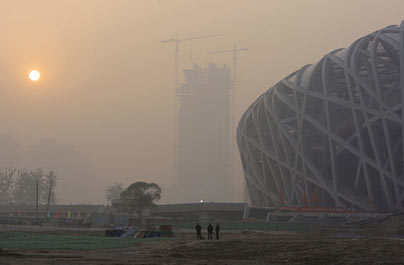
Via an new study recently published in the Journal of the American Medical Association, researchers found that the Chinese government's decision to close down Beijing's polluting factories and take cars off the road during the 2008 Olympics resulted in a remarkable short-term improvement in cardiovascular health. It's the first major study to look at the immediate effects of air pollution in young healthy adults.
In a synopsis published by Environmental Health News, one of the authors describes the study and its importance:
"For the 5-month study from June to November, the researchers recruited 125 resident doctors with an average age of 24 from a centrally located hospital. Half were male, and all were healthy with no history of diabetes or cardiovascular disease.
The researchers measured heart rate, blood pressure and six markers of cardiovascular diseases in blood samples before, during and after the games. The markers included C-reactive protein (CRP), fibrinogen, von Willebrand factor, soluble CD40 ligand, soluble P-selectin concentrations and white blood cell count (WBC).
Two markers associated with blood clotting significantly decreased from pre-Olympic to the during-Olympic period: P-selectin levels dropped by 34 percent and von Willebrand factor levels were reduced by 13 percent. After the games, when the pollution control measures were removed, most markers rose back to pregame levels. But two markers – P-selectin and systolic blood pressure – worsened and showed a significant increase compared to the levels during the games.
Air pollution emissions were also measured at similar times. Levels of most air pollutants during the games decreased up to 60 percent compared to their pregame levels, depending on the type of pollutants. For example PM2.5 dropped 27 percent, nitrogen dioxide 43 percent and sulphur dioxide 60 percent. After the games when pollution controls were removed, emissions rose to higher levels than were measured before the games started.
This study suggests that even young healthy people can benefit from short-term air pollution reduction and supports efforts to quantify and understand the benefits and costs of air pollution control measures."
The next time a politician complains about the cost of air pollution controls, make sure and ask them if they're for preventative heart disease treatment. When they say yes, please remind them that keeping crap out of our air that would otherwise end up in our lungs is such preventative care.
Midlothian Cement Plants Linked to Higher Child Asthma Rates
On the left is a computer-modeling image from the Texas Commission on Environmental Quality showing the direction of the predominant downwind plume of pollution from the three Midlothian cement plants - from extreme NW Ellis County, blowing diagnoally across Tarrant County and into Wise County. On the right is the map from the original 2009 Cook Children's Hospital CCHAPS study indicating levels of childhood asthma in the Hospital's service area. It tracks closely with the direction of the plume and asthma levels increase in closer proximity to the cemnt plants. 
According to researchers Patricia Newcomb and Alaina Cyr from the UTA College of Nursing "…the bulk of Tarrant County asthma cases lie directly in the path of southeasterly winds that have historically carried high levels of particulate matter from working cement kilns in a neighboring county. Asthma prevalence increases in a linear configuration within the path of the 'cement plume' as residential location comes closer to the cement kiln area."
Exposure to Particulate Matter pollution, or soot, is a well-known known cause for asthma. It can also make a child's asthma worse.
"This latest study is one more piece of empirical evidence that we need to decrease pollution from the Midlothian cement plants to secure the right of our children to breathe without getting sick, " said Jim Schermbeck, Director of Downwinders at Risk, a local group originally founded in 1994 to oppose the burning of hazardous waste in the Midlothian cement plants.
Proximity to the pollution from the three Midlothian cement plants was the only environmental factor geographically associated with higher concentrations of childhood asthma, ruling out poverty and indoor air pollution. There also wasn't a strong correlation to urban gas drilling, although the authors concede that "urban drilling may play a part as well" in the region's higher than normal child asthma rates, and there was no direct comparison between the geography of drilling activity and area asthma levels.
In 2009, Cook Children's Hospital released its Community-wide Children's Health Assessment and Planning Survey (CCHAPS), the largest examination of childhood health in North Texas ever undertaken. It found that Tarrant County and the western side of the North Texas region suffer childhood asthma rates significantly higher than state and national averages.
In "Conditions Associated with Childhood Asthma in North Texas," published in the October edition of ISRN Allergy, Newcomb and Cyr revisit the Cook study and delve more deeply into its data. "The purpose of this study was to identify significant associations between asthma diagnosis, comorbid conditions, and social problems in children." The complete article can be accessed on the Cook Hospital CCHAPS website page devoted to asthma, under "Special Reports."
Midlothian is the home of the largest concentration of cement plant manufacturing capacity in the United States. It hosts three large cement plants – TXI , Holcim and Ash Grove – with a total of six kilns. They are the largest stationary sources of pollution in North Texas. Reports submitted by the plants themselves show they poured over a million pounds of Particulate Matter pollution into the North Texas air in 2009.
EPA recently announced that it was considering once again delaying the implementation of new federal emission rules, including stricter particulate matter pollution standards, from 2013 to 2015 that have been in the works for two decades. The delay would also water down proposed PM pollution standards. Schermbeck said Newcomb and Cyr's analysis shows the real world costs of such a rollback.
"It's a scientific fact, endorsed by EPA, that inhaling tiny bits of particulate matter can make people sick and even kill them. What this study makes clear is that the agency is senselessly condemning more Tarrant County kids to illness and suffering by delaying rules that were supposed to have been in place in the 1990's. It's time to start saving lives by reducing this kind of pollution."
Another Waste Fire at a Waste Burning Cement Plant
Indian downwinders complain of air pollution from their local cement kiln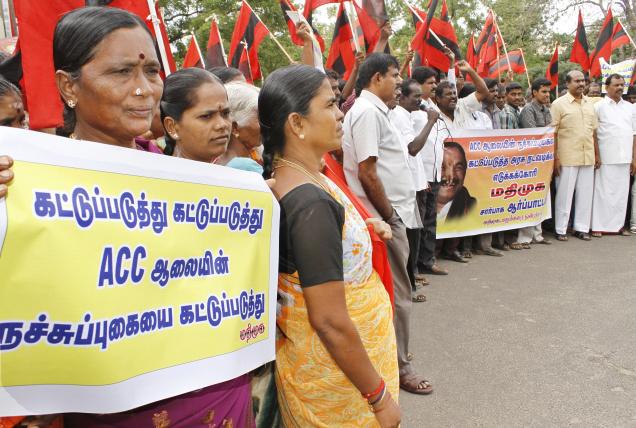
This time in India instead of Utah or South Carolina.
In Coimbatore, plastic and leather wastes stockpiled waiting to be burned as "fuel" at the Madukkarai cement works spontaneously combusted in a three hour fire that did not result in any known injuries at the plant.
However, thick columns of black smoke poured into the sky and that stuff, as the late Dr. Commoner would note, has to go somewhere. A lot of it will no doubt dind its way into the lungs of downwind residents. More than 200 tons of waste was gutted in the fire out of at total twice as large.
Despite local fire officials urging the cement plant to enclose the waste for some time, it had not done so. That is an apparent violation of state law. And readers, will it surprise you in the least to learn that the plant was already a longtime source of complaints from local residents?
Meanwhile the Fire and Rescue Services Department officials pointed out that storing combustible waste materials outside the plant without adequate protection was in violation of the Tamil Nadu fire service rule of 1990.
"It is a violation of section 250 of Tamil Nadu Fire Service Rules 1990 and we will issue a notice to the factory and will give them 15 days to store the waste materials inside a roofed structure with protective walls," said Subramanian.
Residents have been protesting against the cement factory for a long time and have submitted numerous petitions to the district administration. They claimed that the dust and smoke from the factory was causing major health complications, especially for senior citizens and children.
"We have raised the issue on numerous occasions and also submitted petitions to the district administration but till now no action has been taken," said C Palaniswamy, a resident of Kurumbapalayam.
There is a premeditated and orchestrated campaign by the cement industry to allow kilns to become garbage burners of all kinds of wastes. We've seen it manifest itself locally in Midlothian with the TXI permit that allows that plant to burn car parts and plastic wastes.
The more kilns that become gargabe burners, the more garbage of dubious content will pile up at kilns, the more often that garbage causes a fire. We've reported on three just since the summer alone. Being downind of an uncontrolled garbage fire isn't one of the talking points the industry boasts about when it's trying to sell kilns as the industrial equivalent of Kitchen disposals, but it's looking more like a standard feature rather than an option.
Imagine That: Local Regulation of Polluters
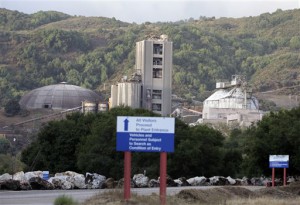 From San Francisco comes word that the area's largest Mercury polluter, the local Lehigh-Heidelberg Cement plant, may be the subject of tougher LOCAL air pollution regulations.
In 2011, the kiln spewed 260 pounds of Mercury into the local airshed and new regulations being proposed for the plant by the Bay Area Air Quality Management District would address not only this pollution, but emissions of dust, ammonia, dioxins, smog pollutants, and hydrocarbons.
In part, the new local rules are being spurred by EPA's own updating (and delaying) of its own air pollution rules for the nation's cement kilns. In part, local pressure from the public is driving their consideration. Bay Area for a Clean Environment collected over 1800 signatures demanding the new more stringent rules.
In California regional air boards are the prime shapers of air quality planning and policy, tailoring measures to their own geographical boundaries and problem areas. Imagine the 10-county DFW non-attainment area for smog (Collin, Dallas, Denton, Ellis, Johnson, Kaufman, Tarrant, Parker, Rockwall, Wise,) having its own air quality agency with the power to enforce new anti-pollution measures without having to get Governor Rick Perry's permission. Local control also means more opportunity for local citizens to have input rather than being blown off by ideologues in Austin intent on scoring political points rather than cleaning the air.
As we've noted before, if DFW officials really want cleaner air, they're going to have to get it themselves.
Another Chapter of Cement Kilns As Garbage Incinerators
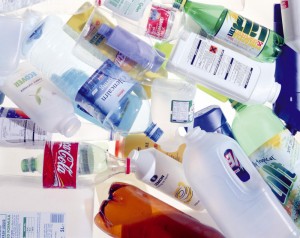 One of the reasons it's so disheartening to have EPA rollback the deadline for new cement plant air toxics standards and gut the PM pollution provision of those standards is because of the large and fundamental shift in what's being burned is taking place within the industry. Downwinders across the country need the protection of these new rules as soon as possible, as everything, including the kitchen sink, is being thrown into kilns.
There's a determined effort underway nationwide for cement plants to secure new permits or permit "amendments" or "modifications" to burn increasing amounts of municipal and industrial garbage, including lots and lots of plastics. With new regulation of hazardous waste burning in the US taking some of the fun and profit away from that practice, the trend is now headed toward burning all kinds of "solid waste" including hard to recycle bits of municipal and industrial garbage like plastics and car "fluff" – all the non-steel parts of a car or truck, including dashboard, electronics, interiors, brake linings, etc.
Locally, TXI's 2011 permit amendment – given without public notice or opportunity for comment – is the worst example of this national trend, although Holcim and Ash Grove are also burning tires, used oils, and other kinds of industrial waste already.
Now word comes of the CEMEX plant in Louisville also making plans to burn plastics and other kinds of garbage, but
"…industrial pollution has been an issue in southwest Louisville for decades. The plant is near the coal-fired Mill Creek power plant, and residents have long complained about dust and soot from both.
Denise Allgood, vice chairwoman of the Valley Village Homeowners Association, said she was not familiar with the proposal and said any change involving air pollution is likely to be sensitive.
The (pollution) that’s coming out of that place now is of great concern,” she said. “We’ve been told by the powers that be that’s it’s better than it has ever been, but I would hope that whatever (CEMEX) is considering, they are also considering the health and welfare of the people in this area.”
What could make the problem wortse? Burning plastics that release exotic new chemicals that can hitch a ride on all that old soot and dust. We're entering a whole new era of contamination by incineration once plastics-burning becomes widespread in the nation's cement kilns. That's a big reason why we need the added protection of the EPA rules.
The Perry-TCEQ Plan for Cleaner Air: More Coal
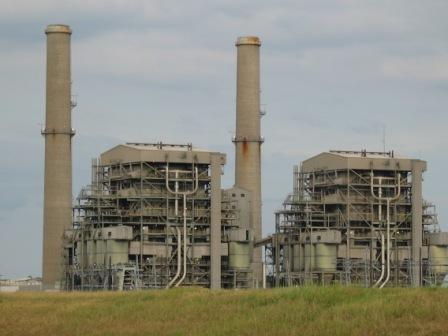 When it rains, it pours, or in this case, spews.
After getting a favorable ruling that struck down the EPA's flexible permit system last week, Team Perry seemingly scored another victory for its friends with Tuesday's ruling against the cross-state pollution rule.
Written by the Obama Administration to replace a similar Bush Administration rule that also got struck down by the courts (but is now back in at least partial effect…it hurts to think about this sometimes), the cross-state pollution rule was an attempt to federalize the problem of continental air pollution, much of it caused by big ol' dirty coal plants like the ones in East and Central Texas.
Texas can't regulate the coal plant pollution that wafts in from Illinois or Kentucky. Likewise, New York can't regulate Ohio facilities that send air pollution over its state lines. A federal solution covering all 50 states is required. Tuesday's ruling agreed, but concluded EPA hadn't given Texas and other states more time to come up with their own strategies to cut air pollution from coal plants. Maybe EPA was influenced by the fact that at the same time this strategy was being proposed, Governor Perry was rolling out plans to help streamline the permitting of 17 new coal plants in Texas.
Neither one of these rulings is as dreadful as it might seem at first. Both can be appealed. And both have mitigating circumstances that cushion the blow. With the flex permit case, all the facilities in Texas got standard operating permits eventually, making the ruling on the flex program itself moot. With the cross-state pollution rules, the Obama EPA itself said that two-thirds of all the health benefits from the rules had already been achieved with the partial implementation of the Bush rules they were meant to replace.
However, the cross state rules were not only supposed to be good in their own right, they also are the underpinning for a couple of other national pollution initiatives, including helping communities meet the new Ozone standard of 75 parts per billion, and the new, lower Particulate Matter pollution standard. Without the rules, these standards will be harder to achieve. And guess who's own plans begin to get mucked up by that failure? You guessed it, the state of Texas.
Because in the case of DFW's chronic smog problem, the Texas Commission on Environmental Quality had already factored compliance with the rule into its already obsolete 2012 clean air plan for the Metromess. That was one of the reasons we were going to see the lowest ozone levels ever recorded in DFW this summer. Without that backstop, it's going to be hard not only to just meet the old 1997 ozone standard of 85 ppb – something DFW has yet to do despite two official tries now over the last seven years – it's going to be hard to meet the much lower standard of 75 ppb.
If you've seen the TCEQ propaganda of the last couple of years, it touts how much pollution totals in Texas have decreased. The Commission uses these numbers to then promote the Perry Team philosophy of limited government intervention, suggesting that it's the TCEQ and Perry responsible for those declines. They are not. For the most part, what the state is touting are the results of federal programs that have decreased pollution systematically across the country – everything from new fuel and pollution standards for cars and trucks, to new federal standards for specific industries, like refineries and chemical plants. Throw in the things that federal citizen suits and pressure got done despite TCEQ – think cement plant pollution reduction in DFW for example – and you have most, if not all of the things reducing pollution in Texas that TCEQ is claiming credit for.
Without the cross state pollution rules, the oldest and dirtiest coal plants in Texas will continue to operate for the foreseeable future. And when the wind blows, some of their pollution will be breathed-in by DFW residents. In the short term, this is Team Perry's trophy for all you hard-working Texas residents – more crap in your lungs.
If the state keeps clearing away all the federal programs that have actually reduced pollution over the last 20-30 years, those total pollution numbers won't be going down much longer. They'll be holding even and then going up. Left to their own devices, Team Perry would have us living in a polluter's Pottersville. And then who will the Governor blame?
Thanks Much.

Thanks to everyone who showed-up on Thursday. More on Monday, but this will give you a run down on who spoke.
Citizens Plan to “Shred” EPA at Cement Plant Rules Hearing
 WHAT: The Nation's Only Public Hearing on the EPA's Rollback of Cement Plant Air Pollution Standards
WHEN: 9am to 7 pm Thursday, August 16th
WHERE: Arlington City Hall, 101 W. Abram
(Arlington)—Opponents of an EPA proposal to rollback new cement plant air pollution standards will incorporate a paper shredder into their comments at an all day national EPA hearing at Arlington on Thursday.
"Sometimes words aren't enough to express your outrage. You need an action that speaks louder. Our shredder is pretty loud," said Downwinders at Risk Director Jim Schermbeck, whose group is leading an effort to recruit 100 speakers to fill every 5-minute speaking slot from 9 an to 7pm.
He and others plan to use the shredder to show the EPA what's at stake in the agency's last-minute reversal of key parts of the first ever national toxic air pollution emission standards.
They're bringing pictures of relatives with pollution-related illnesses, copies of the Clean Air Act, health care bills, and the EPA's iconic logo to feed into the shredder to help drive home the personal and public effects of the agency's proposed two-year delay and increase in soot pollution.
"With this regulatory mugging, EPA is shredding air quality, it's shredding public health, its shredding public confidence. We're just showing the results," said Schermbeck.
Despite only 11 days notice for a national hearing in the middle of August, he predicts citizens will come close to meeting their goal of filling all available speaking slots. It's the only hearing EPA is holding as it considers the changes to the original federal 2010 cement plant pollution standards that were hailed by the same groups now protesting a retreat.
Groups are expected to be joined in their rejection of the rollback by North Texas area elected officials or members of their staff, including Congresswoman Eddie Bernice Johnson, State House Representative Lon Burnam, Dallas County Judge Clay Jenkins, prospective Congressional Representative Mark Veasey, and State Senator Wendy Davis.
In 2009, approximately 90 people testified at a similar DFW hearing as the rules were up for final adoption. Dallas-Ft. Worth is downwind of the nation's largest concentration of cement plant manufacturing, with three large plants located within only a few miles of each other in Midlothian. The plants have been the center of environmental and health controversies since the late 1980's and made North Texas a hotspot of citizen opposition to industry pollution.
Having finally been adopted after 20 years of lawsuits, the new emission standards were on their way to be singed into law by President Obama this summer when EPA suddenly pulled them and announced they wanted to delay implementation from next year to 2015 while also loosening emission standards for Particulate Matter pollution. In evaluating the results of the revision, EPA admitted it will increase PM pollution from the nations cement plants by 135 tons a year.
Previous EPA studies had calculated how many lives would be saved by the standards. Citizens have seized on these estimates to now calculate the harm of the agency's two-year delay, putting the national death toll at between 2-5,000 lives using the EPA's own numbers.
Because of the amount of pollution generated in Midlothian and the population density of DFW, a significant portion of those deaths will be local residents.
No court ordered the after-the-fact revisions. In fact, the rules had survived their very last court challenge last December. Schembeck says that makes the rollback even more mysterious.
"EPA is going out of its way to deny citizens what they were on the verge of winning – the first ever federal air pollution standards for the nation's cement plants," Said Schermbeck. "They're robbing people who've been working on this issue for over 20 years for no good reason. We're not going to be quiet as they try to take away what we've rightfully earned."
Industry’s Man in the White House
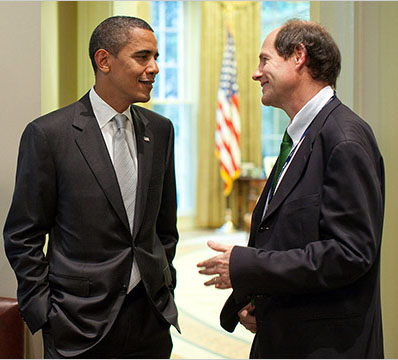 Not very many citizens realize the process that proposed environmental regulations have to go through in any administration in order to get out and published in he Federal Register in one piece. Not only does the regulation have to pass through the EPA's own cost-benefit analysis and survive various Congressional and court challenges, it must also pass through a murkier and more subjective test administered by the Office of Management and Budget, or OMB.
OMB is the very last stop an environmental regulation makes. There are no environmental scientists at OMB to judge the necessity of the regulation. No, OMB's job is to make sure the regulation doesn't hurt industry too much. That may seem like a worthwhile goal, but without any kind of strict guidelines for how to judge that, the conclusion is often open to a lot of interpretation. Industry knows that OMB is its last shot at stopping a regulation that otherwise has broad support form the public and even EPA. Among the non-profit environmental activists in DC, OMB is known as the place regulation go to die.
That's how last year's decision to leave the new ozone standard at 75 parts per billion, rather than the 70 ppb that EPA scientists had advocated – got done. Same thing for a weaker Particulate Matter standard this year. And we can't prove it yet, but we bet OMB had something to do with the rollback in cement plant emission rules being proposed suddenly by EPA/.
The face of the Obama Administration's OMB has been Cass Sunstein, head of the OMB's Office of Information and Regulatory Affairs (OIRA), a powerful department that holds sway over federal agency rulemakings. Having done his damage in the first Obama Administration, he recently announced he was leaving his job and returning to academia. But not before the DC publication "The Hill" got its hands on the e-mails Sunstein sent on behalf of the US Chamber of Commerce to get last year's ozone pollution standard weakened. In effect, he becomes a lobbyist on behalf of industry within the administration after industry has already lost the public health debate.
"The response to The Hill’s FOIA request shows Sunstein played an active role in alerting White House aides to business’s concerns about tightening the ozone standards. Internal communications show that ahead of the September decision, Sunstein circulated strong criticism of the ozone rule from a pair of powerful business groups, the National Association of Manufacturers (NAM) and the Business Roundtable, as well as House lawmakers opposing the tougher standards."
On July 15 of last year, Sunstein sent DeParle and two other aides a copy of a letter from the Business Roundtable to Daley, saying it was “worth reading.” The business group also released the letter publicly at the time.
On July 26, Sunstein sent a wider group of aides — including senior energy adviser Zichal and Phil Schiliro — a column titled “The Latest Job Killer From the EPA” that Business Roundtable President John Engler penned in The Wall Street Journal.
An un-redacted portion of the message from Sunstein states, “I am sure you saw this but just in case.
On Wednesday, Aug. 31, Sunstein forwarded several aides — including Stephanie Cutter, now a top Obama campaign official — an op-ed that NAM President and CEO Jay Timmons penned in The Hill attacking the ozone rule."