Particulate Matter
Time to Push Back and Make Some History
 Dallas Plan Commission Public Hearings on Trinity East Gas Permits, including the "Rawlings Refinery"
Thursday, 1:00 pm
6th Floor Dallas City Hall, City Council Chambers
When the Dallas Plan Commission held its January 10th vote to "reconsider" the denial of gas permits to Trinity East, it didn't allow any public testimony at all about the dangers posed by these proposed drilling and production sites.
Tomorrow it will. And we need you to come and add your body and your voice to this fight.
When the Mayor and City Manager first cooked up this scheme to ram through the last three gas permits in Dallas, they didn't expect to have any roadblocks. They scheduled a meeting five days before Christmas and thought they had it locked up.
They were wrong. You showed up anyway and the Plan Commission voted to deny the permits based on your impassioned pleas for public health and safety.
When City Hall didn't like the results of that vote, and pulled the "reconsideration" stunt in January, 100 of you showed up on a work day to shame the CPC publicly in a meeting that received a huge amount of media coverage.
Now they're holding the second public hearing on these gas permits. We need a larger show of strength to demonstrate we're gaining momentum
We need you to personally come and tell the Plan Commission why it's a bad idea to allow drilling in floodplains and parks and build a refinery next to the city's largest soccer complex where thousands of kids will be playing every weekend.
We know it's getting tiresome, but when you show up at these meetings and hearings, you're helping us win this fight.
Slowly, but surely, your concerns and questions about these Trinity East permits are weighing them down and making it harder for them to get rammed through.
For example, because of your work, we're about to see a bi-partisan call for the Mayor to reject the refinery permit near the Elm Fork Soccer complex. That news will be announced at tomorrow's press conference starting at 1:00 pm.
There's also more in the works challenging the process the City is using to keep these "zombie" permits alive.
The tide is turning. But you have to keep showing up.
Nothing can take the place of a room full of angry citizens. Tomorrow, don't just watch history on TV or read about it the next day. Make history. Thanks.
Zombie Gas Permits on the March Again
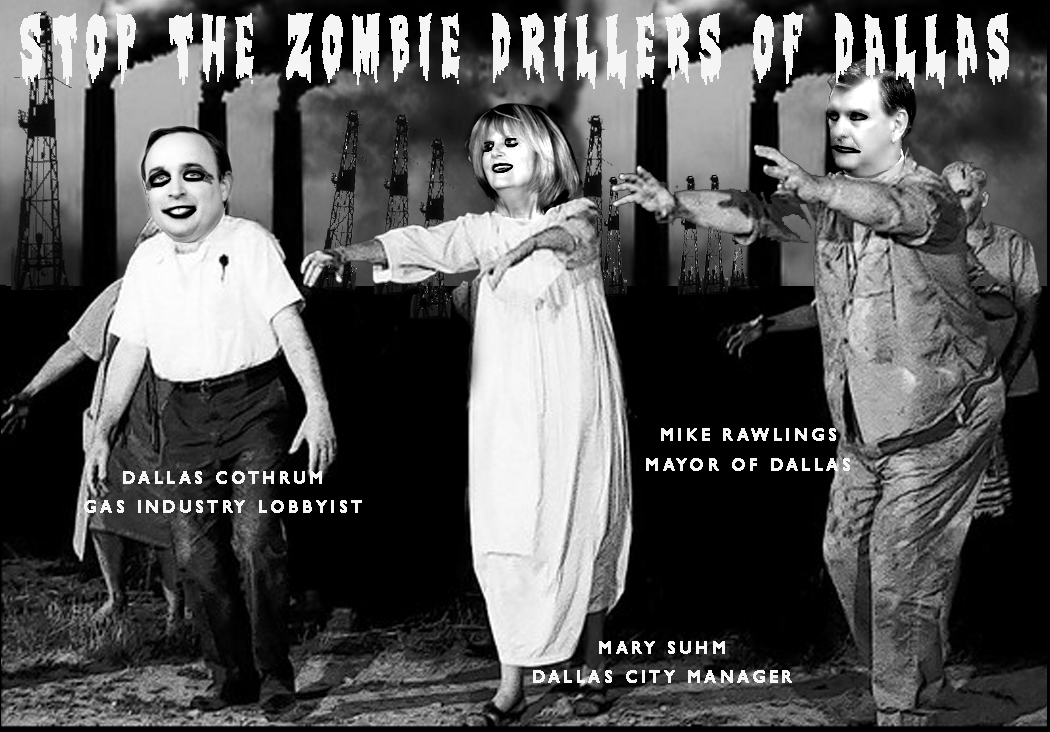
Public (re)-Hearing on the Last Three Dallas Gas Sites.……including the newly-discovered "Rawlings Gas Refinery"
This Thursday
1:00 pm
Dallas City Hall
6th Floor
City Council Chambers
Press Conference followed by City Plan Commission Mtg
This is the "do-over" hearing demanded by the Mayor in order to win approval of these permits – after the first one in December resulted in denial.
Come and defend this victory or they'll steal it away from us.
Dallas Residents at Risk, the alliance of groups that we work with on this issue, will be holding a press conference at 1:00 pm – just like we did before the much-publicized January 10th reconsideration vote – and then heading into the CPC meeting at 1:30. Show up early because we'll be talking about a surprising new development in this fight and bringing you up to date with the latest information.
It's important to demonstrate that opposition to these permits is growing, so if you haven't made it down to City Hall before, Thursday is the day to come.
If you're a regular, then you know how much warm bodies in the audience mean to the moment.
They would have been no news coverage on the 10th without all of us standing up and publicly "shaming" the CPC over its "reconsideration vote" in person. You can't do that by e-mail or petition. We need you there. We need you clapping for the good guys. We need you hissing the bad guys. We need you. There is no substitute.
Looking for material for your testimony? Here are some things we know now about these sites that we didn't when the CPC turned them down in December…..
* Neither the Park Board nor City Council ever voted to allow surface drilling in parks. In fact, city staff assured the City Council in 2008 that would be NO surface drilling in parks. So where did Trinity East get the idea it could have two of its drill sites on city park land (The newly-named Luna Vista Golf Course and near-by gun range)? That's a really good question that nobody at Dallas City Hall has attempted to answer.
* One of the Trinity East sites now contains a large gas refinery and compressor station in addition to a pad site for 20 wells. This facility will become the 10th largest air polluter in Dallas the moment it comes on line, releasing 75-100 tons of air pollution every year only 600 feet away from the City's new Elm Fork Soccer Complex on Walnut Hill.
* Last September, the City of Dallas denied a new permit to a rock crushing facility near the Elm Fork Soccer Complex because its 17 tons of annual air pollution was deemed too threatening for children's health. However, five months later, the city is advocating allowing the operation of a gas refinery and compressor station that is estimated to release some 75-100 tons of air pollution a year. Why is 17 tons of air pollution a health threat but 100 tons is OK? Another great question nobody at Dallas City Hall has answered.
* Trinity East knew when it signed its leases with the City that drilling in parkland and the floodplains was prohibited. So why is the City of Dallas still saying its afraid of a lawsuit by Trinity for backing out of the deal if the permits are denied?
We can win if we keep showing up and asking questions.
Please show up this Thursday.
Guess What? That “Drilling” Permit is Really for a Refinery
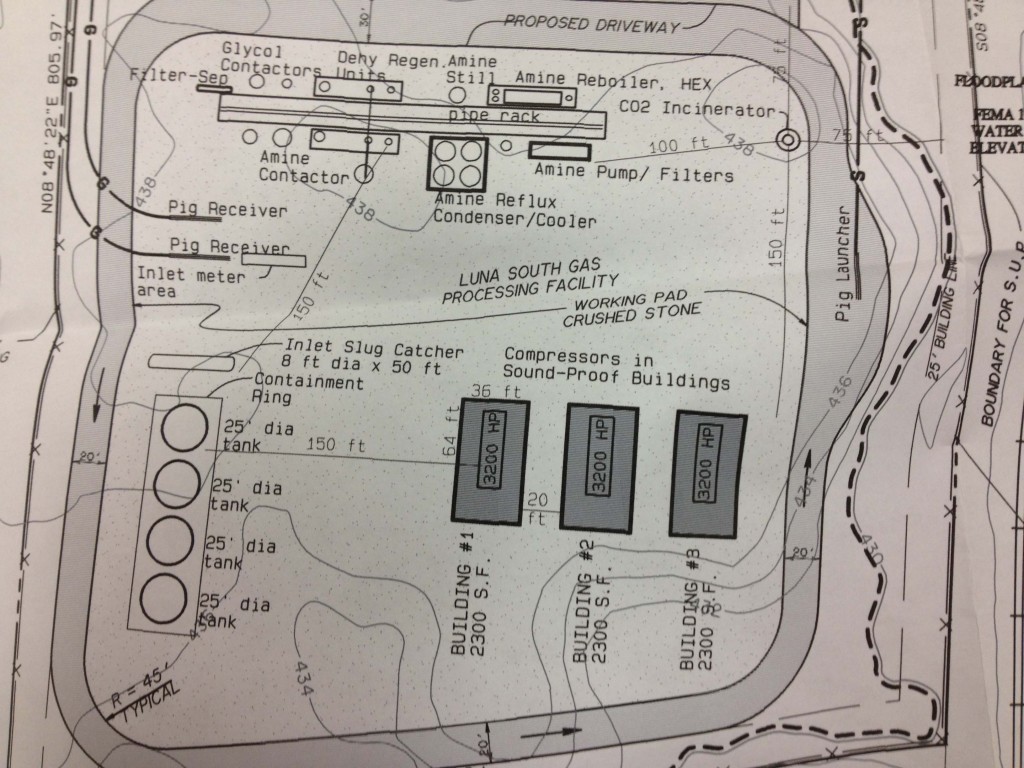 Under the guise of "gas drilling," Dallas City Hall and industry are pressing for approval of a permit that would locate a gas refinery only 600 feet from the new Elm Fork soccer complex, and immediately give birth to one of the ten largest air polluters in the City of Dallas, as well as one of its most toxic.
"There's a huge toxic Trojan Horse hiding in what the City and Trinity East describe as just a gas drilling permit," charged clean air activist Jim Schermbeck of Downwinders at Risk. "In fact, the Elm Fork permit allows for the building of a gas refinery that houses at least three giant compressors as well as an entire acid gas removal unit that strips off hydrogen sulfide, one of the most dangerous substances in the gas patch."
A motion to "reconsider" the Dallas City Plan Commission's 7-5 December 20th rejection of the Elm Fork permit and two other Trinity East gas sites is being advocated by CPC Chair and Mayoral appointee Joe Alcantar at this Thursday's meeting. If successful, the "reconsideration" would require the CPC to hold a second hearing and re-vote on the permits less than a month after denying them.
Opponents say the move is an act of desperation on the part of the Mayor and City Manager to protect a secret deal that was made between the City and Trinity East when the company first paid for mineral rights leases on city owned land. In interviews, the Mayor himself has said that a "deal was cut." Residents say the public was left out of that deal.
But after making calls to City Hall, Schermbeck is convinced that no one in Dallas city government is aware that the "gas drilling permit" being proposed by Trinity East is actually a permit to build a large gas refinery in the Trinity River floodplains.
"They're in way over their heads. City attorneys are still describing this as a drilling permit, but that's not what takes up most of the acreage on this site – it's all about the refinery."
During the December 20th City Plan Commission hearing on the permit, Trinity East representatives stated that the three proposed compressors alone – huge locomotive sized diesel-powered engines that produce thousands of horsepower in order to move gas through pipelines – would release 25 tons of air pollution each every year for an annual total of 75 tons.
That number would immediately place the facility among the city's ten largest air polluters according to the latest state emission totals from 2010. It would join power plants, asphalt and roofing materials manufacturers, and chemical plants as one of the city's biggest "stationary sources" of pollution.
However, Schermbeck thinks Trinity is low-balling their total air pollution impacts by not including other on-site refinery sources like its battery of storage tanks and "acid gas removal" operation that's designed to strip dangerous hydrogen sulfide off of natural gas streams through a series of acid baths and heat.
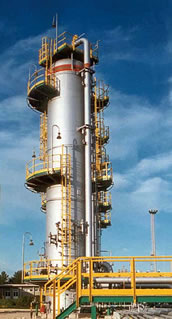
Hydrogen Sulfide is a harmful and toxic compound. It is a colorless, flammable gas that can be identified by its "rotten egg" odor. This invisible gas is heavier than air, travels easily along the ground, and builds up in low-lying, confined, and poorly ventilated areas. It acts as a chemical asphyxiant through inhalation exposure and its effects are similar to cyanide and carbon monoxide, which prevent the use of oxygen.
The equipment to strip off Hydrogen Sulfide from raw gas is large, complicated and dangerous. Site plans show a 200 foot long "pipe rack" with at least 20 "point sources" or stacks, apart from the compressors, where pollution could be released into the atmosphere.
"This isn’t a facility you want near parks or kids," said Schermbeck. "Yet, the City of Dallas seeks to put it just 600 feet away from its new huge soccer complex that’s meant to attract thousands of kids for hours every week."
Such a gas facility also challenges regional smog goals. A 2012 study from the Houston Advanced Research Center found that "routine emissions from a single gas compressor station can raise ozone levels by 3 parts per billion (ppb) as far as five miles downwind, and sometimes by 10 ppb or more as far as 10 miles downwind."
The Trinity East numbers don't reflect the release of greenhouse gas pollution either, which could be enormous from a facility the size of the refinery being proposed. Gas processing plants can release 20 to 80,000 tons of greenhouse gases a year. By comparison, the entire inventory of greenhouse pollution from all Dallas industrial sources in 2005 was 25,000 tons a year.
None of this information was brought up at the December 20th CPC hearing on the Elm Fork permit because the permit request in its current form was only a couple of weeks old when it went to the CPC and the compressors were a last-minute addition to an older, pending request.
Citizens were lucky to get a crowd to even show up five days prior to Christmas, and Schermbeck believes no one at Dallas City Hall bothered to notice that one of the so-called drilling permits was a refinery permit.
"Because it had no expertise of its own, and it was ignoring citizens, City Hall was completely reliant on the company's version of what the permit was for, and Trinity East probably didn't want to admit they were stuffing one kind of permit inside of another. The City didn't perform its due diligence. The result is that it's been completely played by the company."
Schermbeck recounted that he could find no one at City Hall who had any idea of how Trinity East arrived at their "25 tons a year" air pollution figure, knew what kind of specific pollutants that tonnage included, or, most importantly, thought it would be good to know this information before the city handed the company a permit to operate an inner-city gas refinery.
"Mayor Rawlings and the City Manager seem content to give Trinity East a blank check to pollute Dallas air," he said.
A closer look at the refinery site plans also reveals equipment that is fundamentally at odds with the way Trinity East and the gas industry has been portraying what kind of gas Dallas has underneath it.
Up to now, gas operators have been saying Dallas gas is "dry" and without a lot of extra hydrocarbons found in "wet gas" further west. But the acid gas removal units and Glycol conductors proposed for the Elm Fork refinery are built for wet gas.
Schermbeck suggests that perhaps either the City has been mislead about the nature of the gas it owns or the nature of the Trinity East site. He theorized that instead of the Dallas refinery being built for dry Dallas gas, it might be aimed at wet gas coming from the west.
"Dallas would get none of the royalties, but all of the pollution."
Mad? Go to this link now and send an e-mail to the Dallas City Council and City Plan Commission that says you oppose these gas permits and the "reconsideration" of their denial by the Commission:
https://www.downwindersatrisk.org/featured-citizen-action
Do it Now.
Another Win for Your Lake of Air
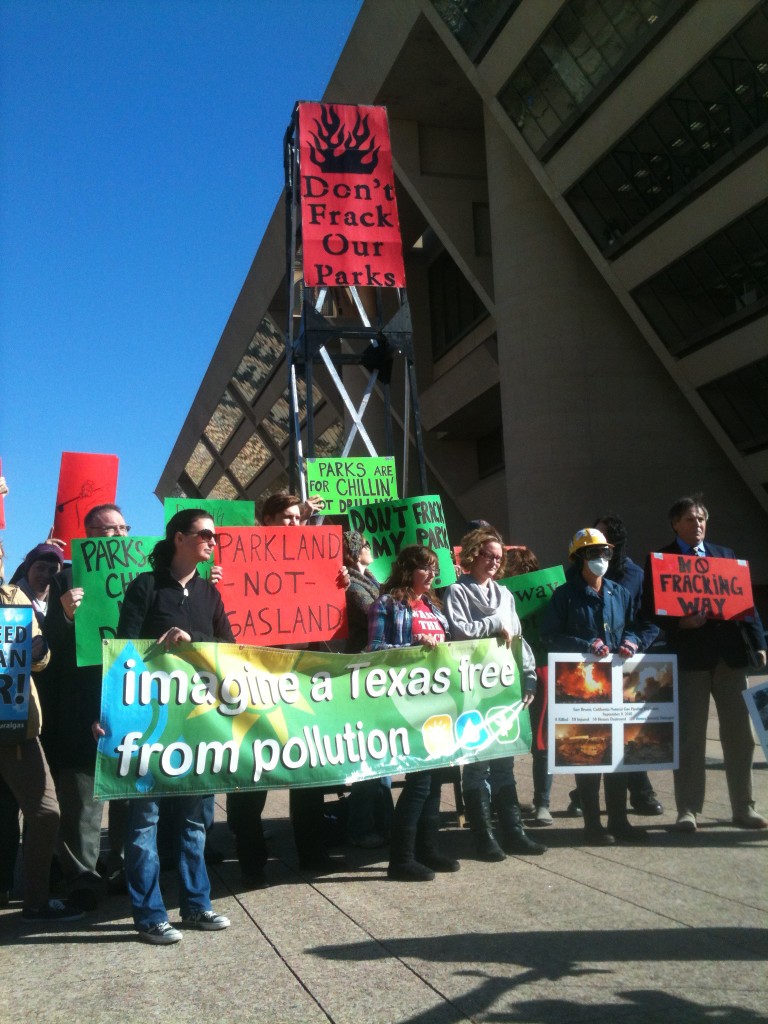 Late Thursday night Downwinders at Risk, as part of the Dallas Residents at Risk alliance, won a victory that citizens weren't supposed to win. Late Thursday night Downwinders at Risk, as part of the Dallas Residents at Risk alliance, won a victory that citizens weren't supposed to win.
Immediately after Thanksgiving, Dallas Mayor Mike Rawlings and City Manger Mary Suhm had plotted to speed the approval of the first gas drilling permit in Dallas. One left over from 2008 that would be exempt from the new drilling ordinance now in the works. One that included a compressor station and allowed for the drilling in city parks and flood plains. City Hall believed it had greased the tracks with threats of gas company lawsuits and given the City Plan Commission no choice but to approve the permit. Just to be sure, they scheduled the Plan Commission vote for December 20th, a time guaranteed to result in smaller crowds of opposition at City Hall. But something happened to make things go a little off-script. Responding to calls for help, enough Dallas residents showed up to articulately speak against the permit for more than an hour. They represented hundreds of neighborhood groups, the environmental community and public interest organizations like the League of Women Voters. If the raw numbers didn't match earlier attendance, the people that did show up represented real constituencies numbering in the thousands. When the vote was finally called at 7:30 pm Thursday evening, we won 7 to 5. The "grandfathered" gas drilling permit would not be approved by the Plan commission. To overturn this decision, the City Council must find 12 votes – a super majority – in favor of the permit at its mid-January meeting. This was not the result Dallas City Hall was counting on the Thursday night before Christmas. But thanks to supporters like you, it was the result that happened. Just as we mobilized opposition to Midlothian cement plant pollution, and helped organize Frisco residents to close down an obsolete and dangerous lead smelter, Downwinders is drawing a line in the Shale in Dallas and leading a push back against irresponsible urban drilling. And, against very long odds, we're winning….again. We do this to protect your lake of air. You ingest an average of 200 gallons of water every year, or about five bathtubs' worth. But you inhale approximately two million gallons of air every year – your own small lake of air.
In DFW, chances are your lake of air is going to have smog in it, along with some soot, some Sulfur Dioxide, Volatile Organic Compounds, as well as an assortment of other manufactured If your tap water was dirty brown and had lots of particles in it, you'd probably choose to drink bottled water. But when the air is dirty brown and has lots of particles in it, your lungs don't have a choice about the air they can use. Downwinders at Risk is here for one reason and one reason only: to defend your lake of air. Whether your air is threatened by smelters, gas rigs, cement plants or too-common smog, we're working to clean it up. For our efforts, Downwinders was proud to receive the first-ever GreenSource DFW award for Outstanding Grassroots Group in 2012. Looking ahead to 2013, your lake of air faces new threats, including worsening new permits by the Midlothian cement plants to burn large volumes of industrial garbage, and indiscriminate aerial spraying of pesticides by local governments. Downwinders at Risk will fight these threats with the combination of good science and citizen activism that's made us the foremost clean air group in DFW. But we need your help to do it. Our work depends on contributions from folks like you who appreciate what we do. Our annual budget is usually only around $30-50,000. We do all the work we do with an amount of money larger groups spend annually on office furniture or travel. We don't get money from a parent group in Washington or New York. Our board members are all from DFW. They're ordinary citizens like you, not rich patrons. Small donations make up a very large percentage of what we take in every year. We couldn't do what we do without you. In the time it took you to read this message, you've inhaled a couple of more gallons of air. Don't you think it should be clean air? You keep supporting us; we keep working for you – and surprising the opposition with victories that citizens in Texas just aren't supposed to be able to pull-off. That's our promise. Thanks for your consideration and Please click here to safely and securely donate online, or send checks to Downwinders at Risk, PO Box 763844, Dallas, TX 75376. Your donation is greatly appreciated and will be wisely spent. Thanks.
|

Traffic Pollution Linked to Autism
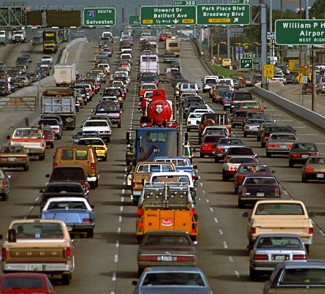 Along with a higher risk of asthma, children who are born and live their first year closer to major freeways also suffer a significantly elevated risk of autism. That's the conclusion of a new study by the Keck School of Medicine of the University of Southern California in Los Angeles.
"Compared to 245 California children who were not autistic, the researchers found that 279 autistic children were almost twice as likely to have been exposed to the highest levels of pollution while in the womb, and about three times as likely to have been exposed to that level during their first year of life.
They found that children exposed to the highest amount of "particulate matter' – a mixture of acids, metals, soil and dust – had about a two-fold increase in autism risk. That type of regional pollution is tracked by the Environmental Protection Agency.
Volk and her colleagues also saw a similar link between autism and nitrogen dioxide, which is in car, truck and other vehicle emissions.
'This is a risk factor that we can modify and potentially reduce the risk for autism,' wrote Dawson in an email to Reuters Health."
It's been estimated by the Centers for Disease Control that autism affects one in every 88 children born in the United States.
A new federal Particulate Matter standard is under consideration by the EPA and could be announced this year. It's been linked to other neurological diseases such as Parkinson's and Alzheimers.
Red Alert for Dec 20th: Dallas Wants to Drill Like It’s 2009
 This is a heads-up to all Dallas residents: Dallas City Hall – the building, the people, everything – has climbed into a time machine and traveled all the way back to 2010.
This has allowed the City council and staff to ignore citizen demands for a more protective gas drilling ordinance, the defeat of a council member who advocated drilling, the creation and conclusion of a task force for helping write a new ordinance, and a bunch of public hearings over the last two years – all so that Dallas City Hall can now just go ahead and do what the gas operators originally asked it to do at the beginning.
The first Special Use Permit request from a gas well operator to allow drilling in Dallas since 2010 will be on the agenda at the December 20th Dallas Plan Commission meeting at City Hall. It concerns a new request to drill by XTO (Exxon-Mobil) at the old Navel Air Station in southwest Dallas, near the Grand Prairie line, that was submitted on November 16th.
Time it's taken the City of Dallas to write a new drilling ordinance in Dallas: 24 months and counting
Time it took XTO to get its new drilling request heard despite not having that new ordinance yet: 20 days
You can read about the sudden jump into municipal action here behind the DMN paywall.
"XTO’s latest requests are apparently on a fast track, headed to the City Plan Commission….
A new, tougher Dallas drilling ordinance is in the works but has not been approved or even published for review, so the existing ordinance would govern the XTO applications, based on the city’s legal view that one set of rules should apply throughout the process."
Every Dallas City Council member appoints a representative to the City Plan Commission. Dallas residents should call their own City Council member (info here), or their Plan Commission appointee (download a list and contact info here) and tell them to reject this XTO request and any others that try to get processed before a new drilling ordinance is in place.
Here's the media release that Dallas Residents at Risk put out this morning about the sudden turn around:
Dallas Officials Consider Throwing Away Years of Work on New Gas Drilling Ordinance and Simply Let Fracking Begin
Have Mayor Rawlings and the Dallas City Council made a decision to move ahead with existing, pending and even new gas drilling applications without taking any action on the new “fracking” ordinance that has been in the works since 2010?
Two weeks ago, Exxon-owned gas company XTO filed a new gas drilling application—because their previous bid to drill at Hensley Field was denied by the Dallas City Plan Commission two years ago. Then the City Council appointed a special Gas Drilling Task Force, whose members met every week for eight months to consider proposals for a new ordinance. They finished their work in February of this year and issued their official recommendations, yet the City Council has not even begun drafting a new ordinance. The only rumored exception: City officials may consider simply changing the existing ordinance to allow fracking in floodplains, which would be necessary for gas company Trinity East to move ahead with its plans to drill in floodplain areas along the Trinity River. Neighborhood groups and environmental advocates say that’s unacceptable.
"This is the largest retreat of leadership that I can ever remember on such an important public health and environmental issue,” said Jim Schermbeck, Downwinders at Risk. “After three years of citizen complaints, a task force created, convened and concluded, expert and public testimony, and all Dallas residents get is a pair of shrugged shoulders from Mayor Rawlings and the Council? It's a bad joke."
There have been several major scientific studies surrounding the risks of fracking since Dallas officials began debating the new ordinance. Community leaders worry that new evidence pointing to health and safety risks for residents living near drilling sites will simply be ignored.
“So what if there's a 66% higher cancer risk within a half mile of a gas well; so what if already bad Dallas smog is made worse; so what if we still have no idea what chemicals will be used for fracking in Dallas,” said Claudia Meyer of the Mountain Creek Neighborhood Alliance. “It's as if the Mayor and Council are closing their eyes, plugging their ears, and desperately hoping to make all these new facts go away by just pretending they never happened.”
The new drilling applications leave Dallas officials exactly where they started, with the City Plan Commission being asked to shoulder the responsibility of deciding on whether to allow fracking to go forward. Advocates say the Commission should decline this offer and let the City Council do what it said it was going to do: Draft and pass a new gas drilling ordinance first.
“If we were only going to end up where we started, what was the point of a task force, or public hearings or anything that's happened since permitting stopped because the City wanted a new drilling ordinance,” said Zac Trahan with Texas Campaign for the Environment. “This is complete and utter dereliction of duty and public trust by the elected officials of this city on one of the most important public health and environmental questions to face Dallas in decades."
Hell Freezes Over: Why the New Federal Report on Midlothian Matters
Everything in italics and "quotation marks" below is a direct quote from the latest chapter of the ATSDR's (Agency for Disease Registry and Toxic Substances) "health consultation" on the impact of certain kinds of industrial air pollution on the local population.
You should take five minutes to glance over the sentences. They've taken a better part of a decade and a great deal of citizen persistence to make it to print. You can read them now only because of a petition to ATSDR by local Midlothian residents, spearheaded by Sal and Grace Mier in 2005, prompted the Agency to get involved.
They're also rarer than hen's teeth. Because the words actually come together in sentences to conclude human health was likely harmed by the pollution from Midlothian's three cement plants and steel mill, as well as recommend decreasing that pollution.
Among grassroots activists, ATSDR has a notorious reputation for issuing reports that are "inconclusive by design." The joke is that the agency never met a facility it couldn't learn to live with. And sure enough, previous chapters in this saga have disappointed. Just two years ago, ASTDR's shoddy work in investigating health impacts in Midlothian and elsewhere across the country was the subject of a Congressional hearing.
These ATSDR reports generate no new data. Instead, they are retrospective looks back at the available sampling/monitoring information and a piecing together of possible exposure paths and levels. As such, they're only as good as the data they can digest. In Midlothian's case, that means they're completely dependent on state monitoring – criticized by citizens for years as being inadequate. Nevertheless, with this latest report, citizens have been somewhat vindicated because of what even that inferior sampling revealed.
The health impacts described in this latest report are also limited to what are called "Criteria Pollutants" – old school substances like lead, soot, sulfur dioxide, and ozone that have been regulated by the Clean Air Act for decades. They do not apply to more exotic kinds of air pollution like endocrine disruptors, which there's little or no monitoring for at all.
So there are a lot of missing pieces, but the ATSDR's conclusions and recommendations have an impact on your lungs and maybe your own local fight, even if you don't have a Midlothian zip code. For the first time a federal agency known to avoid coming to any conclusion about anything was forced to say that human health was adversely affected by the operations of industry in Midlothian.
There's a public meeting on this report on December 6th from 7 to 8:30 pm at the Midlothian Conference Center.
Health Consultation/Assessing the Public Health Implications of the Criteria (NAAQS) Air Pollutants and Hydrogen Sulfide MIDLOTHIAN AREA AIR QUALITY MIDLOTHIAN, ELLIS COUNTY, TEXAS
NOVEMBER 16, 2012 U.S. DEPARTMENT OF HEALTH AND HUMAN SERVICES
Agency for Toxic Substances and Disease Registry
Division of Community Health Investigations
Recommendations:
"Texas Commission on Environmental Quality (TCEQ) should take actions to reduce future SO2 emissions from TXI to prevent harmful exposures."
"TCEQ should take actions to reduce future PM2.5 emissions from TXI and Gerdau to prevent harmful exposures."
"TCEQ should continue efforts to reduce regional ozone exposures."
"TCEQ should insure that levels of these air pollutants do not increase to levels of concern in the future."
"TCEQ should conduct ambient air monitoring to characterize exposures to persons located downwind of the Ash Grove and Holcim facilities and take actions to reduce SO2 emissions from these facilities if harmful exposures are indicated."
"TCEQ should conduct appropriate ambient air monitoring to characterize exposures to persons located downwind of the Ash Grove and Holcim facilities and take actions to reduce PM2.5 emissions from these facilities if harmful exposures are indicated. In addition, particulate matter monitoring is needed in residential areas that are in immediate proximity to the facilities’ limestone quarries."
"In ATSDR’s judgment, one notable gap in monitor placement is the lack of monitoring data for residential neighborhoods in immediate proximity to the four industrial facilities, where fugitive emissions (those not accounted for in stack emissions) likely have the greatest air quality impacts."
Human health was likely harmed, and is still threatened by industrial pollution from Midlothian
From Sulfur Dioxide:
"Breathing air contaminated with sulfur dioxide (downwind of TXI's cement plant and the Ameristeel steel mill) for short periods could have harmed the health of sensitive individuals.…ATSDR cannot determine if harmful exposures to SO2 have been occurring downwind of the Holcim and Ash Grove facilities."
"All 24-hour values in Midlothian were lower than EPA’s former standard. However, the World Health Organization’s health comparable guideline is 8 ppb (WHO, 2006). This value was exceeded at both the Midlothian Tower and Old Fort Worth Road stations in most years of monitoring through 2008…"
"Overall, in the years 1999 to 2001, Old Fort Worth Road (monitoring site north of TXI) ranked among the stations with the highest 24-hour average sulfur dioxide concentrations in the state. As sulfur dioxide emissions from TXI Operations decreased in following years, so did the measured concentrations at this station."
From Particulate Matter, or Soot:
"Public health concern is warranted for adverse health effects from long-term exposure to PM 2.5 in Cement Valley"
"In the past (1996–2008), annual average PM 2.5 levels measured were just below the range of concentration proposed by EPA for lowering the annual average standard…Moreover, many of the annual average PM 2.5 concentrations were above the more conservative WHO health guideline (10 μg/m3)."
"No PM 2.5 monitoring data are available to evaluate exposures downwind of the Ash Grove facility. Furthermore, although annual average PM2.5 levels detected at the Holcim monitor indicate possible harmful levels…."
"We estimated that annual average PM2.5 levels in the vicinity of the Gerdau Ameristeel monitor, from 1996 to 1998, could have ranged from about 22.6 to 26.4 μg/m3, which is above both the current and proposed EPA standard. Using EPA’s approach, the 3-year average level might have been above the NAAQS standard of 15 μg/m3 for these years in the vicinity of the Gerdau Ameristeel monitor. Applying this same approach to annual average PM10 data from other monitors suggests that PM 2.5 levels could have been close to the current and proposed PM2.5 standard, especially for the Wyatt Road, Old Fort Worth Road, Gorman Road, and Midlothian Tower monitors."
"Consistent with the other pollutants discussed earlier, the estimated annual PM 2.5 emissions listed for these facilities are among the highest for Ellis County and also rank high among industrial sources statewide."
From Lead:
"Past lead air exposures during the period 1993 to 1998, in a localized area just north of the Gerdau Ameristeel fence line, could have harmed the health of children who resided or frequently played in this area….In the mid-1990s, the lead levels measured in this area ranked among the highest lead concentrations measured statewide."
From Smog:
"Scientific studies indicate that breathing air containing ozone at concentrations similar to those detected in Midlothian can reduce lung function and increase respiratory symptoms, thereby aggravating asthma or other respiratory conditions. Ozone exposure also has been associated with increased susceptibility to respiratory infections, medication use by persons with asthma, doctor’s visits, and emergency department and hospital admissions for individuals with respiratory disease. Ozone exposure also might contribute to premature death, especially in people with heart and lung disease. School absenteeism and cardiac-related effects may occur, and persons with asthma might experience greater and more serious responses to ozone that last longer than responses among people without asthma."
"The Midlothian Tower site recorded ozone concentrations above the level of the NAAQS for several years (TCEQ, 2011b), and the Old Fort Worth Road site has been measuring ozone concentrations close to the level of the NAAQS. Based on the data from both monitors, from August 1997 to September 2011, the 8-hour EPA ozone standard has been exceeded 236 times."
From Breathing Multiple Pollutants:
"ATSDR believes that sufficient information exists to warrant concern for multiple air pollutant exposures to sensitive individuals, especially in the past….The ability of the scientific community to fully and quantitatively evaluate the health effects from the mixture of air pollutants people are exposed to is at least ten years away (Mauderly et al., 2010)……The current state of the science limits our ability to make definitive conclusions on the significance of simultaneous exposures to multiple criteria air pollutants. ATSDR’s conclusions are based on our best professional judgment related to our understanding of the possible harmful effects of air pollutant exposures in Midlothian and our interpretation of the current scientific literature; therefore, these conclusions are presented with some uncertainty."
From New Production:
"Reductions in SO2 levels in Cement Valley have occurred since late 2008 resulting in exposures to both sensitive individuals and the general public that are not expected to be harmful. These reductions may be caused, in part, by declining production levels at local industrial facilities. Future harmful exposures in Cement Valley could occur if production rises to at least previous levels and actions are not taken to reduce SO2 emissions."
Regulatory "Safe Levels" Very Often Aren't
"Past SO2 exposures were not above the Environmental Protection Agency (EPA) standard in place at that time but were above the current standard."
"Past lead air exposures were not above the EPA standard at that time but were above the current standard.…The scientific community now believes that the current standard (15 μg/m3) for fine PM (measured by PM2.5) is a better indicator of possible long-term health effects from PM exposures than was the former EPA annual average standard for PM10 (EPA, 2006b)."
PM Pollution Decreases Brain Function in Over 50 Population
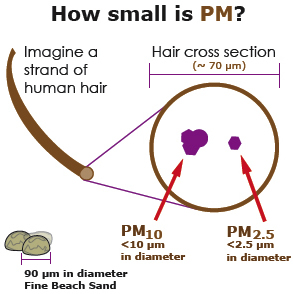 In a study involving approximately 15,000 people, the U.S. National Institute on Aging found that higher levels of exposure to fine particulate matter pollution, or soot, is prematurely aging the brain of those 50 and older by up to three years.
PM pollution had already been linked to other neurological conditions by previous studies, including Parkinson's and Alzheimer's Disease. Scientists have discovered that the microscopic particles can actually pass through the lung wall and into the circulatory system.
"As a result of age-related declines in health and functioning, older adults are particularly vulnerable to the hazards of exposure to unhealthy air,’ said Dr Jennifer Ailshire, from the Andrus Gerontology Center at the University of Southern California.
Air pollution has been linked to increased cardiovascular and respiratory problems, and even premature death, in older populations, and there is emerging evidence that exposure to particulate air pollution may have adverse effects on brain health and functioning as well."
PM pollution is found in the exhaust of all internal combustion engines, as well as the pollution from steel mills, smelters, cement kilns, power plants or any facility with a boiler or furnace. The amount of exposure to PM pollution was one of the reasons the federal Agency for Disease Registry and Toxic Substances (ATSDR) found that the health of residents living downwind of TXI's cement plant and the Ameristeel steel mill in Midlothian could have been compromised. Many leading researchers believe there's no safe level of exposure to PM pollution – that is, that any amount of exposure to it has the potential to cause harm.
The Environmental Agenda of a Second-Term Obama Administration
 Yeah, we don't know what it is either. We suspect not even Lisa Jackson knows. But of course, that doesn't keep the chattering class from speculating about what will or won't happen in the next four years on the energy and environment front. So without further ado….
Here's a pretty banal piece from the Hearst Chain that includes the premise the president is free "to approve natural gas exports and the controversial Keystone XL pipeline without fear of alienating environmentalists he needed at the ballot box."
Ah, but here's a piece from USA Today that quotes heavily from Romney supporters in industry to suggest the president will reject the pipeline and propose a slew of anti-oil and gas regulations.
Then there's this much longer and better Bloomberg piece that actually focuses on EPA rules already in the, er, pipeline, such as new lower Particulate Matter ambient air standards, the possibility of the lower ozone standard Jackson was originally going to propose before she got mugged by the White House re-election campaign, and new greenhouse gases limits for power plants.
It also mentions the possibility – brought up by industry lobbyist and Dallas native Scott Segal, no less – of a carbon tax as part of a solution to the "fiscal cliff" now getting so much post-election coverage, and talks about whether Lisa Jackson is staying or going.
Liberal thinktankers at Think Progress just posted this article advocating the "Five Essential" environmental rules that should be the focus of Obama's second term.
Finally, not mentioned in any article so far, but on the minds of kilnheads across the country, is the fate of the inane proposed revisions in cement plant emissions rules that were the subject of an August EPA national hearing at the Arlington City Hall that many of you attended. A final decision on those is due by December.
Does Pollution Discriminate?
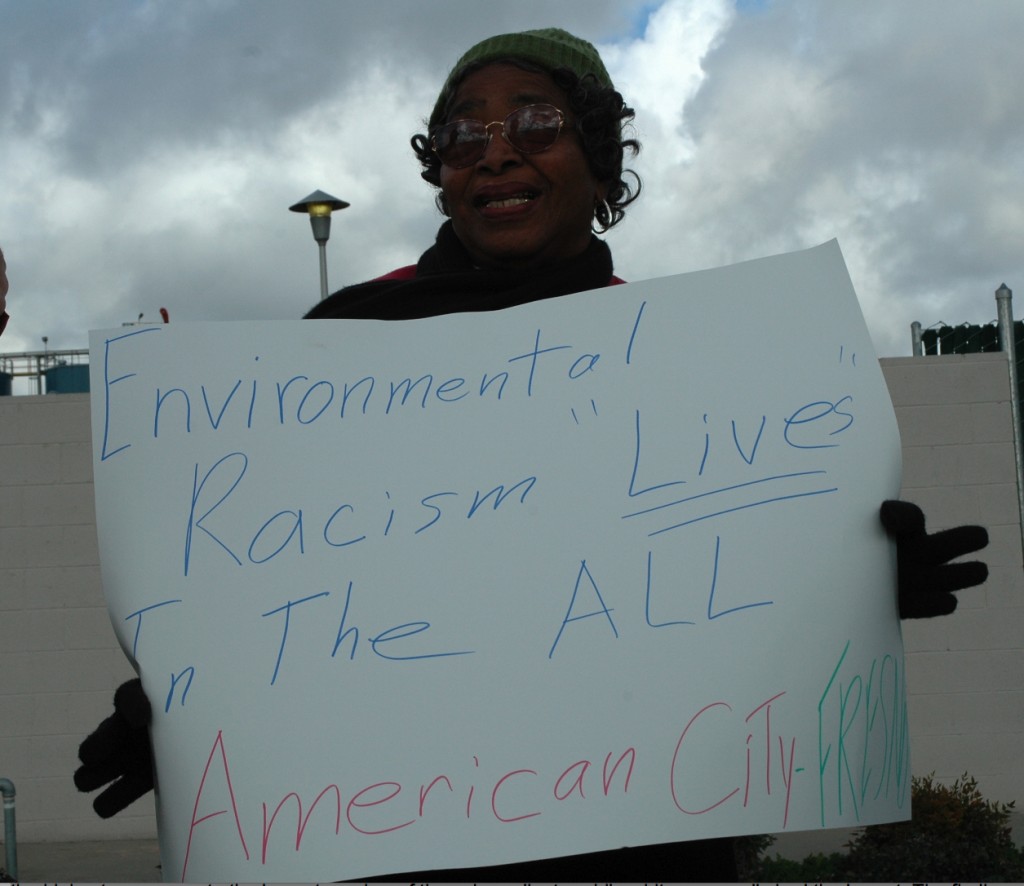 Yes. Or rather the forces that shape where pollution and people co-exist.
Historically we know that low-income and non-white urban areas are more likely to have polluting factories, Superfund Sites and illegal dumping. In large part, this is because the places within a city where "undesirable" heavy industries were allowed to locate were also traditionally also the only places where "undesirable" people, re: anybody that wasn't white or had a little money, were allowed to live. This is how you get massive segregated public housing complexes built across the street from huge lead smelters, as was the case in Dallas only a few decades ago. But maybe you thought that was all a thing of the past.
Today comes word of a new study out of Yale that confirms that people of color and the poor in the US suffer disproportionately from exposure to one of the most insidious kinds of pollutants – extremely tiny particles of poisonous soot called Particulate Matter 2.5 (that's soot that's 2.5 microns or less in size. A human hair is about 10 microns wide). Researchers looked at air monitoring and demographic data from five cities – Los Angeles, Pittsburgh, Cincinnati, St. Louis and Fresno. It is the first study to "reveal major racial and economic differences in exposures to specific particle ingredients, some of which are linked to asthma, cardiovascular problems and cancer." Not to mention strokes, and debilitating brain diseases like Parkinson's and Alzheimer's.
"Tiny particles of air pollution contain more hazardous ingredients in non-white and low-income communities than in affluent white ones, new research shows. The greater the concentration of Hispanics, Asians, African Americans or poor residents in an area, the more likely that potentially dangerous compounds such as vanadium, nitrates and zinc are in the mix of fine particles they breathe. Hispanics had the highest exposures to the largest number of these ingredients, while whites generally had the lowest. The findings of the Yale University study add to evidence of a widening racial and economic gap when it comes to air pollution. Communities of color and those with low education and high poverty and unemployment face potentially greater health risks even if their air quality meets federal health standards."
So how does that affect DFW? We need to let studies like this inform our decisions about city planning. In places that have a lot of pollution problems, it's probably a good idea not to keep adding more. Think of where the fracking in Dallas will be taking place – mostly in minority neighborhoods, along the floodplain, with other "undesirable" industries like landfills near-by. Think about the struggle over community control of the CF Hawn freeway re-do of Deadman's Curve in South Dallas where residents want fewer cars going slower instead of more cars going faster. Cars are a big source of PM pollution. Freeways are large conduits for PM pollution. In the last five years there's been a slew of studies showing more asthma and illness the closer you live to a major freeway. Guess which sub-populations get more freeways in their part of town?
There is an environmental equivalent of Affirmative Action that needs to be incorporated into city zoning and planning. One that considers the past historical inequities and current environmental body burden of affected neighborhoods. One that makes sure that society's "undesirables" do not keep getting piled on top of one another