
air toxics
New Studies Link Air Pollution to Cancer, Heart Failure and…Appendicitis?
 According to CBS News
"A new study published July 10 in The Lancet showed that even breathing low levels of air pollution for a prolonged period of time could raise risk for the often-deadly lung disease. Another study released on the same date showed that short-term exposure to most major air pollutants could increase the risks of hospitalization and death from heart failure."
Lung cancer risks went up 18% with each increase of 5 migrograms of PM 2.5. Researchers noted that they did not find a level of pollution for where there was no risk, and the results indicated "the more the worse, the less the better" when it came to pollution.
"At this stage, we might have to add air pollution, even at current concentrations, to the list of causes of lung cancer and recognize that air pollution has large effects on public health," Takashi Yorifuji from the Okayama University Graduate School of Environmental and Life Science and Saori Kashima from Hiroshima University in Japan…."
A second study shows the risk of dying or going to the hospital because of heart failure increased by 3.52 percent for every 1 part per million increase of carbon monoxide levels; 2.36 percent for every increase of 10 parts per billion of sulfur dioxide; 1.7 percent for ever 10 parts per billion increase in nitrogen dioxide; and about 2 percent for every 10 micrograms per cubic meter increase of particulate matter. Surprisingly, increases in ozone were not linked to heart failure. Unsurprisingly, you're breahting in all of these kinds of air pollution if you live in DFW.
All of that is kind of old news – put stuff in air, see stuff harm your lungs and heart. But here's a new "adverse health effect" being linked to air pollution – appendicitis. While not as lethal as lung cancers and heart attacks, anyone who's had their appendix rupture can tell you it's not a pleasant experience.
And while ozone may not have been linked to heart problems in that previous study, the New York Times reports a Canadian one links it to a slight increase in your chances of having appendicitis.
High ozone levels were associated with an increased number of hospitalizations for appendicitis and were even more strongly associated with cases of burst appendix. For each 16 parts per billion increase in ozone concentration the scientists found an 11 to 22 percent increase in ruptured appendix cases. The study was published in Environmental Health Perspectives. The associations persisted after controlling for age, sex, season of the year and the presence of other air pollutants, like nitrogen dioxide and particulate matter. The reason for the association is unclear, but studies in mice have shown that air pollution can alter the animals’ abdominal bacteria.
Who knew?
The Most Toxic Place in Frisco? City Hall
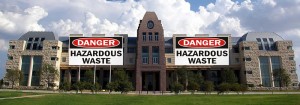 There have been times and places when Frisco's official municipal insularity has undoubtedly worked in its favor. It's focused, "go-our-own-way" style is probably a big reason why the city has carved such a high-profile niche among DFW suburbs.
But the last two years of wrestling with the Exide lead smelter has revealed all of the vices of such an approach when it comes to environmental hazards and public health.
Given the rapidity of events, it's easy to forget that only two years ago, the same city officials now in charge of pursuing a clean-up of the Exide site were lauding the smelter as a valuable member of the local business establishment and trying to find ways to keep it operating. Having a lead smelter spewing tons of toxic air pollution near the High School in the middle of town was OK with these folks. They'd overlooked decades of state and federal environmental violations by the smelter. They overlooked the destruction of a city water treatment plant by the smelter. Hey, Exide employed 100 people. And "what could the city do anyway?"
Only the intervention of citizens, campaigning with the well-known idea of the city being able amortize the facility out of existence, forced the city to finally confront the incongruity of the smelter's operation with its 2013 Frisco surroundings.
Frisco parents didn't sign their mortgages in blood to gain entry in a prized school district only to have their kids IQ suffer because of an obsolete lead smelter. To their credit city officials sensed that the curtain had been pulled back too far on their pretense to go on. They did a 180 and got the smelter out of town. But they did it the Frisco Way: the city manager and city attorney wrote a secret, complicated, $45 buy-out agreement with Exide that was passed by the Council without any public hearing and no debate.
After the unanimous vote, when someone asked Frisco Councilman John Keating if he'd support a community oversight committee to make sure we got the best clean-up of he smelter site, his response was "We're it." And just like that, it was supposed to all go away. Containment.
But lead smelters are messy places, especially outlaw operations like the one Frisco hosted for so long. Especially when they operate decades before most of the regulations governing them now were implemented or enforced. They're hard to contain unless you know what you're doing. And nobody could tell Frisco it didn't know what it was doing. It was Frisco!
The city didn't feel any obligation to let its residents know how it would handle the clean-up, how extensive the clean-up would be, what kind of technologies or strategies might be used. Perhaps most importantly of all though, city officials never asked themselves or their constituents the most basic of planning questions, "What's going to happen to the Exide site?"
The City's de facto answer seems to be: a toxic waste dump. It appears to be fine with letting Exide hold on to the core of the smelter property, where all the worst contamination is, where tons and tons of lead waste are buried or piled or dumped, all uphill from Stewart Creek that still runs right through the site. So amidst all the million-dollar homes and exclusive shopping malls there will be this large toxic no-man's land with scary warning signs and the need for continued monitoring for decades. City officials meet any skepticism of this plan with a shrug of their shoulders. "What can the City do?" For a town with a reputation for being "can-do." Frisco City Hall has lacked the imagination to see anything but the need for an extensive cover-up – literally and figuratively – when it comes to the Exide situation.
Instead of dealing straight-on with the challenge, officials decided to play a game of misdirection by emphasizing what a great new regional park it was building…..directly downstream of the still-contaminated smelter site. But please, mention of any current or potential contamination problems at these presentations by any city official is strictly prohibited. It's just so uncouth to keep bringing that up.
If you lived outside the bubble of Frisco City Hall, you could see the absurdity in this strategy. Putting a park downstream of a dirty Exide site is like putting puppies on the rail at the end of a roller coaster ride. You're just waiting for disaster to strike.
And it turns out those city officials knew it too. They just didn't want to tell their residents.
Six months before they signed that complicated $45 million secret deal, officials were aware there was extensive contamination of the Grand Park area by Exide. Maybe that's one reason they wanted to keep the agreement secret.
We've been told by more than one engineer that the City had a responsibility to turn over that information to the EPA and state when it got the results in November 2011. Instead it just sat on it. How many Frisco children have been needlessly exposed to hazardous material in and around Stewart Creek in the intervening 18 months? How could any Frisco official in good conscience keep this kind of thing from the public?
It took another year and a half for the City to follow-up with its "visual survey" of the entire 5-mile course of Stewart Creek, from the smelter to Lake Lewisville. Then, instead of taking equipment with them on that trip up the Creek that would be able to identify lead waste and give you some idea about its toxicity, including stuff you couldn't necessarily see at first glance, it was merely a sightseeing affair where "suspected" slag and chips that were out in the open were inventoried.
However, even that expedition was enough to confirm that the Creek had been acting as a sluice for Exide waste into the Lake. The City had those results three months ago.
All of this information was known in early June when Frisco Unleaded and Downwinders released a small report on the threat to Frisco's Grand Park from the smelter site. We did it at one of those Council presentations about the park where all of its virtues are discussed, but none of its environmental problems.
Not one city official spoke to the contamination problems facing the park. And it was clear that most were furious at citizens for once again raining on their Grand Park parade. It's as if Frisco city officials really believe that if you just don't mention the Exide toxic waste problem out loud, it can't hurt you.
It's one thing to apply that kind of magical thinking in denying Open Records Act requests and fluffing-up park presentations, but when it infects your ability to protect public health, it becomes a more serious matter.
Not only has the city hid information about hazardous materials that it had a duty to make public. It's been caught trying to actually hide the hazardous materials. When a TCEQ inspector advises the city in 2012 that there's a new pile of battery chips that's washed up, the city's response is to cover it up with "geo-membrane fabric" – even when the TCEQ inspector says that's not going to be sufficient. They don't want to dig it up. They don't want to do more testing to see the extent of contamination. They don't want to actually remove it. They want to cover it up. That's the city's entire M.O. when it comes to Exide these days. And that's what must change.
Had the city been up front with its own residents in real time about the smelter contamination, there would have been no press in June about how the smelter will impact Grand Park. The public would have already known. There would have been no wave of coverage about these City reports and TCEQ memo all of this last week. It would have been out in the open already. By trying to hide information from the public the city only insures it will always be in a reactive mode and behind the curve. It automatically gives more power to curious citizens to write the narrative, as this past month has shown. When your residents are finding this stuff out from us, instead of the local government that insists it's got everything under control, it's a sure sign that they don't have every thing under control
So far, only Frisco Unleaded and Downwinders have offered anything like a long-term answer to the most important question – what's going to happen to the Exide site? And we're even on the planning department's payroll.
But the City Manager, City Attorney and Mayor would all rather drink lye than admit they've been wrong about this problem, or that Frisco Unleaded might have a good idea or two. It's the toxic mix of arrogance, lack of vision, and conflict of interest that's doing the most to poison Frisco right now. Exide's messy waste problem is only a symptom of this kind of mind-set. Before the definitive clean-up can happen at Exide, there's got to be one at City Hall.
A Smelter Runs Through It: New Documents Confirm Widespread Lead Smelter Contamination of Frisco’s Stewart Creek, including Grand Park
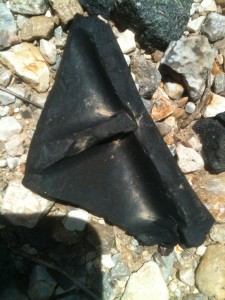 (FRISCO)—Three new documents, including two reports paid for by the City of Frisco but never publicly released, confirm that the former Exide lead smelter is the source of battery chips and slag waste that line Stewart Creek from Frisco to Lake Lewisville, and concludes the smelter site remains a continuing source of contamination.
Samples taken in 2011 by a City of Frisco contractor found that 71% of Creek sediment collected had elevated levels of lead, cadmium or arsenic. A “visual survey” done for the City of smelter waste just three months ago found at least 45 “hot spots” of battery chips or slag along the entire five-mile route of the Creek, from the western edge of the smelter site all the way to its mouth at Lake Lewisville. Last year a state environmental inspector warned in an e-mail that she was concerned about the smelter’s battery chips making their way “into Stewart Creek and flowing to Grand Park where a parent who is also a Frisco resident pulls one out of their child’s mouth.”
Local group Frisco Unleaded received the documents last week as part of an Open Records Act Request to the Texas Commission for Environmental Quality. Members say the contents prove the public is right to be concerned about the impact of the smelter site on the City’s ambitious new Grand Park development. “These reports show why any activity downstream of the smelter, including the enjoyment of the new Grand Park, will be impossible without a comprehensive clean-up of the entire Exide site. This problem isn't just going to go away or fix itself," stated Meghan Green.
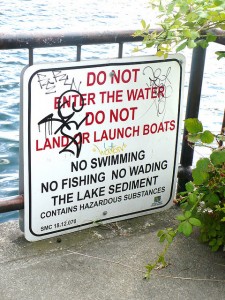
Green also called for the EPA to step in and take over a clean up that until now, has been directed by the state and city. "It’s clear that the toxins at the smelter are being washed into Stewart Creek with each rainfall and are surfacing and will continue to surface along the whole length of the Creek, which happens to also be a tributary into Lake Lewisville. To add insult to injury, Lake Lewisville is a source of drinking water for Dallas. To say that I'm concerned is an understatement. It’s time for the EPA to get more aggressive about protecting public health from this site.”
Although the smelter ceased operation in 2012 and demolition has taken place to remove most of the structures from the central Frisco site, the land itself is the burial ground for tons of lead waste in the form of pieces of used lead-acid batteries broken up for their contents and the slag waste produced from the smelting process. Frisco has arranged to buy an outer ring of the smelter property, but the core part of the operation remains in the hands of Exide, now going through bankruptcy. It’s that core, as well as the property Frisco is buying, that’s the source of the battery chips and slag migrating to Stewart Creek, which runs right though the middle of the Exide site.
That continuing threat to Stewart Creek, along with an assessment of historical contamination, is extensively chronicled in the City and State documents released by Frisco Unleaded today. They include:
1. A November 2011 “Limited Site Investigation” Of Stewart Creek by the City of Frisco
The City of Frisco specifically requested this investigation “to evaluate chemicals of concern in sediment in the vicinity of the Grand Park project.” Samples of sediment were collected at a total of 30 sites, and tested for Lead, Arsenic, Cadmium, Selenium, and Sulfates. 71% of the sediment samples tested for Lead, Cadmium and Arsenic exceeded the Texas Commission on Environmental Quality Ecological Benchmark.
2. March-April 2013, of Stewart Creek, Interim Report, City of Frisco
A year and a half after the Creek sediment sampling, contractors for the City of Frisco performed “a walking survey to identify and document the potential presence of visible battery chips and slag in Stewart Creek."
Chips and/or slag were observed in at least 45 different spots along the entire five-mile route of Stewart Creek from the smelter site in Frisco to the entrance of the Creek into Lake Lewisville, or an average of every 600 feet. The first sample was found at the mouth of the Creek as it flows into Lake Lewisville, a source of drinking water for the City of Dallas.
At least 29 hot spots of battery chips and/or slag were found within the boundaries of Grand Park, from Stonebrook Parkway on the south to the North Dallas Tollway, more than 4 times the number of any other segment along the survey. “Frequent occurrences of concentrated battery chips and potential slag material were observed in the Stewart Creek channel in Grand Park from Stonebrook Parkway to the Dallas North Tollway bridge.”
A Smelter Runs Thru It-Summary
3. TCEQ_battery_chip_emails from Texas Commission On Environmental Quality Staff on Recurring Battery Chip Contamination
In June of last year a TCEQ inspector wrote her supervisors that new concentrations of battery chips had shown up in previously clean-up areas of the smelter site. “These battery chips were believed to have washed up this year and accumulated down gradient along the tree line. Some of these chips were observed making their way down towards Stewart Creek. It looks like they’re being carried toward the trees and the creek with the rainwater. (Exide and City representatives) stated that the area was tested (prior to this new accumulation of battery chips) and it was below 250 ppm. I pointed out that there also wasn’t as many battery chips in those areas when the APAR was submitted. In the report, it states that the area would be covered with the geomembrane fabric and it sounded like this is what they want to do with these new battery chips as well (cover them with fabric). I pointed out that if I were to collect a sample that it would most likely exceed 250 ppm and there were just too many that had accumulated to be covered up with the fabric. As we all know, these chips move under rainy conditions. I told (the City representative) that our concern and I’m sure the city’s concern as well is if these battery chips made it into Stewart Creek and flowed to Grand Park where a parent who is also a Frisco resident pulls one out of their child’s mouth.”
One of her supervisors responds that chips will always come up with a rain: “Based on my experience from working on site contaminated with battery chips and slag, rubber battery chips that are buried will float to the surface (just tires in landfills). While working on sites associated with the West Dallas RSR lead smelter, with the exception of where chips were used as road based, every site that had surface chips on the surface were located over areas where slag and battery chips have been deposited in the past. Were subsurface investigations conducted in the areas of concern to determine the extent of contamination? Or did they only conduct surface investigations.”
Critics of the City’s approach to the smelter site clean-up cited the e-mail as a stunning example of Frisco’s caviler attitude about the contamination problem posed by the Creek. “We’ve often said the City is trying to figuratively cover-up the problem of Stewart Creek, but here’s an example of where they’re doing it literally,” said Jim Schermbeck of Downwinders at Risk, the regional clean air group assisting Frisco Unleaded.
Along with the City and State documents, Frisco Unleaded released the results of its own small sampling of battery chips members collected only last week from the public Right-of-Way on the BNSF railroad tracks leading into the smelter site. One of the chips had over 100 ppm of lead on it and 8.5 ppm of Arsenic. The Lead level is above the TCEQ Ecological Benchmark and the Arsenic level is just below it. Schermbeck said it was easy to collect the chips because they’re lying on the open ground.
Besides demanding that the EPA issue a “Imminent and Substantial Endangerment” order to begin addressing the Creek’s clean up, Frisco Unleaded and Downwinders called for the City of Frisco to release all of its Exide-related documents to the public and for the City of Dallas to begin interceding on behalf of its residents, whose drinking water is under threat from the smelter waste.
Green said that despite the City’s rhetorical promise to its residents to be transparent with them about the site, “that obviously hasn’t been the case since we had to get these city documents from the state. We deserve all the information the City Manager and Mayor have about this site. It’s our families, it’s our town, and it’s our tax money. The Mayor and Council need to make a commitment to residents that they’ll share everything they have about the site with the public. ”
Addressing the issue that could pull in Dallas and other cities, Schermbeck noted, “There’s now clear evidence that the Exide smelter has been a constant source of toxic contamination in Lake Lewisville for decades. The City of Dallas needs to wake-up and begin to lobby for the kind of environmental clean up that can put a stop to that contamination to its water supply.”
According to Schermbeck, it’s the new-found evidence of a continuing threat to the Creek and Lake that make this more than just another effort to clean up a past environmental mess, and warrants a serious escalation of regulatory responses. He noted that most toxicologists agree that there is no safe level of exposure to lead, especially for children, whose minds and bodies are still developing. “And yet, here’s this property on Creek’s edge, that’s proven to be a fountain of constant lead contamination flowing downstream through the middle of densely populated neighborhoods, and ending up in a source of municipal drinking water. It’s a clear and present danger to public health that deserves an immediate and potent remedy.”
+++++++++++++++++++
If you want to let Mayor Maso and the Frisco City Council know how you feel about their sitting on this inforamtion for almost two years, please send a qucik "Click N Send" e-mail to them via our "Featured Citizen Action of the Week." Thanks.
Another Study Links Autism to Air Pollution
 Women living in high air pollution areas while pregnant are up to twice as likely to have a child with autism as those living in low pollution areas, according to a study released June 18 by the National Institute of Environmental Health Sciences.
"What you see is the mothers with the 20 percent least exposure to pollutants, their children are least likely to have autism," lead researcher Dr. Andrea Roberts of the Harvard School of Public Health told The Standard-Times. "With each percentile of pollutant exposure, the presence of autism increased."
The study surveyed more than 300 women about the health of their children and compared the results to federal data on air pollution levels during the time and location of each mother's pregnancy. It's at least the second major study since March confirming a link between airborne pollution, but the evidence has been accumulating since 2006.
Autism is a disorder of brain development characterized by difficulty in social interaction, verbal and nonverbal communication and repetitive behaviors. Nationwide, 1 in 88 children have an autism spectrum disorder, according to the Center for Disease Control.
Illegal Border Crossings
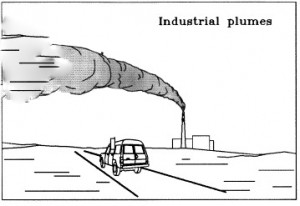 If you live downwind of a state line in the US, you're more likely to breathe the wastings heaved out by heavy industrial air polluters according to a new study reported on by the Washington Post today.
University of Georgia, Georgetown, and University of South Carolina political scientists collaborated on the findings, which document "State Line Syndrome, i.e. when large air polluters are disproportionately likely to be located near downwind borders instead of sharing the burden with more interior locales.
This is not a new phenomena. Lots of case law has been made by one state suing another over cross-border pollution issues. About a decade ago, the Midlothian cement plants were cited by Oklahoma and Tribal Authorities as a statistically significant contributor to haze problems at the Wichita Mountains Wilflife Refuge in the western part of he Sooner state. However, what the new study shows is despite the lack of no logistical reason for many large air polluters to be located near a border, that's where they're concentrated anyway. The result?
"…the farther a location is from a downwind border, the lower the odds that it will host an air polluter. For instance, being about 100 miles upwind of a state line reduces the odds of an air polluter locating there (compared to a hazardous waste facility) by around 6 percent.
The effect is also strongest among the biggest polluters. The facilities that release the most toxic emissions (measured by number of pounds) are the most likely to locate near a downwind border."
But what's at least as interesting to citizens as the confirmation of concentrations, are the motives the professors hypothesize for allowing or designing these concentrations by state government:
"One is that state policy makers encourage it. For instance, Texas would surely want the economic development and tax revenue that would come from a new manufacturing plant. But the state could probably do without the resulting toxic emissions. So one option would be to encourage a manufacturer to locate on Texas’ northern border, where the wind tends to blow across the Red River into Oklahoma.
Alternatively, companies might decide on their own to build a facility in a location where pollution would be carried across state lines. Doing so might reduce the effectiveness of NIMBY, or not-in-my-backyard, activism. If the citizens who feel threatened by a plant live across the border, they may have a hard time persuading lawmakers in the facility’s state – who have little incentive to attend to the concerns of out-of-state residents – to oppose its construction or operation."
That's sounds like the paranoid ranting of a angry housewife or two we've met over the years. And it probably gives Texas officials too much credit for caring about their own airshed. But it does once again show the impossibility of trying to solve air pollution on a piecemeal basis rather than taking a firm and aggressive federalist approach to the problem. What if we dealt with infectious diseases the way we do air pollution – refusing to recognize the transport of the harmful virus across local or state lines? Science has amply demonstrated that we do all indeed live downwind. Time for policy to catch-up.
Why Exide Going Bankrupt Could Be a Good Thing
 A months-long deathwatch surrounding Exide Technologies got a little closer to its climax on Thursday with a Wall Street Journal story quoting "people familiar with the matter" as saying the company was preparing to file for bankruptcy for a second time in a decade sometime this summer.
The original article is behind the Journal's pay wall, but it provides some details as to how the mechanics of such move would work. For one thing, the company's European operations won't be affected at all, according to the story. That's a hint that the company wants to find a way to fully separate its substantial US environmental liabilities – including the toxic waste dump formally known as the Frisco lead smelter – from what it considers to be its more salvageable parts.
Exide is carrying approximately $700 million in debt and many financial analysts doubt its ability to repay a $56 million note due in September. Thus, the summer timing. There was also probably some consideration to cash out while there was still some cash left. Shares of he company were selling for a record low of 34 cents on Thursday. It's last quarterly report in December 2012 cited a $15.4 million loss compared to a profit of $68 million in 2011.
Meanwhile, the company is providing plenty of work for lawyers and bankers:
Restructuring lawyers at Skadden, Arps, Slate, Meagher & Flom LLP are working with the company, while law firm Akin Gump Strauss Hauer & Feld LLP is advising an independent board committee, the people said. Paul, Weiss, Rifkind, Wharton & Garrison LLP is working with some bondholders and Andrews Kurth LLP is working with convertible-note holders, these people said.
Turnaround firm Alvarez & Marsal is working with the company, investment bank Houlihan Lokey is working with some bondholders and Moelis & Co. is working with convertible-note holders, they added.
Even money that the company has already spent more on this effort than they have cleaning up their mess in Frisco.
While completely predictable, this development now puts the City of Frisco at a crossroads for which it's not prepared.
Exide had no intention of rehabilitating or cleaning-up its Frisco smelter site – the part that still has decades and tons of lead contaminated waste buried in the ground – to provide for normal redevelopment. Even assuming the company and City are completely successful in cleaning up the outer zone of smelter property that the City is buying, there's no such plans for the 100 acres or more of hardcore toxic smelter property that was the core of the operations – and which has Stewart Creek running through it. The same Stewart Creek that runs from Exide into the proposed Grand Park. No matter how much the City tried to put a pretty bow on this situation, it still left a big toxic turd floating in the punchbowl, for which there was no contingency plans.
The upside of an Exide bankruptcy is that now the company won't be able to hold the rest of the City hostage by keeping the site a toxic dump forever. Because it won't own it anymore. Going belly up means there are other options besides the ones Exide was dictating because of its ownership.
On the other hand, bankruptcy for a company such as Exide usually means its environmental liabilities are absorbed by the taxpayers via the federal Superfund Site list. Exide already owns an abandoned local lead smelter. Dixie Smelter in South Dallas closed in 1990 as a result of the city's crack down on inner city lead smelters. It's been a fenced-off no man's land ever since. This is what Frisco city officials dread now. Once it's listed for clean-up it may take decades for it to actually happen. The result is the same as if Exide never lost ownership – you still have a toxic waste dump with the Creek running through it on the way to your new regional park.
What to do? The big difference between this lead smelter site and the ones in Dallas is location. Although originally sited on "the other side of the tracks" in Frisco, the city has transformed itself into the North Texas suburb of choice, to the point where the smelter property is now surrounded by exclusive gated communities and malls.
The City should use this fact, and this brief moment before actual bankruptcy, to work with Exide, the EPA, private developers who specialize in reclaiming contaminated sites, and local banks to formalize a plan to completely clean up the entire Exide smelter site in return for being able to build a signature project that will connect Grand Park to Downtown Frisco. Imagine if the smelter and its waste wasn't there on the property – immediately on the North Dallas Tollroad, with a creek running through it, connected to the city's signature green space. It would be another Los Colinas.
The problem, and its a huge one, is to assemble the considerable money it would take to clean the property, while also raising the money it would take to actually build the project, and assume liability for whatever surprises might be found on site in the future. Frisco could do its part by giving generous tax breaks to the developers. EPA could do its part by easing regulatory requirements for transfer. Exide could do its part by selling the land to the City for $1 so that Frisco could concentrate its resources on rehabilitation, not purchase price. There is now considerable self-interest to work a deal that wasn't there before the Exide bankruptcy.
The point is, Frisco officials must be able to answer the question: What's the ultimate plan for Exide property? To let it sit as a toxic waste dump? To let it sit as a toxic waste dump next to a new park that features the same creek that runs through the toxic waste dump? Or is there something more that can and should be done?
City Hall showed a great deal of creativity in drawing up the agreement that resulted in shutting Exide's outlaw smelter operation down. It now needs to exert the same creativity in coming up with a rescue plan for the property the smelter left behind.
Residents Push Back on Frisco Smelter Clean-Up Standards; Report Raises Questions About Huge New City Park Next to “Potential Superfund Site”
 (Frisco)–Frisco residents directly challenged their city’s attempt to gloss over what they say is an important decision to use a less-protective testing method to find toxic contamination on the Exide smelter site, while also releasing a new report that chronicles how that contamination could disrupt plans to build the city’s ambitious “Grand Park.”
Saying city officials either don’t know what method is actually being used for finding “hot spots” of contamination, or isn’t being truthful about its use, members of Frisco Unleaded contrasted an official city denial from Assistant City Manager Ron Patterson with a March memo from the Texas Commission on Environmental Quality.
“Although you state in your response….“an industrial sampling protocol is not being used on the J Parcel,” you are incorrect,” says a letter sent by the group to Patterson and the Frisco City Council on Monday. “Please refer to the Texas Commission on Environmental Quality memo, dated March 8th of this year, accompanying our May 28th letter….TCEQ’s Danielle Lesikar clearly states that the 2 samples per acre testing method, “is a Commercial Industrial Standard,” and “only meets (the) Commercial-Industrial” standards. We’d appreciate if you’d forward documentation that disproves this statement….”
Members of the group say the difference is small but critical. Instead of eight soil samples per acre at the highly contaminated site, Exide is only sampling twice per acre, and so far less likely to find all the toxic material that needs to be removed to bring down high levels of lead, cadmium and other potential contaminants after almost 50 years of smelter operation.
Making sure there are no toxic surprises is important for redevelopment of the site itself, as well as the construction and use of the City’s new 275-acre Grand Park, located only 500 feet away from the smelter property and directly downstream of the Exide contamination via Stewart Creek, which is key to the park’s chain of lakes and water features. That’s the subject of the group’s new report.
“Poisoned Park? How Exide’s Lead Contamination Risks Frisco’s Grand Park,” was released to coincide with the last of three public “design meetings” for Grand Park at City Hall on Monday afternoon. In it, Frisco Unleaded compiles the long litany of abuse to Stewart Creek and the surrounding land by the smelter recorded by state and federal inspectors, including lining the banks of the Creek with toxic lead slag waste, dumping lead waste directly into the Creek, and locating waste dumps and pits in its floodplains.
“This poor Creek has been more or less an open sewer for the entire Exide smelter property for decades. There’s every indication that a lot of contamination is still there. And yet city officials are pretending that they aren’t trying to build a huge park centered along the course of this same Creek, immediately next door, and upstream of the Smelter. None of the previous design meetings have even raised the possibility of an environmental assessment of the threat Exide’s contamination poses to the Park,” said Frisco Unleaded board member Meghan Green.
Besides chronicling the past and current threats to the creek and potential ones to the new Park, the report features the boundaries of Exide’s hazardous waster permit superimposed on FEMA 100-year floodplain maps and USGS topographical maps to indicate how much of Stewart Creek has been affected by the Smelter, which literally sits on either side of its banks before flowing west under the Dallas North Tollway into what would be the new Grand Park.
“It’s important to get the most protective clean-up of the Exide property that we can” said Frisco Unleaded Chair Colette McCadden, “because all of the run-off from the property will be headed directly into the Park and the City itself has proposed building an entire Stewart Creek green belt corridor that would follow the Creek into the Park. This isn’t an industrial site that is sitting in isolation from people and activity. This is a site that’s next to Frisco’s largest park.”
“With the financial condition of the company deteriorating,” added Downwinders at Risk Director Jim Schermbeck, “it’s very possible the smelter site could end up on the EPA’s federal Superfund Site list, and then you’d have the a toxic waste dump site as a neighbor to Frisco’s most ambitious park.”
Among problems for Grand Park development pointed out by the report:
- Despite inspection reports citing known and potential contamination affecting Stewart Creek, no remediation has been performed there in 13 years.
- There’s not sufficient protection from flooding at the site, despite most of the facility being located in low-lying, flood prone areas.
- The FEMA 100-year floodplain runs directly through a landfill full of Exide lead slag, within just 100 feet of a “waste pile” of contaminated dredging from Stewart Creek, and within 200 feet of lead landfills that are in various states of disrepair.
- There’s been no extensive testing of soil, sediment or water within the boundaries of the new park, or between the Smelter and the park, where new contamination has recently been discovered.
The report makes four specific recommendations to insure park and public safety:
- City Officials should commission a full environmental assessment of the Grand Park Project before project planning and development go any further.
- The clean-up of the Exide smelter site should be to the most protective “Residential” standards to allow for open spaces use along Stewart Creek.
- All landfills, dumps and pits of lead waste should be removed from the Exide site to prevent future contamination problems from occurring.
- The water quality of Stewart Creek must be assured.
Frisco Kids Play Within Feet of a Hazardous Waste Dump
This is a 23 second video shot on the corner of Eubanks and 5th Street in Frisco earlier this month. This corner is the northeast border for the property owned by the Exide lead smelter.
When it begins, the camera is looking south toward the now shuttered smelter. In fact, at the 3-second mark, you actualy see the smelter's smokestacks betwen two trees for a brief moment. In front of those trees is the fenceline separating the smelter property from the public. Immediately behind those trees is a berm that marks where the smelter's active landfill is.
This "non-hazardous" landfill holds approximately 9 million pounds of lead-contaminated waste. Lead itself is dangerous, but Exide got caught illegally burying hazarous waste in this non-hazardous landfill. The company's remedy is to dig the hazardous waste up, "re-treat it" and then re-bury it in exactly the same landfill. All this is to be done at the edge of the smelter's property at this corner of Eubanks and 5th.
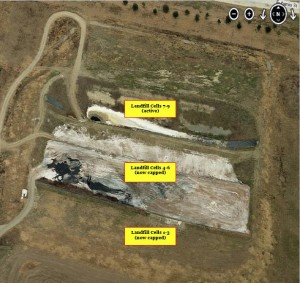
This is an aerial pic of the Exide active landfill operation at the corner of Eubanks and 5th Street. The line of the trees at the top right are the same ones you see in the video.
Besides this waste from production, Exide is now using the landfill to dispose of as much smelter demolition waste as possible. That makes it the most active spot on the smelter property at this point, with trucks full of waste coming and going besides the on-going "digging and "re-treatment" there.
And when Exide is finished stuffing all the lead-contaminated waste it can into this landfill, it hopes to leave it buried in Frisco forever.
Directly across the street from this illegal hazardous waste landfill is the "Play Ball" rec center for kids – a batting cage business. On nice days, you can usually find the south-facing/smelter-facing metal garage door wide open to allow for air circulation for the kids taking practice inside.You can also find their sibings and peers playing on the front driveway, only about 50-100 feet away from the lip of that landfill berm.
When the wind is out of the south, as it often is from March to October, the Play Ball batting cages and the kids there are are directly downwind of the smelter and the landfill operation. A lead-in-air monitor operated by the the Texas Commission on Environmental Quality is located on Eubanks. It's that skinny white pole in the middle of the frame at the 5-second mark. This monitor has repeatedly found concentrations of lead in the air higher than the EPA's new national lead in air standard – since the smelter closed.
So not only are these kids subject to being downwind of all of the smelter's demolition activity. They're also just across the street from the most heavily used part of the smelter now, with a much larger risk of getting contaminated.
Exide, the City of Frisco and the Texas Commission on Environmental Quality all would have you believe that everything is hunky-dory at the lead-smelter site. Look, the smokestacks are coming down! But in reality, this site is still posing risks for Frisco children who are still playing right across the street.
Latest Stop in Slo-Mo Exide Train Wreck: Thursday 5-7pm
 Coming down the hill from the west is a freight train full of woe for Exide. It's carrying at least five shareholder lawsuits aimed at the company for not disclosing its environmental liabilities, including those stemming from the operation of its Vernon, California smelter. That would be the same smelter California state officials shut down due to leaking lead waste and an unacceptable cancer risk to over 100,000 local residents. On board is a "restructuring specialist" who is supposed to see the company through its second bankruptcy in a decade. As of last week, Exide stock was selling for a cool 75 cents a share. The whole company is about to shoot off the rails.
Meeting it head-on coming from the east is the Exide's smelter site in Frisco, over 100 acres and fifty years of sloppy handling and disposal of hazardous lead, arsenic, cadmium, dioxin and other poisons. There are "pre-RCRA" sites aplenty – meaning they were there before any regulations could catch up with them, as well as more recent disasters like the illegal burying of hazardous waste in a non-hazardous landfill. Just last week the City of Frisco released a preliminary environmental assessment of the LEAST-contaminated parts of the smelter that revealed new potential contamination as well as the fact that the entirety of Stewart Creek had been re-routed around the smelter in 1964 – leaving the original channel underneath the MOST contaminated part of the smelter. Moreover, even though the smelter closed in November of last year, it's been routinely causing high levels of lead air pollution from the demolition and closure operations going on.
Caught in the middle are Frisco residents who just want to live without a lot of lead in their air for awhile, and don't want to see a new Superfund Site in their town. The state's Texas Commission in Environmental Quality is in its usual "Yes Man" role to industry and seemingly finds no fault in any of Exide's plans to leave pits and landfills full of smelter waste in Frisco permanently. Having made its sweetheart deal to close the smelter, the City of Frisco has taken a back seat to the company and TCEQ when it's come time to figure out how best to clean-up the site.
Thursday night Exide is sponsoring another one of its "community meetings" in which the community is invited to come hear company representatives put nice spin on everything as well as duck questions about its financial responsibilities and long-term plans. It's no substitute for a real public meeting but its the only game in town for Frisco residents who don't want to see a toxic waste dump site remain downtown.
Exide Community Meeting 5 to 7 pm Frisco Depot 6321 Paige Street – behind Babe's.
A Jim Schutze Primer on the CDC and Aerial Spraying
 You can't tell the players without a program. Read this take on the recent flare up between John Wiley Price and Dallas County Judge Clay Jenkins on the issue of aerial sprying for West Nile. Schutze is the only writer using the term "endocrine disrupter" in connection with what the authorities want to spray and who's trying to follow this issue BEFORE the summer arrives….