Particulate Matter
“Another Study Links Air Pollution to Autism” x4
 One of the areas of environmental health research that's producing almost monthly results is the varied and pernicious adverse human health effects of tiny particulate matter, or soot.
Once only blamed for respiratory problems and then heart attacks, it's now associated with a high blood pressure, strokes, immune system damage and a wide range of neurological diseases and conditions, including IQ loss, Parkinson's, and early dementia. That's because the particles are so small they pass through the lining of the lung and into a person's blood stream and can end up anywhere, including the brain.
Late last week saw the latest study to link PM pollution to autism. It was the fourth major study to do so in the last two years alone. But unlike the previous three, which found an epidemiological association between exposure to PM and the rate of autism in a community, this one may actually begin to explain the physiology of how PM attacks the brain:
"Researchers at the American Association for the Advancement of Sciences (AAAS) annual meeting in Chicago recently detailed the impact that constant exposure to air pollution may have on the developing brain. According to the panel, a series of mouse models have suggested that constant inhalation of air pollution may lead to enlargement of the brain’s ventricles – a hallmark of neurodevelopmental disorders such as schizophrenia and autism."
A brain's ventricular system is a set of four structures containing cerebrospinal fluid (CSF). It's continuous with the central canal of the spinal cord. Cerebrospinal fluid helps to protect the brain, keep it clean and boost its energy. When these ventricles are enlarged, it often indicates a damaged central nervous system. Dr. Deborah Cory-Slechta of the University of Rochester School of Medicine says that's what they found after exposing mice to PM pollution
“When the brain ventricles are too big, it pushes on the rest of the tissue,” Cory-Slectha said. “Also, you have these tracks of what’s called ‘white matter.’ And they cross over the brain; they connect the two hemispheres. And in these mice, those are either missing, or never developed, or died. We don’t know which, but a lot of that is missing, and that too is very characteristic of autism and schizophrenia.”
Ventriculomegaly – the enlargement of the ventricles – is also associated with a range of other brain diseases, such as bipolar disorder and Alzheimer’s disease, as well as a number of birth defects in children. Cory-Slectha noted that this brain damage was largely seen in the male rodents – an interesting finding given that both autism and schizophrenia are mainly male-oriented conditions.
“And part of that that is so interesting is both autism and schizophrenia, not only are they primarily in males, but the rates of those have been going up,” Cory-Slectha said. “And yet nobody can really ever explain why. [They say] it’s the diagnoses, etc. Well you know, air pollution has also gotten worse in some places, and you are exposed to it your entire life. So now we have the [epidemiological research] and we have the animal studies [to support that].”
She's right. We already have very strong correlations between levels of PM pollution and autism that this animal toxicology study now dovetails. Last June, the National Institute of Environmental Health Sciences published a study showing that women living in high air pollution areas while pregnant are up to twice as likely to have a child with autism as those living in less polluted areas.
In March of last year, researches at UCLA published a study showing the more Ozone and Particulate Matter pollution a baby in the womb is exposed to, the more likely he or she will be born with autism. It was the largest study of its kind to date.
In November of 2012, another UCLA study found that children who are born and live their first year closer to major freeways also suffer a significantly elevated risk of autism.
Scientists now know that there is no safe level of exposure to tiny PM pollution, called PM 2.5 because it's 2.5 microns or smaller. Any amount is capable of harming someone, especially if that someone is a child, senior citizen, or already ha health problems. And yet, regulatory agencies pretend this science doesn't exist – otherwise it would be very hard to issue permits for tons of new PM pollution, which they do almost every week.
There's been an explosion in the rate of autism in the US over the last 30 years. Could air pollution account for at least a sizable portion of that increase? The science is saying yes.
Eagle Ford Expose Reveals Weakness in Gas Air Pollution Inventories and That’s Bad News For DFW
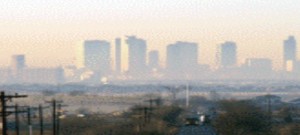 By now, many of you have seen the massive eight-month act of journalism that the Center for Public Integrity committed in describing the situation in the Eagle Ford shale play in South Texas. It's probably the most comprehensive look at what it's like to live in Texas fracking hell that's been published, and it rightly got distributed far and wide.
Along with the now-familiar litany of acute human health effects from gas mining – nosebleeds, headaches, skin rashes, respiratory problems – the article also talked about the smog-forming pollution cause by the thousands of small, medium-sized and large gas facilities that invade a shale play. Together they represent a formidable air quality challenge.
Centering on the Buehring family of Karnes City, the piece lists the inventory of gas mining infrastructure surrounding their home. Besides the 50 wells within two and a half miles, they also host,
"….at least nine oil and gas production facilities. Little is known about six of the facilities, because they don't have to file their emissions data with the state. Air permits or the remaining three sites show they house 25 compressor engines, 10 heater treaters, 6 flares, 4 glycol dehydrators and 65 storage tanks for oil, wastewater and condensate. Combined, those sites have the state's permission to release 189 tons of volatile organic compounds, a class of toxic chemicals that includes benzene and formaldehyde, into the air each year. That's about 12 percent more than Valero's Houston Oil Refinery disgorged in 2012.
Those three facilities also are allowed to release 142 tons of nitrogen oxides, 95 tons of carbon monoxide, 19 tons of sulfur dioxide, 8 tons of particulate matter and 0.31 tons of hydrogen sulfide per year. Sometimes the emissions soar high into the sky and are carried by the wind until they drop to the ground miles away. Sometimes they blow straight toward the Buehrings' or their neighbors' homes.
That's 331 tons a year of smog-forming Nitrogen Oxides and Volatile Organic Compounds released from just a small number of square miles in the Eagle Ford. Just two more collections of facilities like that would equal all the smog pollution coming from the TXI cement plan tin Midlothian – North Texas' single largest smog polluter. It's no wonder then that a San Antonio Council of Governments air pollution model found that Eagle Ford smog pollution would make it impossible for the Alamo City to comply with the new 75 parts per million federal ozone standard.
Moreover, that 331 tons a year figure is just what can be discerned by reading Texas' archaic permitting records. The Center's reporters do a real public service in identifying the loopholes and gaps the system encourages that hide the true air pollution numbers,
Texas' regulatory efforts are also hamstrung by a law that allows thousands of oil and gas facilities—including wells, storage tanks and compressor stations—to operate on an honor system, without reporting their emissions to the state.
Operators can take advantage of this privilege—called a permit by rule, or PBR—if their facilities emit no more than 25 tons of VOCs per year and handle natural gas that is low in hydrogen sulfide. Two employees in the TCEQ's air permits office—Anne Inman and John Gott—estimate these PBRs could account for at least half of the hundreds of thousands of air permits the agency has issued for new or modified oil and gas facilities since the 1970s.
Operators with this type of permit aren't required to file paperwork backing up their self-determined status, so the TCEQ has no record of most of the facilities' locations or emissions. A chart generated in 2011 by the office of then-TCEQ executive director Zak Covar says the permits "Cannot be proven to be protective. Unclear requirements for records to demonstrate compliance with rules."
Big operators sometimes get a PBR for each component of a facility. Each might be under the 25-ton-per-year threshold that would require a more rigorous permit, but the facility as a whole could emit more than that.
The TCEQ refers to the practice as the "stacking of multiple authorizations," and the memo from Covar's office said its use "means that protectiveness and compliance with the rules cannot be demonstrated."
But of course that doesn't keep Rick Perry's TCEQ from saying everything is all right. As per usual, officials want to the results of stationary monitors in the region to assure residents that nothing unhealthy is being breathed-in.
"[M]onitoring data provides evidence that overall, shale-play activity does not significantly impact air quality or pose a threat to human health," agency spokeswoman Andrea Morrow wrote in an email."
But in this case, the region, covering a huge area from East Texas to the Rio Grande, has only five such monitors, "all positioned far from the most heavily drilled areas."
Moreover, that's just the holes in the permitting process itself. What about when a facility is a bad actor and has an "emission event' or "upset" where more than the permitted amount of pollution is released for hours or even days at a time?
"The number of emission events associated with oil and gas development doubled between fiscal years 2009 and 2013, from 1,012 to 2,023. The amount of air pollutants released into the Texas air during these events increased 39 percent."
A gas processing plant in McMullen County, in the southwestern portion of the Eagle Ford, reported 166 emission events last year, almost one every other day. From 2007 through 2011, the Tilden plant, owned by Regency Energy Partners of Dallas, discharged 1,348 tons of sulfur dioxide during such episodes. That's more than 30 times the amount it was legally allowed to release during "normal" operations.
Marathon waited three months to report a 2012 incident at its Sugarhorn plant near the Cernys and Buehrings. It released 26,000 pounds of VOCs in 12 hours, 1,000 times more than allowed under its air permit.
But what has this got to do with DFW smog? Everything. Besides the Barnett Shale play entering and enveloping the Metromess from the West, we also have the Eagle Ford and Haynesville shale plays to our South and East – upwind of DFW during our eight-month "ozone season." There are now as many wells in close proximity to DFW up wind as downwind.
Right now, as part of the new anti-smog plan for DFW being drafted by the TCEQ, the state is "re-calculating" oil and gas air pollution emissions and you'll never guess how that's working out – TCEQ is using industry advice to lower their estimates from last time around. At a January 31st meeting of what's left of the local air planning process, the state presented its new study that it's using to revise the considerable amount of air pollution coming from leaks and releases from condensate storage tanks in the Barnett and elsewhere. As of 2012, these releases are estimated by TCEQ to be only 25% of what they were in 2006. See how well that works out? And this number will be plugged into the computer model that then estimates how much of that air pollution turns into smog.
Instead of getting real world numbers for compressor stations, the TCEQ is now using a fomula based on local production and horsepower to estimate emissions, and guess which way this new technique is sending the numbers?
TCEQ is doing everything it can to make sure that the oil and gas air pollution numbers are as low for this new anti-smog plan as they can make them without breaking out laughing. Why? To prevent the call for new controls on these sources, even though everyone knows they're adding to the problem. Oil and gas emissions are the one air pollution category in DFW that's grown in volume since 2006, while others, like the Midlothian cement plants and East Texas coal plants, and even cars, have all gone down. Meanwhile, DFW ozone averages are higher then they were in 2009. Many of us don't think that's a coincidence. But the ideologically-driven TCEQ can't afford to admit the obvious – not while Rick Perry is running for President.
Compare the TCEQ strategy in DFW with the reality described in the Center for Public Integrity's reports from the Eagle Ford Shale and you have two completely different pictures of the amount of air pollution coming from the oil and gas industry. Which do your trust more – the official calculations coming out of Austin, or the secret memos and field reports uncovered by the reporters?
If what's happening in South Texas is also what's happening in the shale plays in and around DFW – and there's no reason to think it isn't – then the volumes the TCEQ is plugging into its anti-smog plan for the Metromess are off by large factors. That in turn could spell doom for the plan, due to be submitted to the EPA by July of 2015 – a little over a year from now.
This is why it's important for citizens to have their own computing power with their own modeling capabilities. It's the only way to call TCEQ's bluff that it's using all the right information to draft its new clean air plan to EPA. Without the technical know how to be able to look over TCEQ's shoulders and reveal its "GIGO"strategy, our lungs are hostages of Rick Perry's political ambitions.
The next North Texas appearance by TCEQ staff to explain how its estimating – or not – the air pollution from oil and gas industry sources as well as every other source – is scheduled for 10 am on Thursday, April 17th at the HQ of the North Central Texas Council of Governments located at 616 Six Flags Drive – right across the street from the Amusement Park. We need citizens to come out and ask pointed questions about the TCEQ effort to keep us from being taken on another ride to nowhere. Anyone can come and ask questions of the presenters – it's an open forum – and indeed it's the ONLY opportunity citizens have to actually quiz the TCEQ about the process. Please mark the date and try to be there. Meetings usually last until 12 noon or so. They think you're not paying attention. These numbers and quotes from the Public Integrity Center piece gives you lots of ammunition to prove otherwise.
New Studies Link Air Pollution To Diabetes and High Blood Pressure in Pregnancy
 Sometime during the 1990's it became evident that air pollution was more than just a threat to your lungs. Studies begin linking bad air with brain disorders, heart attacks, and hormonal disruption. This pool of research is now very deep and this month got a little deeper with publication of studies linking air pollution to Type 2 Diabetes and high blood pressure.
From the University of Maryland comes a report that concludes air pollution increases inflammation of the heart which leads to diabetes when combined with a high fat diet – the kind so many Americans are still eating. Sedentary mice were fed the high-fat diet and then forced to breath Beijing-like levels of air pollution. Exposure to that bad air, primarily high levels of particulate matter, increased the likelihood of the mice developing diabetes by 2 to 4 times, and increased he severity of the disease as well. But hey, we're in America where the air is so much cleaner than China's, right? According to Dr. Sanjay Rajagopalan, Professor of Cardiovascular Medicine at the University of Maryland,
"….there have been at least 15 studies that have actually extended these observations of experimental models to large populations, and some of these have been done obviously in North America where we live, you know, in a relatively clean environment from an atmospheric standpoint thanks to regulation put together by Congress in the 1970s..but despite that even with the levels you’re exposed to with this continent we still see continuing associations between inhaled particulate matter content and susceptibility to type 2 diabetes.
Meanwhile, researchers at the University of Florida found that exposure to four air pollutants, including two specific types of fine and coarse particulate matters, sulfur dioxide and carbon monoxide, may be more toxic to pregnant women than breathing in cigarette smoke.
"Fetal development is very sensitive to environmental factors," said Xiaohui Xu, an assistant professor of epidemiology in the university. "That is why we wanted to do this research. Hypertension (high blood pressure), in particular, is associated with increased morbidity and mortality, causing a lot of problems for the mother and fetus, including preterm delivery."
Xu and his colleagues matched up 22,000 births in Jacksonville Florida in 2004-2005 with EPA pollution data. After controlling for other risk factors like income and exposure to smoking, they concluded that exposure to air pollutants throughout the first two trimesters of pregnancy increased women's risk of developing one of these conditions as much or more as smoking itself.
So how much influence do environmental factors have on modern health? Dr. Rajagopalan says a lot:
"…there’s a growing body of data that’s suggesting that whether it’s water or air or things that you eat, the packages that food is packed in…all of these things have ever so slight effects on your susceptibility to a number of chronic diseases. And these are things that are the reality, but are really the primary prevention measures where if you took care of these issues, you might not have problems to begin with. So these are easy solutions, clearly when you start to think about it, but also equally complex in terms of implementing at a societal level, because it takes so many different stakeholders to agree and to make these changes, you know, it tends to be a lot more complex.
Yep. We noticed.
Can a Council Whose Majority Voted for the Trinity East Permits Now be Expected to Defend the City’s Denial?
 As you might have heard by now, forlorn natural gas operator Trinity East has sued the City of Dallas for denying the three permits it was seeking to drill along the Trinity River in Northwest Dallas by the Irving border. Claiming breach of contract and even fraud, the company is saying it's owed millions of dollars above and beyond the $19 million it spent on leases for the three sites.
Anyone who's seen the filing knows this is a lawsuit with no legs. Yes, Trinity East leased the land, but guarantees about permits being awarded were not part of the deal. Those can't be bought so blatantly. Even Mary Suhm's secret memo un-earthed last February by the Dallas Observer made it clear that her assistance was not a guarantee and "not a legally binding agreement." The leases were one thing. The permits another. Trinity East thought it had the permits in hand when Suhm signed her memo. So did Suhm.
That's why citizens were told in 2012 that Trinity East permits were a "done deal" by sources in City Hall, including Mayor Rawlings, who seems to have known about the Suhm memo before the public did. There was just no way those permits were going to be denied. Suhm and the Mayor were not going to let that happen. That's why they called for the hearing and permit vote two days before Christmas. They thought no one would show and they could wrap it up. So it was a big surprise when the City Plan Commission voted to deny the TE permits. Undeterred, there was suddenly a call for an unprecedented, second "reconsideration vote" by the Plan Commission by the Mayor's representative on the same permits. But Trinity East lost that fight too, by a wider margin, in January of 2013. This time without any public hearing.
When the CPC denial came to the City Council in August of 2013, charter rules demanded it must be overridden by a super majority of 12. The vote to overturn the CPC's denial was 9 to 6, leaving the denial in place, but showing a majority of the current council in favor of granting the permits.
Then the strategy turned to adapting the new drilling ordinance to fit the Trinity East permits. If they couldn't make it through the front door, they could go in the back way. And so City legal staff tried to manipulate the City Plan Commission into carving out exceptions in the new draft ordinance that would allow that. Instead of a 1500-foot setback, they urged 1000 feet with a variance back to 500 feet. That would allow all Trinity East sites. Then they tried to ease the rules on park drilling, and even succeeded to some extent, softening a ban on surface drilling in parks that was part of the old ordinance.
Only Dallas residents working overtime and applying more scrutiny saved the day and got Plan Commission support for a new ordinance that did finally shut the door on all three Trinity East permits. And of course, that's when Trinity East, aided by the entire gas industry, decided to sue.
So you now have the weird situation where the same City Hall that was trying so desperately to win those permits for Trinity East is now being sued by the company for not being conspiratorial enough to subvert the public process. Yesterday, the city issued an statement saying the company's lawsuit lacked merit and, "The city will vigorously defend its right to exercise its regulatory powers to protect public health and safety as well as the environment."
But here's the thing. Since a clear majority of current Dallas City Council members voted for the permits, how much will power is there among this same group to now defend a position they didn't take? And since it was often the Dallas City Attorney's office leading the charge to manipulate the system on Trinity East's behalf, how well do you trust that same crew to "vigorously defend" the outcome they tried so hard to prevent?
Three are some legal principles involving the city's right to control its own zoning decisions which could motivate the city and/or the Texas Municipal League into such a defense. But you have to wonder how much heart they really have for a fight, of which right up until the last vote, they were on the same side as the company now suing them.
To make sure the City doesn't settle with Trinity East, citizens are going to have to persuade the three council members who voted with them for the new ordinance, but against them on the Trinity East permits to change their minds – Jennifer Staubach-Gates, Dwaine Carrawy and Mayor Ralwings.
That won't be easy. Rawlings was making the "I told you so" rounds in the media yesterday. The first sign that they might be serious about defending themselves is whether they'll hire an outside law firm with municipal law experience to represent them. If they put the same people in the City Attorney's office who were working in concert with Trinity to win those permits in charge of this fight, we're doomed. If they hire a competent firm with a reputation for toughness, you'll know they think there might be some points of law worth going to court for.
Longer term, it once again puts a spotlight n the need to elect additional allies of the six council members who've been reliable allies to citizens on this issue. This coming Dallas municipal election cycle in 2015 will see almost half the council seats up for grabs as incumbents are term-limited out. Stay tuned.
End of an Era: TXI Cement Sold To Martin-Marietta
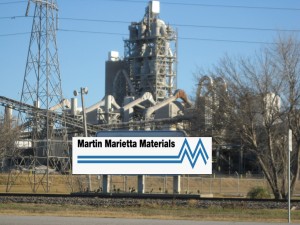 In a $2 billion deal, Raleigh, North Carolina-based aggregate and crushed stone manufacturer Martin Marietta Materials (a separate spin-off on the more well-know aerospace conglomerate) bought Dallas' own TXI Cement, which opened its first cement kiln in Midlothian in 1960.
This year, that kiln, along with the three other obsolete wet kilns at TXI's Midltohian plant that burned hazardous waste for two decades, is due to be demolished, following the company's corporate demise at the hands of the grandson of its founder. And then, the last remnants of the old TXI will be gone for good.
What does the change in ownership mean for breathers in North Texas?
Martin Marietta has owned and operated cement plants around the US in the past, but they'd divested themselves of these prior to 2014. As of now, the TXI cement plants in Texas and California are apparently the only ones the company owns. There's some speculation that Martin-Marietta bought TXI for its aggregate, stone, and concrete facilities in Texas and California, and will soon seek a buyer for the cement plants it inherited, but doesn't really want.
If that's true, the new owners will act as placeholders of the status quo, not investing in big new capital projects, but also trying not to lose any of the value of the assets they now have by running them into the ground. Martin probably won't look favorably upon attempts to bring smog-reducing modern Selective Catalytic Reduction (SCR) technology to TXI via the next clean air plant for DFW, now due in June of 2015. Not only would the plant be among the first to adopt the technology in the US, (even though SCR has been successfully used in European cement kilns for over a decade now), but it would mean new capital investment and a new learning curve.
Swiss-based Holcim Cement, with a huge plant already in Midlothian and a large manufacturing footprint in the US, was rumored to be one of TXI's suitors before the sale was announced. It could be that Holcim, or another well-established player in the cement industry winds up with the actual kilns in the next year. That could complicate the plant's participation in the new clean air in other ways even if new owners are not as intimidated by the demand for new technology
Politically, it'll be interesting to see which Austin lawyers and lobbyists get the business of the new company. Martin-Marietta owns over 40 facilities in Texas already and is represented by it's own crew. Will TXI's law firm and lobbyists survive the buy-out? There are industry lobbyists that will keep the ball rolling no matter what – the Chemical Council, the Aggregate Association, etc. But in Austin, it's all about relationships, and it's hard to say yet how this Martin's buying of TXI changes any of them.
Maybe the place TXI's absence will be felt the most in in the corridors of power in DFW. TXI was proudly headquartered in Dallas. Ralph Rogers, TXI's founder and patriarch was a driving force in local philanthropy, giving millions to public broadcasting (KERA is housed is housed in the "Ralph Rogers Communications Center") and other non-profits. Besides feeing like he was entitled to use PBS's iconic Big Bird to sell the benefits of burning hazardous waste in 50-year-old cement kilns, the non-profit giving Rogers was responsible for made him a known figure on the Dallas Charitable circuit. In turn, this made it hard for the Powers That Be to criticize Roger's company when it became a waste incinerator.
Locally, the establishment played golf with the Rogers' or attended black tie dinners with them, or helped them lift the oversized scissors at ribbon-cutting ceremonies. But that was old Dallas. Hardly of those relationships survived past Ralph Rogers' death in 1997. His son, Robert, failed to maintain that same high-profile locally, and his grandson Jamie seems totally disinterested in the family business or its legacy of charitable giving.
Now, the move of company headquarters from Dallas to Raleigh will complete the disappearance of the once-mighty TXI on the local scene. They'll still be company representatives at functions, but it won't be the guy who can write the big checks, or who the Mayor had a splendid time with last Saturday at the Club.
The company's local political influence has forever been diminished, and that's a good thing for citizens who are fighting the company to get modern controls like SCR. Now, it's just one more corporate entity with a presence in North Texas. A presence that makes it the single largest air polluter in the region. That's the way Dallas and other downwind cities should have viewed the company all along.
Physicians for Social Responsibility Talk This Thursday Night
 Chris Masey
DFW has a lot of things, but one thing we do not have is a group of medical professionals who speak out for environmental health when it's threatened by pollution or other human-made disasters. Nationally, the group Physicians for Social Responsibility (PRS) has filled this role for over 50 years now. Founded in 1961 to make the medical case against a "winnable" nuclear war, the organization has morphed into a strong voice for clean air and water from a public health point of view.
Despite being a national center of medical research and care, DFW doesn't have a local chapter of PSR. But this Thursday, Chris Masey, the Austin-based Texas Director of the group will be in Dallas to talk about their connection to current energy and environmental fights, including the one against aging East Texas coal plants that were the subject of a Dallas County Medical Society petition to the Texas Commission on Environmental Quality.
His visit is sponsored by Dallas Interfaith Power and Light. Its scheduled for this Thursday beginning at 7 at the White Rock Methodist Church on Oldgate Lane. Here's what their blurb says about the talk:
Chris will speak about air quality as a crucial key to human health including fossil fuels background and information, specific toxic emissions, air as a carcinogen, climate disruption, and the shifting patterns of infectious diseases. Chris’s lecture will also include information about Texas PSR, and ongoing advocacy efforts to phase out and close coal-fired power plants and to advocate for stricter carbon emission standards.
More about our speakers: Chris Masey, MBA, is a eighteen-year environmental professional who has worked on a diverse set of projects throughout Texas focusing on public health, conservation, land stewardship, alternative energy sources, recycling, and environmental and solid waste planning. During the last two years, Chris has proudly helped guide Texas PSR (formerly Austin PSR) to become the largest environmental advocacy group led by healthcare professionals in Texas! Chris’ dedication to environmental sustainability is grounded in his love of Texas and the desire for his family to continue to enjoy clean air, clear water, and wide-open spaces.
If you're a medical professional who's interested in helping out citizens in need, or you know someone who fits thst description, please consider attending this Thursday's meeting. There's really no excuse for a metropolitan area the size of DFW not to have a cadre of concerned doctors and nurses who can speak put against fracking close to homes or burning plastic in cement kilns, or just confirm for some of our more aggressively ignorant elected officials that indeed, smog and lead are bad for people. With any luck, perhaps Chris Masey's appearance here this week can begin a conversation that leads to such an effort. It is way overdue. See you there.
What Would A TXI Sale Mean to DFW Air?
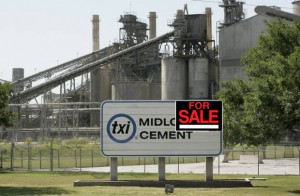 According to the Dallas Morning News, TXI Cement is up for sale with at least two possible buyers, Vulcan and Holcim, mentioned in last Friday's story. Along with kilns in California, the company's Midlothian and Hunter, Texas cement plants are on the block as part of the deal.
As the news reports note, the timing is a little strange in that the construction industry, the barometer for all things cement, is only now rebounding out of its Great Recession doldrums, and TXI's profits are nowhere near it's pre-collapse heights. It could be that the latest generation of the Rogers' family to run the firm isn't all that interested in keeping it running, or that the two largest and restless corporate shareholders, who now own 51% of the company, are anxious to deal.
Of the two suitors listed in the News article, Holcim is one of the industry's international giants that has the large cash reserves, while Vulcan is smaller, US-based, and considered more of an Aggregates business with some cement plants in Florida.
On the other hand, Holcim already operates a huge cement plant across the street from TXI in Midlothian. It's hard to imagine the company needing to double its manufacturing capacity in DFW. But perhaps TXI's California market share makes the deal look attractive as a whole and the Midlothian plant would be spun off to a third party. For Vulcan, it looks like a way to go from a regional powerhouse to a national one by buying plants in two large, influential state economies.
Holcim is a leader in the new waste-burning revival within the cement industry. Its Midlothian cement plant already has a permit to burn a long list of industrial wastes, although it's not as long as TXI's. During the economic downturn,TXI was given permission by Rick Perry's TCEQ (without public notice or participation) to burn a variety of new wastes like car "fluff" and plastics , but reportedly didn't have the capital to build the infrastructure needed to convey the wastes to the kilns. A new owner like Holcim might have the cash to fix that, and fixing that would mean lots more waste-burning. Buying TXI's Midlothian plant would mean buying its waste-burning permits as well, opening up new waste markets for Holcim without having to go to the trouble of a permitting process.
If Vulcan or some other middle-size player buys TXI, you can be sure they'll run the plants 24/7 as much as possible to recoup their investment and take advantage of better economic times. More production equals more air pollution, even with more modern controls forced by recent clean air plans and citizen campaigns.
But it's also possible to imagine a scenario where Holcim buys TXI, uses it's Midlothian limestone quarry to add to its own local reserves, but doesn't necessarily have the incentive to run both cement plants into the ground to justify the purchase price.
A sale of TXI by the Dallas-based Rogers family would be milestone in the industry, and in North Texas. TXI opened its first cement kiln in Midlothian in 1960. You can still see it there on Hwy 67, along with three other, older "wet" kilns that operated for 48 years before being shut down in 2008. They're all scheduled to be demolished later this year, leaving only the circa-2000 TXI Kiln #5 as a landmark. The times, they are a changin'. Stay tuned.
Better Living Avoiding This Chemistry: An Industrial Toxic Primer
 Even though this EcoNews article is about air poisons that result from fossil fuel production, it applies to just about any combustion source, including cement plants, manufacturing plants, vehicles, and so on. It's a pretty good top ten list, although you wonder why Dioxins and Furans got left off, since they're toxic by the gram instead of pound. Also missing is Particulate Matter as a stand alone threat, although it gets a shout out as a by-product. Nevertheless, these are the among the most dangerous pollutants that have caused and are still causing a lot of problems in North Texas and elsewhere:
1. Benzene
Benzene is a well-established carcinogen with specific links to leukemia as well as breast and urinary tract cancers. Exposure to benzene reduces red and white blood cell production in bone marrow; decreases auto-immune cell function (T-cell and B-cells); and has been linked to sperm-head abnormalities and generalized chromosome aberrations.
Benzene is one of the largest-volume petrochemical solvents used in the fossil fuel industry. It is a major component in all major fossil fuel production: oil, coal and gas. People are exposed to it from inhaling automobile exhaust and gasoline fumes, industrial burning such as oil and coal combustion, and exposure to fracking fluids.
There's a recent Emory University study concluding that risk for leukemia fell with every mile between a person's home and facilities that release benzene.
2. & 3. Sulfur Dioxide (SO2) and Nitrogen Oxides (NOx)
Sulfur dioxide (SO2) and nitrogen oxides (NOx) are two primary examples of particle-forming air pollutants (particulate matter). Particulate matter is known to contribute to serious health problems, including lung cancer and other cardiopulmonary mortality. SO2 and NOx are both highly toxic to human health, and contribute directly to thousands of hospitalizations, heart attacks and deaths annually.
SO2 is particularly dangerous for children. Studies correlate SO2 emissions from petroleum refineries—even in lower exposure levels over time —to higher rates of childhood asthma in children who live or attend school in proximity to those refineries. Similarly, small particles of NOx can penetrate deeply into sensitive lung tissue and damage it, causing premature death in extreme cases. Inhalation of such particles is associated with emphysema and bronchitis.
4. Petroleum Coke (Pet Coke)
Pet coke is a by-product of oil processing that's also used as a fuel. It's a heavy dust which resembles coal. It's burned in power plants and cement plants. It contains dozens of dangerous chemicals and heavy metals, including chromium, vanadium, sulfur and selenium. It's a huge contributor to particulate mater and NOx and SOx formation
5. Formaldehyde
Formaldehyde is a carcinogen with known links to leukemia and rare nasopharyngeall cancers, according to the International Agency for Research on Cancer. Formaldehyde is highly toxic regardless of method of intake. It is a potent allergen and genotoxin. Studies have linked spontaneous abortions, congenital malformations, low birth weights, infertility and endometriosis to formaldehyde exposure. Epidemiological studies link exposure to formaldehyde to DNA alteration. It is also contributes to ground-level ozone.
Independent studies, have detected dangerous levels of formaldehyde in both wastewater and ambient air emissions from fracking operations. One researcher, with the Houston Advanced Research Center, said reading from one test site in North Texas, “astoundingly high,” and, “I’ve never heard of ambient (formaldehyde) concentrations that high… except in Brazil.”
6. Polycyclic Aromatic Hydrocarbons (PAHs)
In actuality, this is not a single listing—polycyclic aromatic hydrocarbons (PAH) is an entire class of toxic chemicals, linked together by their unique chemical structure and reactive properties.
Many PAHs are known human carcinogens and genetic mutagens. In addition, there are particular prenatal health risks: prenatal exposure to PAHs is linked to childhood asthma, low birth weight, adverse birth outcomes including heart malformations and DNA damage.
Additionally, recent studies link exposure to childhood behavior disorders; researchers from Columbia University, in a 2012 Columbia University study, found a strong link between prenatal PAH exposure and early childhood depression. Infants found to have elevated PAH levels in their umbilical cord blood were 46% more likely to eventually score highly on the anxiety/depression scale than those with low PAH levels in cord blood. The study was published in the journal Environmental Health Perspectives.
7. Mercury
Mercury is a dangerous neurotoxin emitted from coal-fired power plants and any other combustion source using coal for fuel – like the Midlothian cement plants. It damages the brain and the nervous system either through inhalation, ingestion or contact with the skin. It is particularly dangerous to pregnant women and children. It is known to disrupt the development of the in-vitro brain. In low doses, mercury may affect a child’s development, delaying walking and talking, shortening attention span, and causing learning disabilities. High dose prenatal and infant exposures to mercury can cause mental retardation, cerebral palsy, deafness and blindness. In adults, mercury poisoning can adversely affect fertility and blood pressure regulation and can cause memory loss, tremors, vision loss and numbness of the fingers and toes.
One out of every six women of childbearing age in the U.S. have blood mercury levels that could be harmful to a fetus, according to EPA reports. The EPA estimates that 300,000 children are born each year at risk for significant development disorders due to mercury exposure.
8. Silica (Silicon Dust/Sand)
Crystalline silica (“frac sand”) is a known human carcinogen; breathing silica dust can lead to silicosis, a form of lung disease with no cure. This is a hazard in the cement industry and threat to those living downwind of cement plants, and now it appears to be one for natural gas roughnecks and adjacent homeowners as well.
Silica is commonly used, in huge amounts, during fracking operations. Each stage of the process requires hundreds of thousands of pounds of silica quartz–containing sand. Millions of pounds may be used for a single well.
The presence of silica in fracking operations, simply put, is a major safety risk with a high likelihood of dangerous exposure. Case in point: researchers from the National Institutes of Occupational Safety and Health (NIOSH) recently collected air samples at 11 fracking sites in five different “fracking states” (CO, ND, PA, TX and AR) to evaluate worker exposure to silica. Every single site had measures higher than the NIOSH threshold for safe exposure—so high, in fact, that about one-third of the samples collected were even above the safe threshold for wearing a safety respirator mask. This was reported in May 2013 in the Journal of Occupational and Environmental Hygiene.
9. Radon
Radon is a colorless, odorless, tasteless radioactive gas which causes lung cancer. It is the second largest cause of lung cancer in the U.S. after cigarette smoking. About 20,000 people per year die from lung cancer attributed to radon exposure according to the National Cancer Institute. Further, there is no known threshold below which radon exposures carries no risk.
Radon exposure can come from a variety of natural sources. However, fracking (natural gas) represents a significant new and increased source of radon exposure to millions of citizens. Radon is released into local groundwater and air during fracking operations. It also travels through pipelines to the point of use—be it a power plant or a home kitchen.
The science behind radon release and exposure is complex but explained well here by Christopher Busby, the Scientific Secretary of the European Committee on Radiation Risk, who warns that radon dangers from fracking “have not been addressed properly (or at all) by the environmental impact statements published by the operators, or by the Environmental Protection Agency in the USA.”
10. Hydrofluoric Acid (HF) / Hydrogen Fluoride
Hydrofluoric acid (HF) is “one of the most dangerous acids known.” HF can immediately damage lungs, leading to chronic lung disease; contact on skin penetrates to deep tissue, including bone, where it alters cellular structure. HF can be fatal if inhaled, swallowed, or absorbed through skin.
The senior laboratory safety coordinator at the University of Tennessee said, “Hydrofluoric Acid is an acid like no other. It is so potent that contact with it may not even be noticed until long after serious damage has been done.”
Hydrofluoric Acid is a common ingredient used in oil and gas extraction.
Numerous studies, including recent ones conducted by both The Center for Public Integrity (CPI) and the United Steelworkers Union (USU) cite the oil industry’s abysmal safety record as a high risk factor for a major HF accident; over the past decade, more than 7,600 accidental chemical releases from refineries have been reported by the industry. In the past three years alone, a total of 131 “minor” accidents involved HF.
D-Day Minus 7: Dallas Gas Ordinance Countdown
Considering how little public notice there was, yesterday's Dallas City Council "public comment time" on the new gas-drilling ordinance was well-attended by residents supporting the Plan Commission Draft. Over two dozen people spoke in favor of the CPC recommendations, including the 1500 foot setback, and/or stronger language for parks and flood plains. Murky statements by the Mayor about whether speaking this week would disqualify you from also having your say at next week's public hearing immediately prior to the final Council vote kept other residents from going to the podium.
True to whatever consultant's media training rule book they're following, industry representatives waited until they thought citizen testimony ended to make their condescending case that citizens were relying only on fear and didn't really understand the fracking process. The problem with this strategy is that you have to pretend the previous 45 minutes of citizen testimony never happened, since it's always replete with references to new scientific studies showing increased health harms from fracking, or another connection with earthquakes, or just strange foamy crap falling out of the sky into your yard from the rig down the street. It turns out the industry folks are the ones who don't really know the process.
And as fate would have it, citizens weren't through testifying. Right after telling the City Council how much West Dallas would lose out by not embracing fracking in its neighborhoods, up popped a West Dallas resident who said she wanted nothing to do with the industry, no matter how much money was involved. After another industry spokesman again said supporters of a stronger ordinance were just imagining harms they weren't really there, Sierra Club member Molly Rooke gave a devastatingly effective presentation on exactly how real harms to real people had forced her own group to acknowledge the dangers of gas pollution after initially endorsing natural gas as an entirely green fuel.
Unlike the staff briefing of two weeks ago, which allowed industry supporters on the Council to bloviate at will over what a crime it was to limit drilling in Big D, nobody behind the horseshoe did any talking except the Mayor, who was perfunctory in his opening and closing remarks and didn't give any clues as to his position on the CPC draft. According to Rawlings, it was his idea to have this "public comment time" prior to the final hearing so there wouldn't be the pile-up there was during the Trinity East vote, where you felt more like you were a cog in an assembly line instead of a citizen participating in one the small pageants of American democracy.
At the end of the meeting, Texas Campaign for the Environment members unfurled a banner urging Rawlings to "Be Strong," which was quickly confiscated by the City Hall Police Rapid Protest Response Team. Here's the Dallas Morning News' muted coverage of the event.
Because of the weather, Dallas Residents at Risk is waiting until next Monday to gin up a final push for passage of the Plan Commission draft going into Wednesday's final public hearing and vote beginning at 1 pm at City Hall. Please stay tuned for details about how you can express your public support and send a message to the Council to pass a strong ordinance. We know we sound like a broken record, but if you haven't sent a quick e-mail to the Mayor yet, you can click here and do so within a minute pretty painlessly. If you want a short explanation of what's going and what votes are where, you can read this previous post and get caught-up.
We have only a week to make sure our last year's worth of hard uphill slogging through corruption, double-dealing, and aggressively ignorant bureaucracies is not in vain. Please help us make it the last 1500 feet.
Something Wicked This Way Blows…..
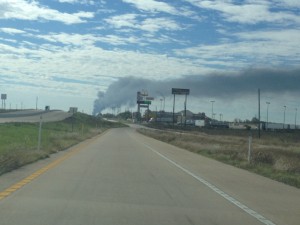 Events like the gas pipeline explosion in Milford are graphic reminders of just how vulnerable our North Texas air shed is to pollution sources from Ellis County. Proximity, predominant wind patterns, and potential for disaster combine to make our Southern neighbor a constant threat.
On Thursday, one could see the plume of smoke stretch out south to north across the entire Metromess. It's a safe bet that not too many of the 6 million plus residents of greater DFW knew there was a town called Milford near them at the beginning of the day, but a lot of them had inhaled Milford soot by evening.
That would be the same soot that reporters keep reminding us "the EPA" says is "non-toxic," based on measurements. Except there is no such thing as non-toxic smoke from a combustion source, which the Milford explosion and fire most certainly was. All combustion produces soot, or Particulate Matter. According to the latest evidence from research scientists, there is no safe level of exposure to PM Pollution. That is, any amount of PM pollution can do human health damage. Even short-term exposure can lead to asthma attacks, heart attacks and strokes. How do we know this – the EPA tell us so on their own website.
Only a couple of years ago, the Magnablend fire in Waxahachie poured its own plume of "non-toxic" smoke into DFW skies, despite the incineration of a large variety of chemicals used in the oil and gas industry. You might remember the water run-off from fighting that fire went into a creek and killed a lot of fish. But don't worry, that same stuff in your lungs is nothing to worry about. Perfectly natural to be able to see what your breathing.
Perhaps the most spectacular modern reminder of how close Ellis County is to us in air miles came back in 1995 when a Midlothian-based tire dump, called…wait for it…."Safe Tire Disposal Company" that was actually a collection site for the nearby cement plant tire-burning operation caught fire its own self.
There are fires, and then there are tire fires. They burn extremely hot, produce a lot of that "non-toxic" smoke, and can keep going for days. And that's exactly what happened in Midlothian. The predominant southerly winds carried all that dark dense smoke right into Downtown Dallas, where it surrounded and engulfed whole office buildings.
Timing is everything and so it was with the Safe Tire Fire. It happened at the exact moment when local citizens were engaged in very public debate with state and local officials over whether air pollution from the three large cement plants in Midlothian (two of which were burning tires) could impact air quality in DFW. You read that correctly. In 1995, citizens were still trying to make the case that millions of pounds of air pollution released just across the Dallas and Tarrant County lines could possibly have a negative impact on metropolitan smog levels. And it was an uphill fight. Officially, there was no confirmation of the impact of these facilities. The DFW air plan stopped at the County Line. Unofficially, you could see the cement plant smokestacks as you drove I-20 across Grand Prairie and Arlington.
When those tires went up in smoke, so did the arguments being used to downplay the impact of Ellis County pollution. It was like adding a dark black dye to the North Texas air flow, beginning in Midlothian, and watching it be carried downstream/downwind right into the heart of downtown Dallas. It was the most defiant demonstration of the citizen's arguments one could imagine. After that, it was a lot easier for everyone to understand Midlothian was only a breeze away from their lungs.
With yet another fire in Ellis County setting off yet another dark, thick plume of smoke that wafts into DFW, we get a reminder of how much closer together the air brings us. Only about half an hour or so away from Milford, a little bit further south, is a new belt of natural gas compressors churning out voluminous amounts of air pollution that's being blown in the same direction as the smoke from that gas pipeline explosion. Unlike that smoke, pollution from these facilities will keep being released 24/7 for the foreseeable future. Add up all this new compressor pollution and it could rival the impact of a new coal plant – just upwind of us. Just because you can't see it doesn't mean it's not having an impact.
Once again, the state's position is that this pollution is no big deal. Once again, citizens are disagreeing. Who would you put your money on?