air toxics
The Dose No Longer Makes the Poison, But We Regulate It As if It Does
 It may come as a shock, but the EPA and industry view exposures to toxic chemicals in basically the same way that a famous 16th-Century occultist named Paracelsus did over 500 years ago: The amount of exposure to a chemical determines its toxicity; the higher the dose, the more toxic it is. The lower the dose, the more benign. "The dose makes the poison."
This approach says there's a linear one-to-one relationship between volume and harm. It's the basis of all federal, state and local environmental health regulation. It's what drives government "risk assessments." It's what allows there to be such things as "safe levels" of things that don't sound very safe.
But, what if this approach didn't capture all of what was going on physiologically between poison and victim? What if there were different effects happening at the cellular level? What if, like the Renaissance-born theory of Newtonian physics, it couldn't account for phenomenon on a smaller-scale because it didn't have the ability to see it? What if there were certain poisons that,
"depict a weird world of endocrine disruption that is as different from traditional toxicology as quantum mechanics is from the staid clockwork of Newtonian physics. When even minuscule quantities of BPA and other disrupters interact with hormone receptors at crucial moments in development — activating, jamming, hijacking or otherwise messing with their normal function — they can give rise to strange-looking experimental results, especially when other hormones are thrown into the mix."
From the journal Nature comes a case study in why no self-respecting thinking person would trust the current regulatory system to give them the final word on whether any given chemical exposure is "safe" or not.
A citizen can't underestimate the kind of threat this research presents to the Environmental Industrial and Legal Complex. Every permit ever written and awarded. Every environmental law every passed. They all depend on a Paracelsusian view of the world. Prove a different world exists and it turns everything upside down.
"A growing number of academic researchers are making just such a claim for endocrine disrupters, a large group of synthetic chemicals able to interact with cellular hormone receptors. These compounds, which range from the common weed killer atrazine and the plasticizer bisphenol A (BPA) to the antibacterial agent triclosan (used in cleansers) and the vineyard fungicide vinclozolin, don't play by the usual rules of toxicology. On the basis of conventional high-dose testing, regulators have set maximum acceptable levels for each of them that assume all doses below that level are safe. But academic researchers who have studied a wider range of doses, including very low ones found in the everyday environment, say that their experiments usually do not generate the tidy, familiar 'ski-slope' dose-response graphs of classic toxicology. Instead, most endocrine disrupters have 'non-monotonic' dose-response curves, meaning that their slopes change at least once from negative to positive, or vice versa, forming 'U' shapes, inverted 'U's or even stranger shapes that resemble undulating Chinese dragons."
It's not just endocrine disruptors that are challenging tradition. We're already seeing the contradiction between the latest science and regulations when it comes to old-fashioned poisons like lead and soot. There's a scientific consensus among the frontline researchers that there's no safe level of exposure to either one of these toxic substances, And yet, permits are still being written to allow what regulators claim are "safe levels" of them to be spewed into the air and our lungs.
Locally, UT Southwestern epidemiologist Dr. Robert Haley's groundbreaking work on Gulf War Syndrome has found similar effects in studying exposure of veterans to very low doses of nerve agents. Levels of substances that weren't supposed to make people sick individually seem to have a harmful synergistic effect when combined.
The more we can see what's happening at the smallest levels of things – whether its the vibrations of atoms in the chair you're sitting in, or the nuance of chemicals in the cells of a developing fetus – the more we find out that things are more complicated than they appear. Science is pushing us in the direction of a "Precautionary Principle" approach to regulating human chemical exposure. That's a radically different perspective that undermines the billions invested in the status quo allowing continual low level poisoning. After 500 years, maybe it's time to find a new model.
Groups Petition EPA to Include Frackers in Toxic Release Inventory
 A dozen environmental and citizens groups filed a petition with EPA on Wednesday to close a loophole in the law and include oil and gas pollution in the annual system of self-reporting emissions and releases with which most US industrial polluters already have to comply.
The Toxic Release Inventory, or TRI, was created in the wake of the horrible Union Carbide plant accident in Bhopal, India, that killed 2500 people immediately, and caused another 16,000 deaths in the months and years since. It's supposed to keep track of all hazardous and toxic chemicals on-site or released by industry at every facility regulated – power plants, cement plants, refineries, chemical plants of all kinds, lead smelters, etc. TRI numbers are self-reported once a year by the companies operating the facilities, based on EPA formulas. These numbers are then made available to the public via the EPA's own TRI Explorer site, or independent groups like RTK.net run by the OMB Watch folks.
However, the TRI leaves out a very large industrial segment – oil and gas drilling. This exemption might have made some sense 30 years ago, but it doesn't now, especially given the dramatic rise in modern-day fracking techniques that use large volumes of hazardous and toxic materials.
If EPA regulators went along, that would fold in not just drilling but also related activities at the wellhead, before oil and gas is ready for transport to customers and refiners. Under environmentalists’ petition, companies would be forced to report chemicals released in drilling and completing wells as well as compression operations and processing at fractionators that split gas into separate components.
Disclosures also would be required from hydraulic fracturing operations, in which mixtures of water, sand and chemicals are pumped underground to release natural gas and oil from dense rock formations.
Eric Schaeffer, director of the Environmental Integrity Project that spearheaded the campaign, stressed that the foundation of the TRI was a deeply held belief that the public has a right to know what kind of pollutants are being released from neighboring facilities.
We’re asking the EPA to “honor those values,” Schaeffer said. “EPA has the power to add other sectors that ought to be reporting, and we’re asking them today to exercise the authority.”
Jane Davenport, a senior attorney with the Delaware Riverkeeper Network, said the reporting mandate should apply broadly.
“The oil and gas industry should not get a pass from statutes that apply to other industries,” she said, noting that the industry already enjoys some exemptions from provisions in the Clean Water Act and other environmental laws.
This may not sound like a radical step, but don't discount the power of public disclosure. TRI numbers from the Midlothian cement plant helped Downwiders show that the kilns were the largest industrial and toxic polluters in North Texas, proved the companies were not telling the truth when they said there were no toxic emissions from waste-burning or cement-making, and allowed citizens to track the volumes of pollution coming out of the kilns and analyze those numbers for trends. That's why the oil and gas industry will be fighting tooth and nail to keep the loophole open. Even something as innocuous as disclosing your own chemical information is threatening to operations that have enjoyed historic protections from the public spotlight.
“You got your fracking fluid in my cement!” Kiln Disposal of Drilling Wastes.
 It was inevitable. Like chocolate and peanut butter. Like rats and the plague.
Two notoriously polluting industries find solace in each other's ability to scratch each other's dirty, irritating itches.
Cement plants are always looking for ways to get paid to burn other people's garbage. It takes a lot of energy to fire a 20-foot flame at 2000 degrees 24/7 in order to cook rock. It also takes a lot of "additives". That's why cement plants started burning other companies' hazardous wastes in the 70's and 80's. Because of a loophole in federal law, 50-year old cement plants with no modern pollution controls were allowed to charge for burning highly toxic wastes from refineries and chemical plants that were otherwise supposed to be going to fully-regulated hazardous waste disposal sites.
But those official sites cost more to use, and the cement plants cost so little. That's right, cement plants charged these polluters to dispose of their wastes, but not more than the incinerators or landfills with all the bells and whistles of "regulation." In this way, cement plant operators double dip – they don't have to shell out as much for fuel they'd have to buy, and they get paid a profit to be a Dispos-All for industry. And by the way, industry calls this "recycling."
Because of the persistence of Downwinders at Risk and other citizens' groups, this loophole has been slowly but surely closing, meaning less and less hazardous waste is being burned in US cement kilns. From a peak of almost 30 kilns burning toxics in the in the 1990's, we're now down to less than a dozen. But to take the place of this lucrative lost market, cement plants across the country are turning to "non-hazardous" waste to burn. Tires, but also municipal garbage, plastic wastes, used oils, shingles, car parts and other kinds of wastes. TXI's new permit allows the burning of a dozen different kinds of industrial wastes at its huge kiln in Midlothian.
While these wastes are classified as "non-hazardous," when they come in the front gate of a kiln, it turns out they can release a lot of toxic pollution when they're incinerated. Metals like lead and cadmium and arsenic that don't burn (consult your High School physics textbook) are present. So are PCB's that have Dioxin. But burning plastic or chlorinated wastes means you can generate Dioxins even without having them present in the wastes to begin with. There's also Mercury in some of the wastes from cars that TXI and other kilns wants to burn.
So you have the release of exactly the same kinds toxic pollution you were concerned about with the burning of officially-classified hazardous wastes. But now, it's taking place "legally," – or at least it is until the law hasn't catches-up with the consequences of this kind of low-rent disposal operation. Have a waste you want to get rid of? Send it to your local neighborhood cement plant. They'll burn anything.
Enter the Natural Gas industry. They've been getting a lot of bad PR lately about their own waste problems. They have billions of gallons of what they like to call "fracking fluid," and what the rest of us would call "hazardous wastes" that's so toxic it must be disposed of in a deep underground injection well after only being used once, isolated from the rest of the earth's environment forever. But because of some well-placed loopholes, this "fracking fluid" is not considered "official" hazardous waste under federal rules. It will just unofficially injure you with its toxins.
As it turns out, injecting billions of gallons of "non-hazardous" toxic liquid under extremely high pressure near deep underground faults is a sure way to generate earthquakes. And that's what's been happening. Not only in North Texas, but other places where there are lots of injection wells. There was another small one last night in Midlothian, right down the highway from a large deep injection well near Venus. Along with the fact that most fracking fluid cannot be or is not "recycled" now and can only be used once before disposal, the fracking fluid generated by the gas industry has turned into an embarrassing sore point.
If only there was some other way the gas industry could dispose of their drilling wastes. If only they could appear to be more environmentally-friendly and save money at the same time……
And there you have the genesis of a happy marriage made in polluter heaven. I have a facility that needs stuff to burn and mix, and I'm not that particular about what the stuff has in it. You have lots of stuff that needs to be burned, er, "recycled" and you spend less when you send it to a facility like mine not specifically built to do that job. Everybody wins!
"The use of drilling wastes and muds is most preferable in cement kilns, as a cement kiln can be an attractive, less expensive alternative to a rotary kiln. In cement kilns, drilling wastes with oily components can be used in a fuel-blending program to substitute for fuel that would otherwise be needed to fire the kiln.
Cement kiln temperatures (1,400 to 1,500 degrees C) and residence times are sufficient to achieve thermal destruction of organics. Cement kilns may also have pollution control devices to minimize emissions. The ash resulting from waste combustion becomes incorporated into the cement matrix, providing aluminum, silica, clay, and other minerals typically added in the cement raw material feed stream.
Recent studies have shown that it is feasible to use such drilling waste as substitute fuel in a cement plant. The drilling mud can be processed by a centrifuge to separate remaining water, compressed by a screw into a solid pump and conveyed.
The cement companies can contribute to sustainability also by improving their own internal practices such as improving energy efficiency and implementing recycling programs. Businesses can show commitments to sustainability through voluntary adopting the concepts of social and environmental responsibilities, implementing cleaner production practices, and accepting extended responsibilities for their products."
For veterans of The Cement Wars of the 1990's this rhetoric is certainly recycled. Cement Plants are Long, Hot and Good for America! Cement plants are the best disposal devices ever. They just make everything go "poof." That's why they were built specifically to dispose of wastes of all kinds – oh wait. nope. They were built to make cement. But how great is it that they can make an entire sideline business out of dealing with, and spewing toxic chemicals into the environment?
Even though the specific article deals with the Middle East, is there any question that a cement plant in Texas or Pennsylvania, or Ohio won't try to make the case for accepting drilling wastes, if they haven't already? The permit modification TXI received to burn plastics and car wastes from the State of Texas required no public notice at all. Citizens only found out after the fact. There are only about a dozen players left in the international cement market. If they're discussing this in Egypt and Saudi Arabia, chances are they're talking about it in Zurich, Heidelberg, and Midlothian too.
Developments like this are why its important to tell the EPA it's making a big mistake to delay and change its cement plant toxic emission rules. The industry's "inputs" are changing rapidly. Two years is too long. We need the protection of those new rules now. If you haven't already clicked and sent EPA an e-mail saying you oppose this delay, the "official" comment period is over, but it couldn't hurt for the folks in DC to see your "unofficial" opposition.
It's also a lesson in why "everything is connected." Don't live near a gas well? If you live in DFW, chances are you live downwind of a kiln that could be burning the wastes of gas wells.
Even a Few Weeks of Cleaner Air Can Make A Big Difference
 We can't tell you how many times a resident from DFW will go on a business trip or vacation to a less-polluted place and report an almost instant shedding of the ill effects of dirty air, only to have an almost equally fast re-acquaintance with those effects once they return. Could air pollution really make that much of a difference in so little a period of time?
As it turns out, yes.
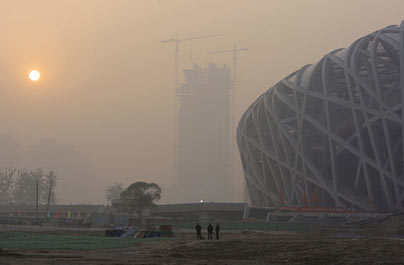
Via an new study recently published in the Journal of the American Medical Association, researchers found that the Chinese government's decision to close down Beijing's polluting factories and take cars off the road during the 2008 Olympics resulted in a remarkable short-term improvement in cardiovascular health. It's the first major study to look at the immediate effects of air pollution in young healthy adults.
In a synopsis published by Environmental Health News, one of the authors describes the study and its importance:
"For the 5-month study from June to November, the researchers recruited 125 resident doctors with an average age of 24 from a centrally located hospital. Half were male, and all were healthy with no history of diabetes or cardiovascular disease.
The researchers measured heart rate, blood pressure and six markers of cardiovascular diseases in blood samples before, during and after the games. The markers included C-reactive protein (CRP), fibrinogen, von Willebrand factor, soluble CD40 ligand, soluble P-selectin concentrations and white blood cell count (WBC).
Two markers associated with blood clotting significantly decreased from pre-Olympic to the during-Olympic period: P-selectin levels dropped by 34 percent and von Willebrand factor levels were reduced by 13 percent. After the games, when the pollution control measures were removed, most markers rose back to pregame levels. But two markers – P-selectin and systolic blood pressure – worsened and showed a significant increase compared to the levels during the games.
Air pollution emissions were also measured at similar times. Levels of most air pollutants during the games decreased up to 60 percent compared to their pregame levels, depending on the type of pollutants. For example PM2.5 dropped 27 percent, nitrogen dioxide 43 percent and sulphur dioxide 60 percent. After the games when pollution controls were removed, emissions rose to higher levels than were measured before the games started.
This study suggests that even young healthy people can benefit from short-term air pollution reduction and supports efforts to quantify and understand the benefits and costs of air pollution control measures."
The next time a politician complains about the cost of air pollution controls, make sure and ask them if they're for preventative heart disease treatment. When they say yes, please remind them that keeping crap out of our air that would otherwise end up in our lungs is such preventative care.
Midlothian Cement Plants Linked to Higher Child Asthma Rates
On the left is a computer-modeling image from the Texas Commission on Environmental Quality showing the direction of the predominant downwind plume of pollution from the three Midlothian cement plants - from extreme NW Ellis County, blowing diagnoally across Tarrant County and into Wise County. On the right is the map from the original 2009 Cook Children's Hospital CCHAPS study indicating levels of childhood asthma in the Hospital's service area. It tracks closely with the direction of the plume and asthma levels increase in closer proximity to the cemnt plants. 
According to researchers Patricia Newcomb and Alaina Cyr from the UTA College of Nursing "…the bulk of Tarrant County asthma cases lie directly in the path of southeasterly winds that have historically carried high levels of particulate matter from working cement kilns in a neighboring county. Asthma prevalence increases in a linear configuration within the path of the 'cement plume' as residential location comes closer to the cement kiln area."
Exposure to Particulate Matter pollution, or soot, is a well-known known cause for asthma. It can also make a child's asthma worse.
"This latest study is one more piece of empirical evidence that we need to decrease pollution from the Midlothian cement plants to secure the right of our children to breathe without getting sick, " said Jim Schermbeck, Director of Downwinders at Risk, a local group originally founded in 1994 to oppose the burning of hazardous waste in the Midlothian cement plants.
Proximity to the pollution from the three Midlothian cement plants was the only environmental factor geographically associated with higher concentrations of childhood asthma, ruling out poverty and indoor air pollution. There also wasn't a strong correlation to urban gas drilling, although the authors concede that "urban drilling may play a part as well" in the region's higher than normal child asthma rates, and there was no direct comparison between the geography of drilling activity and area asthma levels.
In 2009, Cook Children's Hospital released its Community-wide Children's Health Assessment and Planning Survey (CCHAPS), the largest examination of childhood health in North Texas ever undertaken. It found that Tarrant County and the western side of the North Texas region suffer childhood asthma rates significantly higher than state and national averages.
In "Conditions Associated with Childhood Asthma in North Texas," published in the October edition of ISRN Allergy, Newcomb and Cyr revisit the Cook study and delve more deeply into its data. "The purpose of this study was to identify significant associations between asthma diagnosis, comorbid conditions, and social problems in children." The complete article can be accessed on the Cook Hospital CCHAPS website page devoted to asthma, under "Special Reports."
Midlothian is the home of the largest concentration of cement plant manufacturing capacity in the United States. It hosts three large cement plants – TXI , Holcim and Ash Grove – with a total of six kilns. They are the largest stationary sources of pollution in North Texas. Reports submitted by the plants themselves show they poured over a million pounds of Particulate Matter pollution into the North Texas air in 2009.
EPA recently announced that it was considering once again delaying the implementation of new federal emission rules, including stricter particulate matter pollution standards, from 2013 to 2015 that have been in the works for two decades. The delay would also water down proposed PM pollution standards. Schermbeck said Newcomb and Cyr's analysis shows the real world costs of such a rollback.
"It's a scientific fact, endorsed by EPA, that inhaling tiny bits of particulate matter can make people sick and even kill them. What this study makes clear is that the agency is senselessly condemning more Tarrant County kids to illness and suffering by delaying rules that were supposed to have been in place in the 1990's. It's time to start saving lives by reducing this kind of pollution."
Yes Virginia, There is a Pro-Cancer Lobby
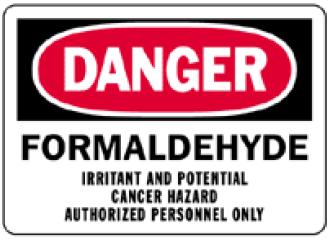 The New York Times' Nicolas Kristof, who's established himself as one the nation's leading editorialist on the harms of what he calls "Big Chem," has another excellent piece in the Sunday edition.
Using the curious case of Formaldehyde, the carcinogen that isn't one according to the people who make money manufacturing it, Kristoff draws a portrait of the kind of industry-fueled professional obfuscation that Big Tobacco, Big Oil and Every other Big Industry of the last 60 years has used to escape necessary regulation.
Part of this strategy is to block, delay and bury information that proves your product's guilt, and so it is with Formaldehyde, something most of us think we only run across in High School biology labs. As it turns out, the chemicals is used in a wide variety of products and our homes are full of it. Our general exposure to formaldehyde has increased. This use and exposure has risen even as the World Health Organization and American scientists have concluded that formaldehyde causes cancer.
And so a seemingly innocuous document like the 500-page "Report on Carcinogens" from the National Institutes of Health becomes a real threat to the manufactured "uncertainty" the chemical industry has spent so much to construct.
“Formaldehyde is known to be a human carcinogen,” declared the most recent Report on Carcinogens, published in 2011. Previous editions had listed it only as a suspected carcinogen, but the newer report, citing many studies of human and animal exposure to formaldehyde, made the case that it was time to stop equivocating."
This conclusion made the report an instant target. Industry got its supporters in the house to demand a follow-up study for Formaldehyde and that no other Reports on Carcinogens be published with the new consensus language on its cancer-causing impacts.
So a chemical that the science says is clearly a carcinogen is still being sold in lots of household products as if it was perfectly safe thanks to folks who, collectively, make up what might be called the "pro-cancer lobby."
Besides all of us being exposed to Formaldehyde through consumer products, people who live in places where natural gas is being mined, like the Barnett Shale, as well as those downwind of waste-burning cement plants, like the ones in Midlothian, get dosed with more of the stuff. So, you know, we're doubly-blessed in DFW.
The High Cost of Fracking
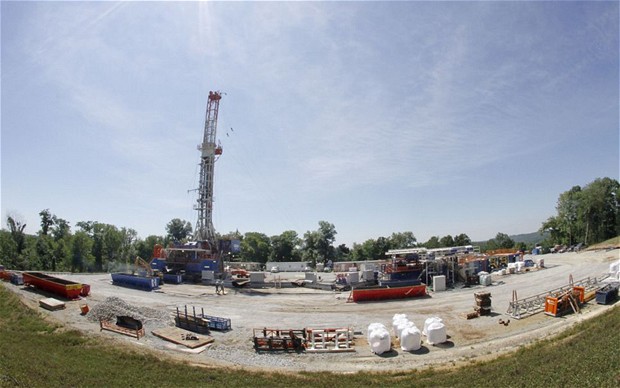 Yesterday, Environment Texas released a new compilation report in Dallas, titled, "The Costs of Fracking." There's not a lot of new information, but it does serve as a convenient catalog of the disadvantages of inviting the gas industry to town, as the Dallas City Council is considering via a new gas drilling ordinance. Every city council member should take a look, although we doubt they will.
The report covers the impact of fracking on public health, water, air, as well as the infrastructure demands of the gas industry. Among the tidbits:
"The truck traffic needed to deliver water to a single fracking well causes as much damage to local roads as nearly 3.5 million car trips. The state of Texas has approved $40 million in funding for road repairs in the Barnett Shale region, while Pennsylvania estimated in 2010 that $265 million would be needed to repair damaged roads in the Marcellus Shale region."
Fracking can affect the value of nearby homes. A 2010 study in Texas concluded that houses valued at more than $250,000 and within 1,000 feet of a well site saw their values decrease by 3 to 14 percent.
The average public health costs of air pollution from fracking operations in Texas’ Barnett Shale region reach $270,000 per day during the summer smog season.
Here's the press release. Here's the report.
Study: Gas Drilling “Significantly” Increasing DFW Smog
 In the middle of another bad North Texas ozone season, a new study by a Houston research consortium concludes that Barnett Shale natural gas facilities "significantly" raise smog levels in DFW, affecting air quality far downwind.
According to the study, ozone impacts from gas industry pollution are so large, they'll likely keep North Texas from being able to achieve the EPA's new 75 parts per billion (ppb) ozone standard.
Author Eduardo P. Olaguer, a Senior Research Scientist and Director of Air Quality Research at the Houston Advanced Research Center, concludes that, "Major metropolitan areas in or near shale formations will be hard pressed to demonstrate future attainment of the federal ozone standard, unless significant controls are placed on emissions from increased oil and gas exploration and production….urban drilling and the associated growth in industry emissions may be sufficient to keep the area (DFW) in nonattainment."
Olaguer's article describing his study was recently published in the July 18th edition of the Journal of the Air & Waste Management Association. It's the first independent study to examine specific North Texas ozone impacts from the gas industry.
Environmental groups say air pollution from natural gas sources is already making it impossible for DFW to meet even the obsolete 15-year old standard of 85 ppb. So far in 2012, five monitors have violated that level of smog despite a state plan that Austin guaranteed would reduce ozone concentrations in DFW to record lows this year. Counting 2012's failure, DFW has been in continual violation of the Clean Air Act for its smog pollution since 1991.
"This study is proof we need a regional strategy of self-defense to reduce air pollution from the gas industry," said Downwinders at Risk Director Jim Schermbeck, whose group has been leading the fight to reduce smog-forming pollution from gas sources for two years now. "TCEQ and EPA are not doing enough to rein-in these facilities. Despite their official plans, our air is getting dirtier, not cleaner because gas pollution is still under-regulated. It's time for us to do more at the local level."
Schermbeck suggested the study could make a difference in the upcoming city council vote on a new Dallas gas drilling ordinance.
"Dallas has a chance to react positively to this new evidence by adopting the nation's first policy aimed at mitigating the tons of new pollution caused by gas mining in its new drilling ordinance. That would be a very large step forward in advancing regional clean air goals."
A city-wide coalition of neighborhood, homeowners, and environmental groups has been urging the Dallas city council to require gas operators to reduce as much air pollution as they release through funding of anti-pollution measures across the city. The Houston Center study gives them a lot of fresh arguments.
According to it, "…oil and gas activities can have significant near-source impacts on ambient ozone, through either regular emissions or flares and other emission events associated with process upsets,and perhaps also maintenance, startup, and shutdown of oil and gas facilities."
In fact, just routine emissions from a single gas compressor station or large flare can raise ozone levels by 3 parts per billion as far as five miles downwind, and sometimes by 10 ppb or more as far as 10 miles downwind.
Those impacts rival the size of smog effects traced back to the Midlothian cement kilns or East Texas coal-fired power plants by previous studies.
As the study notes, "Given the possible impact of large single facilities, it is all the more conceivable that aggregations of oil and gas sites may act in concert so that they contribute several parts per billion to 8-hr ozone during actual exceedances."
This conclusion directly contradicts the stance of the Natural Gas industry and the Texas Commission on Environmental Quality, both of which deny that Barnett Shale gas emissions are large enough or located in areas that can influence DFW ozone levels.
But the Houston study is based in part on data collected by industry, as well as information from the city-sponsored "Fort Worth Study," and citizen-sponsored testing in the town of DISH in Denton County. It also uses a kind of computer modeling that allows for a more realistic understanding of how large releases from gas facilities can increase ozone pollution than the one the TCEQ uses. It's the most sophisticated challenge yet to the state and industry's claim that gas emissions do not constitute a large threat to DFW air quality.
"This is reality-based science, not the ideologically-influenced happy talk that's coming out of TCEQ these days," said Schermbeck. "Local governments in North Texas, especially those that are traditional allies of clean air, need to pay close attention and act on it."
The report is available for downloading here.
The Miracle of Our Perpetually-Projected Lady of the Public Hearing
 In 2009, when there was an EPA national hearing in DFW on the then-proposed cement plant air pollution rules, the mood was festive. There was a brand new administration. There was a campaign for a brand new EPA regional chief from our own ranks gearing up. The brand new air pollution rules at the center of the hearing were capping a two-decade old fight to enforce the law. They were symbolic of a shift in momentum. Citizens had won. The event was held in a large hotel ballroom, and indeed, for citizens who had been a part of that fight, it felt like a day-long celebration.
Three years later, the party was over. The newness had worn off. A once "indefensible" Bush-era ozone standard that was going to be replaced, was instead adopted by the new administration. Dr. Al had won appointment, only to pummeled into resignation by a political mugging that left even the most cynical shaking their heads. Grim persistence was the most common trait shared among the citizens who faithfully trooped to Arlington City Hall for last Thursday's national EPA hearing, where those same rules were now under attack by the Agency itself. It may have only been three calendar years, but that ballroom scene seemed sepia-toned distant now.
Which makes the attendance at Thursday's hearing more remarkable in some ways than the large crowd that gathered in 2009. Then, clean air advocates occupied 88 out of around 93 or so speaker slots available for the all-day hearing. Last week, they occupied 83 out of 86 slots. The faithful were coming, but they weren't happy about it. Isn't that always the case in these stories? Right before the faithful are rewarded with a sign?
The first speaker of the day was young Andy O'Hare of the Portland Cement Association, who, despite being on what appears to be the winning side of this battle, didn't look like he was having a good time. He dutifully and stiffly read a prepared statement that took a pro-delay stance and applauded EPA for being reasonable, i.e. agreeing with the PCA. Justification for the delay was evidenced with the help of a laminated multi-colored poster of a seven-step explanation/timeline that he held up himself without aid of easel or stand. "This timeline," he said as his unsteady grasp floated the graphic on a sea of nervous energy, "reflected the fact that the industry had concluded without a doubt that it would need exactly two years to adapt to the rules. You just had to add up the steps." It looked enough like a high school science fair project at this point for you to wonder why this industry can't invest in better PR help. We're losing to these guys?
Except from some of the same kind of praise by the Texas Cement Council, and the obligatory "We don't even agree tighter standards are necessary" rhetoric from the Texas Association of Business representative, that was the extent of testimony in favor of EPA's last-minute rollback. No individual cement manufacturers spoke. Not even TXI, headquartered only about 20 miles away in Dallas. They must think they have it in the bag.
Following O'Hare, Downwinders Director Jim Schermbeck testified in the place of Downwinders' matriarch and founder Sue Pope. News came on Friday that doctors told the 72-year old Midlothian rancher that she needed a heart transplant. Everyone thought it was a good idea for her to sit the hearing out.
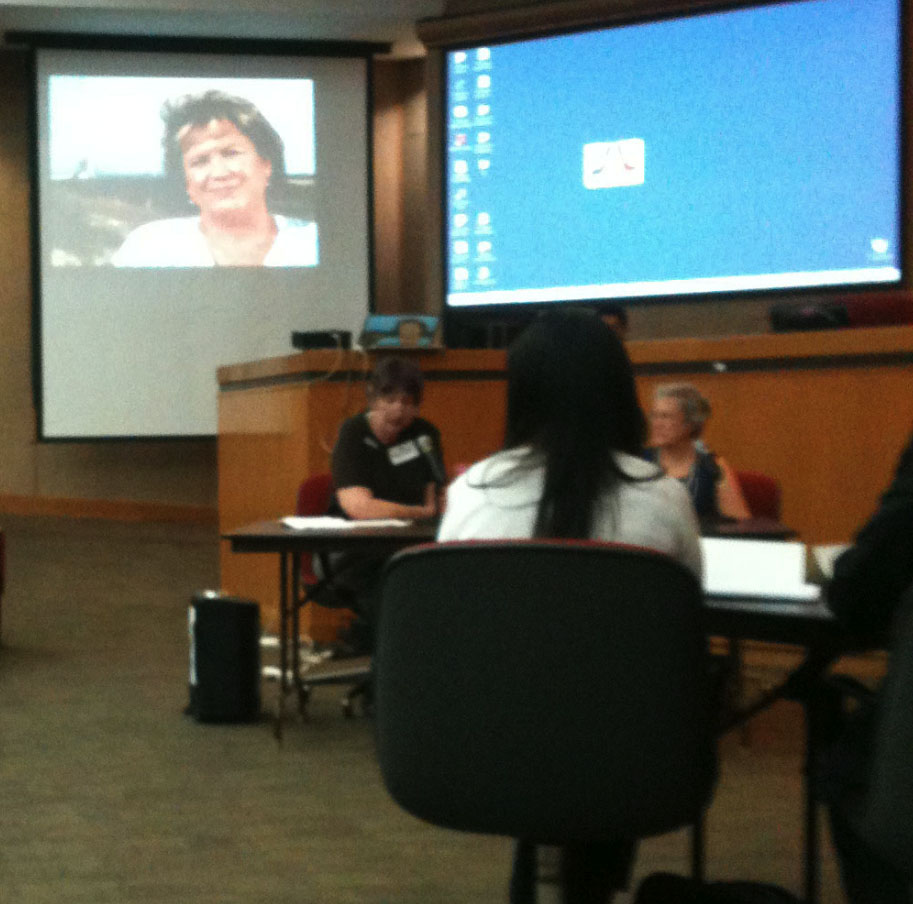
But Schermbeck didn't let that happen. Not exactly. Even before any testimony began, he projected a picture of Pope on a screen above the proceedings. She was staring down at Andy when he testified. Maybe that's what made him nervous.
"These are not industry's rules. These are not EPA's rules. They are Sue Pope's rules, and you shouldn't be messing with them," said Schermbeck. Tracing Pope's 25-year fight to reduce pollution in her hometown, he told the EPA panel she and a handful of others were actually responsible for the rules and it was now destroying them. "EPA has shat on everything Sue Pope has worked for with these proposed revisions, and it should be deeply, deeply, ashamed." He concluded his five minutes by feeding a letter-size version of the same picture of Pope that was being projected larger than life into the desk-size shredder that had been donated for the purpose of telling EPA what they were destroying with their rollback. Schermbeck said the proposed delay and revision was now destroying the woman herself.
Schermbeck wanted to leave that larger-than-life image of Sue up on the screen for as long as anyone in charge would allow. He wanted it to hang like a spectre over the entire day's proceedings. But he knew the screen saver feature on his computer powering the projection would eventually kick-in and make everything go dark. It always does. He's been doing presentations with this combination of equipment for years now and it always goes dark after 10-15 minutes. He'd forgotten to turn it off for this hearing, and now it was going to kick in any minute.
Only it didn't. He kept waiting and waiting. The screen saver never came on. A five-foot Sue Pope head remained there, hovering over the Council Chamber, with eyes as large as dinner plates looking down and directly at the EPA officials taking testimony (Howdy Keith Barnett!), all day long, all 10 hours. Sue Pope was the Alpha and Omega of the hearing.
It wasn't a piece of toast or a tree trunk. But through some unexplainable mix-up of electrons, a real true life saint did make an appearance at the EPA hearing. The official minutes won't reflect it, but for the faithful, the sign was clear: Never, never, never, never, never, never, never ever give up.
Under Ms.Pope's gaze, there was a long parade of poignant and moving testimonials, most finding different ways to say "hell no" five minutes at a time.
Clint Forsvall talked about the thousands of tons of Mercury the EPA's proposed delay would dump into the air, and why, as a parent of an autistic child, that was abhorrent to him. Midlothian resident Alexandra Allred spoke about how often she's had to take her son to the emergency room for middle-of-the-night asthma attacks.
The Galemore family from Chanute, Kansas came and educated everyone on what it's like to live in an isolated cement company town where hazardous waste is still being burned and where there's no independent media, or effective government oversight. Susan Falzone from Hudson, New York came and talked about the 100-year old history of cement plant pollution in that precious river valley. Kemp Burdette from Riverkeepers in North Carolina took on the proposed giant Titan plant. Stephanie Maddin from EarthJustice in DC spoke on behalf of those that couldn't make it to Arlington due to the ridiculous 11-day notice.
Local COPD victim Harriet Irby testified why every little big of air pollution reduction helps her in the daily chore of breathing. Arlington regular thorn-in-the-side-of industry Kim Feil was there with Ben Zene. Retired physician Dr. Robert Portman gave a primer on Particulate Matter pollution. Someone showed up at the last minute after hearing about it only that day to plead for less poisons in the air. It was, she said, important to her.
Most impressive was how so many people that had come to praise EPA in 2009 now came trudging back to try and do their part to keep the rules intact. These are people who know the power of persistence, even when it's in the cause of a rearguard action that shouldn't even be taking place.
Given EPA's transparent intent to steamroll the revisions into law, did we do any good at all? We don't know. But we did our job. EPA tried to make it impossible to get people to come and show their outrage. People, lots of people, came anyway. EPA may still go through with these senseless revisions, but they'll have to do it without a scintilla of public support. We robbed them of that fig leaf.
And we don't know about you, but we're taking the miracle of Our Perpetually-Projected Lady of the Public Hearing as a sign that, although it's highly unlikely that a woman with no technical training, no money, and no political support can, with the help of other similarly-deranged citizens, eventually bring an entire national industry kicking and screaming into the 21st Century…..it can happen.
Citizens Plan to “Shred” EPA at Cement Plant Rules Hearing
 WHAT: The Nation's Only Public Hearing on the EPA's Rollback of Cement Plant Air Pollution Standards
WHEN: 9am to 7 pm Thursday, August 16th
WHERE: Arlington City Hall, 101 W. Abram
(Arlington)—Opponents of an EPA proposal to rollback new cement plant air pollution standards will incorporate a paper shredder into their comments at an all day national EPA hearing at Arlington on Thursday.
"Sometimes words aren't enough to express your outrage. You need an action that speaks louder. Our shredder is pretty loud," said Downwinders at Risk Director Jim Schermbeck, whose group is leading an effort to recruit 100 speakers to fill every 5-minute speaking slot from 9 an to 7pm.
He and others plan to use the shredder to show the EPA what's at stake in the agency's last-minute reversal of key parts of the first ever national toxic air pollution emission standards.
They're bringing pictures of relatives with pollution-related illnesses, copies of the Clean Air Act, health care bills, and the EPA's iconic logo to feed into the shredder to help drive home the personal and public effects of the agency's proposed two-year delay and increase in soot pollution.
"With this regulatory mugging, EPA is shredding air quality, it's shredding public health, its shredding public confidence. We're just showing the results," said Schermbeck.
Despite only 11 days notice for a national hearing in the middle of August, he predicts citizens will come close to meeting their goal of filling all available speaking slots. It's the only hearing EPA is holding as it considers the changes to the original federal 2010 cement plant pollution standards that were hailed by the same groups now protesting a retreat.
Groups are expected to be joined in their rejection of the rollback by North Texas area elected officials or members of their staff, including Congresswoman Eddie Bernice Johnson, State House Representative Lon Burnam, Dallas County Judge Clay Jenkins, prospective Congressional Representative Mark Veasey, and State Senator Wendy Davis.
In 2009, approximately 90 people testified at a similar DFW hearing as the rules were up for final adoption. Dallas-Ft. Worth is downwind of the nation's largest concentration of cement plant manufacturing, with three large plants located within only a few miles of each other in Midlothian. The plants have been the center of environmental and health controversies since the late 1980's and made North Texas a hotspot of citizen opposition to industry pollution.
Having finally been adopted after 20 years of lawsuits, the new emission standards were on their way to be singed into law by President Obama this summer when EPA suddenly pulled them and announced they wanted to delay implementation from next year to 2015 while also loosening emission standards for Particulate Matter pollution. In evaluating the results of the revision, EPA admitted it will increase PM pollution from the nations cement plants by 135 tons a year.
Previous EPA studies had calculated how many lives would be saved by the standards. Citizens have seized on these estimates to now calculate the harm of the agency's two-year delay, putting the national death toll at between 2-5,000 lives using the EPA's own numbers.
Because of the amount of pollution generated in Midlothian and the population density of DFW, a significant portion of those deaths will be local residents.
No court ordered the after-the-fact revisions. In fact, the rules had survived their very last court challenge last December. Schembeck says that makes the rollback even more mysterious.
"EPA is going out of its way to deny citizens what they were on the verge of winning – the first ever federal air pollution standards for the nation's cement plants," Said Schermbeck. "They're robbing people who've been working on this issue for over 20 years for no good reason. We're not going to be quiet as they try to take away what we've rightfully earned."