Particulate Matter
Study: Less Smog Means Healthier Kids
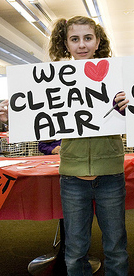 Up to this point almost all studies about air pollution have tracked increasing levels of air pollution with decreasing levels of health. Respiratory problems, strokes, heart disease, Autism, Parkinson's-like symptoms – they've all been linked to exposure to high levels of air pollution vs exposure to less severe air pollution.
Now, comes a new study that approaches the problem from the opposite end of things. It associates healthier kids, specifically, increased lung capacity, with cleaner air over time in Southern California. It provides much needed evidence that pollution controls mandated by the Clean Air Act over the last 40 years have had their intended effect and improved public health.
On Wednesday, the results of the effort were published in the New England Journal of Medicine by researchers from the Keck School of Medicine at the University of Southern California (USC).
Over two decades, researchers at USC studied air pollution levels as they declined in five smog-plagued local communities, while also measuring breathing capacity in 2,120 school children from those same communities during three separate time periods: 1994-1998, 1997-2001 and 2007-2011.
The last group of kids tested showed improved lung growth of about 10% between the ages of 11 and 15, compared with children at the same age in 1996. Overall, the percentage of children with abnormally low lung function at age 15 dropped from nearly 8% in 1994-98, to 6.3% in 1997-2001, to just 3.6% in 2007-11. The positive effects were observed in boys and girls, and regardless of race and ethnicity.
This increase in lung function tracks with improvements in air quality in the LA Basin. According to the ALA, despite a higher population and more cars, Los Angeles had 68 fewer high-ozone days last year than in 1996, and 75 fewer high-particulate-matter days than in 2000. By the study’s conclusion in 2011, fine particulates had fallen by 50 percent and nitrogen dioxide levels by 35 percent in the communities being studied.
Those communities had fewer bad air days because of the pollution controls introduced by government beginning in the mid 1970's with the introduction of the automobile catalytic converter, and continuing to this day with emissions restrictions on everything from shipyards to power plants to lawn mowers.
According to the USC study, those controls and the decrease in smog they produced, have led to fewer stunted lungs and fewer children susceptible to asthma and a host of other respiratory disorders.
According to USC's James Gauderman,
“Improved air quality over the past 20 years has helped reduce the gap in lung health for kids inside, versus outside, the LA basin.”
Consensus in the scientific community (outside TCEQ) seems to suggest that this kind of study wil be important in proving the efficacy of new pollution controls across the country.
Morton Lippmann, a professor of environmental medicine at New York University School of Medicine, said the research would be influential and predicted that within the next few years, when federal emission standards are due for review, “this kind of information will play a major role.”
“It provides confirmation that the work we’ve done to improve air pollution has made a difference in kids’ health,” said Dr. Joel Kaufman, a physician and epidemiologist at the University of Washington, who was not involved in the research. “There are more kids comfortable running around.”
The caveat here is that while new controls benefited public health, it was not necessarily the controls on ozone pollution alone that caused the benefits. During the two decades of study, ozone levels declined only modestly. Ozone has been associated with acute health problems, such as asthma attacks, but the researchers concluded that its reduction does not have the long-term effects on overall lung function that reductions in fine particulates and nitrogen dioxide do.
Pollution controls for ozone, or smog, often have the side effect of reducing particulate matter (PM) and NO2 (one of the forms of Nitrogen Oxide that form ozone), as well. It may well be that these side effects have more impact on public health than previously believed. Certainly the accumulating evidence about the variety of insidious harms caused by even low levels of particulate matter exposure give credence to this idea. Based on the scientific literature, many local downwinders have believed that the single most dangerous kind of pollution being emitted by the cement plants in Midlothian are their voluminous amounts of PM pollution.
One of the reasons Downwinders at Risk has been so insistent on getting Selective Catalytic Reduction (SCR) on the kilns is that, besides being able to reduce NOX pollution by 80-90 % or more, the equipment is also able to make sizable dents in Dioxins, Volatile Organic Compounds, and yes, Particulate Matter pollution.
Ask the State and Holcim To Finally Give DFW “the Holy Grail” of Cement Pollution Control Technology
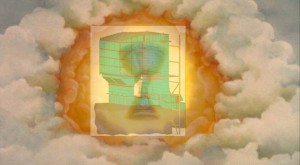 Swiss-based Holcim Cement is requesting a permit amendment to add new piece of pollution control equipment to its Midlothian cement plant, one of three cement plants that make the city the "Cement Capitol of Texas" and the largest concentration of cement manufacturing in the U.S. Good news, right? The problem is that the company is asking the state for the permit before deciding what kind of pollution control equipment to install.
That's right. Holcim is asking the Texas Commission on Environmental Quality (TCEQ) to OK a permit that will result in a "major modification" of its Midlothian plant and could produce significant amounts of new pollution before it even decides what the major modification is going to be. Anywhere else in the country this might be a bit odd, but hey, it's Texas, where Rick Perry's TCEQ has a rubber stamp standing by for anything industry requests.
Holcim's permit request is being prompted by a problem complying with new federal regulations limiting a kind of pollution called Total Hydrocarbons, or THCs. These are also sometimes referred to as "Volatile Organic Compounds." Think Benzene, and other kinds of hazardous flammable gases. In its permit application Holcim says it needs to add new controls to reduce THC to levels and come under the new federal standard. Fair enough. The company then says that it's still trying to decide between two different types of controls and will make up its mind after getting the permit and seeing how well its choice works out on one of its two separate giant kilns. That's the bogus part.
But wait, there's more! The two technologies Holcim is considering installing in Midlothian are: 1) A Regenerative Thermal Oxidizer, or RTO, which is a fancy way of saying setting them on fire and flaring them off, and, 2) A Selective Catalytic Reduction unit, or SCR, which is a tower of treated metal honeycombs that pick up pollution as the plant exhaust passes through them. RTOs are already installed on American cement plants, including TXI's huge Midlothian kiln just a few miles down Highway 67 from Holcim. On the other hand, up to now full-scale commercial SCR units have only been installed on European cement plants and in fact, the Portland Cement Association has lobbied long and hard to keep them out of the US for fear of raising the pollution control bar too high for all of the country's cement plants.
That's because SCR is more expensive to build and maintain than most cement plant control devices. But for the money, you get the Holy Grail of cement plant pollution control technology.
Most of the European cement plants that have SCR units install them to remove another type of pollution from their stacks – Nitrogen Oxides (NOx). If that sounds familiar, it's because NOx is a major smog-forming pollutant, and DFW has so much of it that the region has never been in compliance with the Clean Air Act standard for smog. And you'll never guess which facilities are the single largest sources of NOx pollution in North Texas. Or maybe you will: the Midlothian cement plants. That's why Downwinders at Risk has made it a point to campaign to require all three Midlothian cement plants – Holcim, TXI and Ash Grove – to install SCR….since all the way back in 2001, when the first European units were deemed a success at a German cement plant. SCR can remove 80 to more than 90% of all NOx coming out of a cement kiln. The 6500 tons of NOx a year that the Midlothian cement plants are permitted to release could be reduced to 650 tons with the application of SCR.
Now, as it turns out, SCR units are great not only at capturing large amounts of NOx pollution, but all kinds of other industrial pollution coming out of cement plants as well. Like THCs – up to 70% or so, but also Particulate Matter, Metals, Greenhouse Gases, Carbon Monoxide, and Dioxins. It's what's called a multi-pollutant control device because it does such a good job of eliminating a wide variety of nasty stuff from smoke stacks. This is what makes it the state-of-the-art technology for communities hosting kilns. In contrast, RTOs are single-purpose pollution devices aimed just at hydrocarbon removal and aren't designed to remove other kinds of emissions.
So even though Holcim is considering operating SCR because of its hydrocarbon problem, it would have a massive impact on the plant's air pollution across the board. And if Holcim were to set the precedent, the clock would begin ticking on bringing SCR to the other two Midlothian cement plants as well. It would only be a matter of time.
The public comment period for telling the state whether to accept or reject Holcim's permit application ends this Friday, July 11th at 5 pm. (If you're interested in jumping through the hoops to fill out the online form for official comments, you can go here and use Permit Number 8996)
Downwinders is submitting detailed comments praising Holcim for considering SCR, but urging the TCEQ to reject this permit because it's too vague and doesn't commit the company to any partciular technology, including SCR. We've also been collecting letters form local officials and stare legislators that urge Holcim to definitively choose SCR.
Now we're asking you to help us bombard both the Texas Commission on Environmental Quality and Holcim's US headquarters in Dundee Michigan in the next 48 hours with the same message to show public support for the company to do the right thing while rejecting a placeholder permit that doesn't commit it to do that right thing.
We want a permit request from the company that says Holcim will definitely install SCR, becoming the first commercial application of this state-of-the-art technology in America.
Using our "Featured Citizen Action" link, you can send such a message to Austin and Michigan in a matter of seconds right now. All you have to do is click here and then send the e-mails. We guarantee there's no more important or easier thing you can do for clean air in North Texas this week than sending these e-mails to the TCEQ Commisisoners and Holcim Corporate leadership. Please help us get the cement plant pollution control technology DFW deserves. It will only take a matter of seconds for you to help us achieve a goal we've been working toward for 14 years. We can do this. But we need your help. Now. Thanks.
Rick Perry, with a Smoking Gun, in the COG Headquarters: Monday at 10 am
 The latest chapter in a decades old mystery game of "Get a Clue" happens tomorrow morning, Monday, June 16th when representatives of the Sierra Club and Downwinders at Risk present their case against the current state anti-smog plan during the regional air planning meeting at the headquarters of the North Texas Council of Governments, 616 Six Flags Road in Arlington. Come find out who and/or what keeps the DFW area from ever meeting federal clean air standards year after year and what can be done about it. The meeting starts at 10 am. Citizen groups are expected to do their presentations in the 11 to 12 hour. Then we'll all have a debriefing lunch at the Subway's down the street hosted by State Representative Lon Burnam. Y'all come.
Not So Freindly Skies: Another Study Finds Airport Air Pollution Problems
 For the second time in as many weeks, a new study shows dramatic air pollution problems surrounding one of America's major airports. Last week, it was the fact that Particulate Matter was four to five times higher surrounding LAX, adding up to more annual pollution than more than half of the Los Angeles freeway system.
This time, it's Logan in Boston, where an epic, 14-year long effort by the Massachusetts Department of Health and Human Services shows that children living adjacent to the airport suffer respiratory problems at levels as much as four times higher than those who live further from from the runways. Adults living nearby are twice as likely to experience chronic obstructive pulmonary disease than their peers living in more distant Boston neighborhoods.
According to the study's authors, the findings are “statistically significant” and take into account pollution from vehicle traffic and socioeconomic factors such as smoking rates and poverty. It's the first research to try to explore specific health effects surrounding an American airport, relying on interviews with more than 6,000 adults, who also provided health information for more than 2,200 children in 17 communities within a 5-mile radius of the airport.and combined them with advanced air modeling data to estimate exposure to airport-related emissions.
In response, Airport officials and city leaders are working on plans to use more hybrid and natural gas-powered vehicles in and around the airport, including maintenance vehicles and rental cars, as well as requiring planes to use only one engine while taxiing.
DFW Airport long ago required electrification of all ground vehicles because of North Texas' chronic smog problems.
Boston's study was prompted by complaints from residents about pollution and health concerns. The 17 communities within the study area were Boston, Brookline, Cambridge, Chelsea, Everett, Hull, Lynn, Malden, Medford, Melrose, Milton, Nahant, Quincy, Revere, Saugus, Somerville, and Winthrop.
Show Me the Money: Putting a Dollar Value on Climate Change
 How do you monetize a human life? How about when that life is impaired with an illness? What's it worth to you not having to rush your child to the emergency room when they're turning blue during an asthma attack? What about to prevent a heart attack?
These days we live in a cost-benefit world that demands this kind of accounting for things that should be accepted at face value. Want to talk about the advantages of cleaner air? You have to be able to put a price tag on it. And, with a small slight of hand, that's what the Obama administration did when it touted all the economic reasons why its new carbon capture rule for existing power plants was a plus for the country.
Carbon pollution itself doesn't directly cause the kind of death and suffering among humans that the Clean Air Act was written to address. Oh sure, it might doom countless species, raise sea levels, and cause global catastrophe, but there's not a way to tie it directly to more mundane respiratory diseases or early mortality that we (well, everyone but the Texas Commission on Environmental Quality) associate with "air pollution."
Instead of pricing catastrophic planetary effects, no matter how self-evident their true costs might be, the EPA instead sought out to tag the out of pocket expenses saved by Americans in cutting pollution associated with carbon, like Particulate Matter and smog. Most of the $55 to $93 billion in economic gains cited by the EPA last week came from these co-benefits, rather than from added spending and jobs in renewable energy or preventing massive crop failures. Otherwise, the new rules might not have been "worth it" from a regulatory point of view. The administration projects the new rules will cause the loss of between 79,900 and 80,400 full-time equivalent jobs in power generation versus 111,800 full-time equivalent jobs in renewable or energy efficiency work, basically a wash.
Want to know the price of an asthma attack? $58. Multiply that by 140,000 to 150,000 across the country and you have the approximately $9 million saved over the next 15 years by reducing soot and smog – a side effect of reducing carbon pollution under the rules.
Non-fatal heart attacks cost an average of $98,000 in health care costs and lost earning power among under-25-year-olds versus an average of $200,000 among 55- to 64-year-olds, because this later demographic is supposedly reaching its peak earning power. Preventing a six-day bronchitis episode is valued at $430.
By far the largest single health impact from the carbon rules seems to come from the forecasted reduction in deaths associated with PM pollution, quickly becoming the most insidious and widespread air pollution threat in the world, and smog. EPA economists estimated savings of between $27.3 billion and $66.7 billion from lower levels of PM 2.5 (fine particles smaller than 2.5 microns in size) and Nitrogen Oxide by preventing 2,700 and 6,600 early deaths.
Most of these numbers come from anticipated cleaner or closed coal plants. It's not unusual for EPA to do accounting this way for the rules it's proposing, although it's the first time it's used it to justify carbon pollution regs.
Will these kinds of arguments win over the skeptics? Doubtful, but that's not who they're aimed at. Instead the administration is using these numbers as talking points to the media and the public in hopes of creating momentum the skeptics can't reverse or rationalize. After all, it's hard for even Rick Perry to call out your child's asthma attacks as unimportant or inconsequential.
Study: LAX Pollutes More Than Half of SoCal Freeways
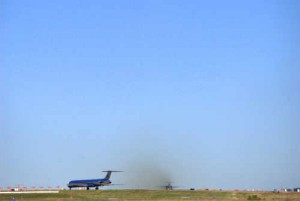 Researchers at the Keck School of Medicine and the University of Southern California have just published a report in the American Chemical Society's Environmental Science & Technology journal that shows air traffic from Los Angeles International Airport is responsible for more air pollution than half of all the city's notoriously congested freeways with a plume extending at least 10 miles downwind.
LAX is the world's sixth largest airport, with 40-60 take-offs an hour. DFW averages 46 according to the airport's own website.
USC Scientists spent a month driving around the LA airport taking air samples for Particulate Mater pollution and found that downwind communities had twice the routine background level of PM in the city. Nine miles out, they found PM levels five times higher than background. Two miles from LAX, PM levels were almost 10 times higher. For comparison's sake, that's equivalent to 174 to 491 miles of freeway traffic. The entire area of Los Angeles County has a total of about 930 miles of freeways. Based on their calculations, scientists concluded that within the area they found to have elevated pollution from the airport, automobiles contributed less than 5 percent of the PN levels. “Therefore, the LAX should be considered one of the most important sources of PN in Los Angeles,” concluded the ACS piece
Why is that a public health concern?
"Ultrafine particles, which form from condensation of hot exhaust vapors, are of particular concern because they deposit deeply into the lungs and can enter the bloodstream. The oxidative stress and resulting inflammation appear to play a role in the development of atherosclerosis (blocked arteries) and can make other health conditions worse, especially for people with existing cardiac or lung conditions including asthma."
As far as we know there's been no study of PM pollution from DFW Airport – no federal highways dollars at stake – but this one from California should prompt one.
Air Pollution is “an overlooked risk factor” for Heart Disease
 Over the last decade we've seen plenty of studies linking air pollution, and specifically Particulate Matter, or soot pollution, to heart disease and attacks. Now Dr. François Reeves,a Canandian cardiologist has a new book "Planet Heart: How an Unhealthy Environment Leads to Heart Disease," that puts those studies in context.
“You can sum it up like this: more pollution, more major adverse cardiac events. Pollution of the city is as toxic as cigarette smoke. It has different stuff in it, but the difference is that with pollution, you get it all through your life, from your birth to your death. If you live in a polluted milieu, as soon as you’re a baby you’ll take it in through every breath.”
Reeves' interest as a cardiologist in air pollution issues was triggered by a 2008 World Health Organization report that tracked mortality rates for cardiovascular disease in European countries. In nations with relatively clean air like Norway or even France, the levels were approximately 25 to 70 per 100,000 men. In Russia and the Ukraine it was 600-750 per 100,000. “I was blown away by those numbers,” Reeves says. “We know the classical and well-demonstrated risk factors for heart disease, like smoking and obesity and inactivity. But that’s when I realized the environment has a huge impact."
Just like lead, and benzene, and dioxin, and so many other kinds of pollution, there appears to be no "safe level" of exposure to PM pollution. Any amount is capable of doing some harm, and the more you're exposed, the more harm is likely to happen. That's why fence-line communities are particularly vulnerable to higher rates of illness. In DFW, where PM levels are considered under control, there are still lots of hot spots for the pollutant. If you live downwind of the Midlothian cement plants, you're inhaling a lot of soot. the closer you live – Cedar Hill, South Grand Prairie, South Arlington, Mansfield – the more soot you're inhaling.
In his new book Reeves gives a list of heart-healthy things an individual can do to reduce their risk of heart disease, including increased bike riding, more public transit, or walking and weaning yourself off of internal combustion engines with electric cars and hybrids. “Look at everything you’re doing to minimize your footprint and do whatever you can to have an impact on global footprint,” Reeves says,
But he recognizes the limits of this kind of advice if a person is living in a smoggy city or region and offers overarching policy advice for officials. Cities and governments must continue their efforts to be green, if only out of their own self-interest.
If those governments need any convincing, Brauer points to a financial argument: fewer health problems mean less strain on the public system. “If you improve air quality, everybody benefits,” he says. “It’s really, really cost-effective.
A Barnett Shale Manifesto…From Austin
 Sometimes it takes a perspective above the grind of trench warfare to give you a better sense of what the entire battlefield looks like. That's what UT Law Professor Rachel Rawlins has done for Barnett Shale activists with the recent publication of her article "Planning for Fracking on the Barnett Shale: Urban Air Pollution, Improving Health Based Regulation, and the Role of Local Governments" in the new Virginia Environmental Law Review.
Don't let the academic title fool you. This is a call for a radically new approach to how communities in Texas regulate the risks of fracking, and every other type of heavy industry. We put the link up for the piece on our Facebook page on Saturday based on a quick reading of its commentary on the Flower Mound cancer cluster, but it's more, so much more than that. Among other things, it's a comprehensive rebuttal of every claim of safety and well-being ever issued by the industry or state authorities about the health of residents living in the Barnett Shale, of which the Flower Mound case is only one example. Rawlins has produced a one-stop catalog of each major air pollution health controversy in the Barnett since concerns began to grow in the last decade, with an almost 30-page review of why no industry or government-sponsored study of fracking pollution and its health effects is a satisfactory response to those concerns. Want to convince your local officials that fracking isn't as safe as it's touted? Here's the staggering blow-by-blow commentary to do it.
But all of that documentation is presented in service to making the point that current state and federal regulation of fracking is failing to protect public health, both in design and in practice. Professor Rawlins' solution to this problem is not to give the state and federal government more power to regulate the gas industry. No, it's to turn the current regulatory framework upside down and give more power to local governments to do the things that the state and federal government should be doing.
In making this recommendation, she echoes the strategy that's been driving Downwinders since it was founded – that the best way to regulate pollution problems is at the local level where the most harm is being done, and it should be directed by the people being harmed. This is what drove our Green Cement campaign that closed the last obsolete wet cement kiln in Texas. This is what fueled our campaign to close down the trailer park-come-lead smelter in Frisco. And it's what was behind the recent Dallas fights over drilling. In each case, it wasn't Austin or Washington DC that was the instrument of change – it was local governments, pressed by their constituents, flexing their regulatory powers. The same thing is driving activists in Denton who are organizing the ban fracking petition drive and vote.
This strategy avoids battles where industry is strongest – in the halls of the state capitol and in DC, where citizens are outspent millions to one. Instead, it takes the fight to neighborhoods where the harm is being done or proposed, where people have the most to lose, where the heat that can be applied to elected officials is more intense. Citizens will still get outspent, but the money doesn't seem to buy corporations as much influence among those actually breathing the fumes of the drilling site, or smokestack.
Particularly now, with corporate-friendly faux-Tea Party types in control of state government and the House of Representatives in DC, there is little room for grassroots campaigns to make a difference by passing new legislation. Even if by some miracle a few bills did pass, their enforcement would be up to the same state or federal agencies that are currently failing citizens. Local is more direct, and more accountable. Professor Rawlins agrees, and spends most of the rest of her 81-page journal article citing the ways in which local control of fracking in the Barnett Shale is hampered by the out-dated top-down approach to regulation, and what should be done to fix that.
Included in her recommendations are two long-term Downwinders projects: Allowing local governments to close the "off-sets" loophole for the gas industry that exempts them from having to compensate for their smog-forming pollution in already smoggy areas like DFW, and creating California-like local air pollution control districts that could set their own health based exposure standards and pollution control measures without having to go through Austin or DC.
If there's a single major fault in Rawlins's analysis, it's that she believes more local control of pollution risks is itself dependent on action by an unwilling state government. But Downwinders and others have shown that isn't true. Our most significant and far-reaching victories – from the closing of the Midlothian wet kilns to the new Dallas drilling ordinance – have all taken place while Rick Perry was Governor and the state legislature was in the hands of our opponents. We did these things despite Austin, not because we had its permission. Local zoning laws, local permitting rules, local nuisance acts, and other local powers are under-utilized by both residents and their elected officials when it comes to pollution hazards.
The same is true now of Downwinders' off-sets campaign aimed at the gas industry. We think we've found a way to avoid the "preemption" argument that would keep local governments from acting on smog pollution from gas sources by aiming the off-sets at Greenhouse gases – an area of regulation Texas is loathe to enter. By targeting GHG reduction, we also reduce a lot of toxic and smog-forming air pollution. It's a back door way, but it accomplishes the same goal. It's going to be up to Texas activists to sew similar small threads of change through an otherwise hostile political environment.
Even given that flaw, Professor Rawlins' introduction to her article is the most concise summary of the air pollution problems caused by gas mining and production in the Barnett, as well as the most credible call to action for a new way of doing business there. Here it is reprinted in full for your consideration:
In the last decade hydraulic fracturing for natural gas has exploded on the Barnett Shale in Texas. The region is now home to the most intensive hydraulic fracking and gas production activities ever undertaken in densely urbanized areas. Faced with minimal state and federal regulation, Texas cities are on the front line in the effort to figure out how best to balance industry, land use, and environmental concerns. Local governments in Texas, however, do not currently have the regulatory authority, capacity, or the information required to closet he regulatory gap. Using the community experience on the Barnett Shale as a case study, this article focuses on the legal and regulatory framework governing air emissions and proposes changes to the current regulatory structure.
Under both the state and federal programs, the regulation of hazardous air emissions from gas operations is based largely on questions of cost and available technology. There is no comprehensive cumulative risk assessment to consider the potential impact to public health in urban areas. Drilling operations are being conducted in residential areas. Residents living in close proximity to gas operations on the Barnett Shale have voiced serious concerns for their health, which have yet to be comprehensively evaluated. Given the complexityof the science, and the dearth of clear, transparent, and enforceable standards, inadequate studies and limited statistical analysis have been allowed to provide potentially false assurances. The politically expedient bottom line dominates with little attention paid to the quality of the science or the adequacy of the standards.
Determining and applying comprehensive health-based standards for hazardous air pollutants has been largely abandoned at the federal level given uncertainties in the science, difficulties of determining and
measuring “safe” levels of toxic pollutants, and the potential for economic disruption. Neither the state nor the federal government has set enforceable ambient standards for hazardous air pollutants.Identifying cumulative air pollution problems that may occur in urban areas, the State of California has called upon local governments to identify “hot spots” and to consider air quality issues in their planning and zoning actions. In Texas, however, preemption discussions dominate the analysis. Any local government regulation that might provide protection from toxic air emissions otherwise regulated by the State must be justified by some other public purpose.
Texas should consider authorizing and encouraging local level air quality planning for industrial activities, similar to what California has done. Care should be taken to separate these facilities from sensitive receptors and “hot spots” that may already be burdened with excessive hazardous air emissions. Given the difficulty of the task, there is also an important role for the state and federal governments in working to establish ambient standards for hazardous air pollutants, as well as standards for health based assessment and public communication. The uncertainty inherent in any of these standards should be made clear and accessible to local governments so that it may be considered in making appropriate and protective land use decisions. Texas should consider allowing local governments to have the power to establish ambient air quality standards, emissions limitations, monitoring, reporting, and offsets for hazardous air pollutants, following the model applied to conventional air pollutants pursuant to the federal program.
Professor Rawlins' article provides Barnett Shale activists with a new map to guide them toward more effective action. We'd all do well to study it and pick local battles that promise to contribute toward its realization.
What are the Pollution Impacts of the New Liquified Natural Gas Plant Announced for Midlothian?
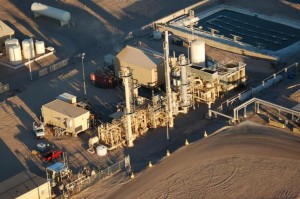 If you're already hosting the three or four largest single sources of air pollution in the entire region you need new large industrial sources of crap like a hole in the head. Likewise, if you've already violated the Clean Air Act for decades the last thing you need are new large sources of smog-producing pollution. But that's exactly what's happening with the announcement last week that a new Liquified Natural Gas (LNG) plant is being proposed for Midlothian's Railport Industrial Park, located between Midlothian and Venus on Highway 67, directly below, and upwind, of the Dallas-Tarrant County line.
Applied Natural Gas Fuels (ANGF) put out a press release on March 21st that touted the purchase of 31 acres for a facility that would house "five liquefaction units, each able to produce 86,000 gallons of fuel daily, and total onsite storage of 1.5 million LNG gallons."
"In preparation of building the facility, which was announced last September, ANGF has purchase orders for all long-lead time items, such as storage tanks, production skids and electric motors and compressors, the company said.
The plant seeks to supply both road transportation and other off-road high-horsepower applications, such as rail, marine, mining, remote power generation and oilfield exploration/production (E&P) operations."
LNG plants take natural gas and cool it to minus 260 degrees F, at which point it becomes a liquid. This allows the industry to be able to store and move it compactly. It's been described as reducing the air out of a beach ball to shrink it to the size of a ping pong ball. But it also greatly increases the chances of accidents. If there's a leak or spill from a tank or pipeline the LNG would convert back to a gas. As it diluted with air, the natural gas/air mixture could become potentially explosive if the concentration of natural gas in air reached between 4% and 17%. In this range, any source of ignition (cell phone, cigarette lighter, attic fan, light switch, auto or boat engine spark plug, carpet spark, etc.) could ignite a vapor cloud and impact a large area.
ANGF already operates an LNG plant in Topock, Arizona, only three miles on the other side of California's border – and tougher regulations. At the same time it's building its new facility in Texas, the company is also doubling the capacity of the Arizona plant. According to an online document about the company's current operations from the Southern California Air Pollution Control District,
"…the gas must be stripped of impurities until it's over 98% methane. Co2, H2S, other sulfur components, moisture, mercury, and particles are stripped via acid gas removal and disposal, gas dehydration, mercury removal, and particle filtration…. The emissions associated with these processes include CO, VOC, SOx, NOx, H2S, particulates, and many toxic organic compounds."
That's Carbon Monoxide, a poison everyone's familiar with, Volatile Organic Compounds, a smog-producing class of chemicals like Benzene and Toluene, many of which are also carcinogenic, Sulfur Dioxide, a respiratory irritant which also causes acid rain, Nitrogen Oxide, a smog-producing respiratory irritant, PM pollution that's been linked to everything from heart attacks to Parkinson's, Mercury, a notorious neurotoxin, and oh yes, Hydrogen Sulfide, or "sour gas," a highly toxic and flammable poison that causes pulmonary edema at low concentrations and death at high ones.
We don't have specific annual volumes of those pollutants for the Midlothian plant yet, and may never get them if the facility receives a standard permit with only an upper ceiling of emissions, but LNG plants use a lot of energy, and therefore have the potential to emit a lot of air pollution. It appears that the Midlothian plant will be burning natural gas for its power, including huge gas turbine compressors. At much larger LNG export plants proposed for the coasts, these compressors have been the subject of a lot of concern. Last November, a Canadian wildlife conservation group released a report on a string of proposed LNG plants for British Columbia that estimated the facilities would be burning most of the gas used in the Province,
"The report, Air Advisory: The Air Quality Impacts of Liquefied Natural Gas Operations Proposed for Kitimat, B.C., concluded LNG plants permitted to operate primarily with natural gas will collectively burn 60 per cent of all the natural gas burned annually in B.C.
The report concluded nitrogen oxide emissions from the LNG plants would increase 500 per cent above existing levels. Nitrogen oxide emissions create acid rain, which harms waterways and fish and creates smog, which causes respiratory problems for children and the elderly, the report states.
The report also concluded natural gas driven LNG plants will increase emissions in the Kitimat area of volatile organic compounds, carbon monoxide and sulphur dioxide."
As a result of these kinds of concerns, the Canadian government committed to spending over a half million dollars on a study of how the gas industry will affect air quality in this part of British Columbia.
The Midlothian plant will be much smaller, put its impact on local and regional air quality could still be substantial depending on the design and technology. Industrial Hydrogen Sulfide and VOCs are not something you want wafting into your backyard, and anything that makes more smog is bad news for the entire DFW region.
Locating in Railport – itself a piece of heavy-metal contaminated ranch property bought and developed by TXI to prevent further liability issues – the LNG plant adds to the inventory of polluters that call Midlothian home. Three large cement plants, a steel mill, a gas power plant, and other smaller entities have made sure the city is the closest thing to a DFW Ship Channel that we have. Collectively, these facilities emit a kind of super plume of air pollution that spews north into the middle of the Metromess during most of the year. If you live anywhere from SW Dallas to NW Tarrant County, you're already breathing the pollution from Midlothian industry. How much the ANGF facility will add to that plume is not yet known, but any increase is going in the wrong direction. Stay tuned.
CDC: Vehicle Exhaust Linked to Higher Child Leukemia Near Roads
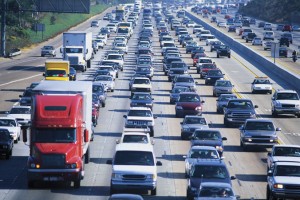 After a review of over 30 years of studies, the Centers for Disease Control concluded that children living near high-volume roads and highways were 50% more likely to suffer from childhood leukemia. The cancer risk is linked to postnatal exposure.
In the April issue of the American Journal of Preventative Medicine, researchers for the CDC explain how they examined all the published studies concerning traffic air pollution risks from 1980 to July of 201. Out of nine relevant studies, seven, covering approximately 8,000 children, reveled a correlation between exposure and leukemia.
"The review found that children diagnosed with leukemia were "50% more likely to live near busy roads than children without leukemia," said Vickie Boothe, a CDC health scientist and lead author of the Journal article. "While the study found a link, it does not prove that living near a busy road causes leukemia."
Previous studies have linked proximity to road traffic with higher childhood asthma and autism rates.