Particulate Matter
Downwinders Had A Good Day in Court Battling EPA Over Cement Plant Rules
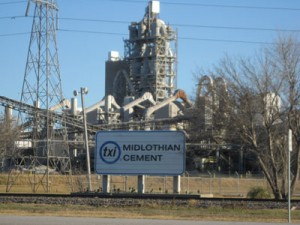 Downwinders has been trying to get new emission limits for cement plants since the mid-1990's. We're still trying.
The first real reform in those rules during the Clinton Administration were pathetically inadequate. Downwinders and other groups assisted by DC-based Earth Justice sued to get them strengthened. We won. When new rules finally emerged from EPA in 2009, they were much better. Many of you came out to the historic national hearing at the DFW Airport hotel to testify in favor of them.
These rules were on their way to being signed by President Obama when they got hijacked by industry at their stop at the Office of Management and Budget, which must review all new regulations. When they emerged, they were unrecognizable in many ways, with deadlines pushed back by years and the important Particulate Matter standard being significantly weakened.
Once again, we're back in court trying to get these watered down rules thrown out. Last week, the DC appeals court that usually takes up federal regulatory fights heard oral arguments from both sides, and even the Republican judges on the panel were skeptical of the Administration's rewrite job.
Reprinted in full below is an inside-the-Beltway account of the proceedings that gives you some idea of what's at stake and what a good day citizens and their representatives enjoyed in court. No date on when to expect a ruling. Even then, if we win, the rules go back to EPA to be rewritten again, albeit with more judicial constraint…theoretically at least.
Judges seem skeptical of EPA claims in cement emissions case
Jeremy P. Jacobs, E&E reporter
Published: Thursday, October 24, 2013
Public health advocates argued in court today that U.S. EPA unlawfully weakened and delayed air standards for cement manufacturers, appearing to gain some traction with a panel of federal appellate judges.
The Natural Resources Defense Council contends EPA caved to industry pressure when it revised its National Emission Standards for Hazardous Air Pollutants, or NESHAP, for portland cement kilns and pushed back its compliance date by two years.
EPA's standards apply to several pollutants, including particulate matter, mercury and other acid gases. The agency revised the particulate matter standard after a court ruling in 2011, but advocates claim the agency did more than the ruling required.
James Pew of Earthjustice, representing the NRDC, told the U.S. Court of Appeals for the District of Columbia Circuit that EPA "gratuitously weakened the particulate matter standard" and violated the "plain and literal meaning" of the Clean Air Act.
Further, he said, many of the issues EPA addressed with its changes "didn't come up" in the previous case.
The cement NESHAP has long been the subject of controversy and litigation.
The kilns are one of the top sources of man-made mercury emissions in the United States. Public health advocates forced EPA to set the standards in a 2010 lawsuit, and when the agency issued the standards later that year it said they would prevent 960 to 2,500 deaths per year.
Industry, however, quickly challenged the standards at the D.C. Circuit. In December 2011, the court ordered EPA to reconsider the standards by taking commercial incinerators that burn solid waste out of its calculations. However, the court largely left the standards in place, including their 2013 compliance deadline (E&ENews PM, Dec. 9, 2011).
When EPA recalculated the standard for particulate matter, the advocates claim the agency made it less stringent. Additionally, EPA reached a settlement with the portland cement industry to delay compliance to September 2015 for all pollutants — not just particulate matter (Greenwire, Dec. 7, 2012).
Public health advocates challenged both actions, as well as a shift from continuous monitoring to one-time annual stack testing for compliance — which also changed the particulate matter standard. The environmentalists also question the standard's inclusion of an "affirmative defense" that protects kilns from citizen lawsuits if they violate the standards during an unavoidable malfunction.
Each issue came up today before a three-judge panel, which included two judges who are considered potential future Supreme Court nominees. The panel appeared receptive to some of the advocates' arguments but not to others.
For example, Judge Brett Kavanaugh, one of the country's leading conservative jurists, appeared skeptical of EPA's decision to delay standards for mercury and other gases to 2015, even though the Clean Air Act says standards must take effect within three years. The 2010 standards for those pollutants, which weren't affected by the D.C. Circuit ruling in 2011, should be in effect now.
"I don't understand," said Kavanaugh, a Republican appointee. "I need help. I don't understand the interrelatedness."
Further, Senior Judge Harry Edwards, a Democratic appointee, said EPA could have easily linked the standards by saying it wasn't "practicable" to meet some without meeting the others. But EPA, Edwards said, never made that argument in the rulemaking.
"I'm really not following this," Edwards said. "Where does the agency make the finding … that compliance couldn't be done practicably?"
Matthew Oakes of the Department of Justice, representing EPA, countered that all the standards are related because the pollution control technology required to limit particulate matter also controls emissions of mercury and other gases. Therefore, it didn't make sense to require kilns to install technology for mercury, for example, before it knew the final particulate matter standard, he said.
That argument was echoed by Carter Phillips of Sidley Austin LLP, representing the cement industry, which intervened in the case.
"You cannot implement any of them in a one-off system," he said.
It was unclear which way the judges were leaning with regard to the advocates' arguments surrounding the particulate matter standard itself. But they appeared receptive to their challenge to EPA's affirmative defense.
Oakes argued that the advocates lacked standing to challenge the affirmative defense, meaning they had failed to prove how they would be injured by it. That notion was flatly rejected by the panel, which said the defense would allow kilns to, at times, exceed the standards, which would harm human health. Therefore, the advocates have grounds to bring the lawsuit, the judges said.
The panel was also skeptical of EPA's arguments on the substantive issue of whether EPA could create the affirmative defense in the first place. Judge Srikanth Srinivasan, President Obama's first appointee to the D.C. Circuit and a leading liberal judge, contended that the Clean Air Act didn't grant EPA that ability.
"This authority wasn't delegated to the EPA to begin with," he said.
Study: Low Levels Of Incinerator Pollution Linked to Premature Births
 A new study being published in the November issue of Epidemiology concludes that even low levels of pollution from solid waste incinerators causes an increase in premature births downwind.
Italian researchers examined over 21,000 births to women living within four kilometers of one of eight solid waste incinerators operating in the Emilia-Romagna region.
"Each newborn was georeferenced and characterized by a specific level of exposure to incinerator emissions, categorized in quintiles of PM10, and other sources of pollution (NOx quartiles), evaluated by means of ADMS-Urban system dispersion models. We ran logistic regression models for each outcome, adjusting for exposure to other pollution sources and maternal covariates.
Preterm delivery increased with increasing exposure….A similar trend was observed for very preterm babies. Several sensitivity analyses did not alter these results. Maternal exposure to incinerator emissions, even at very low levels, was associated with preterm delivery"
Now, you can reassure yourself that we have no single-purpose solid waste incinerators around these parts the way they do on he East Coast or Midwest, so we don't have to worry about this kind of threat. But that's not entirely accurate.
We do have solid waste incinerators in North Texas, they're just called cement kilns. And we have more incinerator capacity than anyone else in the country when it comes to cement kilns.
And, as it turns out, these cement kilns are expanding their lists of available "fuel" to include solid wastes, as well as coal – medical, municipal, and "hard to burn" plastics, as well as car parts, shingles and carpet remains. It's all part of the new wonderful world of commercial garbage burning. If the kilns happen to make some money in the process of turning themselves into under-regulated incinerators, well, all the better for their operators.
For example, and try not to throw up, in the Philippines, the local cement plant is marketing the burning of "Holcimables." What are "Holcimables" you ask? They're "plastics – styrofoam, sando bags, cellophanes and foil packs – textile and rubber." Yes, the same company that operates a cement kiln in North Texas is burning styrofoam in the name of environmental-friendliness in the Philippines. You can bet the Italian incinerators included in this new study were burning some of the same kinds of wastes with the same ingredients.
Burning stuff is bad, whether it's in an incinerator or a cement kiln. And industry is making it very hard to tell the difference.
World Health Organization: Air Pollution Causes Lung Cancer
 As of Thursday, the air you breathe CAN kill you, at least according to the World Health Organization, which officially classified air pollution as a cause of lung cancer. The move came after the group released a report earlier this year estimating that over 220,000 people died from lung cancer worldwide from exposure to bad air. Most of those deaths are occurring in countries in Asia.
Mostly these deaths are due to Particulate Matter pollution, the ubiquitous tiny particles of soot that are produced when things burn, like gas in cars, coal or gas or waste in power plants and cement kilns, and diesel engines and flares in the the gas fields.
Researchers have been producing one study after another for years linking a variety of illness and diseases to various ingredients of dirty air and specifically, Particulate Matter. Parkinson's Disease and other nerve and brain-related ailments, heart attacks and strokes, and of course respiratory problems have all been blamed on PM, but this is the first time it's been classified as a carcinogen. Most scientists in the field believe that there's really no level of exposure to the pollution that's completely "safe."
PM levels in DFW are generally low, but they've been rising over the last couple of years, and those measured levels are based on all of two monitors for all of the Metromess, so they could mask hot spots downwind of large sources (think Midlothian, compressors, and busy freeways). The EPA has proposed a new federal standard that's much lower than the current one, but it has yet to be implemented.
New Studies Link Air Pollution to Pregnancy Risks
 Two new studies provide more evidence that current air pollution standards are not protective of human health.
On Monday, the British Medical Journal, The Lancet, published the results of a huge European-based examination of the effects of Particulate Matter pollution (PM) on the birth weight of newborns. It pooled 14 different previous studies that included more than 74.000 mother-child pairings over 12 countries.
Concentrations of PM below the current European Union standard of 25 micrograms per cubic meter of air – twice the new US standard proposed by EPA in 2012 – were linked to low birth weigh babies. The authors estimated that for every 5 micrograms increase in PM, there was a corresponding 18% increase in there risk of giving birth to an underweight child. Most scientists looking at data like this suggest there really is no safe standard for exposure to PM – that is, any amount can be harmful to health in some way. In this case, the PM was going from mother to child and affecting its health even before coming out of the womb and taking its own first breath.
“We have evidence from animal studies that the tiniest particles enter the bloodstream and go to the fetus,” said the senior author, Rémy Slama, a senior investigator at the Institute of Health and Medical Research in Grenoble, France. “Can we expect other health effects in these children? There are hints that there might be — low birth weight is a marker of negative effects in adulthood.”
PM Pollution comes primarily from types of combustion, like flares in the gas field, power plants, cement kilns and yes, your internal combustion engine in you car. PM pollution is dense along heavily-traveled roads and highways. This kind of information is slowly beginning to impact urban planning. You probably don't want to put an elementary school next to a freeway, or an apartment complex at an intersection. Likewise, you want to try to avoid living directly downwind of thick plumes of the stuff coming from, say an industrial complex that hosts three cement plants and a steel mill. i.e Midlothian.
A University of Florida study that came out last week concluded that pregnant women who live in areas with high levels of air pollution were more likely to suffer from high blood pressure. In this case, the health of approximately 22,000 pregnant women were correlated to readings from local air monitors. Those women living closer to monitors registering high levels of air pollution – defined as not only PM, but smog-forming Nitrogen Oxide and Volatile Organic Compounds – were 12 to 24 % more likely to also have high blood pressure. Although flawed in some important ways by not ruling out variables like weight, the report falls in line with previous studies linking air pollution to blood pressure spikes.
New National Report: Texas is Source of Over 50% of Total US Fracking Pollution
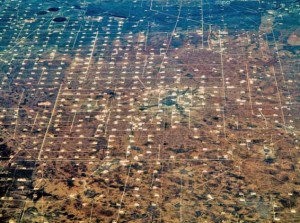 While most of the national publicity surrounding fracking over the past couple of years has involved documenting its encroachment into the Midwest and East Coast, a new first-of-its-kind report demonstrates why Texas is still the center of the oil and gas industry's universe.
Last week the Environment America Research & Policy Center released "Fracking by the Numbers: Key impacts of Dirty Drilling at the State and National Level." As far as we can tell, it's the first systematic collection of quantifiable state-by-state data on the environmental costs of fracking in the entire US – the amount of water used in drilling operations, the amount of air pollution produced, the amount of acreage devoted to leases, etc.
Of course, the numbers all come from either the annual self-reporting industry performs for state and federal regulators, or those regulators themselves, so there's a good chance they're being under-estimated. Nevertheless, the total numbers are still huge and shocking. And what really catches the eye in the state-by-state breakdowns is just how much the operations around us here in Texas contribute to those huge and shocking numbers. We're not just the Belly of the Beast. We're the belly, upper and lower intestines, bowels, and open-throated mouth of the beast.
Number of Wells:
Of the almost 82,000 wells drilled across the country since 2005 (when the Energy Act with the "Halliburton Loophole" included was passed and signed), fully 34,000 have been drilled in the Lone Star State. The second closest state is Colorado with a little over 18,000.
Think things have slowed down and moved elsewhere? Of the 22,300 wells drilled since 2012, 13,500 of them have been in Texas. Colorado again comes in second with 1,900.
Acres of Land Damaged:
130,000 acres out of a US total of 360,000 acres. Colorado is second with 50,000.
Amount of Water Used
Out of a national total of 250,000,000,000 gallons of water used to frack wells, Texas accounts for 110,000,000,000. Pennsylvania is second at 30,000,000,000 gallons.
Amount of Waste Water Produced
Out of a national reported total of 280,000,000,000 gallons (that's 280 billion) of unusable toxic wastewater that needed to be disposed of permanently in injection wells, Texas accounts for 260,000,000,000 gallons. North Dakota is a distant second with 12,000,000,000.
Air Pollution
None of these figures includes totals from other kinds of facilities in the gas cycle, like compressors or pipelines, or storage tanks – just drilling pad operations.
Particulate Matter
Approximately 8,000 tons in Texas out of nationwide total of 13,000.
Nitrogen Oxide (smog-forming)
100,000 tons in Texas out of 170,000 for the entire US.
Carbon Monoxide
153,000 tons in Texas out of a US total of 250,000 tons.
Volatile Organic Compounds (smog-forming and toxins)
14,000 tons in Texas out of 23,000 nationwide.
Sulfur Dioxide (acid rain, respiratory irritant)
300 tons in Texas out of a total of 600 tons nationwide.
Greenhouse Gases
40,000,000 tons in Texas out of a US total of 100,000,000.
When a single state accounts for more than half of the wells, the waste water, and the entire country's air pollution burden from fracking, you understand why campaigning against the industry's practices in Texas is the political equivalent of fighting behind enemy lines. It makes recent victories like the defeat of the Trinity East permits and the adoption of a tougher draft Dallas gas ordinance all the more remarkable, and important.
Beginning in 2006, many of us were caught off-guard by the invasion of wells that swept eastward into the metropolitan DFW area. We didn't know enough to know what questions to ask, or we didn't want to ask them. Now, living in the largest urban gas play in the US, and inventorying these kinds of mind-numbing statistics, we don't have any excuses. Fracking represents one of the most profound environmental and public health challenges ever to confront DFW or Texas. The most important question now is what we intend to do about it.
Ed Ireland is Down to the Scientific Stems and Seeds
 Maybe the Barnett Shale Energy Education Council thought it was being cute by sending their latest "study" out on the day Gasland II had its theatrical premiere in North Texas.
Or maybe they knew what an egg they were laying. It's a basic rule of PR that you don't send things out on a Friday that you actually want people to see. And if you were the industry, even you might be a little embarrassed about this thing too. As of Tuesday afternoon, the group was so proud of it, they hadn't even posted it on their on website. As far as we can tell, it's details have only appeared within stories from in-house publications like the Star-Telegram.
Imagine the pitch on paper, if there was one. "We'll fund our own research so that it'll have maximum credibility. And since we can't find a reliable academic institution to do it for us, we'll have to contract to something called ToxStrategies out of Houston. We won't do any new research at all. We'll just regurgitate the state's own lame monitoring data. We'll take the seven stationary monitors that have screened for air toxics in North Texas – you know, the ones that ony take samples every sixth day (when they were operational), and let that represent the entire Barnett Shale. We'll only look at some Volatile Organic Compounds readings. We won't connect any gas drilling or production taking place to a timeline to show what activity was actually going on around these monitors, so they'll be no way to correlate our presence with increases or decreases in pollution. And of course, since we're using TCEQ monitoring data, we can also use their unsupported claims that there are "safe levels" of benzene and other carcinogens when the most recent science is in direct opposition to that discredited idea."
And that's about it. Old TCEQ monitoring data that may or may not have any correlation to drilling activity is used to once again say, "Look Ma, no health effects!" Think of it as the "Titan Study Part 2."
Industry and regulators always want to start at the smokestack end of things and draw assumptions of human health from that end. As long as pollution is below certain levels that they just know are "safe" (until one day' they're not), they connect the dots and say there is no human harm occurring. They really don't want to actually go out and test that theory among real people on the ground living next to these facilities. They might find it doesn't hold up very well. That's why they want to stick to reviews of monitoring data.
Citizens always want to start from the other end – real life. Let's test that hypothesis about safe levels of poisons and see what the rate of asthma, cancer, miscarriages there are in the neighborhoods around and downwind of these sources. Are the rates of illness higher or lower the closer you get to a facility? Is there any correlation between the types of illnesses and any chemical in the atmosphere or water, no matter how safe the exposure level? And you know what, when it comes to fracking, there seems to be a lot of difference between what the studies that rely on real life say versus what the studies that rely on measurements say, like this "new' old effort released about a quarter to five on a Friday afternoon.
But hey, It can't be the BSEEC without the BS.
Big D’s BFD
 Did you feel the ground shifting under your feet yesterday around 5 pm? It was another one of those local earthquakes caused by fracking. The epicenter was Dallas City Hall. Damage to the gas industry's rhetoric and credibility was extensive.
By a vote of 14 to 1, the Dallas Plan Commission pronounced the permissive "Fort Worth Model" of regulating the drilling and production of natural gas in the Barnett Shale dead. The passing was definitive. As John Cleese might say, "This paradigm is no more…it has ceased to be…this is an EX-paradigm."
It didn't go down without a fight. Up until the very final hours of debate over language in the City's proposed new gas ordinance, staff was still offering weaker versions of rules to Commission members because "that's the way Fort Worth did it." They were all rejected in favor of stricter standards as part of what has the potential to be the most protective ordinance in the Barnett Shale.
Now all we have to do is get eight Dallas City Council members to help us realize that potential.
The draft passed yesterday isn't 100% of what residents want, and in one case doesn't even match the level of protection Dallas itself started out with in 2007. It still provides paths through the bureaucracy for drilling in parks and flood plains, instead of outright bans, and despite staff assurances, the chemical disclosure language isn't foolproof. But to see it only through the lens of what it's not yet doing is to ignore the huge impact of what it already does. Coming from the largest city in the Shale, the Dallas draft immediately offers a modern, tougher alternative to Ft. Worth's submissiveness for dealing with the problems of mining gas in urban environments. To quote our Vice-President, it's a B.F.D. Some of the highlights include:
1) A 1,500 property line-to-property line setback from neighborhoods and other protected uses, matching the most protective setbacks in the Barnett Shale. It can only be reduced to a minimum of 1000 feet with a variance, and that's only possible with 12 out of 15 council votes. Notice of any permit must go out in English and Spanish to all mailing addresses within 2000 feet and the applicant must hold a neighborhood meeting where the project is fully explained.
2) Electrification of all motors and engines on a drilling site. If operators want to make an exception and use combustion engines, they have to show why electrification isn't feasible, and the City has to agree.
3) Tough restrictions on where gas compressor stations can locate – only in heavy industry zoning districts, with the same 1,500 foot setbacks from neighborhoods and all other protected uses, fully enclosed, and they must use electric engines, not diesel or gas. Thanks to some quick pushback by residents and their allies on he Commission, we were able to win back all the rules that staff had excluded in their first take only 24 hours before the vote.
4) A ban on any injection wells in the City of Dallas.
5) A ban on fracking waste pits.
6) Requirements for a road repair agreement before a permit is even considered. This is above and beyond any other insurance or bonding requirement.
7) A recommendation to the Council that it establish a local air pollution off-sets program that would include natural gas facilities. Such a program would be the first of is kind in the nation and close a Clean Air Act loophole that exempts these facilities from participating in the federal off-sets program for smoggy "non-attainment areas."
8) Baseline testing of water, soil, air, and noise at every proposed site.
9) Individual non-toxic "tagging" of all fracking fluids used. Every operator will be required to put their unique chemical signature within the concoction they're pumping into the ground so that if any of it goes where it shouldn't, the offending well can be identified. It's DNA testing for fracking.
10) A recommendation to the Council that during drought conditions, it either charge substantially more for city water that's being used for fracking, or ban the use of city water for fracking all together.
11) A recommendation that the Council demand an additional letter of credit from operators beyond any other insurance or bond to cover uninsurable intentional acts of contamination, i.e. dumping waste into the Trinity River.
We're not in Cowtown anymore.
(There's not an online version of the final language up yet. We'll let you know when there is so you can look this thing over yourselves).
City attorney Tammy Palomino, always a reliable source of information, stated on the record that she believed the draft's language about chemical disclosure would cover all trade secrets, but we're not so sure. That's why we'll be asking the Council to add five simple words to this section that Ms. Palomino didn't: "with no exceptions for trade secrets."
Instead of banning drilling in the floodplain, the proposed ordinance makes it impractical, though not impossible. An operator would have to get a fill permit from the city, and approved by the Army Crop of Engineers, to build a mound that would elevate the entire drilling pad site out of the floodplain. Anyone who's seen the footage from Colorado's flooded gas plays over the last couple of weeks can identify the folly of this approach. What's to keep flood waters from eroding the elevated mound and taking the entire pad site down stream? Only the lack of a kind of levee-to-levee flood we've seen in Dallas before.
Park drilling provided the day's lesson in pretzel logic. A "protected use" includes a recreation area, "except when the operation site is on a public park, playground, or golf course." Then it's perfectly fine to have rig next to the swing set. Got it?
This is less protective than the original Dallas Park decision that preceded the notorious Suhm secret agreement with Trinity East. It called for the leasing of a park's mineral rights but banned surface drilling in any park. You could go under but not on. That's still the most sensible compromise but it went floundering for support yesterday.
Instead, the Park Board will have to request the City Council to hold "Chapter 26" public hearing, after which there must be a 3/4 vote of approval by the Council that officially concludes there's no other possible feasible use for the park land other than gas drilling.
Listening to the comments from many Commissioners right before the vote, one got the feeling that if they had to do it all over, they might not be so equivocal. Nevertheless, they all voted for the more convoluted approach. It's the most flawed part of the ordinance, especially in light of the outcry over allowing any drilling in any public park during the Trinity East fight.
With those exceptions, it was a banner day for residents who've been fighting this good fight for over three years now. It was the kind of day that after Trinity East's main lobbyist whined that the company just couldn't get the electrical hook-ups they needed (in the middle of Northwest Dallas by a major Interstate) during the public hearing right before the final vote, an influential conservative Commissioner successfully moved to amend the completed draft to make the section on mandatory electrification of compressor stations stronger. Ouch.
It was the kind of day when the only ally industry could muster among the 15 Plan Commissioners was the sometimes coherent Betty Culbreath, Dwaine Caraway's brand new gift to Dallas residents. Culbreath said she couldn't vote in conscience for a document that required so much from industry. She felt so passionate about the issue, she missed most of the Commission workshops over the past month or so where the ordinance language was debated. It'd be laughable except the council member who appointed her is now the Chair of the Council's Environmental Committee.
There's no official news about the timeline or process the Council will use to consider the draft now that it's been delivered to them. Despite the mostly winning day residents had on Thursday, its sobering to remember that we only got six votes to deny the Trinity East permits. We need at least two more to make sure this good ordinance stays intact, or gets even stronger.
Such a lopsided Commission result gives us a great running start to get those votes. Backsliding by Council members will be hard to pull-off publicly, although let's face it, some seem immune to embarrassment on this issue.
Cowtown circa 2008 will always be the industry's preferred template for regulation, because they mostly wrote the rules. Residents in the Shale now have a much more citizen-friendly 2013 Big D model they can use for counterpoint – if we can win ACT III of the Dallas Gas Wars.
Dallas City Staff Trying to Pull a Fast One on Eve of Final Gas Ordinance Hearing and Vote
 Thursday's Dallas Plan Commission hearing on a new gas ordinance just got a lot more interesting. At 12 noon today, citizens received the staff proposal for language dealing with compressors stations in Dallas – among the largest, most polluting, most dangerous kinds of facilities in the natural gas fuel cycle.
Staff is attempting to carve out more areas of the cities where compressors can locate, as well exempt them from the already-approved 1,500 foot setbacks from neighborhoods required for drilling wells themselves, as well as exempt them from the vote two weeks ago to require mandatory electrification of all motors and engines.
In other words, city staff probably has a proposed compressor in mind – maybe in the Northlake development or elsewhere – they're trying to write the rules around – just like they tried to do for the Trinity East permits.
What are the changes staff is recommending be adopted tomorrow by the Commission?
1) Staff wants to allow Compressors to call themselves"light industry" and locate in more places in Dallas
Instead of confining them to only Industrial Manufacturing Zoning districts, as was voted on by the Commission two weeks ago, staff has gone ahead and included a brand new category of zoning that would also allow compressors – something called "Industrial Research" districts.
In Dallas, an Industrial Manufacturing district is for "Heavy Industrial Manufacturing Uses with Accompanying Open Storage and Supporting Commercial Uses." That fits compressor stations to a T, since they can emit up to 250 tons per year of air pollution with a "Standard Permit" from the state. They're also subject to tremendous pressures and explosions. They belong in a heavy industrial district.
According to the City of Dallas' own zoning code, the "Primary Use" of facilities in an Industrial Research district is "Research and Development, Light Industrial, Office, and Supporting Commercial Uses."
We know from experience that the only research going on in or around compressor stations in North Texas are experiments on the public health. Staff gives no rationale for allowing compressors to operate in areas of light industry – like warehouse districts – where they would instantly become the nastiest neighbor.
This last minute change is reminiscent of what staff was doing to protect the Trinity East permits before anyone knew about the secret agreement former City Manager Mary Suhm made with the company. Could there now be another company or site the staff is trying to leave open for compressors that wouldn't otherwise be available by sticking to just the Industrial Manufacturing districts the Plan Commission voted for two weeks ago?
2) Staff wants to exempt Compressors from the 1,500 foot setback already agreed to for drilling sites.
Instead of using the distance between operations and neighborhoods the Plan Commission has already agreed is appropriate for well pad sites, staff wants to reduce the distance between larger, more polluting, more permanent compressors stations to just 1000 feet.
This makes no sense at all. For all the real and potential problems at a well drilling site, they're miniscule compared to the pollution footprint of a compressor station. Moreover, the most intense potential releases of air pollution occur at a well site over a period of weeks, or, at most months. Once compressors are built, they're staying put and operating 24/7. If you have a 1,500 foot setback protecting neighborhoods from well sites, shouldn't you also at least provide that same level of protection from a facility that will be pumping out more pollution and also poses a risk of explosion, if not more? But, for some reason, staff wants Dallas residents to be less protected from these kinds of operations.
We need your help at tomorrow's public hearing tomorrow to argue that we need at least the same setback for compressors as we do for well sites.
3) Staff wants to exempt compressors from the requirement to electrify all engines and motors
At their September 12th meeting, the Plan Commission also voted to require electric motors on all gas production facilities. No distinction was made between drilling site motors and generators, and compressors engines. Industry has argued that they can find electric alternatives to every combustion engine including the giant, locomotive-sized engines that run compressors. Since compressor stations are among the largest industrial air polluters, replacing diesel engines with electric ones makes even more sense in a "non-attainment area" for smog like DFW than requiring electrification of all the motors and engines on a drill pad site.
The staff's recommendation that compressors be exempt from required electrification looks to be another special favor staff wants to grant the industry.
These changes, along with others that we're just now receiving word about, are serious enough to cause us to change our plans for tomorrow's public hearing.
Citizen groups be hosting another pre-hearing press conference at 1:00pm in the Flag Room outside the City Council chambers on the 6th floor where we'll be able to itemize the most severe challenges to our goal of getting the most protective gas ordinance in North Texas. THIS IS THE LAST PUBLIC HEARING ON THE ORDINANCE. WE NEED YOUR HELP. Please be there at 1 pm to hear what's at stake and what we need to be calling for in our testimony tomorrow afternoon.
Now is not the time for complacency…..
What Wednesday’s Vote Means for Dallas, the Shale, and the Rest of the Universe
 Wednesday's vote on the Trinity East permits was not only an historic one. It's a long overdue turning point.
The bloody knuckle political fight over urban gas drilling in Dallas in 2013 is the fight local environmentalists owed Fort Worth in 2006. Our collective failure in Cowtown gave the gas industry a too-friendly template for every other DFW city that's come after Fort Worth's gas rush.
Wednesday that template got tossed. A clearly frustrated Trinity East lobbyist complained that the company wouldn't even have had to participate in a Council hearing like this one if the same permits were being sought in Fort Worth. Welcome to Big D.
We can't undo old wrongs, but we can start changing the pattern of behavior that keeps churning out new ones. Wednesday's vote by the Dallas City Council was, by far, the highest-profile rebuke of the gas industry in a region it thinks its owns lock, stock and barrel. As he Dallas Morning News put it, "the defeat could be the death knell for natural gas drilling in a city known around the world for its ties to the petroleum industry." Politically, we aren't in Fort Worth anymore.
So what else is new after yesterday? From micro to macro:
From just a basic civics perspective, it's hard not to be impressed with the job that residents did in mobilizing themselves into a persistent and contentious force for change. This wasn't just an environmental victory. It was a victory for grassroots organizing. Residents had to fight not only the gas industry, but Dallas City Hall staff and the Mayor, who were all doing their best to rig the process in Trinity East's favor. Moreover, they had to fight on multiple fronts at the same time, both within the regulatory process to deny the permits outright, and in the Spring's city council elections to make sure they had the votes once the permits got to the horseshoe on Marilla. And oh yeah, they've had to put together and lobby for the toughest regulations to be included in a new ordinance being written, also at the same time.
That said, the last nine months have seen the biggest show of green political muscle in the city's history. If you total up the numbers of people involved, throw in a scandalous secret memo that brings down a City Manager, add triumphs in half the council elections you enter, and pile on winning-over the local conservative daily newspaper, then there's just no comparison. The momentum carried into Wednesday's meeting when opponents got two more votes than the four that were needed to block the permits, for a total of six. That's a far cry from the two or three everyone was sure about when this started last winter. We've seen the Dallas environmental movement grow up right before our eyes into something nobody, including environmentalists, thought it was capable of being when this started.
The fruit of this new growth was on display at City Hall (Coverge from the DMN, KERA, CultureMap and the Observer). There's no precedent for the kind of coalition that turned-out, except maybe the anti-Trinity Tollroad coalition that almost upended the Citizens Council's plans for solar-powered water taxis and riverside freeways in the 1990's. There were West Dallas residents from La Bajada, Oak Cliff dwellers, North and East Dallas homeowners association presidents, Students, teachers, professionals, gas lease owners, environmentalists, neighborhood activists, an Irving city council member, young mothers, young grandmothers and everything in between. Reflecting this diversity was a Council coalition that included both Hispanic Council members, Adam Medrano and Monica Alonzo, African-American Carolyn Davis, newcomer Philip Kingston, and stalwarts Sandy Greyson and Scott Griggs. If this alliance of interests holds together, it stands a very good chance of getting a strong new ordinance in the coming months.
And what about that new ordinance? With the old business of Trinity East now concluded, all attention is directed at Dallas writing and passing the most protective gas drilling ordinance in the Barnett Shale by the end of the year. The chances of that happening went up dramatically with Wednesday's vote.
One of the most unexpected results coming out of the confrontation was Mayor Rawlings' seemingly blunt declaration that he was four-square against urban drilling in Dallas. Saying the city could afford to be picky about the kind of development it seeks, he stated he didn't think gas drilling was a good match for Dallas and looked forward to passing a strong new ordinance. We'll see. Actions speak louder than words, and so far the Mayor's actions on this issue have all been in service to approving the Trinity East permits. With that fight resolved, can he be trusted to embrace a new philosophy? We'll be able to tell soon enough with a draft ordinance due to be delivered by the Plan Commission to the Council in late September. At any rate, his public confession on Wednesday is another sign of how far the Dallas movement has come. It's impossible to imagine Fort Worth Mayor Betsy Price uttering the same words.
It also gives the new members of the City Council some cover to vote for tougher regulations as well. Rumor has it that Jennifer Staubach-Gates was agonizing over the Trinity East vote even as she entered the Council Chambers. She eventually voted with the Mayor but as an ex- school nurse who's dealt with asthmatic kids firsthand, she's concerned about air pollution and other public health consequences of fracking. The Mayor's coming out against drilling in Dallas may embolden her and others to get on the band wagon. Rawlings' statement also sets a high bar for the slew of Mayoral candidates coming up in the next election cycle.
Residents now must focus on the last two Plan Commission meetings and hearings that are deciding what kind of new gas drilling ordinance Dallas will write. And they represent very full plates of issues indeed:
On Thursday, September 12th, at 8:30 am the Commission will begin work on the topics of "Air Quality," "Water," "Pipelines" and "Compressor Stations" in their morning workshop. At 1:30 pm that same day they'll get around to holding another one of their unique (anti-public) public hearings at City Hall on those same subjects. It's vital that residents remain plugged into this process and show up to speak on these incredibly important issues.
Just as opponents all got behind the idea of 1,500 foot setbacks and made it a mantra, we no need to coalesce around three or four central and simple concepts for the 12th including: 1) Air Pollution Off-sets, 2) Special Zoning Districts for Compressors, and 3) much higher water rates for taking water permanently out of the hydrological cycle.
– Off-sets would require that gas operators estimate how much new greenhouse gas (GHG) pollution they'll emit into the air every year based on EPA numbers and their own self-reporting, and then off-set those increases in air pollution by paying for pre-approved air pollution control projects in Dallas that would reduce pollution. If you expect to release 5 tons of emissions from your gas operations, you will have to pay for reducing five tons of air pollution in the city by electrifying a car fleet, improving energy efficiency measures in homes and buildings, putting more bikes on the street and so forth. In this way, off-sets also act as a strong incentive to decrease emissions as much as possible at the sources themselves. The less you pollute i nthe first place, the less you have to pay to off-set that pollution.
Unlike every other heavy industry that does business in a smog "non-attainment" area such as DFW, the gas industry is exempt from having to do this at the federal level. So we want Dallas to be the first city in the nation to fix that loophole by requiring local off-sets. This would be a precedent-setting piece of policy-making that citizens could then take to other Barnett Shale cities and counties. A grassroots regional policy could grow out of the Dallas template – much like it did when Dallas passed the first "green cement" procurement policy in 2007. That campaign lead to the eventual closing of all seven old wet kilns in Midlothian and millions of pounds of air pollution permanently eliminated. It forced the cement industry to clean up. We want to do the same thing with the gas industry and offsets.
This new policy could be the beginning of a tool that we can use to significantly reduce gas industry air pollution, not only in DFW, but in smoggy metro areas throughout the U.S. that now also host gas drilling, like Denver, Pittsburgh, and Los Angeles.
– Compressor Stations are the big league polluters of the natural gas fuel cycle, running 24/7 365 days a year and emitting voluminous amounts of air pollution. Some compressor stations release more Volatile Organic Compounds than the Midlothian cement plants and they're huge greenhouse gas polluters. A recent study from the Houston Advanced Research Center found that a single flare or compressor could raise downwind smog levels by 3-5 parts per billion or more within five miles. Compressors should be required to get their own Special Zoning District with strict rules on sound, pollution and setbacks.
– Water is precious in NorthTexas and industries that take it permanently out of the hydrological cycle should pay more than those that don't. A lot more, because it means we have to go out and find that water anew. Likewise, during drought conditions, water should be for drinking, not fracking. It's critical we make the industry pay for the real costs of using so much of this absolutely necessary resource and then throwing it away for good down a hole.
On Thursday September 26th the Plan Commission will hold its final public hearing on the new gas ordinance. Then it will vote on a draft to send the City Council. Again, citizens need a good turnout for sending this document off, whether it has everything in it we want, or it's lacking in some important way. We need to be there.
We are only these two September hearings away from showing up at the Dallas City Council with the most protective gas drilling ordinance in the Barnett Shale and providing the region and the country a new alternative for the obsolete Fort Worth model.
If you came down to City Hall, if you e-mailed, or phoned or wrote – Thank you for your contribution to the fight. It took exactly the amount of effort you and everyone else gave to make Wednesday's victory happen. It will take it again to pass a great ordinance.
But stick with us. We're making history.
Dallas Gas Wars: Residents 1, Joe Barton 0
 Can we just admit up front that we're disappointed The Man himself didn't show up to personally lead the Charge of the Light Crude Brigade at yesterday's Dallas Plan Commission public hearing on a new gas drilling ordinance? We thought after Wednesday's passionate personal pleas for turnout at the Society of Petroleum Engineers' monthly meeting, Ol' Smokey Joe would surely have the courage of his convictions. Sadly, no.
Instead, he left the righteous fight against radical environmentalists to seven or eight heavily-outnumbered industry engineers and attorneys who showed-up and told the Commission that a 1,500 foot setback was tantamount to a ban on drilling in Dallas. Almost to a man, (for they were all men) they accused the extremists of persecuting a trouble-free, non-polluting industry that was guilty of none of the awful things being said about it by their opponents. In particular, they sought to tag the environmentalists as uninformed, as out of touch with research and the facts, as hypnotized disciples of Josh Fox. In doing all this however, they could muster no science of their own.
Given over 20 minutes of time to make their industry's case, not one engineer or attorney working within the industry cited even one peer-reviewed, journal-published health study to support their claim of benign impact on public health or the environment. Not a one.
For some time, and through many a fight, we've seen a common thread of industry criticism of the uninformed civilian. It has its roots deep in the pat-them-on-their-well-meaning-head sexism that greeted women like Rachel Carson and Lois Gibbs. It's grown to include anyone that challenges the industry's own cost-benefit analysis. It accuses residents of being "emotional" instead of rational when they disagree with that analysis by asking too many good questions.
And yet…when it comes down to the crunch, it's the industry representatives who appeal to the emotions the most when they raise the flags of jobs and growth and try to get everyone else to salute. It's the industry reps who do the most name-calling and make the most personal charges characterizing their opponents. Call it the Foxifying of industry rhetoric. And it was on full display at the Plan Commission on Thursday. Dallas was denying itself untold riches by effectively sealing off thousands of acres to fracking. It would be a devastating to job growth. No actual studies to prove that mind you, but industry assertions should be treated as facts, especially when they're assertion about economic growth – no matter how self-serving.
There was testimony that parks "are some of the best places to drill." That "there was no way" the industry would ever pollute the air or water. The language was absolutist and, dare we say, non-rational and not supported by the facts. At least, they didn't cite any facts to support those assertions yesterday.
And those radical environmentalists Smokey Joe warned about?
As usual, they included Dallas homeowners association members and presidents, people who owned wells themselves or or leased land for drilling, cancer patients, asthma sufferers, 25 year-olds, 81-year olds, Sierra Club members, Downwinders' board members, long-time Dallas residents and people who just moved here, plus a sprinkling of folks from Farmers Branch, Ft. Worth, Garland and Irving (30 of 35 speakers in favor of a 1,500 foot or more setback gave Dallas addresses) and a lot of women. One of the starkest contrasts between the two sides during the hearing was gender.
And, again, as usual, their representatives did cite studies. Lots of them. Because we've been through this before, because we know we'll be accused of being uninformed civilians, we know what's coming and we load for bear. The most comprehensive epidemiological study in a gas field to date showing increased cancer risks. Check. The most recent CDC study on silica pollution at well pad sites showing ever site tested exceeding federal limits by magnitudes. Check. USGS studies of the small earthquakes caused by fracking and the large ones caused by injection wells. Check and check. Proximity to benzene sources raises Leukemia risks. Check. NOAA study on actual methane releases from gas field being twice industry estimates. Check.
Were there appeals to preserve a good quality of life, clean water and cleaner air? Of course. But in most instances these were backed up by specific facts about fracking that challenged those goals. So that at the end of the day, not only was the Light Crude Brigade outnumbered, they were out-researched by the very bunch of know-nothings they were charging with the crime of misinformation. Most of them women.
That sweetly ironic resonance was the anti-climatic capping of a full day's worth of work for the Commission that included an affirmation of the 1500 foot setback originally agreed to back in June by lunchtime. All of the rhetoric back and forth in the public hearing was over an issue that had been argued and decided behind closed doors in Executive Session some five or so hours before. (You can follow the blow-by-blow live blogging of the Commission's morning meeting at our group Facebook site here, and read accounts of the decision in the DMN, Business Journal, & Observer,)
Winning the second affirmation of the 1500-foot setback at the Commission level now is no small accomplishment, especially since we had staff working against us. Dallas would be the largest city, by far, in the Barnett Shale to adopt such a lengthy setback (Fort Worth has only a 600-foot requirement, with variances even lower than that). As our Vice President might say, it's a BFD.
So if you sent an e-mail to the Commissioners this last week, we thank you very much, because that was the only direct advocacy they saw on this issue from our side before yesterday's decision to stick with 1500 feet was made.
But we've only won this provision as long as we can protect it. That's why it was good to come down to City Hall yesterday and support it anyway. Many of the speakers brought up the example of the last-minute Task Force rollbacks that occurred almost two years ago. With the same staff people who tried to scuttle the 1500 foot agreement still in charge of the ordinance-drafting process and rumors of some vague land swap with Trinity East still floating around, we all need to stay vigilant. And of course, if it reaches the City Council as an official recommendation there's no doubt it will come under fresh attack. But if we can hold it at the CPC, it will make it hard for the Council to change it. That's why it was important to show up yesterday afternoon. Thanks very much to everyone who did.
Another Commission public hearing on the new gas ordinance is scheduled for September 12th in the afternoon – but once again, it's scheduled after the regular zoning cases are heard so no certain start time will be available other than 1:30 pm. It will concentrate on Air and Water Quality issues, as well as compressors – a subject never broached by the Task Force. We'll be working with our allies in the Dallas Residents at Risk alliance to get information on these issue areas to you, so that you'll once again be able to talk circles around the industry. Stay tuned.
And of course next Wednesday, August 28th will see a final vote on the Trinity East permits we've been battling since right after Thanksgiving. Thanks to the work of council members Scott Griggs, and Philip Kingston, who stopped by and gave a good pep talk to the troops before the hearing began, we believe we have the four council votes it will take to uphold the Commission's denial, but we need your help in bringing other, more reluctant members on board the band wagon. Beginning Monday, Downwinders' featured Citizen Action will be e-mails to the Council, urging them to vote to deny the permits.
After Wednesday's expected final Trinity East permit denial at Dallas City Hall, we're going to have a party to celebrate what is among the most important victories for public health and the environment in Dallas history. We don't know where and we don't know when, but such victories are too few and far between not to officially recognize. Please keep your calendar that night open.
Yesterday's Commission vote was a skirmish, inside a battle, inside a larger war with many fronts. But it was a critical skirmish. And residents won. Next week, we'll bury very bad and unethical gas permits that were "a done deal" as recently as March. Then we'll only have the new ordinance on which to focus.
Slowly but surely, we're doing what we said we would – drawing a line in the Shale in Dallas and stopping the steamroller of industry favoritism that's resulted in so much bad policy and public health harm elsewhere in the region. Dallas is becoming the place where the bad stuff stops rolling east and the good-thinking begins rolling back west. See you on Wednesday.