Posts by Downwinders At Risk
Will Obama Adminsitration Get Smackdown From Chemical Safety Board?
 The disaster in West, Texas has, at least for the moment, altered the regulatory radar concerning hazardous materials and emergency planning. Trying to take advantage of that fact is The US Chemical Safety Board, an independent agency that seems to be using the incident to press for long sought safety upgrades in several industries.
The USCSB investigates industrial accidents and issues recommendations to regulators, such as the Environmental Protection Agency and OSHA, as well as companies, states and local authorities, but it lacks the authority to force regulators or companies to make changes on its own.
On July 25th the Board is due to hold a meeting where it's threatening to label the Administration's inaction on regs for combustible dust as "unacceptable" and raise the stakes by categorizing the regs as "Most Wanted" – the first time that's ever happened in the 30-something history of he board. That might sound like weak tea to you and I but it's pretty strong language coming from this group.
The safety board “has made a number of recommendations to OSHA over the years on life-threatening issues, and OSHA hasn’t really responded through the regulatory process,” Matt Shudtz, a senior policy analyst for the Center for Progressive Reform, said in an interview.
Four of the seven recommendations on next week’s agenda would apply to combustible dust, which caused three major industrial explosions in 2003, killing 14. OSHA has been considering a rule to regulate these facilities since 2009, and hasn’t yet submitted even its initial proposal to the White House for review.
Ammonium nitrate, which fueled the West explosion, is now regulated by local, state and federal agencies in a “patchwork that has many large holes,” board Chairman Rafael Moure-Eraso said at a Senate hearing last month. However, regulating that chemical isn’t on the agenda next week: The investigation into that incident continues, and the board hasn’t made any recommendations to include on a ‘most wanted’ list, according to Hillary Cohen, an spokeswoman for the board.
Grassroots groups should do their own investigations into local emergency planning committees mandated by law and see how well their County is doing. As Channel 8 Bret Shipp found out, Ellis County, home to some of the most toxic industries in North Texas, has fallen down on the job, but it wouldn't surprise us to learn that they're in the majority.
TCEQ: Eagle Ford Gas Pollution Making San Antonio Smog Worse
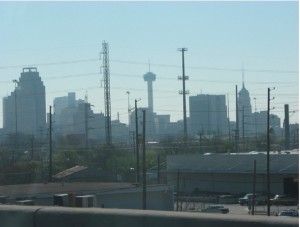 According to a new study from the Texas Commission on Environmental Quality and the Alamo Area Council of Governments, air pollution from the Eagle Ford gas play in South Texas will increase smog levels in San Antonio by 3 to 7 parts ber billion by 2018, the year the nation's metro areas are supposed to be in compliance with a new tougher federal standard.
Because San Antonio's air is already in violation of federal standards, a rise in ozone levels of even 1 ppb matters. San Antonio's ozone average is at 80 ppb and the federal standard is at 75 ppb.
Since it relied on TCEQ engineers and TCEQ computer models, one can safely assume this study is underestimating the problem of this pollution.
On the otheFrom the beginning of the fracking boom, it's been the contention of Rick Perry's TCEQ that gas industry pollution from the Barnett Shale has no significant effect on DFW smog. "All the wells are west of central DFW" goes the rationale, even as Dallas debates new drilling and refinery permits. A lot of us, including atmospheric scientists who study this sort of thing, beleive differently.
For two years in a row, air quality in DFW has gotten worse, not better, They've been more violations and they've moved further east. While 2013 has the potential to be the best year for smog in DFW this decade, it may have much more to do with the cooler, wetter weather than any large decreases in pollution inventories. However, given the impacts outlined
Study: 2 Million Air Pollution Deaths Annually Worldwide, 77,000 in US
 We're a bit behind the curve in reporting on this, but scientists at the University of North Carolina just published a study in "Environmetnal Research Letters" that estimates Particulate Matter and Ozone pollution in the air is responsible for approximately 2.2 million deaths worldwide every year.
Long-timers already know about how insidious Particulate Matter can be, but this only chronicles the hardcore fatal respiratory and cardiovascular impacts, concluding the tiny particles of soot cause at least 2.1 million deaths every year while ozone pollution shortens another 500,000 lives.
"East Asia," aka China, accounts for fully have of both those figures. India for another third. In North America, the casualties include 43,000 premature deaths from PM pollution and 33,000 from ozone.
Jason West, co-author of the study said: "Outdoor air pollution is an important problem and among the most important environmental risk factors for health."
Although alarming, these numbers are all underestimates of the health impacts of both of these pollutants, since they exclude anything other than fatalities. Besides making it harder to breathe, PM pollution has been linked to brain disorders and immune system disruptions.
Morning News on Frisco: City Must Come Clean
 This editorial ran in Today's Dallas Morning News:
"Environmentalists and Frisco residents have long wondered whether contamination existed beyond the borders of Exide Technologies’ shuttered Frisco plant.
Now they know, thanks to recent open records requests from Frisco Unleaded and Downwinders at Risk to state environmental officials. Waste materials from battery recycling processes exist in the 340-acre Grand Park area, the proposed site of an elaborate regional park.
If you live in Frisco, you should be perturbed that you didn’t hear this sobering news sooner — or hear it from the city, which has known of these findings for a couple of months. Instead, the information comes from environmental groups that stumbled across the test results in the Texas Commission on Environmental Quality’s response to their records request.
Given the lingering controversy over the extent and pace of the cleanup of Exide’s plant site, city officials owed it to residents to disclose everything they knew as soon as they learned it. Governmental transparency and communication are important, especially when health, safety, property values and the credibility of cleanup efforts are at stake. This is important because the new reports detail problems on land outside of Exide’s property that need to be cleaned up.
City officials contend they’ve been open with residents and last Monday filed an application to include the Grand Park area in a state voluntary cleanup program.
The city has done itself no favors by sitting on information. Frustrated with the pace of the cleanup, environmental groups want the Environmental Protection Agency to issue an imminent and substantial endangerment order and take over cleanup from TCEQ, which they allege is moving too slowly. While that is unlikely, the complaint underscores the desire of residents and environmental groups to make sure the cleanup is done properly.
What Frisco residents want is what any resident of any community wants — assurances that land that could house levels of lead, cadmium and arsenic in excess of state benchmarks will be cleaned up. The best way to do that is for Frisco to make sure residents know what’s going on — even steps the city might think are minor and procedural. And if subsequent testing definitively links the broader contamination to Exide, then Frisco has to make sure the battery company, now in bankruptcy proceedings, will pay for the cleanup.
More than a year has passed since Exide and Frisco struck a landmark deal to shutter the battery recycler, a major step toward Frisco reclaiming industrial land for a cleaner environment and recreational purposes. Now Frisco must make sure that the area is free of potentially deadly contaminants and that residents are fully aware of the extent of contamination.
Frisco has an opportunity to use land for a grand community vision, but it has to deal openly and transparently with residents and make sure those responsible for the contamination clean up the mess they’ve made."
“Scant Oversight and Lax Reporting” Doom Federal Right-to-Know Regs
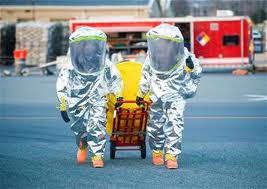 Reuters examines the almost 30-year old Emergency Planning and Community Right to Know Act and finds that, depending on what state you live in, the information that's supposed to be provided to the public is either semi-correct, or full of holes you can drive tanker trucks through.
One of the provisions of the Act is supposed to be an annual inventory of all hazardous chemicals on site at a particular facility. Some 500,000 different substances are covered under the regs and should be accounted for…
But facilities across the country often misidentify these chemicals or their location, and sometimes fail to report the existence of the substances altogether. And except for a handful of states, neither federal nor local authorities are auditing the reports for errors.
As was demonstrated in West, recently, it's important to know what hazardous materials are stored where and in what quantity. Not only for the sake of surrounding residents, but for the first responders coming to their aid in any kind of accident or incident. Reuters cites several examples where firefighters showed-up and were injured on the scene when they didn't know a hazardous chemical was on-site.
A recent Congressional study estimated 60 deaths, more than 1,300 injuries and more than $1.6 billion in onsite and off-site damages caused by accidents at facilities storing 140 Tier II chemicals that have been deemed most dangerous by the EPA.
These numbers also don't include accidents at oil and gas industry sites, often exempt from the same reporting requirements as other industries. It's another reason why Dallas should include a complete, water-proof disclosure provision in any new gas drilling ordinance its Council passes.
Colorado: Oil and Gas Now the Main Source of Smog-Forming VOCs and Third Largest Source of Nitrogen Oxides
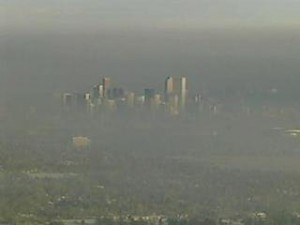 At least 600 tons of air pollution a day caused by the oil and gas industry in Colorado is causing a lot of consternation, especially in the Denver Metro area, which, like DFW, is currently out of compliance with the Clean Air Act for ozone, or smog.
Oil and gas emissions now are the main source of volatile organic compounds in Colorado and the third-largest source of nitrogen oxides, at a time when a nine-county area around metro Denver is already failing to meet federal clean-air standards, state data show.
The Price You Pay to Reveal “environmental degradation for the benefit of powerful and wealthy interests”
 Midlothian? No, Frisco? No, Barnett Shale? No.
Russia. Where taking samples of illegal toxic contamination can get you fatally beaten by thugs instead of headlines and news coverage.
After three men in this heavily polluted city beat Stepan Chernogubov unconscious, fracturing his skull and knocking out three teeth, criminal investigators took him, still bleeding, to a police station where they questioned him for four hours and then threatened to bring charges against him.
Chernogubov had been set upon as he was trying to document the pollution streaming from a chromium plant here, pollution that occasionally turns a marsh feeding the Chusovaya River dark red, next to a waste pond that’s bright green. At least two of those in the fracas turned out to be plain-clothes police officers, he said in recounting the May incident.
The 26-year-old student knew the risks. Environmental activism in Russia attracts serious trouble. A forest advocate in southern Russia, Suren Gazaryan, criticized a governor, was thrown in jail and has now fled the country. An editor who campaigned against a highway project through a forest near Moscow, Mikhail Beketov, suffered brain damage in a 2008 beating, and recently died from his injuries.In the southern region of Voronezh, three activists organizing against the opening of a lead and nickel mine were hospitalized in May after private security guards set upon them.
In this case, the environmental movement is fueled by intense nationalism, you know, like a Russian Tea Party, by residents who consider any modern Moscow-based government just another bunch of tourists passing through the ancient homeland of the Cossacks.
A lot of us have wondered what happened to a similar nationalist strain in environmental politics that motivated Republicans like Teddy Roosevelt to create parks and save natural area in the country. Back then, these ecological marvels were part of "American Exceptionalism" – the country was uniquely blessed with a wide spectrum of climates and topography that should be recognized and enjoyed forever by all Americans. Environmental wonders were seen as symbols of the nation's strength and Providence's bias. Destroying these American treasures was seen as an attack on God's blessing to the country.
But maybe the Koch's have bought all that sentiment out.
New Studies Link Air Pollution to Cancer, Heart Failure and…Appendicitis?
 According to CBS News
"A new study published July 10 in The Lancet showed that even breathing low levels of air pollution for a prolonged period of time could raise risk for the often-deadly lung disease. Another study released on the same date showed that short-term exposure to most major air pollutants could increase the risks of hospitalization and death from heart failure."
Lung cancer risks went up 18% with each increase of 5 migrograms of PM 2.5. Researchers noted that they did not find a level of pollution for where there was no risk, and the results indicated "the more the worse, the less the better" when it came to pollution.
"At this stage, we might have to add air pollution, even at current concentrations, to the list of causes of lung cancer and recognize that air pollution has large effects on public health," Takashi Yorifuji from the Okayama University Graduate School of Environmental and Life Science and Saori Kashima from Hiroshima University in Japan…."
A second study shows the risk of dying or going to the hospital because of heart failure increased by 3.52 percent for every 1 part per million increase of carbon monoxide levels; 2.36 percent for every increase of 10 parts per billion of sulfur dioxide; 1.7 percent for ever 10 parts per billion increase in nitrogen dioxide; and about 2 percent for every 10 micrograms per cubic meter increase of particulate matter. Surprisingly, increases in ozone were not linked to heart failure. Unsurprisingly, you're breahting in all of these kinds of air pollution if you live in DFW.
All of that is kind of old news – put stuff in air, see stuff harm your lungs and heart. But here's a new "adverse health effect" being linked to air pollution – appendicitis. While not as lethal as lung cancers and heart attacks, anyone who's had their appendix rupture can tell you it's not a pleasant experience.
And while ozone may not have been linked to heart problems in that previous study, the New York Times reports a Canadian one links it to a slight increase in your chances of having appendicitis.
High ozone levels were associated with an increased number of hospitalizations for appendicitis and were even more strongly associated with cases of burst appendix. For each 16 parts per billion increase in ozone concentration the scientists found an 11 to 22 percent increase in ruptured appendix cases. The study was published in Environmental Health Perspectives. The associations persisted after controlling for age, sex, season of the year and the presence of other air pollutants, like nitrogen dioxide and particulate matter. The reason for the association is unclear, but studies in mice have shown that air pollution can alter the animals’ abdominal bacteria.
Who knew?
What Did Senator Vitter Get for Holding Gina McCarthy Hostage?
 That's the question that Politico poses and, as some of you might already suspect, the answer is: too much.
PM Pollution From Coal Shortens Lives by 5 Years in China
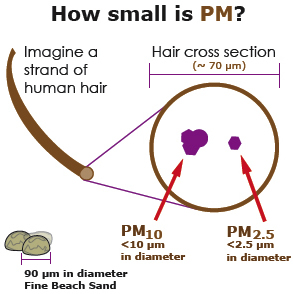 It's all over the place on the net, but just in case you missed it, it turns out that increasing the amount of Particulate Matter pollution results in more people getting killed or injured by that pollution. Shocking.
Sources of PM pollution include your car, your local gas well operation, cement plants, and in this particular case in Northern China, coal plants. Northern provinces that got free coal for heating had an average of 55% higher PM concentrations than those living in warmer climes and burning less coal. That resulted in a dramatic loss of life span tha averages just over 5 years, mostly due to cardio-circulatory problems.
This isn't all that hard to understand is it. You breathe air that goes into your lungs. Fill the air with soot, and you fill your lungs with it too. Fill your lungs with soot and your body has a hard time coping with extra crap in your lungs that isn't supposed to be there. When that happens your heart works overtime to compensate. Cause and effect.
Scientists keep telling us that, like lead, ANY exposure to this very fine soot that can lodge in your lungs is potentially harmful. There's no "safe" level of PM. Yet the EPA and the states still issue permits for the release of large quantities of this poison as if that weren't true. It's another depressing example of the science being far ahead of the regulations.