Air Quality
Study: Gas Drilling “Significantly” Increasing DFW Smog
 In the middle of another bad North Texas ozone season, a new study by a Houston research consortium concludes that Barnett Shale natural gas facilities "significantly" raise smog levels in DFW, affecting air quality far downwind.
According to the study, ozone impacts from gas industry pollution are so large, they'll likely keep North Texas from being able to achieve the EPA's new 75 parts per billion (ppb) ozone standard.
Author Eduardo P. Olaguer, a Senior Research Scientist and Director of Air Quality Research at the Houston Advanced Research Center, concludes that, "Major metropolitan areas in or near shale formations will be hard pressed to demonstrate future attainment of the federal ozone standard, unless significant controls are placed on emissions from increased oil and gas exploration and production….urban drilling and the associated growth in industry emissions may be sufficient to keep the area (DFW) in nonattainment."
Olaguer's article describing his study was recently published in the July 18th edition of the Journal of the Air & Waste Management Association. It's the first independent study to examine specific North Texas ozone impacts from the gas industry.
Environmental groups say air pollution from natural gas sources is already making it impossible for DFW to meet even the obsolete 15-year old standard of 85 ppb. So far in 2012, five monitors have violated that level of smog despite a state plan that Austin guaranteed would reduce ozone concentrations in DFW to record lows this year. Counting 2012's failure, DFW has been in continual violation of the Clean Air Act for its smog pollution since 1991.
"This study is proof we need a regional strategy of self-defense to reduce air pollution from the gas industry," said Downwinders at Risk Director Jim Schermbeck, whose group has been leading the fight to reduce smog-forming pollution from gas sources for two years now. "TCEQ and EPA are not doing enough to rein-in these facilities. Despite their official plans, our air is getting dirtier, not cleaner because gas pollution is still under-regulated. It's time for us to do more at the local level."
Schermbeck suggested the study could make a difference in the upcoming city council vote on a new Dallas gas drilling ordinance.
"Dallas has a chance to react positively to this new evidence by adopting the nation's first policy aimed at mitigating the tons of new pollution caused by gas mining in its new drilling ordinance. That would be a very large step forward in advancing regional clean air goals."
A city-wide coalition of neighborhood, homeowners, and environmental groups has been urging the Dallas city council to require gas operators to reduce as much air pollution as they release through funding of anti-pollution measures across the city. The Houston Center study gives them a lot of fresh arguments.
According to it, "…oil and gas activities can have significant near-source impacts on ambient ozone, through either regular emissions or flares and other emission events associated with process upsets,and perhaps also maintenance, startup, and shutdown of oil and gas facilities."
In fact, just routine emissions from a single gas compressor station or large flare can raise ozone levels by 3 parts per billion as far as five miles downwind, and sometimes by 10 ppb or more as far as 10 miles downwind.
Those impacts rival the size of smog effects traced back to the Midlothian cement kilns or East Texas coal-fired power plants by previous studies.
As the study notes, "Given the possible impact of large single facilities, it is all the more conceivable that aggregations of oil and gas sites may act in concert so that they contribute several parts per billion to 8-hr ozone during actual exceedances."
This conclusion directly contradicts the stance of the Natural Gas industry and the Texas Commission on Environmental Quality, both of which deny that Barnett Shale gas emissions are large enough or located in areas that can influence DFW ozone levels.
But the Houston study is based in part on data collected by industry, as well as information from the city-sponsored "Fort Worth Study," and citizen-sponsored testing in the town of DISH in Denton County. It also uses a kind of computer modeling that allows for a more realistic understanding of how large releases from gas facilities can increase ozone pollution than the one the TCEQ uses. It's the most sophisticated challenge yet to the state and industry's claim that gas emissions do not constitute a large threat to DFW air quality.
"This is reality-based science, not the ideologically-influenced happy talk that's coming out of TCEQ these days," said Schermbeck. "Local governments in North Texas, especially those that are traditional allies of clean air, need to pay close attention and act on it."
The report is available for downloading here.
The EPA Loss in Court You Didn’t Hear About, But Could Affect You More in DFW
 Let's face it, the EPA legal team has taken a bunch of hits lately. Losses in court over the Texas Flex permitting plan and national cross state pollution rules, among others, have gotten lots of headlines, but for various reasons may not be as awful as they first sound to environmentalists.
But there was a recent ruling that did hit home for metropolitan areas like DFW that are a) already in "non-attainment" of the federal ozone, or smog, standard, and, b) host lots of urban gas and oil drilling. You probably didn't hear about it, but it may have more of an impact on your air here because it once again left a large loophole in current law that allows the oil and gas sector to escape emissions "off-setting."
According to the Clean Air Act, every large industry that comes to set up shop in a non-attainment area like DFW must decrease as much pollution as it estimates it will increase. This is required so that new pollution doesn't just take the place of pollution that's been reduced from industries already operating in the area. Otherwise, there would be a large imbalance between new industries and established ones that would put air quality progress in peril.
And that's exactly what's happening in DFW.
For a decade now, gas mining in the Barnett Shale has added tons and tons of new air pollution to the North Texas airshed that has not had to be off-set with reductions. While emissions from this industrial sector grew, pollution from local cars, power plants and cement kilns actually decreased. Based on past experience DFW should be making headway toward cleaner air. But we're not. For the last two years, DFW air quality progress has stagnated and even begun rolling backwards. This year we already have five monitors out of compliance with a 1997 ozone standard, compared to just one in 2010.
So why aren't gas emissions subject to Clean Air Act "off-sets" just like a power plant or cement kiln? Because nobody writing the Clean Air Act in 1970, or its amendments in 1991, anticipated urban drilling on the scale we're experiencing it in DFW these days. Nobody foresaw the establishment of a huge gas patch in a large metropolitan area with connected, but widely diffused sources of emissions spread out over hundreds of square miles. They were thinking about "stationary sources" of pollution like coal-fired power plants, refineries and the like. The amounts needed to trigger off-setting are all oriented toward these massive facilities, not lots of smaller sources that eventually equal or surpass their output. As a result, there's a huge loophole that keeps the oil and gas industry from being regulated like any other industry in a non-attainment area.
EPA has recognized this loophole and tried to close it by ruling that facilities connected by process in the gas field may be treated as one large source of pollution – the term is "aggregate." And this is the definition that a court recently shot down in a Michigan case:
"The Cincinnati, Ohio-based 6th U.S. Circuit Court of Appeals held yesterday that EPA had no basis to find that the natural gas sweetening plant and sour gas production wells owned by Summit Petroleum Corp. in Rosebush, Mich., are "adjacent" under the statute and therefore a single source just because they shared some similar functions.
It is an important case for the oil and gas industry because it is the first appeals court ruling to address a recent EPA move seeking to more aggressively "aggregate" various nearby sources of air pollution at oil and gas facilities for permitting purposes.
The court ordered EPA on a 2-1 vote to consider again whether the facilities, spread over a 43-square-mile area, are "adjacent" under the "plain-meaning of the term," which focuses only on physical proximity."
Just in case there was any doubt about why the gas industry was challenging the EPA policy of aggregating, the next sentence of the article makes it clear:
"Industry groups object because it can bring the individual sources under the umbrella of more stringent Clean Air Act permitting requirements."
Now, of course adjacent in common law means next door. But what does it, or should it mean, in environmental law? The collective air pollution being generated by that 43 square mile complex could very well be "adjacent" to your lungs a short distance downwind. But the court didn't see it that way.
That means that going into the next clean air plan for DFW – one that will, at least theoretically be aimed at the new 75 parts per billion ozone standard – EPA will not be able to "off-set" the large amounts of air pollution generated by gas mining and processing in the North Texas non-attainment area.
And that's why we have to do it ourselves, one city and one county at a time. Starting in Dallas. Starting now.
As part of the larger re-writing of the Dallas gas drilling ordinance, a very large and impressive coalition of homeowners groups, neighborhood associations, and environmental organizations have all endorsed the idea of Dallas requiring local off-sets for any pollution released by new gas facilities within the city limits. A company would have to pay for projects that would reduce as much pollution as it was estimated to release every year. Dallas would be the first city in the country to adopt such a policy, but it probably wouldn't t be the last. And it wouldn't take that many before you started seeing an impact on industry's emissions.
We have a model in the successful Green Cement Campaign of the last half decade, that also started in the Dallas City Council chambers with a first-in-the-nation vote. All it took was a dozen cities and counties passing green cement procurement ordinances to get the cement industry's attention. As of 2014, something like 300,000 tons of air pollution a year will have been eliminated because there are no more dirty wet kilns in North Texas.
We can do it again. This time with gas patch pollution. We have to. Nobody else is going to do it for us.
Gas Industry Cites Decreasing CO2, Forgets About Increasing Methane
 Maybe you've seen the headlines over the last couple of days. US Carbon Dioxide (CO2) emissions reached an historical 20 year low in the first quarter of 2012. The Federal Energy Administration attributed this decline to three factors: a mild winter, less travel, and gas-powered utility plants replacing coal-fired ones. Whereas coal was producing about 50% of America's electricity in 2005, it's only contributing 34% now, with most of that slack now being taken up by gas-generated electricity.
Gas industry representatives were quick to take credit for the reduction and use it has proof of how climate-friendly natural gas is. But they forgot something important when they did that. They didn't weigh the increase in methane releases caused by gas mining against the decrease in CO2 pollution. Methane doesn't have the lifespan of CO2 in the atmosphere, but pound per pound in the short-term, it's 25 times more potent in its climate change impact. According to climate scientist Michael Mann of the Earth System Science Center at Penn State University, “We may be reducing our CO2 emissions, but it is possible that we’re actually increasing the greenhouse gas problem with methane emissions.”
Gas Patch Pollution Linked to First Alamo City Ozone Violation
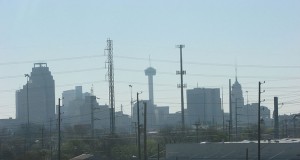 Ever since smog was an issue in Texas starting in the last 1980's, the two largest metropolitan areas have been duking it out for worst air in the state. Houston was the undisputed champion for awhile, but as of the last couple of years, Dallas-Ft. Worth has been neck and neck, and last, year, even posted worse numbers than Bayou City. No other city even came close.
Until now.
For the first time ever, San Antonio has a monitor in violation of the national ozone standard. It's the new standard of 75 parts per billion, so it's still way ahead of Houston and Ft. Worth that are still have chronic problems meeting the old 1997 85 ppb standard. But it's still a milestone.
What factors helped push SA over the line? Well, theres the significant growth of the larger metropolitan area itself, and out-of-state power plants that will now not be better controlled because of Team Perry's victory over the cross state pollution rules, and oh yeah, gas patch air polluion from the Eagle Ford Shale that's up wind of San Anontio:
"Increased air pollution from the oil and gas boom of the Eagle Ford Shale is believed to be a factor, in addition to local sources and pollution coming from Mexico, East Texas and the East Coast."
Authority Considers Large Epidemiological Study of Nuke Sites
 This is not your father's Nuclear Regulatory Commission.
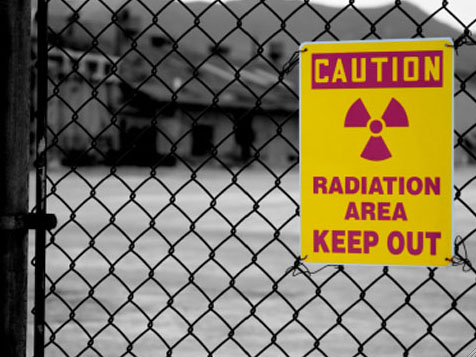
Spurred by recent studies in Germany and France that found children living near certain nuclear reactors were twice as likely to develop leukemia, NRC commissioners are considering undertaking one of the largest epidemiological studies ever considered, proposing to examine cancer rates of those living adjacent to or near all 104 American nukes.
According to the agency, about 1 million people live within five miles of operating nuclear plants, and more than 45 million live within 30 miles. The Comanche Peak nuclear power plant in Glen Rose is about 40 or so miles southwest of Ft. Worth. It actually sits partially in Hood County, which is north, or downwind, of the nuke most of the year. Hood County has seen its cancer rate "increase significantly" since the plant came online and posted a cancer mortality rate higher than more heavily-populated and polluted Tarrant County, according to one activist who looked at the state-collected data.
The challenges to doing this kind of unprecedented study well are vast. There are problems with population mobility, uncontrolled variables, and lack of appropriate data. Nevertheless, the NRC seems to be at least seriously considering the idea:
"The five-member NRC is expected to vote later this year on a proposal to investigate cancer rates in each census tract within a 30-mile radius of a nuclear reactor and assess cancers in children younger than 15 years old by reviewing their mothers' proximity to a nuclear facility during pregnancy. It would also review cases of leukemia, a cancer associated with radiation exposure of children."
Study Links Utah’s “Wintertime Ozone” with Gas Patch Pollution
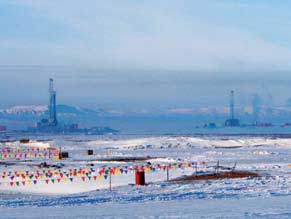 The rural Unita Basin in Utah has had some of the worst smog in the nation – in the middle of winter, with snow on the ground. That's not supposed to happen, but 10,000 gas wells, along with car and truck traffic combine to make it happen. A new $5 million study confirms that the smog-forming gas patch pollution is a major cause. "That seems to be a pretty strong link," said the study's main researcher.
Isn't the fact that there's that a smog problem in rural Utah where none existed before fracking began sufficient evidence of the link between fracking and smog to warrant cities already suffering smog problems like Dallas to take precautions before the open the door to fracking in the city limits?
The Perry-TCEQ Plan for Cleaner Air: More Coal
 When it rains, it pours, or in this case, spews.
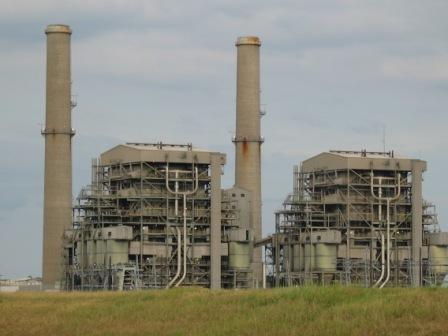
After getting a favorable ruling that struck down the EPA's flexible permit system last week, Team Perry seemingly scored another victory for its friends with Tuesday's ruling against the cross-state pollution rule.
Written by the Obama Administration to replace a similar Bush Administration rule that also got struck down by the courts (but is now back in at least partial effect…it hurts to think about this sometimes), the cross-state pollution rule was an attempt to federalize the problem of continental air pollution, much of it caused by big ol' dirty coal plants like the ones in East and Central Texas.
Texas can't regulate the coal plant pollution that wafts in from Illinois or Kentucky. Likewise, New York can't regulate Ohio facilities that send air pollution over its state lines. A federal solution covering all 50 states is required. Tuesday's ruling agreed, but concluded EPA hadn't given Texas and other states more time to come up with their own strategies to cut air pollution from coal plants. Maybe EPA was influenced by the fact that at the same time this strategy was being proposed, Governor Perry was rolling out plans to help streamline the permitting of 17 new coal plants in Texas.
Neither one of these rulings is as dreadful as it might seem at first. Both can be appealed. And both have mitigating circumstances that cushion the blow. With the flex permit case, all the facilities in Texas got standard operating permits eventually, making the ruling on the flex program itself moot. With the cross-state pollution rules, the Obama EPA itself said that two-thirds of all the health benefits from the rules had already been achieved with the partial implementation of the Bush rules they were meant to replace.
However, the cross state rules were not only supposed to be good in their own right, they also are the underpinning for a couple of other national pollution initiatives, including helping communities meet the new Ozone standard of 75 parts per billion, and the new, lower Particulate Matter pollution standard. Without the rules, these standards will be harder to achieve. And guess who's own plans begin to get mucked up by that failure? You guessed it, the state of Texas.
Because in the case of DFW's chronic smog problem, the Texas Commission on Environmental Quality had already factored compliance with the rule into its already obsolete 2012 clean air plan for the Metromess. That was one of the reasons we were going to see the lowest ozone levels ever recorded in DFW this summer. Without that backstop, it's going to be hard not only to just meet the old 1997 ozone standard of 85 ppb – something DFW has yet to do despite two official tries now over the last seven years – it's going to be hard to meet the much lower standard of 75 ppb.
If you've seen the TCEQ propaganda of the last couple of years, it touts how much pollution totals in Texas have decreased. The Commission uses these numbers to then promote the Perry Team philosophy of limited government intervention, suggesting that it's the TCEQ and Perry responsible for those declines. They are not. For the most part, what the state is touting are the results of federal programs that have decreased pollution systematically across the country – everything from new fuel and pollution standards for cars and trucks, to new federal standards for specific industries, like refineries and chemical plants. Throw in the things that federal citizen suits and pressure got done despite TCEQ – think cement plant pollution reduction in DFW for example – and you have most, if not all of the things reducing pollution in Texas that TCEQ is claiming credit for.
Without the cross state pollution rules, the oldest and dirtiest coal plants in Texas will continue to operate for the foreseeable future. And when the wind blows, some of their pollution will be breathed-in by DFW residents. In the short term, this is Team Perry's trophy for all you hard-working Texas residents – more crap in your lungs.
If the state keeps clearing away all the federal programs that have actually reduced pollution over the last 20-30 years, those total pollution numbers won't be going down much longer. They'll be holding even and then going up. Left to their own devices, Team Perry would have us living in a polluter's Pottersville. And then who will the Governor blame?
The Miracle of Our Perpetually-Projected Lady of the Public Hearing
 In 2009, when there was an EPA national hearing in DFW on the then-proposed cement plant air pollution rules, the mood was festive. There was a brand new administration. There was a campaign for a brand new EPA regional chief from our own ranks gearing up. The brand new air pollution rules at the center of the hearing were capping a two-decade old fight to enforce the law. They were symbolic of a shift in momentum. Citizens had won. The event was held in a large hotel ballroom, and indeed, for citizens who had been a part of that fight, it felt like a day-long celebration.
Three years later, the party was over. The newness had worn off. A once "indefensible" Bush-era ozone standard that was going to be replaced, was instead adopted by the new administration. Dr. Al had won appointment, only to pummeled into resignation by a political mugging that left even the most cynical shaking their heads. Grim persistence was the most common trait shared among the citizens who faithfully trooped to Arlington City Hall for last Thursday's national EPA hearing, where those same rules were now under attack by the Agency itself. It may have only been three calendar years, but that ballroom scene seemed sepia-toned distant now.
Which makes the attendance at Thursday's hearing more remarkable in some ways than the large crowd that gathered in 2009. Then, clean air advocates occupied 88 out of around 93 or so speaker slots available for the all-day hearing. Last week, they occupied 83 out of 86 slots. The faithful were coming, but they weren't happy about it. Isn't that always the case in these stories? Right before the faithful are rewarded with a sign?
The first speaker of the day was young Andy O'Hare of the Portland Cement Association, who, despite being on what appears to be the winning side of this battle, didn't look like he was having a good time. He dutifully and stiffly read a prepared statement that took a pro-delay stance and applauded EPA for being reasonable, i.e. agreeing with the PCA. Justification for the delay was evidenced with the help of a laminated multi-colored poster of a seven-step explanation/timeline that he held up himself without aid of easel or stand. "This timeline," he said as his unsteady grasp floated the graphic on a sea of nervous energy, "reflected the fact that the industry had concluded without a doubt that it would need exactly two years to adapt to the rules. You just had to add up the steps." It looked enough like a high school science fair project at this point for you to wonder why this industry can't invest in better PR help. We're losing to these guys?
Except from some of the same kind of praise by the Texas Cement Council, and the obligatory "We don't even agree tighter standards are necessary" rhetoric from the Texas Association of Business representative, that was the extent of testimony in favor of EPA's last-minute rollback. No individual cement manufacturers spoke. Not even TXI, headquartered only about 20 miles away in Dallas. They must think they have it in the bag.
Following O'Hare, Downwinders Director Jim Schermbeck testified in the place of Downwinders' matriarch and founder Sue Pope. News came on Friday that doctors told the 72-year old Midlothian rancher that she needed a heart transplant. Everyone thought it was a good idea for her to sit the hearing out.
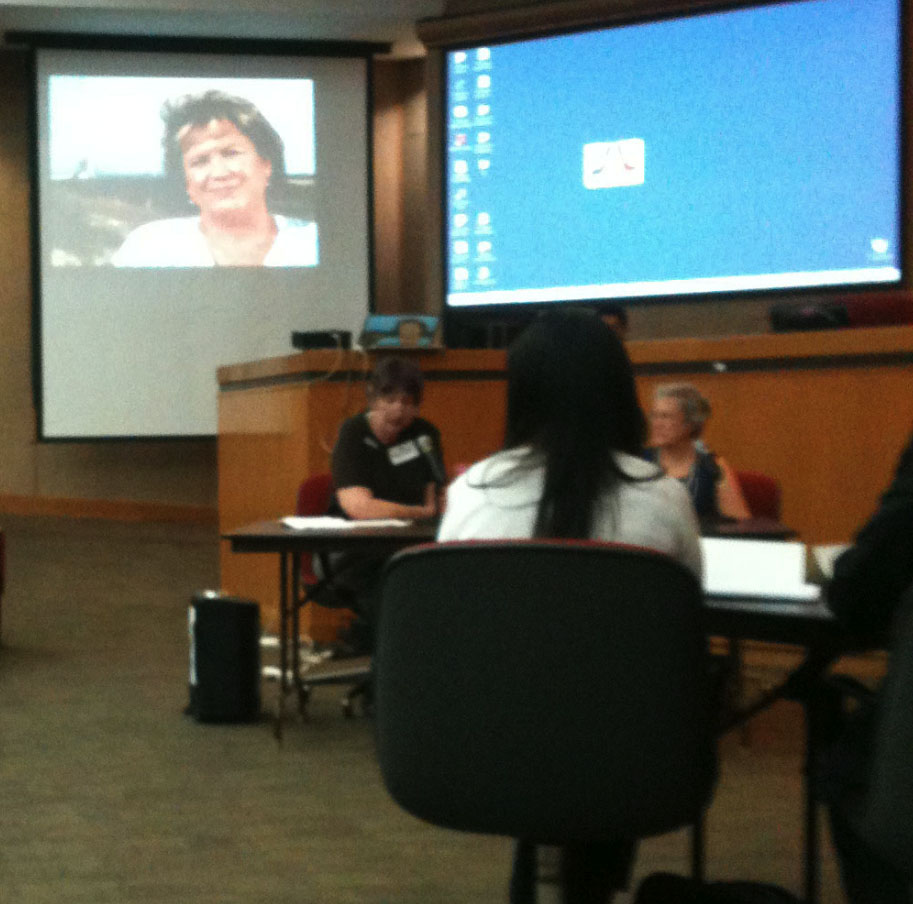
But Schermbeck didn't let that happen. Not exactly. Even before any testimony began, he projected a picture of Pope on a screen above the proceedings. She was staring down at Andy when he testified. Maybe that's what made him nervous.
"These are not industry's rules. These are not EPA's rules. They are Sue Pope's rules, and you shouldn't be messing with them," said Schermbeck. Tracing Pope's 25-year fight to reduce pollution in her hometown, he told the EPA panel she and a handful of others were actually responsible for the rules and it was now destroying them. "EPA has shat on everything Sue Pope has worked for with these proposed revisions, and it should be deeply, deeply, ashamed." He concluded his five minutes by feeding a letter-size version of the same picture of Pope that was being projected larger than life into the desk-size shredder that had been donated for the purpose of telling EPA what they were destroying with their rollback. Schermbeck said the proposed delay and revision was now destroying the woman herself.
Schermbeck wanted to leave that larger-than-life image of Sue up on the screen for as long as anyone in charge would allow. He wanted it to hang like a spectre over the entire day's proceedings. But he knew the screen saver feature on his computer powering the projection would eventually kick-in and make everything go dark. It always does. He's been doing presentations with this combination of equipment for years now and it always goes dark after 10-15 minutes. He'd forgotten to turn it off for this hearing, and now it was going to kick in any minute.
Only it didn't. He kept waiting and waiting. The screen saver never came on. A five-foot Sue Pope head remained there, hovering over the Council Chamber, with eyes as large as dinner plates looking down and directly at the EPA officials taking testimony (Howdy Keith Barnett!), all day long, all 10 hours. Sue Pope was the Alpha and Omega of the hearing.
It wasn't a piece of toast or a tree trunk. But through some unexplainable mix-up of electrons, a real true life saint did make an appearance at the EPA hearing. The official minutes won't reflect it, but for the faithful, the sign was clear: Never, never, never, never, never, never, never ever give up.
Under Ms.Pope's gaze, there was a long parade of poignant and moving testimonials, most finding different ways to say "hell no" five minutes at a time.
Clint Forsvall talked about the thousands of tons of Mercury the EPA's proposed delay would dump into the air, and why, as a parent of an autistic child, that was abhorrent to him. Midlothian resident Alexandra Allred spoke about how often she's had to take her son to the emergency room for middle-of-the-night asthma attacks.
The Galemore family from Chanute, Kansas came and educated everyone on what it's like to live in an isolated cement company town where hazardous waste is still being burned and where there's no independent media, or effective government oversight. Susan Falzone from Hudson, New York came and talked about the 100-year old history of cement plant pollution in that precious river valley. Kemp Burdette from Riverkeepers in North Carolina took on the proposed giant Titan plant. Stephanie Maddin from EarthJustice in DC spoke on behalf of those that couldn't make it to Arlington due to the ridiculous 11-day notice.
Local COPD victim Harriet Irby testified why every little big of air pollution reduction helps her in the daily chore of breathing. Arlington regular thorn-in-the-side-of industry Kim Feil was there with Ben Zene. Retired physician Dr. Robert Portman gave a primer on Particulate Matter pollution. Someone showed up at the last minute after hearing about it only that day to plead for less poisons in the air. It was, she said, important to her.
Most impressive was how so many people that had come to praise EPA in 2009 now came trudging back to try and do their part to keep the rules intact. These are people who know the power of persistence, even when it's in the cause of a rearguard action that shouldn't even be taking place.
Given EPA's transparent intent to steamroll the revisions into law, did we do any good at all? We don't know. But we did our job. EPA tried to make it impossible to get people to come and show their outrage. People, lots of people, came anyway. EPA may still go through with these senseless revisions, but they'll have to do it without a scintilla of public support. We robbed them of that fig leaf.
And we don't know about you, but we're taking the miracle of Our Perpetually-Projected Lady of the Public Hearing as a sign that, although it's highly unlikely that a woman with no technical training, no money, and no political support can, with the help of other similarly-deranged citizens, eventually bring an entire national industry kicking and screaming into the 21st Century…..it can happen.
Thanks Much.

Thanks to everyone who showed-up on Thursday. More on Monday, but this will give you a run down on who spoke.
Citizens Plan to “Shred” EPA at Cement Plant Rules Hearing
 WHAT: The Nation's Only Public Hearing on the EPA's Rollback of Cement Plant Air Pollution Standards
WHEN: 9am to 7 pm Thursday, August 16th
WHERE: Arlington City Hall, 101 W. Abram
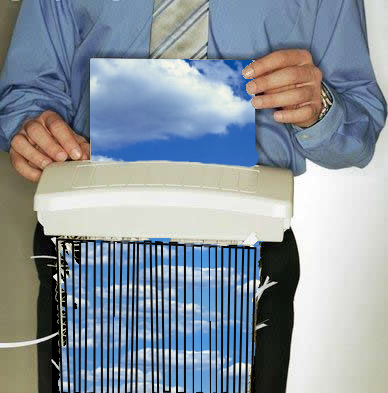
(Arlington)—Opponents of an EPA proposal to rollback new cement plant air pollution standards will incorporate a paper shredder into their comments at an all day national EPA hearing at Arlington on Thursday.
"Sometimes words aren't enough to express your outrage. You need an action that speaks louder. Our shredder is pretty loud," said Downwinders at Risk Director Jim Schermbeck, whose group is leading an effort to recruit 100 speakers to fill every 5-minute speaking slot from 9 an to 7pm.
He and others plan to use the shredder to show the EPA what's at stake in the agency's last-minute reversal of key parts of the first ever national toxic air pollution emission standards.
They're bringing pictures of relatives with pollution-related illnesses, copies of the Clean Air Act, health care bills, and the EPA's iconic logo to feed into the shredder to help drive home the personal and public effects of the agency's proposed two-year delay and increase in soot pollution.
"With this regulatory mugging, EPA is shredding air quality, it's shredding public health, its shredding public confidence. We're just showing the results," said Schermbeck.
Despite only 11 days notice for a national hearing in the middle of August, he predicts citizens will come close to meeting their goal of filling all available speaking slots. It's the only hearing EPA is holding as it considers the changes to the original federal 2010 cement plant pollution standards that were hailed by the same groups now protesting a retreat.
Groups are expected to be joined in their rejection of the rollback by North Texas area elected officials or members of their staff, including Congresswoman Eddie Bernice Johnson, State House Representative Lon Burnam, Dallas County Judge Clay Jenkins, prospective Congressional Representative Mark Veasey, and State Senator Wendy Davis.
In 2009, approximately 90 people testified at a similar DFW hearing as the rules were up for final adoption. Dallas-Ft. Worth is downwind of the nation's largest concentration of cement plant manufacturing, with three large plants located within only a few miles of each other in Midlothian. The plants have been the center of environmental and health controversies since the late 1980's and made North Texas a hotspot of citizen opposition to industry pollution.
Having finally been adopted after 20 years of lawsuits, the new emission standards were on their way to be singed into law by President Obama this summer when EPA suddenly pulled them and announced they wanted to delay implementation from next year to 2015 while also loosening emission standards for Particulate Matter pollution. In evaluating the results of the revision, EPA admitted it will increase PM pollution from the nations cement plants by 135 tons a year.
Previous EPA studies had calculated how many lives would be saved by the standards. Citizens have seized on these estimates to now calculate the harm of the agency's two-year delay, putting the national death toll at between 2-5,000 lives using the EPA's own numbers.
Because of the amount of pollution generated in Midlothian and the population density of DFW, a significant portion of those deaths will be local residents.
No court ordered the after-the-fact revisions. In fact, the rules had survived their very last court challenge last December. Schembeck says that makes the rollback even more mysterious.
"EPA is going out of its way to deny citizens what they were on the verge of winning – the first ever federal air pollution standards for the nation's cement plants," Said Schermbeck. "They're robbing people who've been working on this issue for over 20 years for no good reason. We're not going to be quiet as they try to take away what we've rightfully earned."