Hell Freezes Over: Why the New Federal Report on Midlothian Matters
Everything in italics and "quotation marks" below is a direct quote from the latest chapter of the ATSDR's (Agency for Disease Registry and Toxic Substances) "health consultation" on the impact of certain kinds of industrial air pollution on the local population.
You should take five minutes to glance over the sentences. They've taken a better part of a decade and a great deal of citizen persistence to make it to print. You can read them now only because of a petition to ATSDR by local Midlothian residents, spearheaded by Sal and Grace Mier in 2005, prompted the Agency to get involved.
They're also rarer than hen's teeth. Because the words actually come together in sentences to conclude human health was likely harmed by the pollution from Midlothian's three cement plants and steel mill, as well as recommend decreasing that pollution.
Among grassroots activists, ATSDR has a notorious reputation for issuing reports that are "inconclusive by design." The joke is that the agency never met a facility it couldn't learn to live with. And sure enough, previous chapters in this saga have disappointed. Just two years ago, ASTDR's shoddy work in investigating health impacts in Midlothian and elsewhere across the country was the subject of a Congressional hearing.
These ATSDR reports generate no new data. Instead, they are retrospective looks back at the available sampling/monitoring information and a piecing together of possible exposure paths and levels. As such, they're only as good as the data they can digest. In Midlothian's case, that means they're completely dependent on state monitoring – criticized by citizens for years as being inadequate. Nevertheless, with this latest report, citizens have been somewhat vindicated because of what even that inferior sampling revealed.
The health impacts described in this latest report are also limited to what are called "Criteria Pollutants" – old school substances like lead, soot, sulfur dioxide, and ozone that have been regulated by the Clean Air Act for decades. They do not apply to more exotic kinds of air pollution like endocrine disruptors, which there's little or no monitoring for at all.
So there are a lot of missing pieces, but the ATSDR's conclusions and recommendations have an impact on your lungs and maybe your own local fight, even if you don't have a Midlothian zip code. For the first time a federal agency known to avoid coming to any conclusion about anything was forced to say that human health was adversely affected by the operations of industry in Midlothian.
There's a public meeting on this report on December 6th from 7 to 8:30 pm at the Midlothian Conference Center.
Health Consultation/Assessing the Public Health Implications of the Criteria (NAAQS) Air Pollutants and Hydrogen Sulfide MIDLOTHIAN AREA AIR QUALITY MIDLOTHIAN, ELLIS COUNTY, TEXAS
NOVEMBER 16, 2012 U.S. DEPARTMENT OF HEALTH AND HUMAN SERVICES
Agency for Toxic Substances and Disease Registry
Division of Community Health Investigations
Recommendations:
"Texas Commission on Environmental Quality (TCEQ) should take actions to reduce future SO2 emissions from TXI to prevent harmful exposures."
"TCEQ should take actions to reduce future PM2.5 emissions from TXI and Gerdau to prevent harmful exposures."
"TCEQ should continue efforts to reduce regional ozone exposures."
"TCEQ should insure that levels of these air pollutants do not increase to levels of concern in the future."
"TCEQ should conduct ambient air monitoring to characterize exposures to persons located downwind of the Ash Grove and Holcim facilities and take actions to reduce SO2 emissions from these facilities if harmful exposures are indicated."
"TCEQ should conduct appropriate ambient air monitoring to characterize exposures to persons located downwind of the Ash Grove and Holcim facilities and take actions to reduce PM2.5 emissions from these facilities if harmful exposures are indicated. In addition, particulate matter monitoring is needed in residential areas that are in immediate proximity to the facilities’ limestone quarries."
"In ATSDR’s judgment, one notable gap in monitor placement is the lack of monitoring data for residential neighborhoods in immediate proximity to the four industrial facilities, where fugitive emissions (those not accounted for in stack emissions) likely have the greatest air quality impacts."
Human health was likely harmed, and is still threatened by industrial pollution from Midlothian
From Sulfur Dioxide:
"Breathing air contaminated with sulfur dioxide (downwind of TXI's cement plant and the Ameristeel steel mill) for short periods could have harmed the health of sensitive individuals.…ATSDR cannot determine if harmful exposures to SO2 have been occurring downwind of the Holcim and Ash Grove facilities."
"All 24-hour values in Midlothian were lower than EPA’s former standard. However, the World Health Organization’s health comparable guideline is 8 ppb (WHO, 2006). This value was exceeded at both the Midlothian Tower and Old Fort Worth Road stations in most years of monitoring through 2008…"
"Overall, in the years 1999 to 2001, Old Fort Worth Road (monitoring site north of TXI) ranked among the stations with the highest 24-hour average sulfur dioxide concentrations in the state. As sulfur dioxide emissions from TXI Operations decreased in following years, so did the measured concentrations at this station."
From Particulate Matter, or Soot:
"Public health concern is warranted for adverse health effects from long-term exposure to PM 2.5 in Cement Valley"
"In the past (1996–2008), annual average PM 2.5 levels measured were just below the range of concentration proposed by EPA for lowering the annual average standard…Moreover, many of the annual average PM 2.5 concentrations were above the more conservative WHO health guideline (10 μg/m3)."
"No PM 2.5 monitoring data are available to evaluate exposures downwind of the Ash Grove facility. Furthermore, although annual average PM2.5 levels detected at the Holcim monitor indicate possible harmful levels…."
"We estimated that annual average PM2.5 levels in the vicinity of the Gerdau Ameristeel monitor, from 1996 to 1998, could have ranged from about 22.6 to 26.4 μg/m3, which is above both the current and proposed EPA standard. Using EPA’s approach, the 3-year average level might have been above the NAAQS standard of 15 μg/m3 for these years in the vicinity of the Gerdau Ameristeel monitor. Applying this same approach to annual average PM10 data from other monitors suggests that PM 2.5 levels could have been close to the current and proposed PM2.5 standard, especially for the Wyatt Road, Old Fort Worth Road, Gorman Road, and Midlothian Tower monitors."
"Consistent with the other pollutants discussed earlier, the estimated annual PM 2.5 emissions listed for these facilities are among the highest for Ellis County and also rank high among industrial sources statewide."
From Lead:
"Past lead air exposures during the period 1993 to 1998, in a localized area just north of the Gerdau Ameristeel fence line, could have harmed the health of children who resided or frequently played in this area….In the mid-1990s, the lead levels measured in this area ranked among the highest lead concentrations measured statewide."
From Smog:
"Scientific studies indicate that breathing air containing ozone at concentrations similar to those detected in Midlothian can reduce lung function and increase respiratory symptoms, thereby aggravating asthma or other respiratory conditions. Ozone exposure also has been associated with increased susceptibility to respiratory infections, medication use by persons with asthma, doctor’s visits, and emergency department and hospital admissions for individuals with respiratory disease. Ozone exposure also might contribute to premature death, especially in people with heart and lung disease. School absenteeism and cardiac-related effects may occur, and persons with asthma might experience greater and more serious responses to ozone that last longer than responses among people without asthma."
"The Midlothian Tower site recorded ozone concentrations above the level of the NAAQS for several years (TCEQ, 2011b), and the Old Fort Worth Road site has been measuring ozone concentrations close to the level of the NAAQS. Based on the data from both monitors, from August 1997 to September 2011, the 8-hour EPA ozone standard has been exceeded 236 times."
From Breathing Multiple Pollutants:
"ATSDR believes that sufficient information exists to warrant concern for multiple air pollutant exposures to sensitive individuals, especially in the past….The ability of the scientific community to fully and quantitatively evaluate the health effects from the mixture of air pollutants people are exposed to is at least ten years away (Mauderly et al., 2010)……The current state of the science limits our ability to make definitive conclusions on the significance of simultaneous exposures to multiple criteria air pollutants. ATSDR’s conclusions are based on our best professional judgment related to our understanding of the possible harmful effects of air pollutant exposures in Midlothian and our interpretation of the current scientific literature; therefore, these conclusions are presented with some uncertainty."
From New Production:
"Reductions in SO2 levels in Cement Valley have occurred since late 2008 resulting in exposures to both sensitive individuals and the general public that are not expected to be harmful. These reductions may be caused, in part, by declining production levels at local industrial facilities. Future harmful exposures in Cement Valley could occur if production rises to at least previous levels and actions are not taken to reduce SO2 emissions."
Regulatory "Safe Levels" Very Often Aren't
"Past SO2 exposures were not above the Environmental Protection Agency (EPA) standard in place at that time but were above the current standard."
"Past lead air exposures were not above the EPA standard at that time but were above the current standard.…The scientific community now believes that the current standard (15 μg/m3) for fine PM (measured by PM2.5) is a better indicator of possible long-term health effects from PM exposures than was the former EPA annual average standard for PM10 (EPA, 2006b)."
PM Pollution Decreases Brain Function in Over 50 Population
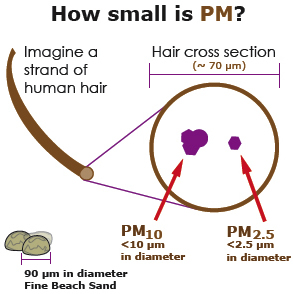 In a study involving approximately 15,000 people, the U.S. National Institute on Aging found that higher levels of exposure to fine particulate matter pollution, or soot, is prematurely aging the brain of those 50 and older by up to three years.
PM pollution had already been linked to other neurological conditions by previous studies, including Parkinson's and Alzheimer's Disease. Scientists have discovered that the microscopic particles can actually pass through the lung wall and into the circulatory system.
"As a result of age-related declines in health and functioning, older adults are particularly vulnerable to the hazards of exposure to unhealthy air,’ said Dr Jennifer Ailshire, from the Andrus Gerontology Center at the University of Southern California.
Air pollution has been linked to increased cardiovascular and respiratory problems, and even premature death, in older populations, and there is emerging evidence that exposure to particulate air pollution may have adverse effects on brain health and functioning as well."
PM pollution is found in the exhaust of all internal combustion engines, as well as the pollution from steel mills, smelters, cement kilns, power plants or any facility with a boiler or furnace. The amount of exposure to PM pollution was one of the reasons the federal Agency for Disease Registry and Toxic Substances (ATSDR) found that the health of residents living downwind of TXI's cement plant and the Ameristeel steel mill in Midlothian could have been compromised. Many leading researchers believe there's no safe level of exposure to PM pollution – that is, that any amount of exposure to it has the potential to cause harm.
Australian Study: Fracking Releases 3X Normal Greenhouse Gases
S cientists from Southern Cross University in Australia found levels of greenhouse gases in that country's largest fracking play that were three times normal background levels, and higher than those recorded anywhere else on the planet.
“The concentrations here are higher than any measured in gas fields anywhere else that I can think of, including in Russia,” Damien Maher, a biochemist who helped conduct the tests, told the Sydney Morning Herald."
Air contaminants being monitored included methane ad carbon dioxide.
"Some scientists surmise that the excess levels are due to seepage of the gas through displaced soil and aquifers that carry “fugitive” emissions released by fracking a mile or more below ground. Carbon cycle expert Peter Rayner of the University of Melbourne told the Australian Broadcasting Corp. that the elevated gas levels were probably due to “emissions that escape from the intended process of production.”
Not surprisingly, there are health complaints form residents living in and near the wells in the play.
"Helen Redmond, a physician with the New South Wales chapter of Doctors for the Environment, cited rising complaints of rashes, nausea, headaches and nose bleeds among people living close to the Tara gas fields.”Hydrocarbon exposure cannot be ruled out as a cause without much more comprehensive investigation,” she told the Sydney newspaper…."
Back here in DFW, Dallas is still stalling on writing a new gas drilling ordinance that citizens want to prompt the nation's first local policy of off-setting greenhouse gas pollution. And many observers believe DFW just failed its second clean air plan in five years because of the impact of rising gas industry pollution.
30 Years After They’re Banned, PCB’s Still Making It Hard to Have Kids – In Texas
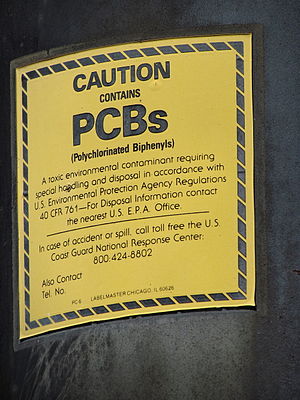 Another argument for the implementation of the Precautionary Principle.
 Exposure to these pollutants is known to have a number of effects on human health, but their effects on human fertility — and the likelihood of couples achieving pregnancy– have not been extensively studied."Our findings suggest that persistent organochlorine pollutants may play a role in pregnancy delay," said the study's first author, Germaine Buck Louis, Ph.D., director of the Division of Epidemiology, Statistics, and Prevention Research at the Eunice Kennedy Shriver National Institute of Child Health and Human Development (NICHD) at NIH.Dr. Buck Louis added that individuals may limit their exposure by removing and avoiding the fat of meat and fish, and by limiting the consumption of animal products.
An Idea Worthy of Our Consideration
 Under current law, EPA can designate states to enforce federal environmental laws if they, in fact, actually enforce the law and run competent programs. Once given by the EPA, rarely is this power taken away from a state.
But when a state doesn't do a good job of enforcing the law or runs a program ineptly, the EPA considers taking back responsibility.That's happened recently in Iowa with the enforcement of the Clean Water Act. The Iowa Department of Natural Resources had been heavily criticized by state environmental groups for allowing huge CAFOs – Concentrated Animal and Feeding Operations to pollute the state's waterways. Beginning five years ago, they petitioned the EPA to take direct control of enforcing the Clean Water Act in Iowa. Their petition prompted an EPA investigation. The results confirmed the criticisms of the environmentalists and now the EPA is seriously thinking about stepping in.
Texas environmental groups should take note.
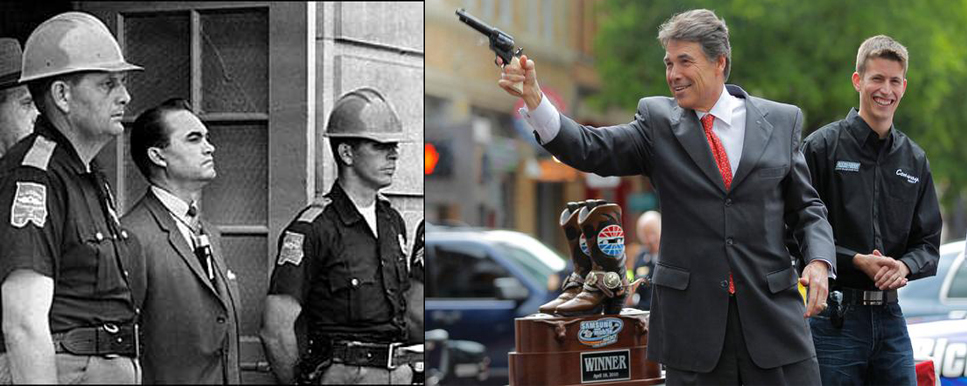
There is plenty of evidence on the public record to suggest Governor Perry and his Texas Commission on Environmental Quality are engaged in an active campaign of "nullification" of federal environmental laws just as Alabama Governor George Wallace was intent on negating federal civil rights legislation and rulings in the 1960's. But instead of standing in the schoolhouse door, Perry is using the world's second largest environmental agency to slow and obfuscate enforcement of the law in the name of his own over-the-top pro-industry agenda. The penalty for this kind of behavior 50 years ago was having the National Guard and Federal Marshals come into Alabama and make sure the law was followed. All we need in 2012 is for EPA to re-establish competent control over half a dozen federal environmental laws.
And if you don't think our Governor and his environmental agency are so nefarious as to construct a strategy to frustrate federal environmental law enforcement, what about stripping them of their responsibilities strictly because of their incompetence at administrating the federal programs. Take the last DFW air plan.…please. TCEQ kept insisting that the turnover of new cars on the road would almost singe-handedly produce the cleanest air in 25 years in North Texas. Not only was that forecast epically wrong – and off by a larger margin than the TCEQ's last clean air plan failure in 2007 – the plan actually left the region with dirtier air than when it began. It was bad science. Call this incompetence or call it incompetence by design. Either way, the result is the same. The Clean Air Act is not being effectively enforced by the state of Texas.
There are excellent reasons to believe that as long as Governor Perry and his TCEQ acolytes are making the decisions, DFW residents won't be able to breathe safe and legal air. It was obvious to many observers that needed pollution controls for industry didn't get included in the state's 2011 air plan for DFW because it would hinder the Governor's ability to raise money from this sector and it might appear to contradict his anti-regulatory political message. Rumor has it that Perry will run for Governor again in 2014 in order to re-position himself for another try at the Presidency in 2016. DFW's next clean air plan is due from the Perry TCEQ in….2015. As long as Perry has ambitions for higher office, your lungs are doomed
Along with trying to mobilize public opinion and rally local officials, maybe one thing DFW residents should be doing by way of self-defense is preparing a petition to EPA requesting it take over Texas' enforcement of the Clean Air Act.
TCEQ Lets Industry Avoid $90 Million in Fines, Asks Drivers to Pick Up the Tab
 Here in DFW, we've paid the price of continuing dirty air for the state's bias toward blaming all air quality problems in DFW on cars. As cars got so much cleaner, all of our smog problems were supposed to literally go "poof." This was almost the entire basis of the just-failed TCEQ clean air plan, and it didn't work. Turns out, there might be more causing our smog problems than just cars.
Nevertheless, the bias persists because the ideological slant of the TCEQ's boss, Governor Perry, won't allow it to pursue a more balanced approach. Via the Houston Chronicle comes the latest way it's getting expressed in bad public policy – by letting pollution control measures be paid off by fees on individual drivers instead of fines assessed against large polluters that are targeted specifically for that purpose.
"The Texas Commission on Environmental Quality is asking the federal government for permission to waive fines for the region's 260 chemical plants, oil refineries and other large facilities.
The commission argues that it should not have to collect those fines because it already is raising money for smog-fighting programs through vehicle inspection fees and sales taxes for diesel equipment, among other revenue sources.
For years, the fees and taxes have funded a program that helps cover the cost of replacing or retrofitting dirty, old vehicles and equipment, such as locomotives, haul trucks and tugboats. The program has helped to improve air quality in the state's smoggiest cities."
The cover story for doing this is that the Commission would much rather the fine money be spent on actual pollution controls at the offending facilities – though there is nothing, especially the TCEQ, to make them do so – and that consumers would just pay the price down the line. We don't know what's more insulting – the incredibly thin and flimsy veneer of these excuses, or that the TCEQ expects any one to believe this clap-trap, which comes right out of our failed Governor's presidential campaign. What ever happened to getting tough on crime?
As for industry, well, it's just downright unfair Houston industry has to pay any fines at all for being out of compliance with a Carter-era ozone standard! Those that have seen the slides of Houston air pollution blowing into DFW will be particularly bedazzled by this plea from a corporate attorney,
"Jed Anderson, a Houston-based attorney who represents industry in regulatory matters, said the commission's proposal is a fairer distribution of the burden because cars and trucks produce so much smog-forming emissions. Even then, he said Houston should not have to pay at all, saying the amount of pollution that blows into Texas from other countries is enough to push the region out of compliance for ozone."
Funny, that's what TCEQ and their DFW local flunkies say about y'all. In fact, at the turn of the current century, DFW tried to get a pass for violating the ozone standard because, if you didn't count the stuff coming in from Space City, we would have, you know, theoretically been able to meet it.
Sorry Mr. Joe and Joann Six-Pack, but if you drive an inspected car that gets 70-90% pollution removal and deposits a thousand or so pounds of air pollution a year, you're not a constituent of TCEQ, you're the enemy.
On the other hand, if you operate a facility that not only pollutes the air with millions of pounds of pollution because you won't install the best equipment, but has also been breaking the law, "Right this way, Monsieur." Environmental Defense Fund's Dr. Elena Craft says in the Chronicle piece, "The commission is basically doing everything it can not to collect fines from industry" – and everything in its power to once again put the onus on drivers.
Even Low-Level Cadmium Exposure in Womb Can Lead to Lower IQ
 By way of the Environmental Health News comes word of a new study looking at the effects on low-level, "ambient" levels of the toxic metal Cadmium on 5 year-olds in Bangladesh.
Although the exposure pathway in the study assumes the Cadmium is coming primarily from a diet of food grown in contaminated soil, the results speak to the possible effects of any kind of risk – inhalation or ingestion.
"Prenatal exposures to the metal cadmium — even at low levels common in most countries — can have long-lasting effects on children's IQ. A study from Bangladesh found that 5-year-olds who were exposed through their mothers to higher levels had IQs that were 2 to 3 points lower than less-exposed children. The new evidence suggests that even low-level exposures before birth may have continued effects on children's brain function.On average, scores dropped by 2 to 3 points in children with the highest exposures when compared to those with the lowest exposures. Even small drops in IQ may affect a child’s ability to succeed at school and work later in life. Lower IQ's across the population also have large impacts on society."
Cadmium is a naturally-occurring metal contaminant found at low levels in the environment. Industry uses it to make batteries, coat and plate plastics and other metals, and make paint (remember Cadmium Red?). It's also emitted by car exhaust, the burning of industrial wastes, coal, and oil. When spread on fields, fertilizers and sewage sludge contaminated with cadmium can increase levels in cropland soils.
What are some possible local sources of cadmium in the air? The Midlothian cement plants that are now increasingly burning industrial wastes. Steel mills – like the Ameristeel one in Midlothian. Lead smelters like the one Exide is closing up at the end of the month in Frisco, along with the slag and battery chips the smelter "landfarmed" in Frisco for decades. These are all in addition to the Cadmium you may be ingesting through your diet or by sucking on that cute charm bracelet you bought that was made in China.
The Environmental Agenda of a Second-Term Obama Administration
 Yeah, we don't know what it is either. We suspect not even Lisa Jackson knows. But of course, that doesn't keep the chattering class from speculating about what will or won't happen in the next four years on the energy and environment front. So without further ado….
Here's a pretty banal piece from the Hearst Chain that includes the premise the president is free "to approve natural gas exports and the controversial Keystone XL pipeline without fear of alienating environmentalists he needed at the ballot box."
Ah, but here's a piece from USA Today that quotes heavily from Romney supporters in industry to suggest the president will reject the pipeline and propose a slew of anti-oil and gas regulations.
Then there's this much longer and better Bloomberg piece that actually focuses on EPA rules already in the, er, pipeline, such as new lower Particulate Matter ambient air standards, the possibility of the lower ozone standard Jackson was originally going to propose before she got mugged by the White House re-election campaign, and new greenhouse gases limits for power plants.
It also mentions the possibility – brought up by industry lobbyist and Dallas native Scott Segal, no less – of a carbon tax as part of a solution to the "fiscal cliff" now getting so much post-election coverage, and talks about whether Lisa Jackson is staying or going.
Liberal thinktankers at Think Progress just posted this article advocating the "Five Essential" environmental rules that should be the focus of Obama's second term.
Finally, not mentioned in any article so far, but on the minds of kilnheads across the country, is the fate of the inane proposed revisions in cement plant emissions rules that were the subject of an August EPA national hearing at the Arlington City Hall that many of you attended. A final decision on those is due by December.
2011 Toxic Release Inventory Numbers Out from EPA, Still Plenty of Poison for Everyone
 After the devastating 1984 Bhopal Union Carbide chemical plant disaster in India that killed thousands, US policymakers decided it might be a good idea to keep track of where toxic and hazardous chemicals were stored and released. Thus was born the EPA's annual Toxic Release Inventory data base, wherein every company that keeps a certain amount of dangerous material on-site or releases it into the environment is required to submit an estimate to the agency.
Now the numbers for 2011 are out and available for your perusal via the EPA's own TRI Explorer tool, where with a little effort, you can find out what kind of threat you face in your state, county, city or zip code. We haven't had time yet to look at Texas or DFW facilities as a whole to see what's up or down but according to the this Bloomberg article from Monday, the national total is up from 2010, which is what you'd expect given the pace of economic recovery. In 2010, there were 3.8 billion pounds of chemicals listed, this year, 4. 1 billion pounds, or almost 13 pounds for every man, woman and child in these United Sates. Maybe some of you are feeling like you're getting more than your share. Now you can confirm or put to rest those suspicions.
This year's TRI included numbers for 16 previously unreported chemicals that have been classified as carcinogenic by the National Institute of Health's National Toxicology Program: 1-amino-2,4-dibromoanthraquinone; 2,2-bis(bromomethyl)-1,3-propanediol; furan; glycidol; isoprene; methyleugenol; 1,6-dinitropyrene; 1,8-dinitropyrene; 6-nitrochrysene; 4-nitropyrene; o-nitroanisole; nitromethane; phenolphthalein; tetrafluoroethylene, tetranitromethane; and vinyl fluoride.
EPA says total releases of reported carcinogens have doubled since 2008, while those of persistent, bio-accumulative, and toxic compounds have risen by about one-third. The agency will have its own national analysis in a month
Not included in any TRI yet are all the toxic and hazardous chemicals used in gas and oil drilling. Sixteen groups from around the country are petitioning EPA to officially include them in future inventories.
Fracking the Vote
 Sharon has the rundown on how various local initiatives about fracking fared yesterday.