Posts by Downwinders At Risk
EPA Interpretation of Soot Regs Under Fire
 In an important challenge to the way EPA has gone about regulating the tiniest and most harmful forms of soot, or "Particulate Matter" pollution, attorneys for environmental groups seem to making some headway in the courts.
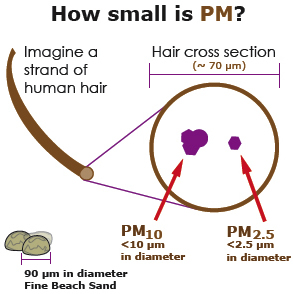
Currently, EPA is about to recommend new PM pollution rules that will reportedly lower the exposure standard for "PM 2.5" – that is, soot that's 2.5 MICRONS or less in size. A human hair is about 10 microns wide, so we're talking incredibly small particles that can easily find their way into your lungs, and then pass through directly into your blood stream.
However, when the Clean Air Act was amended in the early 1990's, the danger of PM pollution was confined to "PM 10" – particles 10 microns or less in size. So called "Coarse PM." But research over the last 20 years has pointed to the greatest danger to human health coming from the smallest kinds of PM pollution – the stuff that's 2.5 or smaller. It's been linked at very low levels of exposure not only to respiratory disease, but to heart attacks, strokes, and brain diseases similar to Parkinson's and Alzheimer's. In fact, the consensus among researchers now is that there is no level of exposure to PM 2.5 pollution that's not capable of doing some harm, that is, there is no "safe level" of exposure.
In another example of how regulations don't keep pace with science, EPA is still regulating PM 10 standards stricter than they are PM 2.5 standards, even though we now know that it's the smallest stuff that is more harmful. EPA is actually using another part of the Clean AIr Act to regualte PM 2.5 pollution than it uses to regulate PM 10 pollution. And the provision it uses for PM 2.5 allows states a lot more wiggle room than the tougher PM 10 provisions.
PM 10 pollution pouring out of a smokestack includes all PM 2. 5 pollution. But "PM 2.5 polluiton"excludes the larger coarser soot. Clear?
One of the three judges of the US Court of Appeals for the District of Columbia, David Tatel, had a hard time with the fact that EPA went outside it's own PM 10 rules to regulate a sub-set of more dangerous PM 10.
"I don't see why it makes much sense to separate out the fine particles," Tatel said. "I don't understand why the agency would do this.' Tatel indicated he did not believe the Clean Air Act required EPA to handle fine particulate matter differently than the coarser pollutants. References in the statute to PM 10 seemed to indicate Congress was referring to particulate matter in general, which would include PM 2.5, Tatel said."
This is exactly the argument EarthJustice lawyers were using. When the Clean Air Act says "fine particles" it means PM 10 and PM 2.5 – you can't regulate PM 10 without also regulating PM 2.5. But this is a law of physics that EPA is trying to undo. The Agency is actually arguing that Congress only meant to apply the standards to PM 10 pollution and no other "fine particles." It's also arguing that the challenge is a decade too late, since the original rules were passed in 1997. The judges didn't seem to be buying that defense either.
With brand new EPA regs for PM pollution expected to be announced shortly, one could reasonably assume this is mostly an academic exercise. but it's not. First, these old rules will still be in play for some time as the new ones are phased-in. It's important to get it right in the intervening period. These old regs affect PM emissions from cement kilns, boilers of all types, power plants and even cars and the public health impact of a stricter standard could be significant. Second, the interpretation EPA uses to establish the new rules could rest on whether the courts agree that it used the right provisions and language last time out.
We've been saying this a lot lately, but it's true. PM pollution is the most insidious, dangerous, and widespread form of air pollution in the world today. It is the ozone of the 21st Century in terms of how pervasive its effects are, and the size of the regulatory response to counter that harm.
Shocking Study: Air Pollution Regulations Improve Public Health
 One of the most basic arguments of industry opponents of clean air regulations is that they really don't do that much to improve public health. Given all the studies concluding that increases in air pollution lead to increases in illness and death, this argument is every bit as plausible as denying global warming at this point. But that doesn't stop industry and their supporters in elected office quit trying.
Out of New York and via the Journal of Exposure Science and Environmental Epidemiology comes a three year study (2004-2006) that tracks decreases in ozone pollution to increases in public health, specifically fewer hospital admissions for respiratory problems. Overall, a decrease of about 9% in ozone pollution lead to an 11% decrease in hospitalizations. That's significant, bordering on one-to-one percentage point drop.
The study followed the progress of the EPA's NOx Budget Trading Program (BTP), a cap and trade system established for East Coat states to help them reduce their ozone, or smog pollution, that ran from 2004 to 2008, when it was replaced by the older, Bush-era version of the EPA's cross-stare pollution rules. It looked at all of New York in terms of eight regions throughout the state. Drops in smog averaged 9% but were substantially lower during the critical summer "ozone season."
According to the folks at the Environmental Health News:
"Regulations do work to lower pollution, which in turn can improve respiratory health.
Ozone levels decreased across the state of New York and hospital admissions for respiratory disease dipped in half of the regions studied after the EPA's regulatory program started. There were also notable decreases in hospital admissions for certain respiratory illnesses, most age groups and most health insurance groups.
The reduced admissions for those on public assistance suggests that low income residents may have benefited the most from air quality improvements. This would be an important achievement since this group often experiences the highest air pollution exposures.
These results are consistent with the limited number of other studies that compare pollution levels and health before and after required air pollution reductions."
It says more about the opposition to new regulations that we still have to have studies proving that less crap in the air means less illness and death. This has been a settled scientific fact for some time. But Industry pays big money for it to be a still-disputed political fact.
“You got your fracking fluid in my cement!” Kiln Disposal of Drilling Wastes.
 It was inevitable. Like chocolate and peanut butter. Like rats and the plague.
Two notoriously polluting industries find solace in each other's ability to scratch each other's dirty, irritating itches.
Cement plants are always looking for ways to get paid to burn other people's garbage. It takes a lot of energy to fire a 20-foot flame at 2000 degrees 24/7 in order to cook rock. It also takes a lot of "additives". That's why cement plants started burning other companies' hazardous wastes in the 70's and 80's. Because of a loophole in federal law, 50-year old cement plants with no modern pollution controls were allowed to charge for burning highly toxic wastes from refineries and chemical plants that were otherwise supposed to be going to fully-regulated hazardous waste disposal sites.
But those official sites cost more to use, and the cement plants cost so little. That's right, cement plants charged these polluters to dispose of their wastes, but not more than the incinerators or landfills with all the bells and whistles of "regulation." In this way, cement plant operators double dip – they don't have to shell out as much for fuel they'd have to buy, and they get paid a profit to be a Dispos-All for industry. And by the way, industry calls this "recycling."
Because of the persistence of Downwinders at Risk and other citizens' groups, this loophole has been slowly but surely closing, meaning less and less hazardous waste is being burned in US cement kilns. From a peak of almost 30 kilns burning toxics in the in the 1990's, we're now down to less than a dozen. But to take the place of this lucrative lost market, cement plants across the country are turning to "non-hazardous" waste to burn. Tires, but also municipal garbage, plastic wastes, used oils, shingles, car parts and other kinds of wastes. TXI's new permit allows the burning of a dozen different kinds of industrial wastes at its huge kiln in Midlothian.
While these wastes are classified as "non-hazardous," when they come in the front gate of a kiln, it turns out they can release a lot of toxic pollution when they're incinerated. Metals like lead and cadmium and arsenic that don't burn (consult your High School physics textbook) are present. So are PCB's that have Dioxin. But burning plastic or chlorinated wastes means you can generate Dioxins even without having them present in the wastes to begin with. There's also Mercury in some of the wastes from cars that TXI and other kilns wants to burn.
So you have the release of exactly the same kinds toxic pollution you were concerned about with the burning of officially-classified hazardous wastes. But now, it's taking place "legally," – or at least it is until the law hasn't catches-up with the consequences of this kind of low-rent disposal operation. Have a waste you want to get rid of? Send it to your local neighborhood cement plant. They'll burn anything.
Enter the Natural Gas industry. They've been getting a lot of bad PR lately about their own waste problems. They have billions of gallons of what they like to call "fracking fluid," and what the rest of us would call "hazardous wastes" that's so toxic it must be disposed of in a deep underground injection well after only being used once, isolated from the rest of the earth's environment forever. But because of some well-placed loopholes, this "fracking fluid" is not considered "official" hazardous waste under federal rules. It will just unofficially injure you with its toxins.
As it turns out, injecting billions of gallons of "non-hazardous" toxic liquid under extremely high pressure near deep underground faults is a sure way to generate earthquakes. And that's what's been happening. Not only in North Texas, but other places where there are lots of injection wells. There was another small one last night in Midlothian, right down the highway from a large deep injection well near Venus. Along with the fact that most fracking fluid cannot be or is not "recycled" now and can only be used once before disposal, the fracking fluid generated by the gas industry has turned into an embarrassing sore point.
If only there was some other way the gas industry could dispose of their drilling wastes. If only they could appear to be more environmentally-friendly and save money at the same time……
And there you have the genesis of a happy marriage made in polluter heaven. I have a facility that needs stuff to burn and mix, and I'm not that particular about what the stuff has in it. You have lots of stuff that needs to be burned, er, "recycled" and you spend less when you send it to a facility like mine not specifically built to do that job. Everybody wins!
"The use of drilling wastes and muds is most preferable in cement kilns, as a cement kiln can be an attractive, less expensive alternative to a rotary kiln. In cement kilns, drilling wastes with oily components can be used in a fuel-blending program to substitute for fuel that would otherwise be needed to fire the kiln.
Cement kiln temperatures (1,400 to 1,500 degrees C) and residence times are sufficient to achieve thermal destruction of organics. Cement kilns may also have pollution control devices to minimize emissions. The ash resulting from waste combustion becomes incorporated into the cement matrix, providing aluminum, silica, clay, and other minerals typically added in the cement raw material feed stream.
Recent studies have shown that it is feasible to use such drilling waste as substitute fuel in a cement plant. The drilling mud can be processed by a centrifuge to separate remaining water, compressed by a screw into a solid pump and conveyed.
The cement companies can contribute to sustainability also by improving their own internal practices such as improving energy efficiency and implementing recycling programs. Businesses can show commitments to sustainability through voluntary adopting the concepts of social and environmental responsibilities, implementing cleaner production practices, and accepting extended responsibilities for their products."
For veterans of The Cement Wars of the 1990's this rhetoric is certainly recycled. Cement Plants are Long, Hot and Good for America! Cement plants are the best disposal devices ever. They just make everything go "poof." That's why they were built specifically to dispose of wastes of all kinds – oh wait. nope. They were built to make cement. But how great is it that they can make an entire sideline business out of dealing with, and spewing toxic chemicals into the environment?
Even though the specific article deals with the Middle East, is there any question that a cement plant in Texas or Pennsylvania, or Ohio won't try to make the case for accepting drilling wastes, if they haven't already? The permit modification TXI received to burn plastics and car wastes from the State of Texas required no public notice at all. Citizens only found out after the fact. There are only about a dozen players left in the international cement market. If they're discussing this in Egypt and Saudi Arabia, chances are they're talking about it in Zurich, Heidelberg, and Midlothian too.
Developments like this are why its important to tell the EPA it's making a big mistake to delay and change its cement plant toxic emission rules. The industry's "inputs" are changing rapidly. Two years is too long. We need the protection of those new rules now. If you haven't already clicked and sent EPA an e-mail saying you oppose this delay, the "official" comment period is over, but it couldn't hurt for the folks in DC to see your "unofficial" opposition.
It's also a lesson in why "everything is connected." Don't live near a gas well? If you live in DFW, chances are you live downwind of a kiln that could be burning the wastes of gas wells.
What Kevin Said
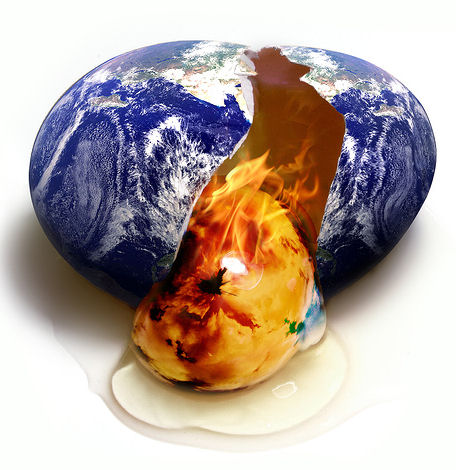 Kevin Drum talks about the politics of Climate Change, and why it never came up in last night's presidential debate.
Italian Government Seizes Cement Plant for Toxic Violations
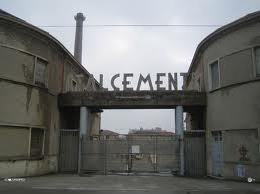 This is what we call enforcement.
Italian Justice Department officials seized a cement kiln run by Italcementi, the world's fifth largest cement manufacturer, near the village of Velletri, southwest of Rome, for not completing updates in equipment that would bring it in line with European Union environmental standards.
It's the second time this year that the Italian government has resorted to seizure of a major polluter's facility. A steel plant was ordered shut last month.
In the case of the kiln, operations will continue while the modernization is being completed.
Italcementi owns the old Essroc cement plants in Logansport, and Speed, Indiana, Nazarath. Pennsylvania, and Martinsburg, West Virginia as well as Canada and Puerto Rico.
Perry’s Politicizing of Science Costs Anti-Cancer Agency its Stars
 For most of modern history, Texas Governors haven't served more than two four-year terms and most had trouble doing that. Although they might be able to appoint a lot of folks to state agencies, current Governors couldn't re-make the agency into their own private fiefdom because there were too many members who owed their jobs to former Governors, maybe even ones from a different political party, or with different ideas about policy.
Rick Perry's never-ending-term has changed that. In office for 12 years and counting, he's managed to use time and the power of appointment to remake just about every executive branch agency the state has. And not just at the top, but deep, deep down into the upper and mid-level echelons of power. Because of the work we do, we see it most obviously with the Texas Commission on Environmental Quality, where Perry's influence reaches down to make sure the Chief Engineer is as ideologically-correct as the politically-appointed Chair. As a result, the Commission's science is harnessed in service to Rick Perry's perpetual campaign goals and is never allowed to contradict them.
But now that same MO seems to have backfired when it comes to superstar anti-cancer researchers who don't need the connections or positions Perry offered them.
Via the New York Times, (how come we haven't heard about this as much from Texas news outlets?) comes word that at least seven more scientists joined their former boss, a Nobel Prize winner, in walking out of Governor Perry's "Cancer Prevention and Research Institute." With $700 million in grant money, only the federal government offered more cash for research projects, so what could have forced such a walk-out?
Apparently, the researchers had the quaint idea that they'd actually be working on ways to, you know, cure cancer. Instead, Perry seems to have wanted the fund to provide another pipeline of money to his cronies in industry by focusing on "commercialization projects" that "focus on turning research into drugs or other products that can be sold rather than financing research itself."
Nobel laureate Dr. Alfred G Gilman resigned in protest last May after the Institute voted to approve such a $20 million dollar commercialization project. Now his colleagues are leaving in droves for the same reason.
"Phillip A. Sharp, another Nobel laureate, was among seven scientists who resigned last week, writing in his resignation letter that the agency’s decisions have carried a “suspicion of favoritism” in how the state is handing out taxpayer dollars.
Brian Dynlacht, another scientist who is leaving, warned that the agency was headed down a path of systematic abuses.
“You may find that it was not worth subverting the entire scientific enterprise — and my understanding was that the intended goal of C.P.R.I.T. was to fund the best cancer research in Texas — on account of this ostensibly new, politically driven, commercialization-based mission,” Dr. Dynlacht wrote in his letter."
Let's just be very clear about this. As long as Rick Perry is Governor, anyone who tells you a Texas state agency is an adequate watchdog for any industry, much less the state's polluters, either has no idea how state government works these days, or knows exactly how it works and is sending you down the proverbial garden path.
GAO: Fracking is Overwhelming EPA, Has Many Unknown Risks
 GAO stands for Government Accountability Office. We bet you didn't think there was such a thing.
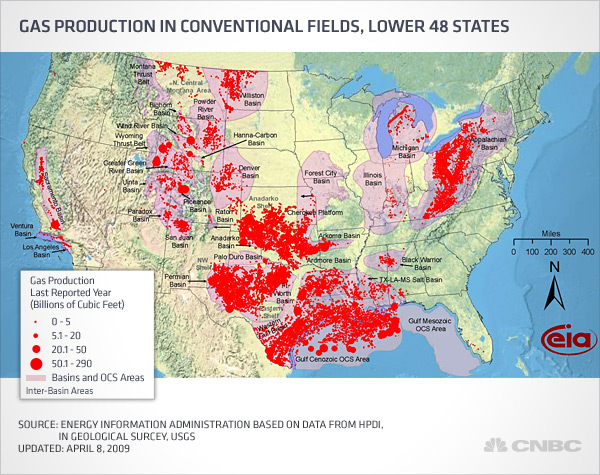
The GAO is in business to issue reports on how government works and doesn't work. It's the audit and investigative arm of the Congress. Today comes news that the Office has issued two new reports on fracking – one on how federal regulators are coping with the new responsibility of overseeing so much new drilling in so many new places all at once, and one on the possible risks posed by fracking to the public health and the environment.
GAO says fracking is overwhelming the resources of the federal agencies assigned to watchdog the process and industry:
"Federal and state agencies reported several challenges in regulating oil and gas development from unconventional reservoirs. EPA officials reported that conducting inspection and enforcement activities and having limited legal authorities are challenges. For example, conducting inspection and enforcement activities is challenging due to limited information, such as data on groundwater quality prior to drilling. EPA officials also said that the exclusion of exploration and production waste from hazardous waste regulations under RCRA significantly limits EPA’s role in regulating these wastes. In addition, BLM and state officials reported that hiring and retaining staff and educating the public are challenges. For example, officials from several states and BLM said that retaining employees is difficult because qualified staff are frequently offered more money for private sector positions within the oil and gas industry."
And the GAO says there are a lot of unknown risks to fracking based on the evidence so far:
Oil and gas development, whether conventional or shale oil and gas, pose inherent environmental and public health risks, but the extent of these risks associated with shale oil and gas development is unknown, in part, because the studies GAO reviewed do not generally take into account the potential long-term, cumulative effects. For example, according to a number of studies and publications GAO reviewed, shale oil and gas development poses risks to air quality, generally as the result of (1) engine exhaust from increased truck traffic, (2) emissions from diesel-powered pumps used to power equipment, (3) gas that is flared (burned) or vented (released directly into the atmosphere) for operational reasons, and (4) unintentional emissions of pollutants from faulty equipment or impoundments–temporary storage areas. Similarly, a number of studies and publications GAO reviewed indicate that shale oil and gas development poses risks to water quality from contamination of surface water and groundwater as a result of erosion from ground disturbances, spills and releases of chemicals and other fluids, or underground migration of gases and chemicals. For example, tanks storing toxic chemicals or hoses and pipes used to convey wastes to the tanks could leak, or impoundments containing wastes could overflow as a result of extensive rainfall. According to the New York Department of Environmental Conservation's 2011 Supplemental Generic Environmental Impact Statement, spilled, leaked, or released chemicals or wastes could flow to a surface water body or infiltrate the ground, reaching and contaminating subsurface soils and aquifers. In addition, shale oil and gas development poses a risk to land resources and wildlife habitat as a result of constructing, operating, and maintaining the infrastructure necessary to develop oil and gas; using toxic chemicals; and injecting fluids underground. However, the extent of these risks is unknown. Further, the extent and severity of environmental and public health risks identified in the studies and publications GAO reviewed may vary significantly across shale basins and also within basins because of location- and process-specific factors, including the location and rate of development; geological characteristics, such as permeability, thickness, and porosity of the formations; climatic conditions; business practices; and regulatory and enforcement activities."
So now we have the Director of the US Centers for Disease Control's Environmental Health agency saying that, "We do not have enough information to say with certainty whether shale gas drilling poses a threat to public health," along with the GAO saying the extent of the risks posed by fracking to our air, water, and land are largely unknown. How many more red flags do you need?
Even a Few Weeks of Cleaner Air Can Make A Big Difference
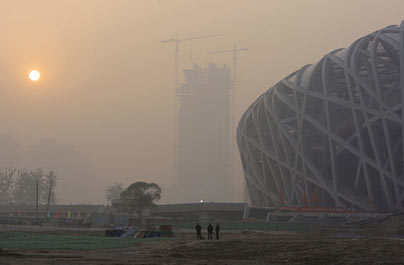 We can't tell you how many times a resident from DFW will go on a business trip or vacation to a less-polluted place and report an almost instant shedding of the ill effects of dirty air, only to have an almost equally fast re-acquaintance with those effects once they return. Could air pollution really make that much of a difference in so little a period of time?
As it turns out, yes.
Via an new study recently published in the Journal of the American Medical Association, researchers found that the Chinese government's decision to close down Beijing's polluting factories and take cars off the road during the 2008 Olympics resulted in a remarkable short-term improvement in cardiovascular health. It's the first major study to look at the immediate effects of air pollution in young healthy adults.
In a synopsis published by Environmental Health News, one of the authors describes the study and its importance:
"For the 5-month study from June to November, the researchers recruited 125 resident doctors with an average age of 24 from a centrally located hospital. Half were male, and all were healthy with no history of diabetes or cardiovascular disease.
The researchers measured heart rate, blood pressure and six markers of cardiovascular diseases in blood samples before, during and after the games. The markers included C-reactive protein (CRP), fibrinogen, von Willebrand factor, soluble CD40 ligand, soluble P-selectin concentrations and white blood cell count (WBC).
Two markers associated with blood clotting significantly decreased from pre-Olympic to the during-Olympic period: P-selectin levels dropped by 34 percent and von Willebrand factor levels were reduced by 13 percent. After the games, when the pollution control measures were removed, most markers rose back to pregame levels. But two markers – P-selectin and systolic blood pressure – worsened and showed a significant increase compared to the levels during the games.
Air pollution emissions were also measured at similar times. Levels of most air pollutants during the games decreased up to 60 percent compared to their pregame levels, depending on the type of pollutants. For example PM2.5 dropped 27 percent, nitrogen dioxide 43 percent and sulphur dioxide 60 percent. After the games when pollution controls were removed, emissions rose to higher levels than were measured before the games started.
This study suggests that even young healthy people can benefit from short-term air pollution reduction and supports efforts to quantify and understand the benefits and costs of air pollution control measures."
The next time a politician complains about the cost of air pollution controls, make sure and ask them if they're for preventative heart disease treatment. When they say yes, please remind them that keeping crap out of our air that would otherwise end up in our lungs is such preventative care.
Researcher Smackdowns Gas Industry Over Smog Study Criticisms
 You may remember that Dr. Jay Olaguer with the independent Houston Advanced Research Center (HARC) set off a bit of a controversy last month with publication of a new study showing that gas mining activity in DFW was "significantly" increasing local smog levels 2 to 8 miles downwind. His report focused on flares and compressors and showed that just one facility could increase ozone levels by 2-3 parts per billion. This was another invaluable piece of evidence pointing to the impact of under and un-regulated emissions from the gas mining industry
It didn't take long for the gas industry to have it usual knee-jerk response – deny everything. Even if you have to misrepresent the original research and lie about its conclusions. First, the PR specialists at Energy in Depth responded without even reading the study. Dr. Olaguer's full response to that piece of hackary is located here.
Next Ed Ireland, PR director of the Barnett Shale Energy Education Council did another whack job trying to discredit Olaguer's work. His falsehoods and mistakes are rebutted point by point here.
Industry charged that the model used by Dr. Olaguer wasn't peer-reviewed. It was – in three different journals.
Industry charged that all the smog-forming Volatile Organic Compounds examined by Dr. Olaguer were treated the same in the model. Wrong again. Highly reactive VOCS – the ones most likely to cause smog problems, are treated in much greater detail than the standard model used by TCEQ and others.
Industry charges the flare emission factors used by Dr. Olaguer are based on the 2010 TCEQ Flare study. They are not.
Industry then falls back on the "we've got so many TCEQ monitors that say everything is hunky-dory" argument. HARC responds by saying that "the TCEQ monitoring network is too sparse to determine the true impact of oil and gas site emissions on air quality." Amen.
HARC's study is unique in that it started from scratch and didn't assume anything – unlike the approach TCEQ and the industry uses. "The HARC model is, in fact, the only model currently available that can tractably assess ozone impacts at very high spatial resolution near sources." TCEQ and the industry don't have a credible response to this study because they've never looked at the same phenomena that Dr. Olaguer is examining.
Pollution from gas drilling and processing is setting back progress in DFW's fight for better air quality. There are no more excuses for local officials to hide behind. Gas may be cleaner when it burns in a power plant, but North Texas has become the natural gas equivalent of Appalachia where the local environment and public health is sacrificed for industry profits.
Midlothian Cement Plants Linked to Higher Child Asthma Rates
On the left is a computer-modeling image from the Texas Commission on Environmental Quality showing the direction of the predominant downwind plume of pollution from the three Midlothian cement plants - from extreme NW Ellis County, blowing diagnoally across Tarrant County and into Wise County. On the right is the map from the original 2009 Cook Children's Hospital CCHAPS study indicating levels of childhood asthma in the Hospital's service area. It tracks closely with the direction of the plume and asthma levels increase in closer proximity to the cemnt plants. 
According to researchers Patricia Newcomb and Alaina Cyr from the UTA College of Nursing "…the bulk of Tarrant County asthma cases lie directly in the path of southeasterly winds that have historically carried high levels of particulate matter from working cement kilns in a neighboring county. Asthma prevalence increases in a linear configuration within the path of the 'cement plume' as residential location comes closer to the cement kiln area."
Exposure to Particulate Matter pollution, or soot, is a well-known known cause for asthma. It can also make a child's asthma worse.
"This latest study is one more piece of empirical evidence that we need to decrease pollution from the Midlothian cement plants to secure the right of our children to breathe without getting sick, " said Jim Schermbeck, Director of Downwinders at Risk, a local group originally founded in 1994 to oppose the burning of hazardous waste in the Midlothian cement plants.
Proximity to the pollution from the three Midlothian cement plants was the only environmental factor geographically associated with higher concentrations of childhood asthma, ruling out poverty and indoor air pollution. There also wasn't a strong correlation to urban gas drilling, although the authors concede that "urban drilling may play a part as well" in the region's higher than normal child asthma rates, and there was no direct comparison between the geography of drilling activity and area asthma levels.
In 2009, Cook Children's Hospital released its Community-wide Children's Health Assessment and Planning Survey (CCHAPS), the largest examination of childhood health in North Texas ever undertaken. It found that Tarrant County and the western side of the North Texas region suffer childhood asthma rates significantly higher than state and national averages.
In "Conditions Associated with Childhood Asthma in North Texas," published in the October edition of ISRN Allergy, Newcomb and Cyr revisit the Cook study and delve more deeply into its data. "The purpose of this study was to identify significant associations between asthma diagnosis, comorbid conditions, and social problems in children." The complete article can be accessed on the Cook Hospital CCHAPS website page devoted to asthma, under "Special Reports."
Midlothian is the home of the largest concentration of cement plant manufacturing capacity in the United States. It hosts three large cement plants – TXI , Holcim and Ash Grove – with a total of six kilns. They are the largest stationary sources of pollution in North Texas. Reports submitted by the plants themselves show they poured over a million pounds of Particulate Matter pollution into the North Texas air in 2009.
EPA recently announced that it was considering once again delaying the implementation of new federal emission rules, including stricter particulate matter pollution standards, from 2013 to 2015 that have been in the works for two decades. The delay would also water down proposed PM pollution standards. Schermbeck said Newcomb and Cyr's analysis shows the real world costs of such a rollback.
"It's a scientific fact, endorsed by EPA, that inhaling tiny bits of particulate matter can make people sick and even kill them. What this study makes clear is that the agency is senselessly condemning more Tarrant County kids to illness and suffering by delaying rules that were supposed to have been in place in the 1990's. It's time to start saving lives by reducing this kind of pollution."