Midlothian Cement Plants Linked to Higher Child Asthma Rates
On the left is a computer-modeling image from the Texas Commission on Environmental Quality showing the direction of the predominant downwind plume of pollution from the three Midlothian cement plants - from extreme NW Ellis County, blowing diagnoally across Tarrant County and into Wise County. On the right is the map from the original 2009 Cook Children's Hospital CCHAPS study indicating levels of childhood asthma in the Hospital's service area. It tracks closely with the direction of the plume and asthma levels increase in closer proximity to the cemnt plants. 
According to researchers Patricia Newcomb and Alaina Cyr from the UTA College of Nursing "…the bulk of Tarrant County asthma cases lie directly in the path of southeasterly winds that have historically carried high levels of particulate matter from working cement kilns in a neighboring county. Asthma prevalence increases in a linear configuration within the path of the 'cement plume' as residential location comes closer to the cement kiln area."
Exposure to Particulate Matter pollution, or soot, is a well-known known cause for asthma. It can also make a child's asthma worse.
"This latest study is one more piece of empirical evidence that we need to decrease pollution from the Midlothian cement plants to secure the right of our children to breathe without getting sick, " said Jim Schermbeck, Director of Downwinders at Risk, a local group originally founded in 1994 to oppose the burning of hazardous waste in the Midlothian cement plants.
Proximity to the pollution from the three Midlothian cement plants was the only environmental factor geographically associated with higher concentrations of childhood asthma, ruling out poverty and indoor air pollution. There also wasn't a strong correlation to urban gas drilling, although the authors concede that "urban drilling may play a part as well" in the region's higher than normal child asthma rates, and there was no direct comparison between the geography of drilling activity and area asthma levels.
In 2009, Cook Children's Hospital released its Community-wide Children's Health Assessment and Planning Survey (CCHAPS), the largest examination of childhood health in North Texas ever undertaken. It found that Tarrant County and the western side of the North Texas region suffer childhood asthma rates significantly higher than state and national averages.
In "Conditions Associated with Childhood Asthma in North Texas," published in the October edition of ISRN Allergy, Newcomb and Cyr revisit the Cook study and delve more deeply into its data. "The purpose of this study was to identify significant associations between asthma diagnosis, comorbid conditions, and social problems in children." The complete article can be accessed on the Cook Hospital CCHAPS website page devoted to asthma, under "Special Reports."
Midlothian is the home of the largest concentration of cement plant manufacturing capacity in the United States. It hosts three large cement plants – TXI , Holcim and Ash Grove – with a total of six kilns. They are the largest stationary sources of pollution in North Texas. Reports submitted by the plants themselves show they poured over a million pounds of Particulate Matter pollution into the North Texas air in 2009.
EPA recently announced that it was considering once again delaying the implementation of new federal emission rules, including stricter particulate matter pollution standards, from 2013 to 2015 that have been in the works for two decades. The delay would also water down proposed PM pollution standards. Schermbeck said Newcomb and Cyr's analysis shows the real world costs of such a rollback.
"It's a scientific fact, endorsed by EPA, that inhaling tiny bits of particulate matter can make people sick and even kill them. What this study makes clear is that the agency is senselessly condemning more Tarrant County kids to illness and suffering by delaying rules that were supposed to have been in place in the 1990's. It's time to start saving lives by reducing this kind of pollution."
“It’s My Park – Don’t Frack It”
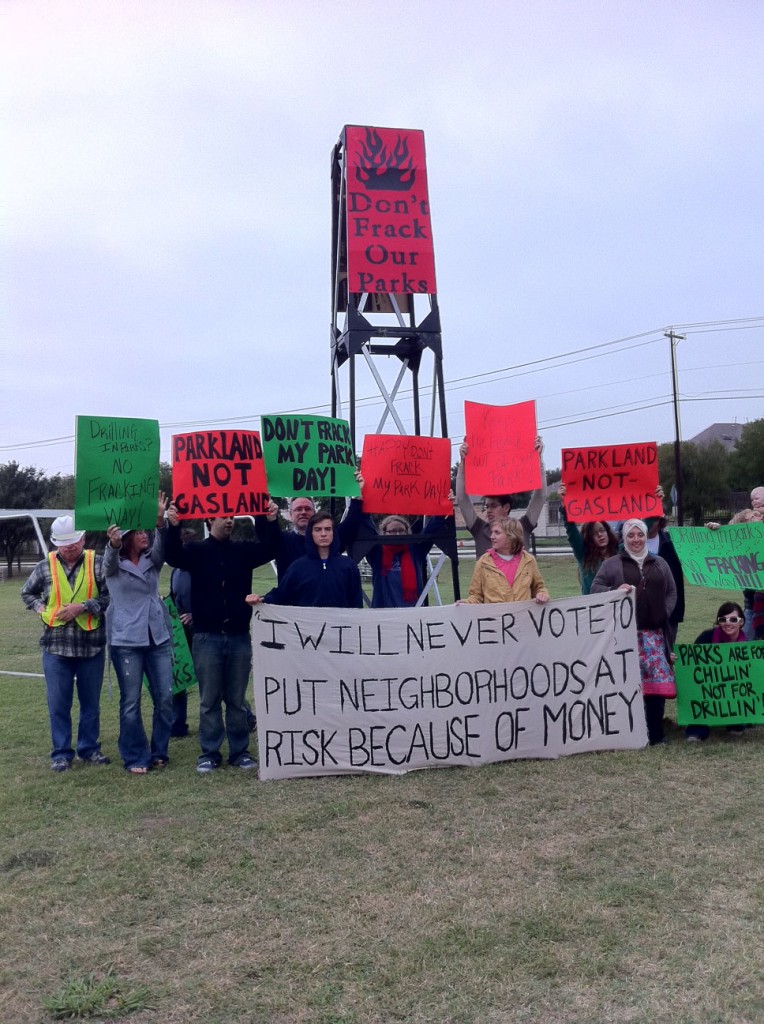 Last Saturday, the City Of Dallas sponsored its annual "It's My Park Day." Usually, it's a assembly of hardy volunteers who are out doing clean-up in Dallas open and green spaces that the city can't always afford to do these days.
But this year was different. Showing up at Winfrey Point at White Rock Lake – the home district of "Sulfuric Sheffie" Kadane one of he most vocal supporters for allowing gas drilling in the city's parks – was another, more focused contingent and they brought along a brand new people-friendly prop to get their message across.
Led by Mountain Creek Neighborhood Alliance members Ed and Claudia Meyers, a group of about a dozen residents set-up a 15-foot tall faux drilling rig right there on the Lake shore with a bright red "Don't Frack My Parks" message at the top and then proceeded to hand out flyers quoting Council member Kadane as saying “We’ve got parklands there that aren’t being utilized for anything. What else are you gonna put there?”
The "Drilling for Truth" crew generally got a warm reception at White Rock from park-friendly volunteers, then proceeded onto the Volunteer Appreciation event at Valley View Park where they ran into Councilwoman Linda Koop. All in all, not a bad way to debut a new prop in the fight against irresponsible urban drilling. And now that it's on the move, watch for the rig in your neighborhood.
Dust from Homes Near Cement Kilns Have 2 to 9 X More Dioxin
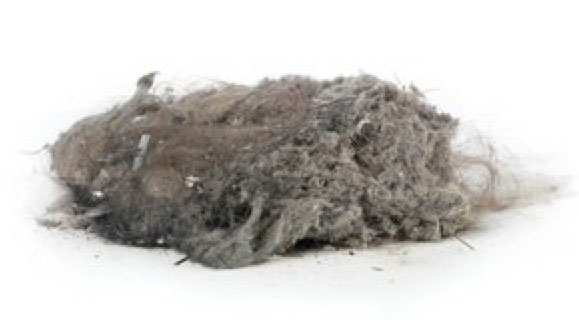 Here's some information the Midlothian Chamber of Commerce probably won't be linking to at their website.
A national research team that includes personnel from The National Cancer Institute, Colorado Sate University, the University of Washington, and the Mayo Clinic has concluded that homes within one to three miles of cement plants contain house dust that contains 2 to 9 times more Dioxins than homes not located near kilns.
Dioxins are among the most toxic substances ever tested by EPA. Dioxin is the poison in Agent Orange. It's what made both Love Canal in New York, and Times Beach Missouri Superfund Sites. It's so toxic it's measured in grams, not pounds. It's a carcinogen and an endocrine disrupter. Like Lead and Particulate Matter, there is no known "safe" exposure level to Dioxin.
40 homes across four states were chosen from an earlier non-Hodgkin lymphoma study. Samples of dust were collected from vacuum cleaner bags and test for a variety of Dioxins (the testing for Dioxins is VERY expensive and that's one reason you don't see a lot of field tests for it). Four kinds of dioxin-emitting facilities identified by EPA were in close proximity to one or more of the sampled households – cement kilns, coal plants, sewage sludge incinerators, and medical waste incinerators. Proximity to major roadways was also considered a separate source. But "high concentrations" of Dioxins were only associated with homes near cement plants. Major roads also saw "elevated" levels, but not nearly as much as kilns.
The full study was recently published in the September edition of "Science of the Total Environment."
Midlothian currently hosts six active cement kilns. There were as many as ten up until 2008. It is the largest concentration of cement manufacturing in the nation. And all of DFW is downwind of it most of the year.
As we mentioned last week, a 1999 study by Barry Commoner and his group out of Washington University in St. Louis traced Dioxins from the TXI cement plant all the way to the Arctic Circle. So don't feel safe if you think you live far enough downwind not to be affected by the Midlothian plant plumes.
For years, Midlothian residents and others have been asking the federal government for a meaningful health effects and testing protocol for determining the total load of dioxins in and around these kilns. It hasn't come. Their requests were based on published higher incidents of certain kind of birth defects in Ellis County, as well as clusters of animal health effects observed by local ranchers and breeders. And these observations started when hazardous waste burning began in the mid-1980's. EPA has stated that waste-burning kilns release more dioxin than non-waste burning ones.
So it's important to remember that the astounding high concentrations of Dioxins that were located in homes in close proximity to a a cement kiln were linked to a kiln not burning hazardous waste. Granted, we don't know what kind of "non-hazardous wastes" it might have been burning, but the results begs the question about how much higher Dioxin levels might be in a place like Chanute, Kansas where Ash Grove's kiln is still burning hazardous wastes.
And it also once again points out why we can't be complacent about the kilns in Midlothian just because they quit burning the worst of the worst toxic wastes. Even without that practice, they pose an on-going clear and present danger to the region's public health from just their "routine" emissions. Now that all of them have or want permits to burn plastics and garbage, you could reasonably expect to see an increase in Dioxins and other forms of more exotic pollution spewing out of their tall smokestacks. And you know why their so tall don't you? So that the pollution they're releasing travels further downwind.
Yes Virginia, There is a Pro-Cancer Lobby
 The New York Times' Nicolas Kristof, who's established himself as one the nation's leading editorialist on the harms of what he calls "Big Chem," has another excellent piece in the Sunday edition.
Using the curious case of Formaldehyde, the carcinogen that isn't one according to the people who make money manufacturing it, Kristoff draws a portrait of the kind of industry-fueled professional obfuscation that Big Tobacco, Big Oil and Every other Big Industry of the last 60 years has used to escape necessary regulation.
Part of this strategy is to block, delay and bury information that proves your product's guilt, and so it is with Formaldehyde, something most of us think we only run across in High School biology labs. As it turns out, the chemicals is used in a wide variety of products and our homes are full of it. Our general exposure to formaldehyde has increased. This use and exposure has risen even as the World Health Organization and American scientists have concluded that formaldehyde causes cancer.
And so a seemingly innocuous document like the 500-page "Report on Carcinogens" from the National Institutes of Health becomes a real threat to the manufactured "uncertainty" the chemical industry has spent so much to construct.
“Formaldehyde is known to be a human carcinogen,” declared the most recent Report on Carcinogens, published in 2011. Previous editions had listed it only as a suspected carcinogen, but the newer report, citing many studies of human and animal exposure to formaldehyde, made the case that it was time to stop equivocating."
This conclusion made the report an instant target. Industry got its supporters in the house to demand a follow-up study for Formaldehyde and that no other Reports on Carcinogens be published with the new consensus language on its cancer-causing impacts.
So a chemical that the science says is clearly a carcinogen is still being sold in lots of household products as if it was perfectly safe thanks to folks who, collectively, make up what might be called the "pro-cancer lobby."
Besides all of us being exposed to Formaldehyde through consumer products, people who live in places where natural gas is being mined, like the Barnett Shale, as well as those downwind of waste-burning cement plants, like the ones in Midlothian, get dosed with more of the stuff. So, you know, we're doubly-blessed in DFW.
Study: Green Spaces Make Pregnancy Easier
 Coming under "Confirming Things You Probably Already Knew," is this study via the folks at Environmental Health News:
"Living in homes surrounded by grass and trees can reduce pregnant women's exposures to traffic-related air pollution, according to a study in Barcelona, Spain. As green space around their homes increased, their exposure to fine particles and nitric oxides decreased. Particles and gases in vehicle exhaust can affect the development and health of fetuses, so this study suggests that green space in urban neighborhoods has a health benefit."
Over the last five years, study after study has provided proof that living near roadways increases your likelihood of having respiratory problems and other health problems. And yet, just like the regulations surrounding lead smelting or waste-burning haven't caught up to the most recent science, so traditional highway risk assessments don't yet acknowledge most of this new scholarship.
The design of the CF Hawn/SM Wright freeway redo that will help shape South Dallas for a generation or more is in its final stages of planning. There may be as little as 2-4 months until approval will be given by the Federal Highway Administration to proceed with a 6-lane thoroughfare instead of a more community-friendly four land boulevard that residents have voiced support for time and again.
Now is the time to call attention to a factor that may not have been examined very thoroughly, if at all, by TXDOT or local officials in designing the redo – before another wrong is inflicted on South Dallas by the city.
Another Waste Fire at a Waste Burning Cement Plant
Indian downwinders complain of air pollution from their local cement kiln
This time in India instead of Utah or South Carolina.
In Coimbatore, plastic and leather wastes stockpiled waiting to be burned as "fuel" at the Madukkarai cement works spontaneously combusted in a three hour fire that did not result in any known injuries at the plant.
However, thick columns of black smoke poured into the sky and that stuff, as the late Dr. Commoner would note, has to go somewhere. A lot of it will no doubt dind its way into the lungs of downwind residents. More than 200 tons of waste was gutted in the fire out of at total twice as large.
Despite local fire officials urging the cement plant to enclose the waste for some time, it had not done so. That is an apparent violation of state law. And readers, will it surprise you in the least to learn that the plant was already a longtime source of complaints from local residents?
Meanwhile the Fire and Rescue Services Department officials pointed out that storing combustible waste materials outside the plant without adequate protection was in violation of the Tamil Nadu fire service rule of 1990.
"It is a violation of section 250 of Tamil Nadu Fire Service Rules 1990 and we will issue a notice to the factory and will give them 15 days to store the waste materials inside a roofed structure with protective walls," said Subramanian.
Residents have been protesting against the cement factory for a long time and have submitted numerous petitions to the district administration. They claimed that the dust and smoke from the factory was causing major health complications, especially for senior citizens and children.
"We have raised the issue on numerous occasions and also submitted petitions to the district administration but till now no action has been taken," said C Palaniswamy, a resident of Kurumbapalayam.
There is a premeditated and orchestrated campaign by the cement industry to allow kilns to become garbage burners of all kinds of wastes. We've seen it manifest itself locally in Midlothian with the TXI permit that allows that plant to burn car parts and plastic wastes.
The more kilns that become gargabe burners, the more garbage of dubious content will pile up at kilns, the more often that garbage causes a fire. We've reported on three just since the summer alone. Being downind of an uncontrolled garbage fire isn't one of the talking points the industry boasts about when it's trying to sell kilns as the industrial equivalent of Kitchen disposals, but it's looking more like a standard feature rather than an option.
Barry Commoner: 1917- 2012
 Dr. Barry Commoner died today. It's hard to summarize the breadth and depth of Dr. Commoner's public life in a single blog post. He was one of the original scientist-activists, along with Linus Pauling and Rachel Carson, who were first concerned by the dangers of radiation poisoning in a post WWII world, and then took that concern and applied it to the entire modern world.
He was perhaps the most eloquent scientific spokesmen for both the opportunity and trivialization of "environmentalism." To him, the environmental movement was just another name for the broader historical social justice movement that was seeking equality for women and minorities, and ending poverty and war. The same system lead to all of these ills. It was no coincidence that the worst polluters were also the worst union busters and paid women less for the same jobs. Environmentalism was just the name you gave to fighting the side effects of this rotten system when it began to harm the earth's natural cycles as well as our own.
On the other hand, he hated the ghetto of meaning that "environmentalism" had taken on recently, divorced from all of these other symptoms. Barry Commoner was no treehugger. He didn't see value in fighting for the natural world unless it had an impact on people and their collective misery.
“I don’t believe in environmentalism as the solution to anything. What I believe is that environmentalism illuminates the things that need to be done to solve all of the problems together. For example, if you’re going to revise the productive system to make cars or anything else in such a way as to suit the environmental necessities, at the same time why not see to it that women earn as much as men for the same work?”
His four informal rules of ecology were catchy enough to print on a T-shirt and take to the street: Everything Is Connected to Everything Else. Everything Must Go Somewhere. Nature Knows Best. There Is No Such Thing as a Free Lunch.
He insisted that the future of the planet depended on industry’s learning not to make messes in the first place, rather than on trying to clean them up. It followed, by his logic, that scientists in the service of industry could not merely invent some new process or product and then wash their hands of moral responsibility for the side effects. He was a lifelong opponent of nuclear power because of its radioactive waste; he scorned the idea of pollution credit swaps because after all, he said, an industry would have to be fouling the environment in the first place to be rewarded by such a program.
Downwinders benefited from Commoner's lifelong devotion to scholarship. He was an ardent opponent of all forms of waste-incineration, long ago figuring out that industry claims of chemicals going "poof" inside a furnace was at odds with basic physics. Around 1999, Commoner did a landmark study tracing the path of Dioxin emissions from major sources in North America, including TXI's waste-burning cement plant. Methodically, he showed how a poison manufactured and spit out of a smokestack in Midlothian ended-up in the Arctic Circle to become encased in fish fat or whale blubber. Everything Is Connected to Everything Else. Everything Must Go Somewhere.
Downwinders also inherits its sense of mission from the perspective that Dr. Commoner made famous. We see our job as redressing inequality and injustice as it manifests itself in public health and the human physiology. People get shat on by industry. It's our duty to help them, and if we can, build precedents for the next group so that they don't get shat on quite as bad. And if we can get these citizens to also see the similarities between themselves and others who are getting shat on by the same Powers-That-Be, then we're making progress.
Here's to Dr. Commoner and the recognition that no environmental battle is fought in a social or political vacuum.
“Instead of waiting for the EPA, we’re requiring compliance in 2013″
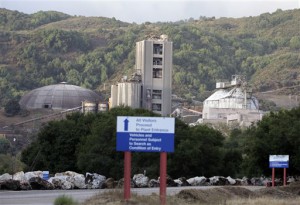 That's the triumphant statement of Santa Clara County Supervisor Liz Kniss after a September 19th vote by the Bay Area Air Quality Control District to implement new emission standards for the Lehigh Permanente Southwest Cement Plant in Cupertino, the only cement plant in the San Francisco Area. The standards are as strict or stricter than the slew of new regulations proposed by EPA, and will be imposed by the original EPA deadline of 2013 instead of the expected delayed start date of 2015.
Kniss, who serves on the district’s board of directors, said the new standards require sharply reduced emissions of various pollutants (NOx, particulate matter, mercury, dioxins, hydrochloric acid, hydrocarbons and ammonia). In the case of each pollutant, the new standard will match or exceed those recommended by the U.S. Environmental Protection Agency, scheduled for implementation in 2015. For example, the allowable average daily emissions of mercury would be reduced from 0.72 pounds to 0.05 pounds – a 93 percent reduction.
“The new (district) regulations make Lehigh Permanente the most tightly regulated cement plant in the nation,” Kniss said. “A 93 percent reduction in mercury is very dramatic.”
Why can't Texas do this as well? It could. If the Texas Commission on Environmental Quality was interested, it could pass it's own set of rules that mimicked EPA's and vote to implement them next year. But that will never happen because Governor Perry is dedicated to regulating industry with ideology, not science. In California, each region has its own air quality board that's in charge of new pollution control measures. That's why this local entity can set cement plant air pollution standards that are now the toughest in the country.
Left unsaid by any of the stakeholders is the added pressure this move in California puts on EPA in Washington DC. The Agency still hasn't finalized the watering down and delay of the new rules, despite a national public hearing in DFW in August, and thousands of submitted comments. The Cupertino plant will be operating under a distinct disadvantage compared to its peers if EPA goes ahead and delays the rules until 2015, while it must meet them by next year.
Meanwhile DFW's air quality – with more cement manufacturing capacity than any other place in the county – is still being held hostage by a state agency and Governor who don't think any more regulations of any kind are needed for the Midlothian kilns. Until we disconnect our fate from Austin's political ambitions, North Texas will never have clean air.
When the Gas Industry Says “Full Disclosure,” It Only Means 65%
According to an EneryWire analysis, "at least one chemical was kept secret in 65 percent of fracking disclosures" by companies that publicly disclosed the ingredients in their hydraulic fracturing fluid.
 The study supports the claims of critics including Downwinders, that companies who say they're fully disclosing the contents of their fracking fluids aren't really doing so. Downwinders has joined other members of the Dallas Residents at Risk alliance in calling for the City of Dallas to require true full disclosure of all fracking fluids in order to better protect first responders.
Industry claims it has a right to prevent the public, including doctors, firefighters, and police from knowing certain "trade secret" ingredients in their fracking fluids and every clearinghouse for ingredient information – including the much-heralded one established in Texas – allows for the use of this exemption. This trade use exemption is what the EnergyWire analysis tracked.
"It's outrageous that citizens are not getting all the information they need about fracking near their homes," said Amy Mall, who tracks drilling issues for the Natural Resources Defense Council. "Companies should not be able to keep secrets about potentially dangerous chemicals they're bringing into communities and injecting into the ground near drinking water."
But companies say they spend millions of dollars researching and developing new formulations of frack fluid and shouldn't have to give away their secret recipes.
"In just the past 18 months, the industry has spearheaded an effort that took us from an idea on paper about disclosure to a fully functional and user-friendly disclosure system," said Steve Everley of Energy in Depth, a campaign of the Independent Petroleum Association of America. "That kind of commitment and progress cannot be overstated in a discussion about industry disclosure."
This is very simple. If your a Dallas firefighter responding to an accident at a gas facility site, you need to know what chemicals are on site, how much of those chemicals are there, and where they're stored. No exceptions.
Study: Dioxin Exposure Can Reach Three Generations into the Future
 Via Environmental Health News:
"Pregnant rats exposed to an industrial pollutant passed on a variety of diseases to their unexposed great-grandkids, according to a study published Wednesday. Washington State University scientists found that third-generation offspring of pregnant rats exposed to dioxin had high rates of kidney and ovarian diseases as well as early onset of puberty. They also found changes in the great-grandsons' sperm. The great-grandkids – the first generation not directly exposed to dioxin – inherited their health conditions through cellular changes controlling how their genes were turned on and off, the researchers reported. The dioxin doses used in the study were low for lab rats, but are higher than most people’s exposures from the environment. The study raises questions that won’t be easy to answer about people’s exposure to dioxins from food and industrial sources."
The new study examined how dioxin exposure affects a person’s epigenome – a road map of chemical changes to DNA and associated proteins. As a fetus develops, its epigenome is reprogrammed, and it can be permanently altered by exposures. The epigenome is then passed down through generations – along with susceptibility to adult-onset disease.
Cement kilns are a large source of dioxins, which are so toxic they're measured in grams, not pounds or tons. Lead smelters are another large source – the Exide smelter in Frisco has been of the largest dioxin polluters in the state. Any kind of incineration process, especially involving chlorides/plastics will release dioxins. This is why its a bad idea to burn plastic garbage as TXI's cement plant in Midlothian does now, or build a "waste-to-energy" incineratator that burns "un-recyclable plastics," as many of us suspect the City of Dallas want to do in the near future.
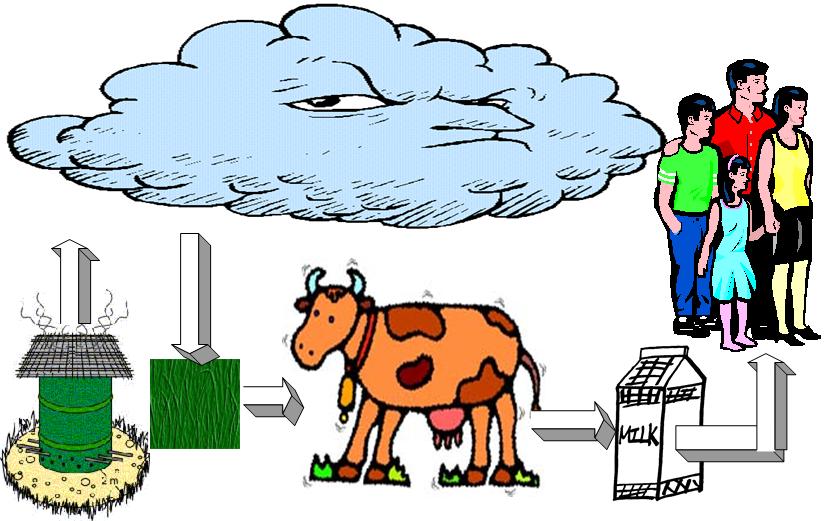
However, most people get most of their exposure to dioxin from ealing fatty foods that contain it – dairy products like cheese and milk. It enters the food chain as fallout from thousands of different sources, gets absorbed into the soil and plants, and those plants are then eaten by hungry cows.
The findings are not directly applicable to humans, researchers said. The way the animals were dosed is not the same way people are exposed to dioxins, and the moms were dosed for a few days – roughly similar to the first trimester – which does not mimic typical human exposure that is low and gradual but builds over time, Wolstenholme said. Humans and rats also clear dioxin from their bodies differently, she said.
“We cannot know from these studies if people are similarly at increased risk for the same diseases,” Wolstenholme said.
Still, the researchers wrote that their findings “have implications for the human populations that are exposed to dioxin and are experiencing declines in fertility and increases in adult onset disease, with a potential to transmit them to later generations.”