Posts by Downwinders At Risk
Timing is Everything: National Fracking Conference Coming to Dallas
 When it fracks, it pours.
Just as the long-running fight over gas drilling in Dallas explodes into a full-fledged City Hall scandal, here comes a national fracking conference to spotlight how the rush to drill can create more problems than it solves.
On Saturday March 2nd, and Sunday March 3rd, DFW residents have a great opportunity to take a break in the fight and see superstars of the citizens movement in person when the "Stop the Frack Attack" conference settles in for a two-day run at the Best Western Plus Dallas Hotel & Conference Center at 8051 Lyndon B Johnson Freeway just east of Coit (map).
You can look at a full schedule of speakers and workshops here, but there are some events that stand out:
SUNDAY, MARCH 3rd
9:00 am – 9:45 am: Morning Plenary: "Health Impacts of Fracking" with Wilma Subra and Nadia Steinzor. Dr. Subra was a 1999 MacArthur "genius" award winner for helping “ordinary citizens understand, cope with and combat environmental issues.” She's one of the leading scientific voices in the grassroots environmental health movement. Nadia Steinzor is the Marcellus Shale organizer for national group Earthworks. You you only see one presentation, you might want to make it this one.
SUNDAY, MARCH 3rd
2:50 pm -3:45 pm : "Connecting Fracking, Climate Change, and Clean Energy" with Dr. Tony Ingraffea. Dr. Ingaffea was the Cornell University scientist who first called BS on the gas industry's claims of being 100% climate friendly. As his presentation points out, the mining and production of gas is not climate friendly at all and makes it a worse choice than coal in some respects.
SUNDAY, MARCH 3rd
4:15 pm – 5:30 pm: Closing Plenary with Deborah Rogers.
Deborah Rogers is a Ft. Worth based economic analyst whose own family property was put under siege by fracking in Cowtown. She just released a new report on the "bubble economics" of the gas industry and will close out the weekend with a presentation on the real economics behind the shale boom.
You don't get to see these three headliners at the same gig very often outside of either coast, so take advantage of them showing up at your front door just as we're about to start another chapter in the Dallas Drilling Scandal, with a City Plan Commission vote scheduled for March 21st. Be prepared.
Besides these great speakers, there are also lots of workshops:
Fracking 101
Community Organizing & Leadership Development
Pipelines, Compressor Stations and Other Infrastructure
Spokesperson training
Nonviolent Direct Action
A full two days. Nationally-known speakers. A bunch of workshops where you'll learn the things you need to know and meet people like yourself. All for only $50 bucks – and that includes lunch both days. Register here now. See you there.
Study: Gas Drilling Cause of Wintertime Smog in Utah Basin
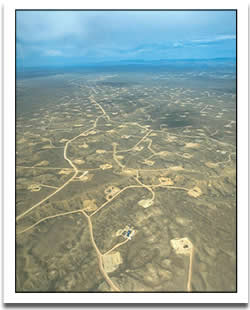 98 to 99 percent of the Volatile Organic Compounds (VOCs) and 57 to 61 percent of the Nitrogen Oxide (NOx) found in Utah's Uninta's Basin are emitted by gas drilling or production sources, and are responsible for worsening smog there, according to a new Utah Department of Environmental Quality study of air quality there.
The Basin is one of several large rural Western areas of the country that also includes stretches of Colorado and Wyoming where gas drilling has caused the phenomena of "wintertime ozone," creating smog as bad or worse than Los Anageles or Houston.
Despite low snowfall this year, the Basin has still seen more than a dozen episodes of high ozone so far. The ozone readings can reach nearly twice the limit considered safe by the EPA and last for weeks at a time. In 2011, levels reached 139 parts per billion, nearly double the federal health standard. About 1,100 wells were drilled that year.
Leaks from pipes and tanks and fumes from pumps, dryers and compressors were major sources of volatile organics. Drill rigs and fracking were sources of nitrogen oxides and methane, according to the study.
While making no recommendations,the report did say that reductions in certain kinds of volatile organic compounds, including benzene and toluene, “could be particularly effective since they are not only a direct health concern but are more active in ozone production than many other” VOCs.
EPA Staffer Who Oversaw Cement Plant Rule Gutting Will Be Your Next Administrator
 According to a number of different Washington-DC based news outlets, President Obama has picked current EPA Director of Air and Radiation, Gina McCarthy, as his choice to head up the entire Agency for his second term.
McCarthy was the EPA staffer in charge of explaining to citizens why new cement plant emission rules the Agency and the President had already signed-off on in 2010 were gutted last year just prior to adoption, despite unanimous citizen opposition to the changes at a national hearing at Arlington City Hall last August. Instead of a 2013 compliance deadline, the industry now has until 2015. And real time particulate matter monitoring was tossed in favor of a using a formula every so often.
McCarthy's paraphrased explanation: "These new rules are gonna make kilns ever more awesome!"
In a meeting last year with kiln activists, she couldn't explain why the rule was being changed, who wanted it changed, or where the order to change it came from. It was a mystery even to the most cynical DC-based environmentalists. And now she's in charge of the whole show.
Some are interpreting McCarthy's promotion as a first step in the Administration taking executive action on climate change, since she headed up some recent initiatives on that front.
A Boston native, McCarthy came to Washington after serving as the top environmental regulator in Massachusetts and Connecticut under Democratic and Republican governors.
Former Massachusetts Governor Michael Dukakis, a Democrat, appointed her chair of a council to oversee a review of a proposed hazardous waste incinerator in the Boston area in 1990.
She later served as an environmental policy adviser to then-Massachusetts Governor Mitt Romney and launched the state's first Climate Protection Action Plan. Romney was Obama's Republican opponent in the 2012 presidential election.
In 2004, McCarthy was appointed to head Connecticut's Department of Environmental Protection under then-Governor Jodi Rell, also a Republican, and helped lead the state into a carbon cap-and-trade system for Northeastern states, known as the Regional Greenhouse Gas Initiative.
New Texas Study Confirms That Smog is Bad For Your Heart
 Heart attacks are more common within just hours of high ozone and/or particulate matter levels according to a new large study of air pollution health effects that was sponsored by Rice University.
Evidence already links airborne particles with heart disease and lung problems but the new findings are the first to show that high ozone may immediately raise the risk that a person's heart will stop beating.
"Heart patients should consider when there are high ozone levels that they should take extra care of themselves," lead author Katherine Ensor of Rice University in Houston told Reuters Health.
Ensor and her colleagues looked at Houston hospital records from 2004 to 2011 and compared them with records from hospitals outside the city.
Cardiac arrest risk went up by 4.4 percent for every 20 parts per billion of ozone above average (50-60 ppb) within the previous three hours. For every increase by 6 micrograms of fine particulates per cubic meter of air in the prior two days, cardiac arrests rose by 4.6 percent. In the summer, it's not unuual for DFW monitors to record 1-hour ozone levels of over 100 ppb or more, and 8-hur averages in the 80 to 90 ppb range. There are only two urban monitors for PM pollution, but those have been trending up over the last few years as ozone levels have been rising as well.
Because there are many risk factors for cardiac arrest, an additional link to ozone could have big implications for people with chronic medical conditions living in urban areas, according to Dr. Comilla Sasson of the University of Colorado, who was not involved in the new study.
WHO: “Mounting Evidence” Endocrine Disrupting Chemicals Harming Human Health
 On Tuesday, and international team of of 16 scientists from 10 nations released a new report that concludes evidence linking hormone-mimicking chemicals to human health problems has grown stronger over the past decade, becoming a "global threat" that should be addressed.
A joint effort by the World Health Organization and the United Nations Environment Program, the report is meant to give policymakers the latest information on chemicals that seem to interfere with the normal development of hormones in people and wildlife. It represents a significant change from a previous 2002 report that called such evidence weak.
The panel found that endocrine-related diseases and disorders are on the rise. There is now “emerging evidence for adverse reproductive outcomes” and “mounting evidence" for effects on thyroids, brains and metabolism, the report summary says.
Besides everyday consumer exposure through packaging, cosmetics, and food, local DFW industrial sources for endocrine disrupting chemicals include combustion sources of any kind, waste-burning, oil and gas production, and plastics manufacturing. In fact, it's the ubiquity of the pollutants that makes it hard to tell which exposure can have what health effect.
One problem vexing those who study endocrine-disrupting chemicals is the vast number of them – about 800 are known – and how they may interact with one another. They’re in a variety of goods – such as pesticides, flame retardants, plastics, cosmetics and canned foods – and research has only touched the “tip of the iceberg,” according to the report.
“The vast majority of chemicals in current commercial use have not been tested at all,” the authors wrote in the summary.
“We seem to be accepting as a society that it’s acceptable to load up our next generation with chemicals in an unregulated manner and hope they’re not bad,” said Thomas Zoeller, a professor at the University of Massachusetts, Amherst and a co-author of the report. “We need to change that entire culture.”
Congressional Report: Environmental Causes of Breast Cancer Must be Researched
 "Most cases of breast cancer “occur in people with no family history,” suggesting that “environmental factors — broadly defined — must play a major role in the etiology of the disease.” That's the conclusion of something called the Interagency Breast Cancer and Environmental Research Coordinating Committee, which came out with a report last week.
In 2012, Breast cancer was diagnosed in 227,000 women, killed 40,000, and cost more than $17 billion to treat in the United States.
Yet only a fraction of federal research funding has gone toward examining links between breast cancer and ubiquitous chemicals such as the plastic hardening agent bisphenol A; the herbicide atrazine; and dioxin, a byproduct of plastics manufacturing and burning, says the report, prepared for Health and Human Services Secretary Kathleen Sebelius.
“National survey data show that many of these chemicals are present in the blood or urine of children and adults in the United States, and some EDCs are present in 100 percent of the people sampled. Exposure to such compounds early in life can be especially dangerous, the report says.
All told, some 84,000 chemicals are registered for use in the United States. But complete toxicological screening data are available for only 7 percent of these substances, says the report, which calls for “enhanced testing of chemicals, especially classes of chemicals combined together as a mixture, for effects on the mammary gland and breast …”
“Prevention needs to be as important as other investments that are made in screening, treatment and access to care,” Jeanne Rizzo, co-chair of the committee and president of the San Francisco-based Breast Cancer Fund said in an interview. “There really is a problem, and until we address it we’re going to continue to have a quarter of a million new cases every year.”
The report’s release comes three months after a Center for Public Integrity article detailing a study of female plastic automotive parts workers in Windsor, Ontario. That study found that women employed in the chemical-intensive industry were nearly five times as likely to develop breast cancer, prior to menopause, as women in a control group.
“That was essentially an uncontrolled human study,” Rizzo said of the Windsor workers. “We can’t do that. We need to learn from animal studies.”
In the United States, an estimated 150,000 female workers in the plastics and synthetic rubber industries are likely exposed to many of the same chemicals as the women in Windsor, including polyvinyl chloride, or PVC, plastic; acrylonitrile; formaldehyde and styrene.
At least 216 chemicals, including endocrine-disrupting substances like bisphenol A, have been associated with mammary gland tumors in animals. Endocrine-disrupting chemicals, or EDCs, are used to make plastics and pesticides and found in products such as furniture, metal food cans and cosmetics.
But environmental exposures have gotten relatively little attention from researchers.
The National Institutes of Health spent almost $2.4 billion on 2,910 breast cancer research projects from fiscal year 2008 through fiscal year 2010. But only about 27 percent of these projects had to do with prevention, and just 10 percent could be considered “environmental health research.”
Of the $2.8 billion appropriated by Congress from 1992 through 2012 for the Department of Defense Breast Cancer Research Program, 75 percent went toward “basic biology and treatment research, with only 3 percent for prevention and cancer control projects."
The committee recommends that researchers prioritize “chemicals that are produced in high volumes for which there is biologically plausible evidence of their role in the development of breast cancer.”
It also suggests that regulators improve oversight of “cosmetics and personal care products as well as household cleaning and food containment products,” and step up environmental monitoring, especially of “underserved and under-researched groups as well as ‘fenceline’ communities that are in close proximity to industry or waste sites.”
Study Links Hearing Loss to Low Levels of Lead and Camium Exposure
 Exposure to extremely low levels of Lead and Cadmium can lead to hearing loss of up to 20% according to a new study published on Monday.
"The metal levels found to influence hearing were below national workplace standards set by the Occupational Safety and Health Administration. Although the study does not establish causality, the results support previous animal and humans studies that link these heavy metals to hearing loss.
Animal studies show lead and cadmium have a wide array of toxic effects on the hearing system. Both can affect the inner ear where sound is received and sent on to the brain.
Human studies are limited, but exposure to high levels of lead has been linked to hearing loss in children and males exposed at work. Studies in teens have also linked cadmium exposure to hearing loss."
Lead is used in electronics and ammunition, and of course can be found in the fallout of lead smelters like the one in Frisco that Exide Corporation operated until recently. In the United States, the most common sources are old building with lead-based paint, contaminated soil, household dust and drinking water.
Cadmium is widely used in batteries, paint pigments and metal plating. It's also a by-product of ore smelting and released in the air from the burning of fossil fuels. Most people are exposed to cadmium through diet, air pollution and smoking.
Hearing was tested at sound frequencies of normal speech so a loss could make it harder to hear conversations. Lead and cadmium were measured in blood samples.
When lead levels were higher, so were cadmium levels. Higher levels of the metals either alone or together related to more hearing loss, especially in older adults.
Adults with the highest lead and cadmium exposures had more hearing loss. Lead levels above 2.8 micrograms per deciliter of blood related to an 18.6 percent rise in PTA and cadmium levels above 0.8 micrograms per liter had a 13.8 percent increase in PTA.
The CDC recently recommended an "action level" of lead in blood of 5 micrograms per deciliter based on the last decade of research, most of which suggests there is no safe level of exposure to lead. This study certainly points in that direction.
Despite banning lead from gasoline and paint, ongoing testing shows that the average concentration of lead in the American bloodstream is still two orders of magnitude higher than natural human levels.
Perry’s Coal Rush Ends With a Whimper, not a Bang
 In 2006, Governor Perry announced that he was going to fast track over a dozen new coal plant permits in East and Central Texas. There was an instant hue and cry. Not only citizens but cities protested. Believe it or not, the same Dallas City Hall now prostituting itself for gas refineries was actually out organizing a multi-municipality alliance with Houston against the coal plants and Perry. Downwinders launched its now infamous "Smokestack Love" cross-state tour, complete with a 16-foot long parade-quality float with a smokestack-inhaling Perry.
Unfortunately, opponents weren't able to stop all the plants. A leftover 1980's permit for the Oak Grove lignite plant north of College Station did get approved over the objections of local landowners. But most were derailed by fierce resistance or lower natural gas prices brought on by the heavy exploitation of the Barnett and Eagle Ford Shale plays.
Last Thursday, the final domino of that proposed 2006 wave of new coal plants fell with the announcement that the White Stallion plant near Bay City was being canceled.
"The news marks a victory for opponents of coal in Texas, notably the Environmental Defense Fund and the Sierra Club, who have worked for years to oppose the White Stallion and other coal power projects in the state. At this point, there are no longer any major new traditional coal power plants planned in Texas. All of the new projects are primarily natural gas and wind power, with some solar."
Congratulations to all those who worked so hard to see these bad ideas finished off for good. But remember there are still older coal plants in East and Central Texas that are among the largest point sources of pollution in the state, and the nation. Having now eliminated new potential clean air threats from the last of the Perry-proposed coal rush, the Sierra Club is turning its attention to the existing plants that are long past their prime and need to be replaced with cleaner sources of energy.
Downwinders on the March in DC
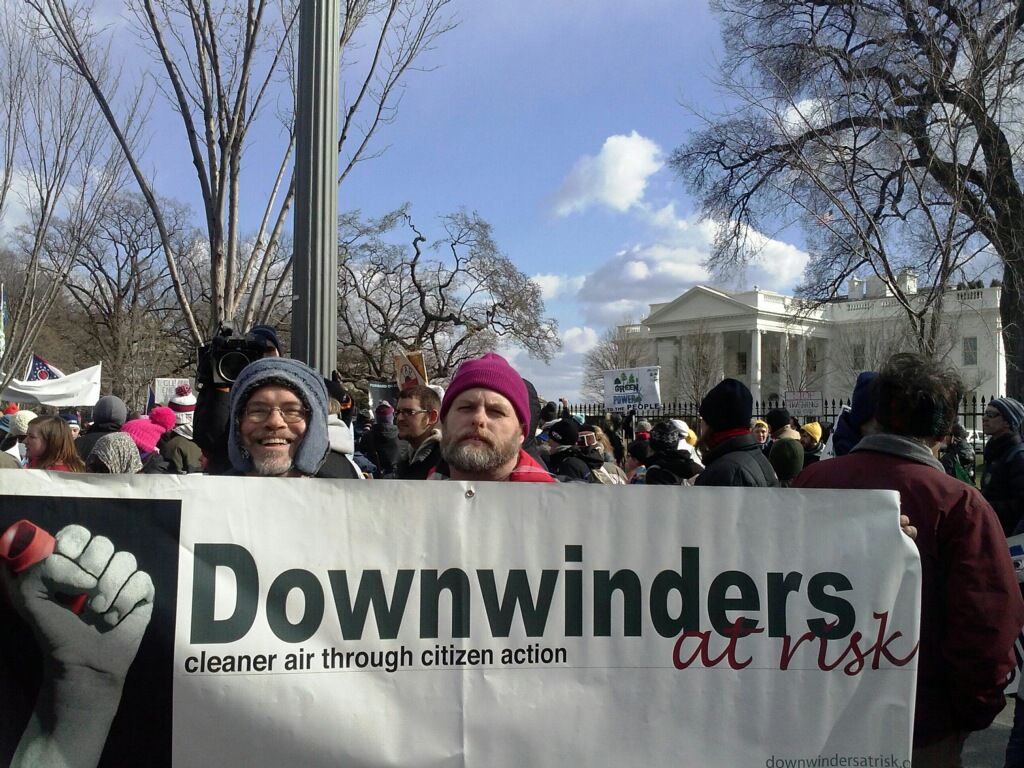 Downwinders at Risk Chair Gary Stuard and board member Molly Rooke were two of about 40,000 marchers yesterday in what's being billed as the largest rally for climate change action in U.S. history. Aimed primarily at stopping the Keystone Pipeline project that's snaking its way through East Texas, the rally was the culmination of a campaign begun by Bil McKibben and his 350.org effort two years ago. Joining Gary and Molly were busloads of other Texans including Hilton Kelly, a well-known veteran of Port Arthur refinery fights, whose hometown is now the destination point for the pipeline.
Despite the showing yesterday, and the President's pledge to finally act on the issue in his second inaugural address, many observers still expect him to approve the pipeline. Among the most popular scenarios being tossed around in the blogosphere is one where Obama first regulates Greenhouse Gas pollution from coal plants, the largest stationary source of such pollution, and then, after the applause dies down, approves the Keystone pipeline. Today's New York Times lays out the "knotty decision" the President faces in either alienating base support among environmentalists, or making unions and Canada very angry.
“Toxic Smog” in China, India, and….Utah
 Air pollution so bad that local doctors are telling prospective parents to wait to conceive children. Beijing? No. New Deli? No? Try Salt Lake City.
"Try to conceive in mid- to late-spring, after the inversion is over. That probably gives [a woman] the best window of opportunity for the critical first three months [for the fetus] to develop under the least amount of pollution," said physician Brian Moench, an anesthesiologist and president of Utah Physicians for a Healthy Environment. Better yet, he says, "get out of Salt Lake City to conceive."
Because of their geography and growth, some western US cities suffer significant smog problems in the wintertime when cold air inversions trap pollution and cause concentrations of pollutants to skyrocket. But this has been a particularly rough year for Utah. Northern Utah valleys have been choked in winter smog almost every day since Christmas. Soon after a storm covered the valley floors with snow two weekends ago, pollution climbed to levels considered "unhealthy" even for the general population. Things are so bad a group of doctors has asked the Governor to declare a medical emergency.