Posts by Downwinders At Risk
Groups Sue Over Fracking Causing Rural Utah Smog Problem
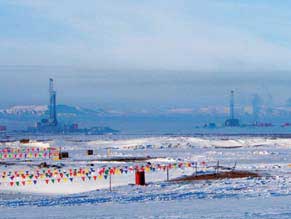 Last week five groups, including Utah Physicians for a Healthy Environment, EarthJustice, and the Southern Utah Wilderness Alliance sued the EPA for not classifying the Uintah Basin as a "non-attainment area" for the new federal ozone standard despite having plenty of evidence that the gas mining region is routinely experiencing some of the worst smog in the country.
"It was once considered strictly a summertime problem in big cities. But winter pollution readings from the oil and gas fields of Wyoming and eastern Utah in the past seven years have shown the pollutants that create ozone— nitrogen oxides and volatile organic compounds — can also cause problems in snowy, rural areas.
Monitoring data in the Uintah Basin collected between 2009 and 2011 shows violations of federal health limits on ground-level ozone, which are set at 75 parts per billion. In 2010 and 2011, ozone levels rose as high as 121 parts per billion and 139 parts per billion, respectively."
To most of us this would mean the area is indeed due a non-attainment designation and should be required to draw up a plan to bring smog levels down. But to EPA, this only means the area is "unclassifiable," and it can put off that planning. That's why the groups are suing. And that's why it doesn't pay to think the EPA is taking care of everything.
But think about how this situation tests the claims of the gas industry operators.
In a previously pristine environment, without any cars or other kinds of heavy industry, they've now created smog on par with Los Angeles and Houston in the middle of extremely rural Utah…in the wintertime! They say they don't need new regulations; that they can voluntarily apply pollution controls. But in Utah, they either haven't done so in sufficient numbers, or those controls are clearly inadequate. Something more is needed than just voluntary controls.
Something like off-sets that require you to reduce as much air pollution as you spew.
Exposure to Phthalates (Plastics) Linked to Diabetes in Women
 Just last week we mentioned that one of the chemicals to look out for in burning plastics was phthalates – a class of widely-used chemicals that make plastic more plastic, i.e. more flexible. Phthalates are used in perfumes, cosmetics, and lots of household items made with Polyvinyl Chloride. This is how the stuff ends up in garbage, and how it can end up in your lungs when that garbage is burned at a cement kiln or power plant as "fuel" in the name of "recycling."
This isn't a theoretical problem. When Midlothian area residents began collecting their own air samples downwind of the local hazardous-waste burning cement plants in the 1990's, they often found significant levels of phthalates.
From past research we know that exposure to phthalates in the womb can disrupt male hormones and have a range of health effects including feminizing male genitalia and reduced IQ.
And guess what? Ellis County rates of Hypospadias (a congenital birth defect in which the opening of the urethra is on the underside, rather than at the end, of the penis. are almost twice as high as for the state a a whole.
This week comes the news that Harvard scientists have linked phthalates to diabetes among women, and particularly to women of color in the Latino and Black communities who experienced the most exposure. Among these populations the risk of diabetes was double. The researchers cautioned that they don't yet know if phthalates actually cause the disease, but they seemed sure of an association.
“It’s extremely likely that phthalates and other chemical contaminants will turn out to be a big part of the obesity and diabetes epidemic, but at this point we really don't know how these chemicals are interacting with each other, or with the human body.”
Diabetes, an endocrine disease marked by problems with insulin production or insulin resistance, affects nearly 26 million Americans, or 11 percent of the population older than 20, according to CDC data. People of color already suffer disproportionally from the disease. According to the Centers for Disease Control, blacks have a diabetes rate 77 percent higher than that of whites, while Latinos have a 66 percent higher rate.
The Harvard study is at least the third in in two years to link phthalates to diabetes in women or adults in general.
“With phthalates, the story is really still emerging,” said Kristina Thayer, a researcher with the National Institute of Environmental Health Sciences and the National Toxicology Program. “Studies like these are considered exploratory, but they seem to be consistent.” “More needs to be done to really fill in this question of potential causality, and the roles that specific phthalates may play,” she added.
But don't expect the Chemical industry, EPA, or the Texas Commission on Environmental Quality to be concerned about this lack of information on the health effects of phthalates exposure. Don't expect them to postpone decisions about burning garbage for fuel because of these gaps in knowledge. Allowing things to happen without fully accounting for all of their hazards is just another day at the office for them. If you want these things to happen, you're going to have to Do-It-Yourself.
“The Conversion of a Climate-Change Skeptic”
 The New York Times publishes a Mea Culpa from the guy whose statments climate change deniers held up as a definitive challenge to the phenomena. Now, they'll probably stop doing that, assuming they make it through his new conclusioins.
The ‘long, sordid history’ of Texas’ most brazen polluter
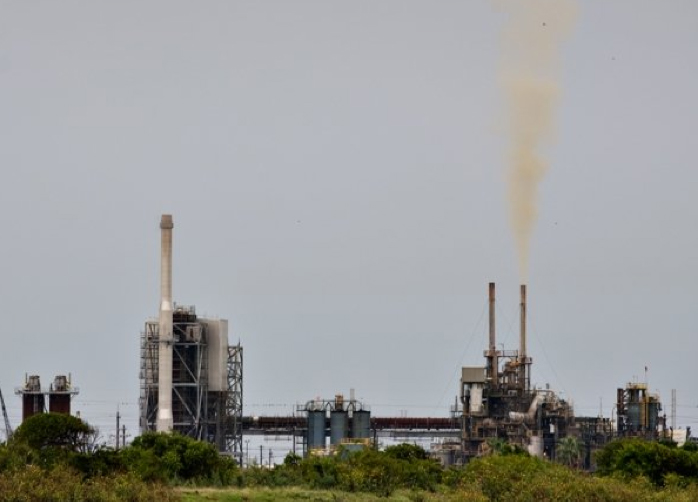 …is Gulf Chemical & Metallurgical Corporation, a "recycling" operation in Freeport on the coast where magma-spewing smokestacks are just business as usual. As chronicled by the Texas Observer's Forrest Wilder, it's also a case study on why the Texas Commission on Environmental Quality is an inadequate enforcer of the law. Not for the faint of heart or folks who think the government is already too tough on polluters.
We Need Your Help on Wednesday
 Dallas is writing a new gas drilling ordinance. As part of this new set of rules, we have a chance to win the nation's first "off-sets" program for air pollution from gas drilling and processing.
Off-sets would require gas operators to pay for decreasing as much greenhouse gas air pollution as they're estimated to emit every year. If a company's annual air pollution emissions total 5 tons a year, it would have to fund projects that would reduce air pollution by 5 tons a year.
Every other major industrial source of air pollution in the DFW area is already subject to off-sets because of anti-smog regulations. Even though they can emit more air pollution than many of these industrial sources, a loophole allows gas operators to escape this requirement.
Greenhouse gases include smog-forming Nitrogen Oxide, CO2, and methane. Applying this program means Dallas would be the first local government in the country to require the gas industry off-sets. This would set a precedent and could be copied by other local governments in North Texas, just like Downwinders' Green Cement policies. And like those Green Cement policies, they could lead to significant air pollution reductions all over the region.
Off-sets help balance the costs of drilling by better reflecting its true impact. They act as an incentive to reduce pollution at the source. Together with larger buffer zones protecting homes and schools, and bans on drilling in parks and floodplains, off-sets can be part of a much tougher Dallas ordinance.
If off-sets are not required, new increases in gas industry emissions will continue to cancel out the kind of progress we've all worked so hard to achieve. As drilling has marched east, air monitors officially violating the old 85 parts per billion ozone standard have moved east as well. This year, we've already seen a monitor at I-35 and Mockingbird in inner city Dallas violate that standard – something it had not done since 2005.
We're now in the final stages of decision-making about the content of the Dallas ordinance. Beginning at 1 pm Wednesday at Dallas City Hall in Room 6ES, there's going to be a showdown of industry vs citizens.
Notorious gas industry PR spinmeister Ed Ireland will be speaking for 15 minutes about why Dallas needs to keep regulations loose. Attorney and Dallas gas drilling task force member Terry Welch will get 15 minutes to explain why the city needs to get tougher in its rules for drilling. Then the City Council will get to ask questions. No final decision for now, but the tone that's set at this "briefing session" will be critical.
Even if you don't live in Dallas, you have a stake in this decision. The pollution spewed by the gas industry in Dallas can become smog over Arlington, Ft. Worth, Denton, or Weatherford.
To be sure the Council members understand how important this issue is to Dallas' future and your present, we need you there at City Hall on Wednesday. Nothing says "concern" better than lots of people showing up to watch what happens. Likewise, empty seats are taken to mean there isn't much interest. It's during a workday, but if you can come, or send someone in your place, the effort will be worth it.
Videos and Pics of the DC Frack Attack Rally
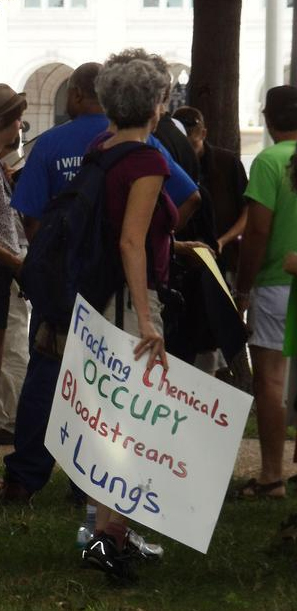 Via the Digital Journal, and Flickr here's a good sampling to give you a taste if you weren't there.
Think Nationally. Act Rationally. Stop the Frack Attack in Dallas
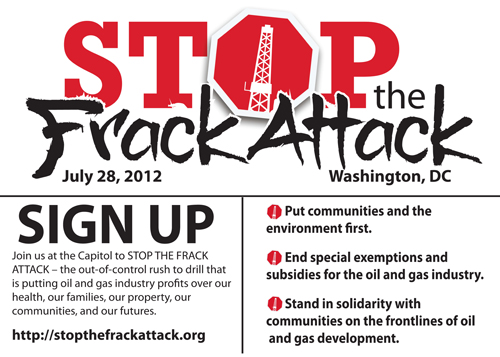 We want to extend a big ol' thank you to all those Barnett Shale residents who are in our nation's capital right now getting ready to attend the largest national rally on fracking ever held in the US.
Former DISH Mayor Calvin Tillman, Earthworks' Sharon Wilson, former Decatur resident and gas victim Tim Ruggiero, are all among those up in Washington, giving interviews and raising constructive hell with the Texas Congressional delegation. Along with Don Young and CANDO, Gary Hogan and the folks at the North Central Texas Communities Alliance, and Susan Read in Grand Prairie, these are the most stalwart heroes of our local Shale fight.
Going on seven years now, they've been taking on the Oil and Gas industry in Texas (spend a moment thinking about what that means) on behalf of not only their own neighborhoods, but ours as well. And they started without all the evidence we have now about the hazards of fracking – known and unknown. All they had was their common sense and intuition.
And it was very lonely. For so long it was only the Barnett Shale that was in play. Only the middle of the country, in places where the nation's press wasn't headquartered, where celebs didn't have their summer homes, where, it seemed, nobody that could help them, cared about them.
Traditional environmental groups who they thought might side with them were instead being funded by their opponents because "natural gas was so much cleaner than coal." Non-traditional ones, like Downwinders we're sorry to say, were just not paying enough attention or had their own full agendas. So this first generation of fracking opponents had to start from scratch, with none of the resources, expertise, or support that just about any other environmental cause could expect to receive.
But they kept at it. And they built a huge library of real world knowledge about fracking. Not the theoretical PR clams, but what actually happens to people and land when the rigs show up. Their knowledge was so essential that a budding film maker named Josh Fox knew he had to make the Barnett Shale one of the stops to talk with them for his new film "Gasland." Their knowledge was going national just like the drilling.
Because as usually happens, greed got the better of an industry. The gas companies couldn't stop with the Barnett, or other rural western plays. They had to go east, to Pennsylvania, to New York, within hours of Manhattan. They began to imperial the summer homes, or water sources, or views, or health of very rich and powerful people who have access to more resources than your average angry DFW resident. Fracking got more media attention. It got more research attention in academia. It's becoming a part of popular culture. David Letterman is now ranting about fracking.
And tomorrow's rally in DC makes it official – fracking is now a national environmental controversy that's forcing citizens to build a national environmental movement. At the center of that movement, and somewhere in the center of that crowd tomorrow, stands those folks from the Barnett Shale who are finally seeing their cause get the kind of attention it deserves. It will be a banner day. Better late than never.
How can you help that movement if you're not in DC this week? By exploiting every opportunity to use what we now know about Fracking thanks to those early activists.
The largest city in the Barnett Shale is in the final stretch of writing a new gas drilling ordinance. This Wednesday at 1 pm on the 6th floor of Dallas City Hall, the City Council will be receiving its second briefing on the hazards of fracking. We need you there to show the Council you're interested in seeing a strong and protective ordinance. In Dallas, we have a chance to make progress in making the industry begin to pay for its own pollution, to set precedents that will be important. We can win. We can make things better. We can honor those whose work has given us a multitude of evidence of harm by using it to grab this Dallas ordinance by the horns and make the most out of it. Want to support the national anti-fracking movement? Think Nationally. Act Rationally in Dallas.
One Week From Today: Gas Drilling Showdown at Dallas City Hall
It's getting down to it. Whether Dallas resident or downwind, be there or get fracked. 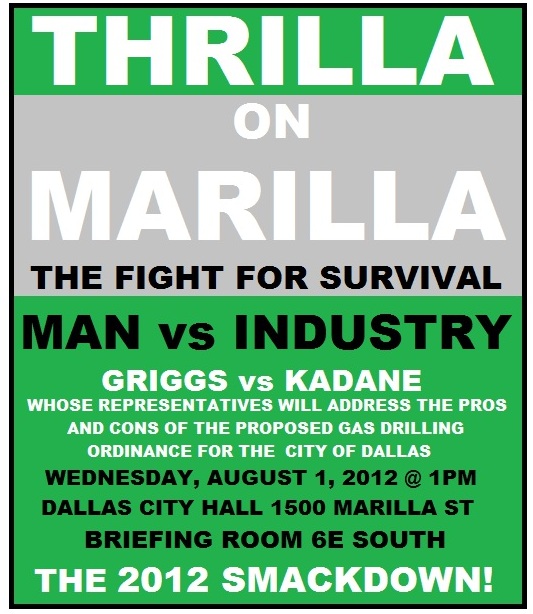
The Next Big Dallas Environmental Fight? Garbage Burning
 Many folks in the DFW environmental community think the battle over "flow control" at the McCommas Bluff landfill in Dallas is merely a prelude the the bigger goal of locating a large "materials recovery" operation there that will include a waste-to-energy power plant that can generate cash for City Hall as well as electricity. Once confined to the land-starved East Coast and Midwest, garbage burning is coming to Texas under the cover of recycling schemes that want to use it to make a buck instead of paying a landfill to take it.
A wave of garbage-burning permits have been approved across the country over the last 2-3 years at various cement plants, including the TXI kiln in Midlothian, south of Dallas, which can now burn plastic wastes and the non-steel parts of cars, including brake linings, electronic switches, vinyl covers, mats, and dashboards. Now the groundwork is being put in place to extend that practice into municipal garbage burning using power plants.
The sale pitch sounds great. The waste companies and city will be "completely committed" to recycling and reusing as much waste as possible. They'll only burn a "small percentage of leftover waste" that would otherwise go to a landfill. It has "significant BTU value" and it "reduces pollution" when you burn it! Why bury it when you can use it to make power that people need. It's really just like recycling!
Except it isn't. It's garbage burning. It's burning plastics. It's burning "fibers." It's burning teated lumber. It's burning "a small list of alternative fuels" and when there's not a enough of that stuff to generate the required power, the list expands. And it produces more air pollution, and distributes that air pollution over a much larger area, affecting many more people, than the same amount of garbage continuing to go to a landfill.
The 20-year fight over burning hazardous wastes at TXI and the other Midlothian cement plants began with the companies telling residents that they were "recycling flammable liquids" in kilns that reached almost 2000 degrees, and burned up 99.99% of all the waste. Soon, the cement kilns were mixing in non-flammable solids like toxic metals, and wastes with chlorine, and contaminated water that had little or no BTU value at all. And far from removing 99.99% of the bad stuff, the kilns added a toxic soup of chemicals to their already voluminous amounts of air pollution.
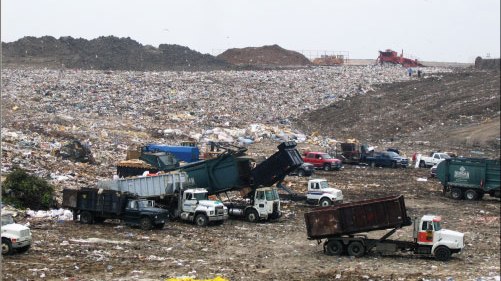 A landfill's toxic plume is usually slow-moving, flows only downhill, and can be tracked as it goes through soil. An incinerator's plume is blowing toxic air pollution wherever the wind is blowing, traveling as far the the wind will carry it, and changes from day to day, often eluding monitors if they're not in exactly the right place. Then, after all that, there's the problem of what to do with all the toxic ash. Send it to a landfill. Which practice puts more people in harm's way? Which one affects public health more? Which is the more sustainable alternative?
As a means of getting tuned up for the fight ahead, which some rumors put as near as this fall or winter, let's examine a little study partially sponsored by the American Chemical Council that was published the other day with the intent of setting the stage for widespread garbage, sorry, "refuse" burning.
It comes from UT – where another study on energy just got a lot of unfavorable publicity. This time It's Dr. Michael Webber who's Associate Director of the Center for International Energy and Environmental Policy in the Jackson School of Geosciences, Co-Director of the Clean Energy Incubator at the Austin Technology Incubator, Fellow of the Strauss Center for International Security and Law at the LBJ School of Public Affairs, and Assistant Professor of Mechanical Engineering at the University of Texas at Austin. Whew.
He's also a member of the "Pecan Street Project" in Austin, which is a "citywide, multi-institutional effort in Austin to create the electricity and water utilities of the future by the innovation and implementation of smart grids, smart meters, and smart appliances. The Pecan Street Project team includes UT, the City of Austin, Austin Energy, the Environmental Defense Fund, the Austin Technology Incubator, and eleven corporate partners."
See? Already the guy has impeccable credentials.
And what is Dr. Webber and the American Chemical council selling today?
"If 5% of residual waste from recycling facilities were diverted to energy recovery, it would generate enough power for around 700,000 American homes annually."
First, you understand that Dallas alone has more than 700,000 homes, and so we're talking about burning 5% of the entire nation's leftovers to get electrical energy for a city smaller than Dallas…for a year.
Second, does anyone know how many waste incinerators would have to be built and and what cost, or how they'd be financed? Nope. But we digress….
"The study found that while single-stream recycling has helped divert millions of tons of waste from landfills in the U.S. – where recycling rates for municipal solid waste are currently over 30% – Material Recycling Facilities (MRFs) currently landfill between 5% and 15% of total processed of the material treated as residue.
According to the researchers this residue is primarily composed of high energy content non-recycled plastics and fibre.
The report proposed that one possible end-of-life solution for these energy dense materials is to process the residue into Solid Recovered Fuel (SRF) that can be used as an alternative energy source capable of replacing or supplementing fuel sources such as coal, natural gas, petroleum coke, or biomass in many industrial and power production processes."
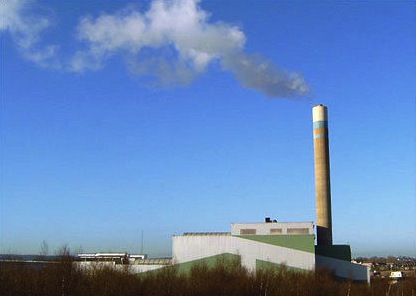 You will be unsurprised to learn that a cement kiln was involved in "testing" how well the
 garbage, sorry, SRF burned. Because it can reach temperatures of almost 2000 degrees!
But the results are not exactly spectacular in the way the Chemical Council probably anticipated.
Sulfur Dioxide (Sox) pollution was reportedly reduced over what coal alone would have emitted by some 20 to 44% (the study rounds this number up to "roughly 50%"). OK. but that's what SOx "scrubbers" are for. The study doesn't say whether the kiln used for the experiment had scrubbers on it. Not a lot of them do right now, but most power plants do and any new power plant or cement kiln would have to have them as well. Both the TXI and Holcim dry kilns have scrubbers already, and the new Ash Grove dry kiln will as well. These scrubbers can reduce SOx pollution by over 80%. So can we agree that we're better off just adding scrubbers to facilities instead of setting fire to plastic garbage to reduce this kind of air pollution?
On the other hand Nitrogen Oxide (NOx) pollution reportedly went up 25% to as much as 93%, when garbage was burned compared to coal. This spike was explained away by saying the kiln didn't have a proper delivery system for the garbage to reach the kiln. That's untested speculation by the authors that may or may not be true. Any increase in smog-forming NOx pollution would be hard to sell in an area like DFW that's been in violation of federal smog standards for over 20 years.
CO2 emissions were reportedly reduced by a paltry 1.5% – the equivalent to getting a million cars off the road! But that's another small number when you realize that just treating the CO2 from the three Midlothian cement plants here in North Texas would get you that number or something even bigger.
When you burn plastic you get dioxins – one of the most toxic substances in the world. The Chemical Council knows this. But there was no testing for dioxins, or phthalates, or any of the more exotic kinds of air pollution one would expect to see when you burn plastics and other kinds of garbage. This is one of the primary objections citizens would have about this practice, and yet there was no testing for it.
These results may not seem that great to you, but they impressed both the Chemical Council and Dr. Webber.
"In this case, one person's trash truly is another person's treasure. Americans send tons of waste to landfills each and every day, meaning that one of America's most abundant and affordable sources of energy ends up buried in landfills," commented Cal Dooley, president and CEO of ACC.
"It's time we got smart and made energy recovery a central part of America's energy strategy," he added.
Meanwhile Dr. Webber added: "The findings from our study demonstrate how engineered fuels can make a meaningful contribution to our nation's strategy while reducing carbon and sulfur emissions compared to some forms of energy,"
Let's translate: "Your trash is our potential treasure. We can't portray ourselves as "Green" if we don't find some way to make plastics more eco-friendly. Plus, we can make a buck packaging our garbage for you to burn it. Our findings show that under these very controlled circumstances, and with not too many questions asked, burning garbage can make some minimal pollution reductions that other readily available alternatives could make better, while also increasing the kind of pollution that most people don't want."
This fight over garbage burning will be as big, if not bigger than the fight over gas drilling. It will involve environmental justice issues, toxic pollution, private-public contracts, sustainability, and real recycling vs the fake kind. And lots and lots of doublespeak. Get your waders on.
What To Expect When You’re Expecting Gas Drilling
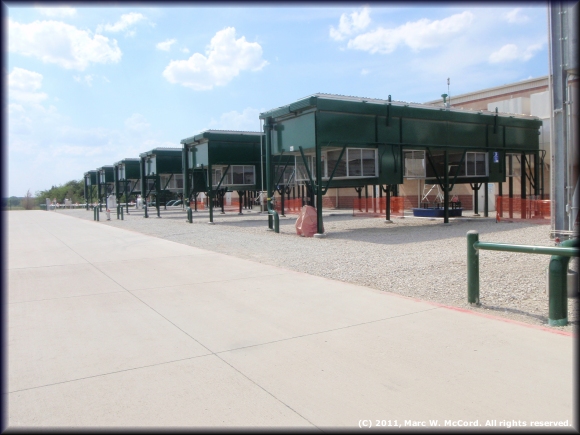
If you're a Dallas resident and you want to find out more about the kinds of new facilities that might be located near you if gas drilling is allowed in your city per the new ordinance the Council is debating on August 1st, here's a item of interest from West Virginia, where operators are already fracking.
"Sulfur dioxide, carbon monoxide and formaldehyde are some of the chemicals Chesapeake Energy is likely to pump into the air in Ohio County from its numerous drilling sites, company information states.
Earlier this year, Chesapeake officials confirmed plans to build local compressor stations that may release these and other chemicals into the atmosphere. Now, the company is identifying "potential to emit" levels for several potentially hazardous materials from its well drilling sites.
The amounts of the particulates that may be released at the four sites slightly vary. The carbon monoxide projections, for example, range from 40 tons per year to 61.5 tons per year to be released from a single site.
In addition to the pollution from the well sites, Chesapeake also will release emissions from its local compressor stations. Chesapeake, in a legal advertisement earlier this year, confirmed the "potential to discharge" the following amounts of these materials on an annual basis from the operations at the compressor stations: carbon dioxide – 93,800 tons; nitrogen oxides – 82.96 tons; carbon monoxide – 16.87 tons; methane – 86.64; carbon dioxide equivalent – 95,667 tons; benzene – 0.33 tons; and formaldehyde – 3.22 tons."
Formaldehyde and Benzene are both carcinogens. Carbon Dioxide is the primary greenhouse gas pollutant, and methane is right behind. Nitrogen Oxide is the primary component of smog in DFW. All this – 93,000 tons a year of air pollution – from just one gas compressor. Where in Dallas would you propose to put a facility that spews that much air pollution? And how would you keep it from adding to the chronic air quality problem the City already has? And then what about the fact that the operators might not need just one, but three, or five, or ten of these compressors in Dallas? It's not uncommon to build complexes that house as many as a dozen or more locomotive-size compressors in the Barnett Shale, which includes at least the western half of Dallas.
When you allow drilling, you're allowing everything else that follows drilling, including compressors and their pollution, storage tanks that leak copious amounts of the same kind of pollution, pipelines that can use eminent domain to run through your front yard, and a host of other hazards, some of which we know about, some of which we no doubt have not yet discovered. Gas mining is not conducive to neighborhoods or attracting new, non-polluting development. If Dallas City Hall doesn't know this now, it most certainly will learn it later.