Toxicology
Exposure to Phthalates (Plastics) Linked to Diabetes in Women
 Just last week we mentioned that one of the chemicals to look out for in burning plastics was phthalates – a class of widely-used chemicals that make plastic more plastic, i.e. more flexible. Phthalates are used in perfumes, cosmetics, and lots of household items made with Polyvinyl Chloride. This is how the stuff ends up in garbage, and how it can end up in your lungs when that garbage is burned at a cement kiln or power plant as "fuel" in the name of "recycling."
This isn't a theoretical problem. When Midlothian area residents began collecting their own air samples downwind of the local hazardous-waste burning cement plants in the 1990's, they often found significant levels of phthalates.
From past research we know that exposure to phthalates in the womb can disrupt male hormones and have a range of health effects including feminizing male genitalia and reduced IQ.
And guess what? Ellis County rates of Hypospadias (a congenital birth defect in which the opening of the urethra is on the underside, rather than at the end, of the penis. are almost twice as high as for the state a a whole.
This week comes the news that Harvard scientists have linked phthalates to diabetes among women, and particularly to women of color in the Latino and Black communities who experienced the most exposure. Among these populations the risk of diabetes was double. The researchers cautioned that they don't yet know if phthalates actually cause the disease, but they seemed sure of an association.
“It’s extremely likely that phthalates and other chemical contaminants will turn out to be a big part of the obesity and diabetes epidemic, but at this point we really don't know how these chemicals are interacting with each other, or with the human body.”
Diabetes, an endocrine disease marked by problems with insulin production or insulin resistance, affects nearly 26 million Americans, or 11 percent of the population older than 20, according to CDC data. People of color already suffer disproportionally from the disease. According to the Centers for Disease Control, blacks have a diabetes rate 77 percent higher than that of whites, while Latinos have a 66 percent higher rate.
The Harvard study is at least the third in in two years to link phthalates to diabetes in women or adults in general.
“With phthalates, the story is really still emerging,” said Kristina Thayer, a researcher with the National Institute of Environmental Health Sciences and the National Toxicology Program. “Studies like these are considered exploratory, but they seem to be consistent.” “More needs to be done to really fill in this question of potential causality, and the roles that specific phthalates may play,” she added.
But don't expect the Chemical industry, EPA, or the Texas Commission on Environmental Quality to be concerned about this lack of information on the health effects of phthalates exposure. Don't expect them to postpone decisions about burning garbage for fuel because of these gaps in knowledge. Allowing things to happen without fully accounting for all of their hazards is just another day at the office for them. If you want these things to happen, you're going to have to Do-It-Yourself.
Low Birth Weight Pregnancies 25% More Likely Within 1.5 miles of Fracking
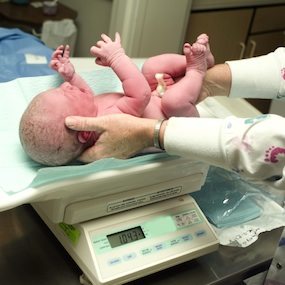 A mother's exposure to fracking increases the chance a a low weight birth by 25%, according to a new study by Elaine Hill, a doctoral candidate at Cornell University. Hill's research also found a 17% increase in "small for gestational age" births and reduced health scores among newborns whose moms lived close to fracking sites.
“Unconventional Natural Gas Development and Infant Health: Evidence from Pennsylvania” is the working title of the study, which has not yet been peer-reviewed or journal-published. Hill used data from 2010 and focused on those living up to 1.5 miles from gas development sites. Pennsylvania increased its unconventional natural gas wells from 20 in 2007 to 4,272 by the end of 2010.
Hill publicized her findings at a public hearing in New York state, which is considering new regulations for fracking. She decided to come forward now, rather than wait for up to two years for the review process to accredit her research because she believes her study has implications policy makers need to incorporate into those regulations.
“My study is robust across multiple specifications and it indicates that our future generation may be seriously harmed. I couldn’t possibly value my career over their well-being,” Hill said by email last Thursday.
We already have a Colorado School of Public health study released in March that shows a 66% higher chance of getting cancer if you live within a half mile of a fracking site. Hill's study is the first to track health effects up to a mile and a half away.
These reports are in addition to the hazard of earthquakes now officially linked to fracking waste injection wells by the US Geological Society, and the risk of getting silicosis from breathing in illegal levels of sand particles noted by industrial hygienists – both from earlier this year. All of this is new research that didn't exist before 2012. What other hazards are we ignorant of this year?
Just another reason why you should be at Dallas City Hall at 9 am on Wednesday, August 1st for the Thrilla on Marilla.
Rejected Smog Standard Would Have Saved 4100 Lives Annually – including DFW Residents
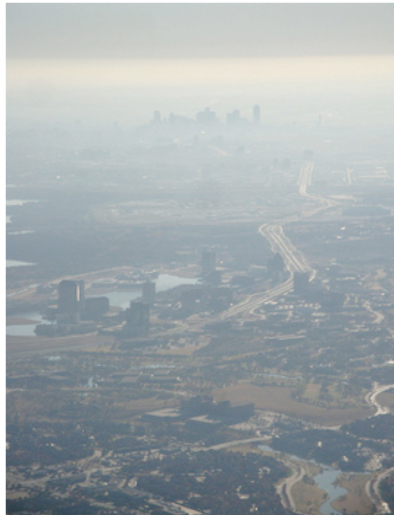 The EPA-proposed ozone/smog standard of 70 parts per billion the White House rejected at the last minute in 2011 would have saved almost twice as many lives per year over and above the Bush-era standard of 75 ppb that was eventually adopted, according to a new study by John Hopkins University scientists.
Most of those new leases on life would have come in large cities like New York, Chicago, and Los Angeles, where smog levels are historically high. But researcher say the standard would also have saved a significant number of DFW lives as well.
The lower standard was rejected by the Office of Management and Budget, and Executive Branch agency that has grown to have veto power over almost all EPA regulatory decisions based on their economic impact – a variable specifically excluded from consideration in the Clean Air Act.
The John Hopkins team also concluded that the lower 60 ppb standard that was in the lower range of what was recommended by EPA's own science advisory would have saved up to 8000 lives per year, compared with the 2500 annual lives estimated to be saved under the more lenient 75 ppb standard.
In addition to more lives saved, the study concluded that millions of asthma attacks and acute respiratory problems would be prevented with a lower ozone standard.
“We contend that a more stringent standard would prevent a substantial number of adverse health outcomes,” wrote the researchers, led by senior scientist Frank Curriero of the Johns Hopkins Bloomberg School of Public Health.
They calculated the reduced deaths by incorporating data from a variety of health studies around the country that have found that whenever ozone levels rise, deaths and hospitalizations from cardiovascular and respiratory problems rise, too.
There was also a warning that climate change would make higher ozone levels more likely, as seems to be in play this year with much of the country experiencing the kind of drought and heat Texas had last summer, and with national ozone level spiking.
EPA officials estimated that achieving the rejected 70 ppb standard would cost between $19 billion and $25 billion per year, including the estimated $8 billion for meeting the current standard set by the Bush administration in 2008. However, the agency estimated the health benefits would be worth $11 billion to $37 billion per year. Based on new evidence of medical costs associated with ozone pollution, that figure may have been very conservative.
The EPA's next review of the standard is supposed to begin in 2013. The Clean Air Act requires an evaluation every five years; Jackson, however, had planned to act early until Obama asked her to stop.
Meanwhile, DFW still can't meet the old 1997 85 ppb standard after three clean air plans in the last seven years. This year's fate is already sealed thanks to the June smog attack we had early on. Our worst monitors are averaging above 85 ppb and we haven't gotten to August – traditionally our worst month. Smog is taking its toll on our health in DFW, even if it doesn't make the nightly news.
Imagine Our Surprise: PM Standard Weakened By White House
 Confirming what a lot of observers had already suspected, the Washington Post reported on Wednesday that the White House submitted a new federal air standard for Particulate Matter air pollution this year that was higher than EPA originally proposed.
It's not the first time the Obama Administration has been accused of sacrificing science-based air quality standards for politics. Last year, the White House mugged EPA's Lisa Jackson with a last-minute decision to forgo tightening the Bush-era ozone/smog standard that she had already termed "legally indefensible."
Particulate Matter, or is the widespread and increasingly insidious pollutant that can be breathed-in and affect not only your respiratory system, but pass through the lung lining into the blood stream to also impact brain and heart function.
Based on a recommendation from its own panel of scientists, the Agency proposed a tightening of the PM standard from 15 to 12 micrograms per cubic meter of air. That recommendation then went to the Office of Management and Budget, which in the last 20 years has grown to have veto power over all EPA regulations. OMB directed the EPA to set the limit slightly higher, between 12 and 13 mg/m3. That doesn't sound like much of a change, but it could be the difference between areas like DFW getting a pass or having to adopt a plan to better control PM pollution.
Critics see the move as one more example of science taking a back seat to politics in the Obama White House when push comes to shove.
Kilnheads across the country just saw the same thing happen just last month with the EPA's proposed rollback of new cement plant emission rules that were 20 years in the making and on the verge of being implemented. However, that move is a stumper compared to the yanks that restrained the EPA on new ozone and PM rules – both national standards with widespread implications. Why is the EPA going out of its way at the last minute to bow to cement industry pressure when there don't appear to be nationwide political implications or impacts to these rules? We hope the Post can snoop around and get to the bottom of this reversal the same way it's reported on the retreats in ozone and PM.
“How your great grandmother’s chemical exposures may affect you”
 In a study published this week, "rats exposed in the womb to five common environmental pollutants passed on DNA-changing attributes that persisted in causing ovarian cancer three generation removed from the original exposure."
It's another example of "epigenetics" – when harmful environmental exposures to one generation can skip a generation or two and show up as health effects decades later.
According to the new study, the five pollutants reprogram how DNA is expressed in the developing fetus' eggs, setting the stage for ovarian disease later in their life.
If you're a Vet, the news is worse. The U.S. Department of Defense helped select the pollutants based on potential exposures in military personnel. They included vinclozolin, a fungicide that's used in the wine industry; a pesticide mixture including permethrin and DEET; a plastic mixture including bisphenol A (BPA) and two widely used phthalates (DEHP and DBP); the industrial byproduct dioxin; and a hydrocarbon mixture called "jet fuel," which is used to control dust on road surfaces.
Researchers at Washington State University exposed pregnant rats to one of five different chemicals alone or in mixtures during a critical time of pregnancy when their daughter pups' eggs were developing. The pups were then mated with males from the same treatment group, and the resulting pups were bred yet again. Only the original generation of pregnant rats had been exposed to the chemicals. The adult daughters and great granddaughters of the dosed animals (called the F1 and F3 generations) were examined for ovarian disease.
In all exposure groups, both the daughter (F1) and great-granddaughter (F3) mice had fewer egg follicles in their ovaries compared to controls, indicating a reduced pool of available eggs. Both generations – but particularly the F3 animals – also had an increased number of ovarian cysts compared to controls.These findings are characteristic of Polycystic Ovarian Syndrome (PCOS) and Premature Ovarian Insufficiency (POI), which are believed to affect 18% of all women.
Other diseases, including allergies and asthma; liver, gastric, prostate and colorectal cancer; and psychiatric disorders are thought to have an epigenetic component. This is the first time that epigenetic changes have been shown in association with ovarian disease. This proof-of-concept study used higher doses of chemicals than what people would typically encounter. Future work is needed to investigate whether lower, more environmentally relevant chemical levels also affect ovarian disease across generations of the rodents.
Locally, we're surrounded by sources of one or more of these pollutants, especially phthalates, BPA, dioxin, and hydrocarbons. BPA is the subject of a lot of media attention and just yesterday, the FDA banned its use in sippy cups for infants. Frisco's Exide lead smelter has been a top ten dioxin polluter in Texas over the last decade. The cement plants in Midlothian are also large industrial sources of dioxin, and new permits to burn more "non-hazardous" wastes that turn into hazardous emissions only ensure that will remain the case. On the ground, internal combustion engines from cars and the natural gas industry facilities in the Barnett Shale soak us in hydrocarbons.
Despite the documentation of the epigenetic effect of certain pollutants in recent years, this impact has not yet been incorporated into any risk assessment of a polluting facility by any environmental or public health agency in the U.S. We may be planting the seeds for epidemics of all kinds in the next 20-50 or more years, and it's all perfectly legal now. Once again, the science is way out in front of the regulations. That's why citizens must arm themselves with the latest research. You won't be getting updates on this stuff from EPA or TCEQ. That's also why it's ridiculous for anyone to speak about the "over-regulation" of polluters in this country. We're nowhere close to understanding what the long term consequences are of our actions in allowing so many chemicals into the environment to mix and match with our own biology. In this larger public health sense, pollution is still very much under-regulated in the United States.
Burmuda Grass Strain Off-Gassing Cyanide
 Not many stories can startle you these days. But this one will. It's right out of one of those cheesy mid-70's eco-themed diatribes where Mother Nature finally gets her revenge for all the abuses heaped on her by humankind.
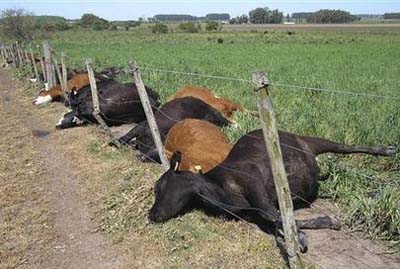
Only this isn't a movie. It's real: a hybrid strain of Bermuda grass hypernized strain used in pastures across the Southwest is off-gassing cyanide and killing cattle in Elgin, Texas.
"When our trainer first heard the bellowing, he thought our pregnant heifer may be having a calf or something," said Abel. "But when he got down here, virtually all of the steers and heifers were on the ground. Some were already dead, and the others were already in convulsions."
Within hours, 15 of the 18 cattle were dead.
"That was very traumatic to see, because there was nothing you could do, obviously, they were dying," said Abel.
The exact cause is unknown, but the source is not. It's a commonly used strain of Bermuda grass called Tifton 85 that's been around for 15 years. But it hasn't gone through a record-breaking drought, and some scientists think the stress might have had unforeseen consequences.
"Coming off the drought that we had the last two years … we're concerned it was a combination of events that led us to this," Dr. Gary Warner, an Elgin veterinarian and cattle specialist who conducted the 15 necropsies, told Kelly.
What is more worrisome: Other farmers have tested their Tifton 85 grass, and several in Bastrop County have found their fields are also toxic with cyanide. However, no other cattle have died.
Scientists at the U.S. Department of Agriculture are dissecting the grass to determine if there might have been some strange, unexpected mutation.
ATSDR E-Mail Address For Comments is Bad, Compensates with Week Extension
 The ATSDR finally admitted that, yep, that e-mail address we published for people to submit their commnets on the Agency's Midlothian "health consultation" doesn't work and never will work, and so they're providing another and extending the commenting opportunity by one week to Friday, June 29th. Here's he entirety of the ATSDR's response:
ATLANTA— The public comment period for the recently released Midlothian Public Health Assessment has been extended to June 29, 2012.
Comments on the document must be made in writing and those received during the public comment period will appear in the final version of the health consultation. Comments (without the names of persons who submitted them) and ATSDR’s responses to these comments will appear in an appendix to the final health consultation. Names of those who submit comments will be subject to release in answer to requests made under the U.S. Freedom of Information Act (FOIA).
Send comments to: rlm6@cdc.gov,or mail to:
ATSDR Records Center
Attn: Rolanda Morrison
Re: Midlothian Area Air Quality – PHC #1
4770 Buford Highway, NE (MS F-09)
Atlanta, Georgia 30341
No "We're sorry we screwed-up the public comment process" or "It's all our fault, try again." We could say this is one big metaphor for the Agency's multi-year invovlvement in Midlothian, but we won't. We'll let you do that in your comments.
PM Follow-Up: the 2005 Spike and the Midlothian Drop
 (Note: Downwinders sent out an air quality alert on Monday urging folks to send their comments 1) into EPA to support the new PM standard, and 2) the federal ATSDR in regards to its "health consultation" in Midlothian. The correct address for the PM comments is "a-and-r@docket.epa.gov" – the same as the alert, but apparently the the whole address didn't get underlined. Use the complete address and you shouldn't have any problem. The ATSDR address for comments used in the alert is cut and pasted from the agency's own website, but was rejecting comments Monday afternoon for some reason. Complaints have been made and we hope they'll actually be allowing comments on Tuesday.)
In covering the PM 2.5 standard announcement, a lot of attention was paid by the media to the fact that only a handful of counties in the US would not be able to meet the new number by 2020. The Obama Administration worked hard to send that message in order to preempt the kind of backlash that killed last year's new smog standards. But what are the actual levels now and how close or far is DFW from ever having to worry about being in non-attainment for PM pollution?
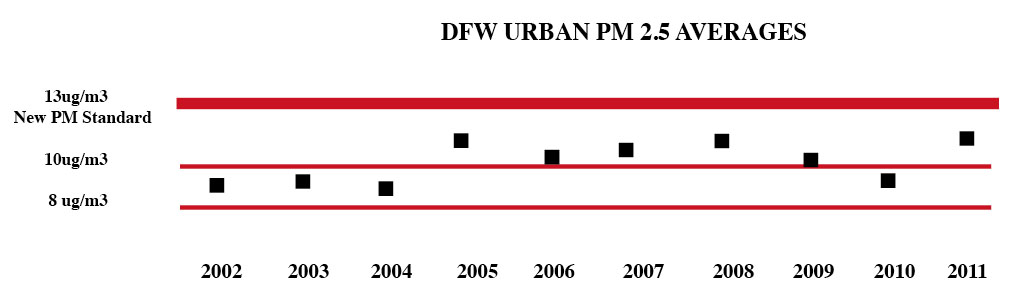
 The new standard is an annual average of 13 micrograms per cubic meter of air, expressed as ug/m3. As far as we can tell from the monitoring records TCEQ keeps online, DFW hasn't come close to exceeding that number. But that's not really as conclusive as it might first sound. There are only two PM 2.5 monitors located in the heart of the DFW metropolitan area. One is on /Hinton Street near Mockingbird and Harry Hines in Dallas and the other is at the Haws Athletic Center location just north of downtown Ft. Worth. All others are in far southern Ellis County, Kaufman County, or Johnson County and act as "background" monitors to track PM pollution coming in or leaving urban DFW. In contrast, there are at least nine ozone monitors located in urban/Suburban DFW .

Tracking the two central city core monitors over the last ten years shows a slow but steady rise in the average PM 2.5 levels being recorded, staring at a little below 9 ug/m3 in 2002 and ending with an 11.01 last year. That's an increase of almost 2 ug/m3 in a decade. 2011 was a drought year and so there was probably more dust in the air. But records show other years where annual averages were in the high-10 to 11 ug/m3 range. What they also show is that these higher levels all come after 2005. In fact, across the board, at all the DFW monitors recording PM levels from 2004 to 2005, there was a statistically significant jump from annual averages in the high 8 ug/m3 range in 2004 to over 11 ug/m3 by the end of 2005. And while some monitors came back down, the two central city monitors have stayed up – particularly at the Ft. Worth site. So what happened in 2005? There was a Mexican volcano eruption that summer, but it ended. The higher PM averages in North Texas didn't. It was too soon to see the effects of urban drilling, although that may play a part in keeping the Ft. Worth levels higher now. Whatever it was, it makes a clear bright line that separates the pre-2005 lower numbers from the post-2005 higher ones.
Last year's average of 11.58 ug/m3 at the Dallas site was the highest at that monitor, or any other, in the last ten years. It's less than 1.5 ug/m3 away from breaking the brand new PM standard of 13. That same monitor has already seen a 2.25 ug/m3 increase in annual averages since 2002.
EPA says don't worry, but we'd keep our eyes on those long term trends.
 The Obama administration is banking on the impact of new power plant rules, cement plant standards, and other emission-affecting regulations to lower PM levels over the next eight years. And that could be a good bet. One of the things that also sticks out from the limited amount of DFW PM data is how much of a drop there's been at the Midlothian monitor located north of the TXI cement plant over the last five years after reaching a peak in 2008. That was the year TXI decided to shut down its four obsolete wet kilns that burned hazardous wastes and rely solely on its newer and generally less polluting dry kiln. In 2008, the Midlothian monitor recorded an annual level of 10.7 ug/m3. Last year it recorded an annual average of 8.0. That's progress.
EPA Lowers National Particulate Matter Standard, World Doesn’t End
 In what will probably be one of the most important environmental health decisions of the Obama Administration, the EPA is proposing to reduce the national ambient air standard for what are called "fine particles" of particulate matter, or soot, a pervasive form of air pollution that is linked to an increasing number of ailments ranging from respiratory illnesses, to heart attacks, to Autism, and brain damage.
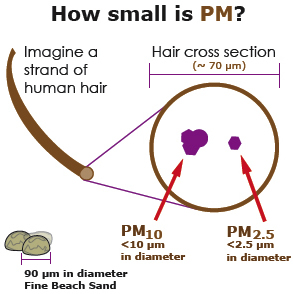
Particulate Matter 2.5, or tiny bits of soot that are 2.5 microns or less in diameter (a typical human hair is 50 microns) comes from the combustion process – gas-powered cars, diesel trucks, cement plants, utility plants, or boilers or furnaces of any kind.
Sand dust, at 90 microns in size, is much, much larger, so we're not talking about "EPA regulating dust." PM is an industrial pollutant. And study after study has shown that it kills and injures people even at levels that up until Friday were considered legal and "safe."
PM is so insidious because not only is it a toxin in its own right, it also acts as a tiny suitcase for all the by-products of whatever combustion made it. Coal or cement plant soot might contain Mercury or dioxins. Car soot could have Benzene residues. And these hitchhiking pollutants are carried deep inside the lung by the soot, where they stay, doing damage for years.
In a Boston Globe piece running thursday night, Dr. Albert Rizzo, chairman of the board of the American Lung Association, was quoted as saying that, "The science is clear, and overwhelming evidence shows that particle pollution at levels currently labeled as officially `safe' causes heart attacks, strokes and asthma attacks.
The new rule would set the maximum allowable standard for soot at range of 12 to 13 micrograms per cubic meter of air. That's the upper level of what the EPA's own panel of scientists recommended (11-13) without breaking the law by disregarding the panel's range as the Bush EPA did in 2006 when it decided to retain the 1997 standard. That annual standard was 15 micrograms per cubic meter. That doesn't sound like much of a reduction (17%), but it's the difference between a standard that embraces the newest science versus a 15-year old one that was not considered protective of human health. It could also mean the difference between metropolitan areas like DFW being given the all clear or classified as "non-attainment" for PM pollution, the same way it's in non-attainment for ozone, or smog pollution.
That would mean the region would have to put together a plan to reduce PM pollution, and of course that could mean opportunities to press for more modern controls on the Midlothian cement plants, east Texas coal plants, and other large PM polluters. One of the first steps will have to be putting more PM monitors in the DFW region – there are only eight now and three or four of those would be considered "background" sites, that is they monitor what's blowing into DFW, but not what residents are breathing.
Since monitoring began in 2000, annual highs in DFW have ranged mostly in the 20 and 30 microgram range, with forays into the 40s and 50's mid-decade. You can use this TCEQ website to track the four highest PM readings in DFW and the rest of the state for each of the last 12 years and this one to track daily readings – although both suffer from an obsolete color-coded alert system that underestimates health damage at lower levels of exposure.
In March, the Dallas Morning News compared DFW's mostly "moderate" levels of PM pollution to the most recent studies and concluded that local populations were at increased risk of heart attacks and strokes. It's not clear yet how EPA will enforce the standard or the timeline it will use but you can be sure it'll be generous since the Administration was forced to release this new standard by court order in an election year. That's because PM pollution is as widespread as ozone pollution and the measures necessary to reduce it could mean a long march toward modernizing many industries. t’s going to be a big step forward,” said Frank O’Donnell, head of the DC-based Clean Air Watch in the Washington Post article the broke the story. “This could help frame the national effort to clean this up for at least a decade.”
Think about how much effort has been directed at reducing smog in DFW over the last 20 years – HOV lanes, vapor recovery systems at the gas pump (put not necessarily at the gas well) and every paint shop, pollution controls on the Midlothian cement kilns, coal plants and other large industries.
It's probably going to take the same kind of all-inclusive slog to achieve compliance with this new standard, so the Obama Administration isn't gong to rush things. Despite opponents claims that these kinds of standards cost jobs, the opposite is actually true. Capital investment goes up because businesses are modernizing and putting on new control and implementing more efficient processes. Local jobs are created when those are installed. Waste is reduced. Operating costs often decrease. Despite being forced into the 20th Century by federal regs and citizen action, the cement industry in Midlothian has reduced emissions while also increasing manufacturing capacity. The same thing has happened in other industries.
Apparently the EPA is counting on the fact that previous rules aimed at other pollutants and problems have steadily been reducing PM pollution as a beneficial side effect, so the ramping up won't be as dramatic as it might have been. The proposed new standard will get published in the Federal Register and then finalized by next December 14th, so that no matter who wins in November, these rules seem to be on track. For a great primer on PM pollution in general and the history of today's decision, go check out Frank O'Donnel's Clean Air Watch website. Read More
1st National Disease Cluster Conference This Fall
 A seven-year old coalition of scientists, activists and health professionals are hosting the nation's first Disease Cluster Conference in Washington D.C. September 12-14th to provide a forum for networking and information sharing among the growing number of people doing work around what appear to be dense concentrations of specific illnesses that may or may not have environmental causes. According to the National Disease Cluster Alliance, "this networking opportunity is not just the conference itself, but also the conference planning process, which will purposely be longer than usual in order to give planning participants an opportunity to interact on issues with low emotional content before broaching more controversial topics. An explicit goal is to build trust among the various stakeholders of disease cluster response." You can find out more about the Conference at the group's website here. A disease cluster is defined by The Centers for Disease Control and Prevention (CDC) as “an unusual aggregation, real or perceived, of health events that are grouped together in time and space and that is reported to a public health department." The NDCA says " It’s estimated that every year there are approximately 1,000 public requests for investigations into suspected cancer clusters. This staggering figure does not even include cluster concerns about diseases and conditions other than cancer, such as autism, birth defects, multiple sclerosis, or Parkinson’s disease."