air toxics
Nation’s Only Public Hearing on Roll Back of Cement Plant Rules Scheduled for Aug 16th in DFW
 Environmentalists are angry at EPA for giving the public less than two weeks notice prior to the nation's only hearing on a rollback of new air pollution rules for cement plants that the agency says could save thousands of lives annually, including many in DFW.
One of those who came in 2009, and vowed to show up again on the 16th was Ft. Worth resident Margaret DeMoss, who was instrumental in getting her city to adopt a "green cement" policy to reduce pollution from obsolete Midlothian cement kilns in southern DFW.
She also noted that in 2009, when the rules were being proposed, there were three national hearings coast to coast. Now that the rules are being weakened, there's only one.
"It's outrageous that the EPA would schedule this hearing at the last minute and in only one location in the nation; lot of other regions suffer downwind from cement kilns. Who will speak for them?"
Downwinders at Risk and other community groups repeatedly sued to get them enforced. That effort resulted in 2010 emission rules that were hailed as the largest single advance in air quality for the US cement industry, and were universally supported by citizens living near and around the nation's cement plants.
They had already passed all necessary regulatory review, just overcome their last legal hurdle, and were on their way to President Obama for his signature and implementation by 2013 when they got yanked by the administration's Office of Management and Budget earlier this year.
When the rules re-emerged, their enforcement was pushed back to 2015 and their strict Particulate Matter pollution provisions were considerably weakened.
According to EPA's own health impact studies for the rules, that two-year delay will cause at least 2000-5000 premature deaths nationwide.
Despite a halt in the burning of hazardous wastes at local cement plants in 2010, MIdlothian remains the home of the largest concentration of cement manufacturing in the entire U.S.
Three large cement plants – TXI, Holcim, and Ash Grove – are still the largest point sources of air pollution in North Texas, generating thousands of tons of air pollution.
Since DFW is downwind of Midlothian, Metroplex residents are exposed to more cement plant pollution than any other metropolitan area in the country, and represent a disproportional number of these 2-5000 annual deaths that EPA estimates will occur because of its rules delay.
"If these revisions are adopted, DFW residents will be paying a high price for the Administration's retreat," said Schermbeck. "That's why we must make our objections heard now."
He urged those that want to speak at the August 16th hearing to reserve a five-minute slot with EPA coordinator Pam Garrett by e-mailing her at garrett.pamela@epa.gov or calling (919) 541-7966
Thank you, It WAS a Watershed Moment in the Dallas Drilling Fight
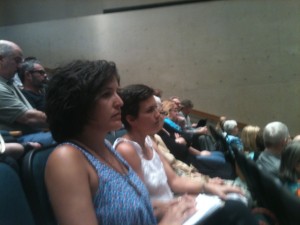
 Yesterday's Dallas City Council briefing on a new gas drilling ordinance was supposed to be a showdown between dueling spokespeople for pro and anti-fracking arguments. And it did provide lots of memorable exchanges and statements. But the most dramatic moment of the day came courtesy of the audience itself.
Dallas municipal law attorney Terry Welch was coming to the end of his presentation on why the recommendations from the city's task force should be strengthened: If we're wrong and fracking turns out to be completely safe, then you can always come back and liberalize strict regulations. But you can't undo the damage once drilling takes place with insufficient safeguards. Err on the side of public health and safety.
And with that, 90% of the packed room erupted into at least 60-90 seconds of continued and loud applause. But that wasn't the moment.
Because he had ended early, even after this round of applause, Welch had time left. Mayor Rawlings noted that and said something to the effect that "If you want to keep applauding for 4 more minutes I won't objec…." The last words of that sentence had not even left his mouth before the crowd took him up on his offer, began clapping wildly again and within seconds jumped to its feet with a sustained standing ovation that went on for the longest time. It was one continuous loud and kinetic vote in favor of doing more that was aimed directly at the Mayor and Council. That was the moment.
This was no public hearing, but the public most certainly was heard. It was the first time the Council had seen the depth and breath of support for stronger drilling rules. The pent-up energy from that applause was like a Blue Norther hitting the Council horseshoe straight-on.
Likewise, it was the first time the Council's constituents had seen the depth and breath of the pro-drilling members' belligerence and hopelessly out-of-date attitudes. It produced a lot of head-shaking.
We hope to bring you selected video from the meeting over the next couple of days. Meanwhile, here's a pretty good summary from the live blogging the Morning News was posting (do tell!), as well as a more sedate article for the paper itself.
Some highlights:
– You Care. There were so many of you – in August during work hours – that they had to move the meeting from the smaller briefing room to the Council Chambers, which were quickly filled too. It was a tremendous turnout. Thank you.
– Industry isn't satisfied. It's clear now that industry is trying to rollback the required distances between homes and wells even further than what the city's Task Force recommended after their last-minute collapse in February. A variance of 750 feet is no longer adequate. Now they want 600 feet. That's 400 feet closer than a strip club is allowed to get to a home in the City of Dallas.
– The council most ardent proponents of drilling share Ireland's view that the on-going national debate has been settled in their minds, and there are no serious hazards to fracking in urban areas.
– Mayor Rawling is very much engaged in this process and issue. He was attentive, asked good questions, and kept the lengthy proceedings flowing smoothly but democratically. Whatever else you may think of him or his motives, he's focused and direct on this subject.
– Citizen advocates Scott Griggs, Sandy Greyson, Angela Hunt and Carolyn Davis all asked great questions and provided a counterbalance to the Troglodyte contingent of the Council. You might want to drop them a thank you note.
– "Sulfuric Sheffie" Kadane – In what was the most jaw-dropping exchange of the day, Councilmember Kadane asked Welch if he knew what kind of chemicals would be spilled at a fracking site. Not waiting for an answer, he offered not benzene, or toluene, or diesel fuel, but Sulfuric Acid. Perfectly harmless stuff! We use it to clean our swimming pools! A little Sulfuric Acid wasn't going to hurt anyone.
– Jerry "El Conejo "Allen – Councilman Allen was obsessed with all the "rabbit holes" Welch and other could go down in terms of the hazards of fracking and thought he had all the ammunition he needed from spending a couple of hours going down some of them via Google. These rabbit holes are known to the rest of us as research. Did Welch know that the Trinity River was full of treated sewage right now?! Did he know how many regulatory agencies oversaw fracking? Did he know that thousands of people die every year from exposure to chemicals in the home? Wasn't fracking only dangerous because people were talking about it? Above all else, he kept reminding everyone that the gas operators had already paid the city 34.8 million for lease rights and not only do they deserve something in return but that's a lot of money!
Angela "Law and Order" Hunt – The most revealing exchange all day was Hunt's cross examination of hostile witness Ed Ireland, the gas PR hack Kadane had chosen to give the industry arguments, over full disclosure of all chemicals being used in fracking. She asked Ireland if he had any problem with Dallas writing an ordinance that would demand the listing of every single chemical being used on site. Not at all, Ireland said. Of course, he added, the operators themselves don't always have the last say. They hire contractors like Haliburton to come in and actually do the fracking and THEY might have a problem disclosing their fracking fluid recipes. Three times Hunt posed the same question, never letting Ireland escape a conclusive, definitive answer. Do you support full disclosure? And Ireland gave three slippery answers that finally pulled the curtain away from the industry's premeditated deception.
We're gaining momentum. By the end of he day, there was such a stark contrast between the advocates and arguments for more protections versus the Hollywood-scripted arguments of the other side, that you could almost hear the collective council pivoting to our side, despite no vote being taken. We can't afford to be over confident, but if we keep the pressure on, we can win this fight.
Next stop – We need at least one, if not two evening public hearings on the ordinance. As you contact your city council reps, please be sure to include this request.
The ‘long, sordid history’ of Texas’ most brazen polluter
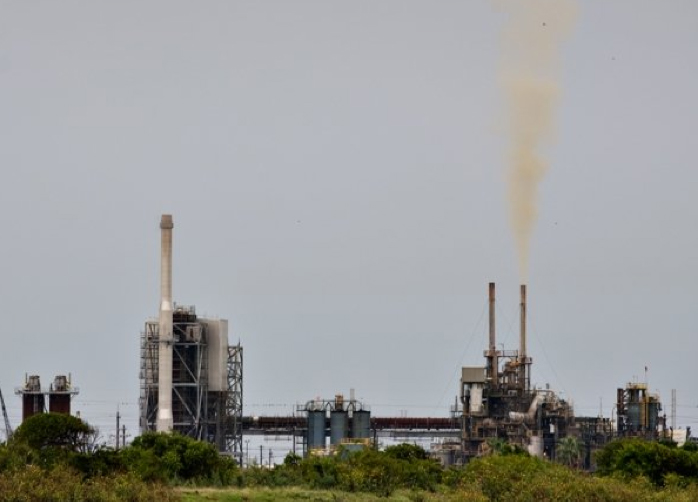 …is Gulf Chemical & Metallurgical Corporation, a "recycling" operation in Freeport on the coast where magma-spewing smokestacks are just business as usual. As chronicled by the Texas Observer's Forrest Wilder, it's also a case study on why the Texas Commission on Environmental Quality is an inadequate enforcer of the law. Not for the faint of heart or folks who think the government is already too tough on polluters.
Think Nationally. Act Rationally. Stop the Frack Attack in Dallas
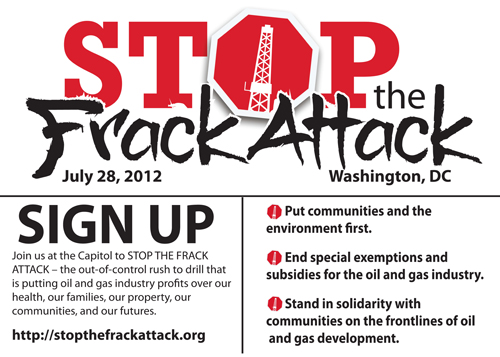 We want to extend a big ol' thank you to all those Barnett Shale residents who are in our nation's capital right now getting ready to attend the largest national rally on fracking ever held in the US.
Former DISH Mayor Calvin Tillman, Earthworks' Sharon Wilson, former Decatur resident and gas victim Tim Ruggiero, are all among those up in Washington, giving interviews and raising constructive hell with the Texas Congressional delegation. Along with Don Young and CANDO, Gary Hogan and the folks at the North Central Texas Communities Alliance, and Susan Read in Grand Prairie, these are the most stalwart heroes of our local Shale fight.
Going on seven years now, they've been taking on the Oil and Gas industry in Texas (spend a moment thinking about what that means) on behalf of not only their own neighborhoods, but ours as well. And they started without all the evidence we have now about the hazards of fracking – known and unknown. All they had was their common sense and intuition.
And it was very lonely. For so long it was only the Barnett Shale that was in play. Only the middle of the country, in places where the nation's press wasn't headquartered, where celebs didn't have their summer homes, where, it seemed, nobody that could help them, cared about them.
Traditional environmental groups who they thought might side with them were instead being funded by their opponents because "natural gas was so much cleaner than coal." Non-traditional ones, like Downwinders we're sorry to say, were just not paying enough attention or had their own full agendas. So this first generation of fracking opponents had to start from scratch, with none of the resources, expertise, or support that just about any other environmental cause could expect to receive.
But they kept at it. And they built a huge library of real world knowledge about fracking. Not the theoretical PR clams, but what actually happens to people and land when the rigs show up. Their knowledge was so essential that a budding film maker named Josh Fox knew he had to make the Barnett Shale one of the stops to talk with them for his new film "Gasland." Their knowledge was going national just like the drilling.
Because as usually happens, greed got the better of an industry. The gas companies couldn't stop with the Barnett, or other rural western plays. They had to go east, to Pennsylvania, to New York, within hours of Manhattan. They began to imperial the summer homes, or water sources, or views, or health of very rich and powerful people who have access to more resources than your average angry DFW resident. Fracking got more media attention. It got more research attention in academia. It's becoming a part of popular culture. David Letterman is now ranting about fracking.
And tomorrow's rally in DC makes it official – fracking is now a national environmental controversy that's forcing citizens to build a national environmental movement. At the center of that movement, and somewhere in the center of that crowd tomorrow, stands those folks from the Barnett Shale who are finally seeing their cause get the kind of attention it deserves. It will be a banner day. Better late than never.
How can you help that movement if you're not in DC this week? By exploiting every opportunity to use what we now know about Fracking thanks to those early activists.
The largest city in the Barnett Shale is in the final stretch of writing a new gas drilling ordinance. This Wednesday at 1 pm on the 6th floor of Dallas City Hall, the City Council will be receiving its second briefing on the hazards of fracking. We need you there to show the Council you're interested in seeing a strong and protective ordinance. In Dallas, we have a chance to make progress in making the industry begin to pay for its own pollution, to set precedents that will be important. We can win. We can make things better. We can honor those whose work has given us a multitude of evidence of harm by using it to grab this Dallas ordinance by the horns and make the most out of it. Want to support the national anti-fracking movement? Think Nationally. Act Rationally in Dallas.
What To Expect When You’re Expecting Gas Drilling
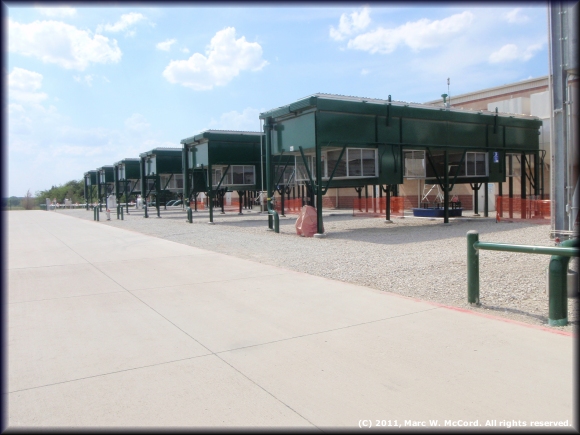
If you're a Dallas resident and you want to find out more about the kinds of new facilities that might be located near you if gas drilling is allowed in your city per the new ordinance the Council is debating on August 1st, here's a item of interest from West Virginia, where operators are already fracking.
"Sulfur dioxide, carbon monoxide and formaldehyde are some of the chemicals Chesapeake Energy is likely to pump into the air in Ohio County from its numerous drilling sites, company information states.
Earlier this year, Chesapeake officials confirmed plans to build local compressor stations that may release these and other chemicals into the atmosphere. Now, the company is identifying "potential to emit" levels for several potentially hazardous materials from its well drilling sites.
The amounts of the particulates that may be released at the four sites slightly vary. The carbon monoxide projections, for example, range from 40 tons per year to 61.5 tons per year to be released from a single site.
In addition to the pollution from the well sites, Chesapeake also will release emissions from its local compressor stations. Chesapeake, in a legal advertisement earlier this year, confirmed the "potential to discharge" the following amounts of these materials on an annual basis from the operations at the compressor stations: carbon dioxide – 93,800 tons; nitrogen oxides – 82.96 tons; carbon monoxide – 16.87 tons; methane – 86.64; carbon dioxide equivalent – 95,667 tons; benzene – 0.33 tons; and formaldehyde – 3.22 tons."
Formaldehyde and Benzene are both carcinogens. Carbon Dioxide is the primary greenhouse gas pollutant, and methane is right behind. Nitrogen Oxide is the primary component of smog in DFW. All this – 93,000 tons a year of air pollution – from just one gas compressor. Where in Dallas would you propose to put a facility that spews that much air pollution? And how would you keep it from adding to the chronic air quality problem the City already has? And then what about the fact that the operators might not need just one, but three, or five, or ten of these compressors in Dallas? It's not uncommon to build complexes that house as many as a dozen or more locomotive-size compressors in the Barnett Shale, which includes at least the western half of Dallas.
When you allow drilling, you're allowing everything else that follows drilling, including compressors and their pollution, storage tanks that leak copious amounts of the same kind of pollution, pipelines that can use eminent domain to run through your front yard, and a host of other hazards, some of which we know about, some of which we no doubt have not yet discovered. Gas mining is not conducive to neighborhoods or attracting new, non-polluting development. If Dallas City Hall doesn't know this now, it most certainly will learn it later.
Groups Demand DFW Hearing on EPA’s Rollback of Cement Plant Rules
 In a letter sent Tuesday, ten grassroots and national groups from across the country, including Downwinders at Risk, joined together to call on EPA to schedule a public hearing in Dallas-Ft. Worth on its proposed rollback of cement plant emission rules.
In publishing the revised rules in the Federal Register last week, EPA proposed only one public hearing be held on August 2nd in North Carolina, where there is not a single operating cement plant, although the proposed new giant Titan cement plant is trying to win permit approval to operate near Cape Fear.
Downwinders was joined by Montanans Against Toxic Burning out of Bozeman; Montana Environmental Information Center in Helena; Selkirk, Coeymans, Ravena Against Pollution (SCRAP) in upstate New York; California Communities Against Toxics, based in Rosamond, the Stop Titan Action Network, Penderwatch and Conservancy, Cafe Fear River Watch, and North Carolina Coastal Federation, all from the Tarheel state, as well as Earthjustice, the DC-based legal defense team that has partnered with Downwinders and many of the other groups for 20 years in trying to get these new rules implemented.
In 2009, DFW was one of three metropolitan areas that hosted public hearings on the then-proposed rules, referred to as National Emission Standards for Hazardous Air Pollutants, or NESHAP. Over 200 people attended at the impossible-to-get-to DFW Airport Hotel and almost 100 testified – more than participated in the DC and LA hearings combined. All but five testified in favor of strong EPA regulation of cement plant emissions.
DFW is also downwind of the nation's largest concentration of cement plant manufacturing capacity, with three large plants and a total of six kilns operating today in Midlothian, in Ellis County.
EPA's changes to the rules, which include moving the compliance deadline from 2013 to 2015, as well as loosening the Particulate Matter standards and eliminating real time monitoring of PM pollution, were proposed just as the rules were about to be finalized and signed into law. No one at EPA can explain exactly why. No judge asked them to. The public didn't demand it. The Administration seems to be going out of its way to find favor with the cement industry even as the EPA is still carrying on a massive national enforcement initiative against it.
If you haven't done so already, please click here and send your comments opposing the changes in the cement plant emission rules. You only have until August 17th.
The full text of the groups' letter:
We, the undersigned groups, respectfully request that the Environmental Protection Agency hold a public hearing in Dallas, TX on its recently re-proposed NESHAP rule for Portland cement kilns. We request that this hearing be held in addition to the hearing scheduled at the Research Triangle Park facility in North Carolina.
There are no cement plants operating in North Carolina. It is incredibly important for the EPA to hold at least one public hearing in a location that is directly impacted by the toxic air pollution that this NESHAP rule addresses. Dallas is an appropriate additional hearing location for numerous reasons. First, there are multiple cement plants in the vicinity. Second, there is a precedent for public hearings on this rule in the region— on June 17, 2009, the EPA held a productive public hearing in Dallas on the Portland cement NESHAP. Third, Dallas's central location is more convenient for other impacted citizens from across the country who wish to travel to provide testimony.
We have worked for more than a decade to secure strong protections against the emissions of mercury, arsenic and other toxic air pollutants that cement plants emit. We would appreciate the opportunity to continue our involvement on this important issue at an additional public hearing in Dallas.
Four Years Later, State Gets Around to Issuing Clean Air Plan for Exide That Won’t Apply
In 2008, the EPA issued a new lead-in-air standard for all U.S. lead smelters.
In 2011, the Texas Commission on Environmental Quality finaly submitted its first proposed plan to meet that new standard in Frisco, Texas, host of the Exide lead smelter. It was rejected as inadequate by EPA on the same day it was submitted.
In May of 2012, the City of Frisco and Exide reached a settlement that commits the company to ceasing the operation of its Frisco smelter on December 31st, 2012.
Last week, the Texas Commission On Environmental Quality released its second plan to meet the 2008 EPA lead-in-air standard at the Exide smelter in Frisco. Its effective date is December 31st, 2014, or two years after Exide will have closed per its agreement with the City of Frisco.
The plan and the accompanying Agreed Order doesn't incude any fines or enforcement measures that address the dozens of violations detailed by TCEQ inspectors at the Exide smelter just last year. Nor does it address the closure and adequate clean-up of the smelter once operations cease.
Between 2008 and the end of this year, Exide will have released an estimated 14,000-16,000 pounds of lead into the air in Frisco.
If you're thinking that this TCEQ planning document is irrelevant, you'd be pretty close to summarizing not only this episode, but decades of state oversight. And yes, this is why it's important to have citizens suing Exide themselves to enforce the law rather than Waiting for Godot TCEQ.
Another Day, Another White House Retreat on Clean Air
 In an election year, apparently no environmental initiative is safe from the Obama White House.
You may have missed this because it was one of those late Friday government announcments that officials like to use to bury bad news, but the EPA is going to consider softening those much-ballyhooed coal plant Mercury emissions rules that it fought so hard to get only last year. And because "consider" in this case means "we're going to do it," you can add these rules to the growing list of those clean air efforts in this supposedly environmentally-friendly administration that have bitten the dust because of political interfernce.
One of the reasons this rule is being rewritten is to satisfy the less-than-state-of-the-art White Stallion coal and pet coke-fired power plant being proposed for Matgorda Bay, whose owners have campaigned against the new rules since Day One. They say the rules are too strict and can't be met, despite being based on the track record of top performers in the utility industry. You will be unsurprised to learn that the Texas Commission on Environmental Quality is a co-facilitator in that campaign, up to the point of being so enthusiastic in its unquestioned support that it had to be ordered by a state judge to reconsider the first air permit it gave the plant because of the lack of any public participation.
White Stallion is going to be built less than 20 miles from the boundary of the eight-county Houston "non-attainment area" for ozone, or smog. Regulations on new sources of industrail pollution are tighter inside such areas than outside. That's pretty much all you need to know about the owner's commitment to using best technology. It's the same problem DFW used to face with the Midlothian cement plants and Ellis County until Donwiwnders petitioned, and EPA agreed, to include them in the North Texas non-attainment area.
Anything that makes it harder for Houston to meet clean air standards, also makes it harder for DFW to do the same. But this rollback is also a shame because of this administration's gap between promise and performance when it comes to critical upgrades in national polluiton standards – ozone, particulate matter, cement kilns and now coal plants. When push comes to shove, there seemingly isn't any polluter this White House won't do a favor for between now and November.
Low Birth Weight Pregnancies 25% More Likely Within 1.5 miles of Fracking
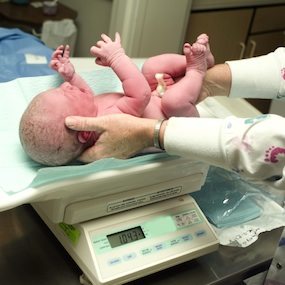 A mother's exposure to fracking increases the chance a a low weight birth by 25%, according to a new study by Elaine Hill, a doctoral candidate at Cornell University. Hill's research also found a 17% increase in "small for gestational age" births and reduced health scores among newborns whose moms lived close to fracking sites.
“Unconventional Natural Gas Development and Infant Health: Evidence from Pennsylvania” is the working title of the study, which has not yet been peer-reviewed or journal-published. Hill used data from 2010 and focused on those living up to 1.5 miles from gas development sites. Pennsylvania increased its unconventional natural gas wells from 20 in 2007 to 4,272 by the end of 2010.
Hill publicized her findings at a public hearing in New York state, which is considering new regulations for fracking. She decided to come forward now, rather than wait for up to two years for the review process to accredit her research because she believes her study has implications policy makers need to incorporate into those regulations.
“My study is robust across multiple specifications and it indicates that our future generation may be seriously harmed. I couldn’t possibly value my career over their well-being,” Hill said by email last Thursday.
We already have a Colorado School of Public health study released in March that shows a 66% higher chance of getting cancer if you live within a half mile of a fracking site. Hill's study is the first to track health effects up to a mile and a half away.
These reports are in addition to the hazard of earthquakes now officially linked to fracking waste injection wells by the US Geological Society, and the risk of getting silicosis from breathing in illegal levels of sand particles noted by industrial hygienists – both from earlier this year. All of this is new research that didn't exist before 2012. What other hazards are we ignorant of this year?
Just another reason why you should be at Dallas City Hall at 9 am on Wednesday, August 1st for the Thrilla on Marilla.
Downwinders and Frisco Unleaded Send Notice: We’ll Enforce the Law if EPA Doesn’t
Our news release says it all:
Citing a lengthy list of unresolved federal violations, citizen groups tired of waiting for EPA to enforce the law at the Exide lead smelter in Frisco are gearing up to do it themselves.
Members of Frisco Unleaded and Downwinders at Risk gathered at 9:30 this morning in front of the Frisco Post Office on Stonebrook Parkway to mail "Notice of Intent" letters to Exide corporate representatives, EPA, and state environmental administrators. The action initiates the official 90-day notice required under federal law before the groups can step into the shoes of regulators and file a "Citizens Suit" to prosecute the smelter for violating the Clean Water Act, Clean Air Act, and the Resource and Conservation Recovery Act.
Although the smelter and the City of Frisco reached a settlement in May that required the 48-year old facility to cease active operations by the end of this year, there have been no fines or clean-up orders issued by either the EPA or the Texas Commission on Environmental Quality despite dozens of violations at the smelter dating back to 2009, including dumping lead waste into Stewart Creek, and burying hazardous waste without a permit.
"There are chronic contamination problems at Exide that still pose a hazard to Frisco residents and property. There's also a long history of law-breaking that the company must be held accountable for," said Colette McCadden, Secretary of Frisco Unleaded, "It's just unfortunate we have to file suit ourselves to make it happen."
In their 17-page Notice Letter the groups state they're acting now "to ensure that past environmental violations are addressed, and contamination at Exide's Plant is adequately and fully remediated to eliminate the substantial and imminent threat to public health and the environment resulting from such contamination," as well as, "to prevent future environmental violations and insure ongoing actions at Exide's Plant, including any clean up efforts, are conducted in such a way so as to prevent further contamination of the surrounding community."
There are 182 pages of attachments supporting the allegations made in the Notice Letter, including reports from both the EPA and TCEQ inspectors citing the smelter for numerous state and federal violations involving water quality, air quality, and handling and disposal of hazardous wastes.
"We're ecstatic that Exide will be closing its smelter," said Frisco Unleaded Co-Chair Meghan Green. "But as part of the settlement that makes that possible, the City of Frisco is leaving the fate of a Superfund-like site in the middle of our town up to Exide, EPA and TCEQ, – the same government agencies that allowed things to get so bad in the first place. Our lawsuit is the only way Frisco residents will have any guarantee that things will be done right this time."
In June, the TCEQ missed a deadline to submit a final clean air plan for the smelter before it closes, along with a chance to issue an enforcement order outlining what steps Exide must take to address long-standing violations uncovered by inspectors.
According to McCadden, "Frisco Unleaded and the Downwinders at Risk Education Fund view this lawsuit as an action of last resort after decades of regulatory failure concerning the Exide lead smelter."Frisco Unleaded is an affiliate of Downwinders at Risk that was founded only last August. Both groups are seen as instrumental in changing Frisco city policy from one of accommodation with the smelter last fall, to eventually pursuing a course of action to close it.Federal statutes require that groups that want to file Citizens Suits must give the targeted polluter and the appropriate agencies 90 days for the option of addressing the complaints outlined in a Notice Letter. That means that the groups can't officially file suit until at least October. Meanwhile, the EPA could act on its own or ignore the Letter."Up to now, the EPA has been alarmingly nonchalant about this outlaw smelter and the public health threat it represents," said Downwinders at Risk Director Jim Schermbeck. "We hope the agency will use our letter as a wake up call and finally enforce the law. We just want them to do their job."