Posts by Downwinders At Risk
German Cement Plants Now Mostly Waste Burners
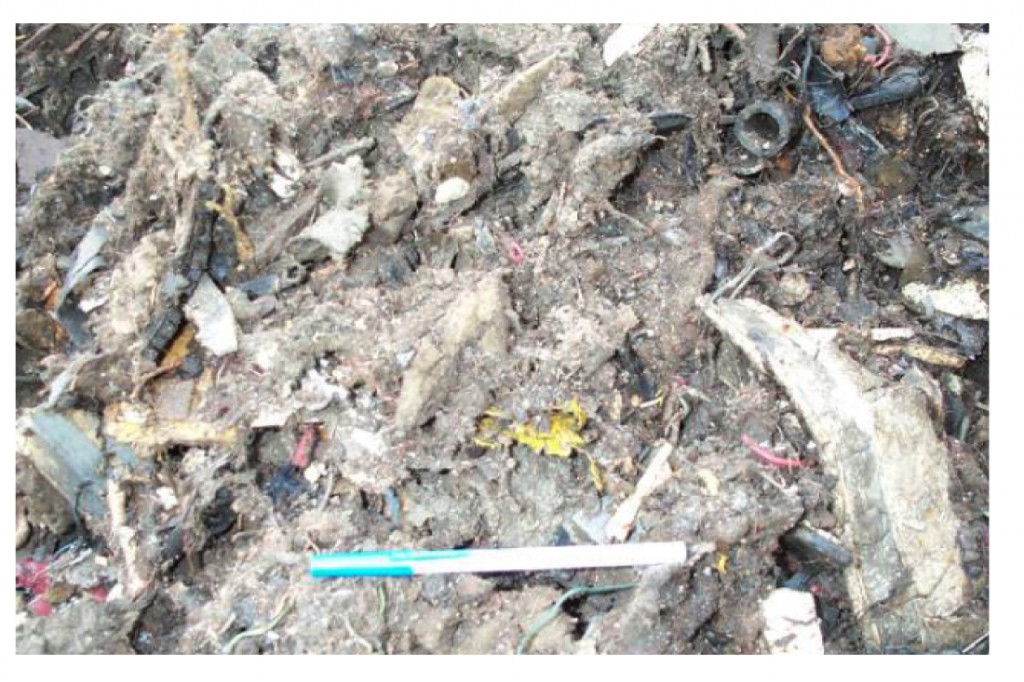 The cement industry calls it "alternative fuel" or "co-generation," but it's really just waste burning. This was true during the 1980's and 90's when the cement industry began converting kilns to large hazardous waste incinerators, and it's true now that the industry is trying to turn kilns into giant garbage incinerators. In one permit request after another across the country, cement plants are adding not just used tires and oil, but plastics wastes, automobile interiors and anything else they can get in bulk to the list of "fuels" they can burn. Locally, TXI's 2011 "permit amendment" allows the Midlothian kiln to burn a long lists of industrial wastes. To see where this leads, look no further than Germany, where fully 61% of all fuel consumed in that nation's cement kilns in 2011 was provided by plastics, used tires, and used oils. It's worth noting that European emissions requirements are usually stricter than EPA's, but the figure is still alarming since it was only about 30% in 2000.
“How your great grandmother’s chemical exposures may affect you”
 In a study published this week, "rats exposed in the womb to five common environmental pollutants passed on DNA-changing attributes that persisted in causing ovarian cancer three generation removed from the original exposure."
It's another example of "epigenetics" – when harmful environmental exposures to one generation can skip a generation or two and show up as health effects decades later.
According to the new study, the five pollutants reprogram how DNA is expressed in the developing fetus' eggs, setting the stage for ovarian disease later in their life.
If you're a Vet, the news is worse. The U.S. Department of Defense helped select the pollutants based on potential exposures in military personnel. They included vinclozolin, a fungicide that's used in the wine industry; a pesticide mixture including permethrin and DEET; a plastic mixture including bisphenol A (BPA) and two widely used phthalates (DEHP and DBP); the industrial byproduct dioxin; and a hydrocarbon mixture called "jet fuel," which is used to control dust on road surfaces.
Researchers at Washington State University exposed pregnant rats to one of five different chemicals alone or in mixtures during a critical time of pregnancy when their daughter pups' eggs were developing. The pups were then mated with males from the same treatment group, and the resulting pups were bred yet again. Only the original generation of pregnant rats had been exposed to the chemicals. The adult daughters and great granddaughters of the dosed animals (called the F1 and F3 generations) were examined for ovarian disease.
In all exposure groups, both the daughter (F1) and great-granddaughter (F3) mice had fewer egg follicles in their ovaries compared to controls, indicating a reduced pool of available eggs. Both generations – but particularly the F3 animals – also had an increased number of ovarian cysts compared to controls.These findings are characteristic of Polycystic Ovarian Syndrome (PCOS) and Premature Ovarian Insufficiency (POI), which are believed to affect 18% of all women.
Other diseases, including allergies and asthma; liver, gastric, prostate and colorectal cancer; and psychiatric disorders are thought to have an epigenetic component. This is the first time that epigenetic changes have been shown in association with ovarian disease. This proof-of-concept study used higher doses of chemicals than what people would typically encounter. Future work is needed to investigate whether lower, more environmentally relevant chemical levels also affect ovarian disease across generations of the rodents.
Locally, we're surrounded by sources of one or more of these pollutants, especially phthalates, BPA, dioxin, and hydrocarbons. BPA is the subject of a lot of media attention and just yesterday, the FDA banned its use in sippy cups for infants. Frisco's Exide lead smelter has been a top ten dioxin polluter in Texas over the last decade. The cement plants in Midlothian are also large industrial sources of dioxin, and new permits to burn more "non-hazardous" wastes that turn into hazardous emissions only ensure that will remain the case. On the ground, internal combustion engines from cars and the natural gas industry facilities in the Barnett Shale soak us in hydrocarbons.
Despite the documentation of the epigenetic effect of certain pollutants in recent years, this impact has not yet been incorporated into any risk assessment of a polluting facility by any environmental or public health agency in the U.S. We may be planting the seeds for epidemics of all kinds in the next 20-50 or more years, and it's all perfectly legal now. Once again, the science is way out in front of the regulations. That's why citizens must arm themselves with the latest research. You won't be getting updates on this stuff from EPA or TCEQ. That's also why it's ridiculous for anyone to speak about the "over-regulation" of polluters in this country. We're nowhere close to understanding what the long term consequences are of our actions in allowing so many chemicals into the environment to mix and match with our own biology. In this larger public health sense, pollution is still very much under-regulated in the United States.
Be There
 What Ray says.
Go Fly a Kite
Chinese air quality actiivists are finding all kinds of ingenious ways to get the truth out about how bad air pollution is their country. We've written before about how they're buying their own portable PM monitors and posting the resutls online. Here's a group that's found a way to both make cheap air monitoring devices and really cool pieces of art at the same time by attaching elelctronics and LEDS to kites and getting color-coded real time results.
Energy Dependence: Fracking in Texas Relies on Guar From India
 Because "without guar, you cannot have fracturing fluids," and 85% of the world's guar is grown in a large desert in india. So to exploit American natural gas, operators must rely almost completely on a foreign import.
Coverage of the Exide Lead Smelter Notice Letter
 Frisco Unleaded members Meghan Green and Colette McCadden had a lot of company on Monday when they showed-up at the Frisco Post Office to do some buisness mailing. As a result, our Notice Of Intent to Sue letter send-off to Exide got pretty good coverage.
You can see the Channel 4 story here, the KERA piece here, and the behind-the-paywall DMN article here.
Let's hope this action lights a fire under EPA. Otherwise, it's onto The People's Court in October.
Downwinders and Frisco Unleaded Send Notice: We’ll Enforce the Law if EPA Doesn’t
Our news release says it all:
Citing a lengthy list of unresolved federal violations, citizen groups tired of waiting for EPA to enforce the law at the Exide lead smelter in Frisco are gearing up to do it themselves.
Members of Frisco Unleaded and Downwinders at Risk gathered at 9:30 this morning in front of the Frisco Post Office on Stonebrook Parkway to mail "Notice of Intent" letters to Exide corporate representatives, EPA, and state environmental administrators. The action initiates the official 90-day notice required under federal law before the groups can step into the shoes of regulators and file a "Citizens Suit" to prosecute the smelter for violating the Clean Water Act, Clean Air Act, and the Resource and Conservation Recovery Act.
Although the smelter and the City of Frisco reached a settlement in May that required the 48-year old facility to cease active operations by the end of this year, there have been no fines or clean-up orders issued by either the EPA or the Texas Commission on Environmental Quality despite dozens of violations at the smelter dating back to 2009, including dumping lead waste into Stewart Creek, and burying hazardous waste without a permit.
"There are chronic contamination problems at Exide that still pose a hazard to Frisco residents and property. There's also a long history of law-breaking that the company must be held accountable for," said Colette McCadden, Secretary of Frisco Unleaded, "It's just unfortunate we have to file suit ourselves to make it happen."
In their 17-page Notice Letter the groups state they're acting now "to ensure that past environmental violations are addressed, and contamination at Exide's Plant is adequately and fully remediated to eliminate the substantial and imminent threat to public health and the environment resulting from such contamination," as well as, "to prevent future environmental violations and insure ongoing actions at Exide's Plant, including any clean up efforts, are conducted in such a way so as to prevent further contamination of the surrounding community."
There are 182 pages of attachments supporting the allegations made in the Notice Letter, including reports from both the EPA and TCEQ inspectors citing the smelter for numerous state and federal violations involving water quality, air quality, and handling and disposal of hazardous wastes.
"We're ecstatic that Exide will be closing its smelter," said Frisco Unleaded Co-Chair Meghan Green. "But as part of the settlement that makes that possible, the City of Frisco is leaving the fate of a Superfund-like site in the middle of our town up to Exide, EPA and TCEQ, – the same government agencies that allowed things to get so bad in the first place. Our lawsuit is the only way Frisco residents will have any guarantee that things will be done right this time."
In June, the TCEQ missed a deadline to submit a final clean air plan for the smelter before it closes, along with a chance to issue an enforcement order outlining what steps Exide must take to address long-standing violations uncovered by inspectors.
According to McCadden, "Frisco Unleaded and the Downwinders at Risk Education Fund view this lawsuit as an action of last resort after decades of regulatory failure concerning the Exide lead smelter."Frisco Unleaded is an affiliate of Downwinders at Risk that was founded only last August. Both groups are seen as instrumental in changing Frisco city policy from one of accommodation with the smelter last fall, to eventually pursuing a course of action to close it.Federal statutes require that groups that want to file Citizens Suits must give the targeted polluter and the appropriate agencies 90 days for the option of addressing the complaints outlined in a Notice Letter. That means that the groups can't officially file suit until at least October. Meanwhile, the EPA could act on its own or ignore the Letter."Up to now, the EPA has been alarmingly nonchalant about this outlaw smelter and the public health threat it represents," said Downwinders at Risk Director Jim Schermbeck. "We hope the agency will use our letter as a wake up call and finally enforce the law. We just want them to do their job."

Another “Alternative Fuel” Fire at a U.S. Cement Plant
Following a warehouse of industrail waste that spontaneously combusted at a South Carolina cement plant last month come news from Morga n, Utah that a semi and part of the "auxilary fuel" builing at Holcim's Devil's Slide cement plant caught fire while waste was being pumped from the truck. No injuries were reported. Expect more of these kinds of accidents as mixed industrial garbage is funneled into cement plants as "fuel.".
Follow-up: Homeowners Insurance Won’t Cover Fracking Losses
In the light of Nationwide's decison to quit writing policies for those who lease land to frackers, the Hartford Courant did a quick round of call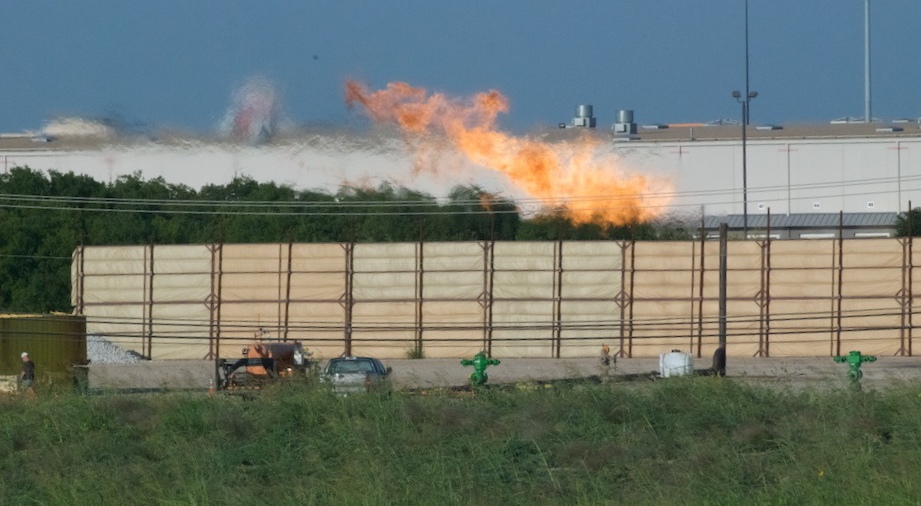 s and discovered that homeowners were already up a creek when it came to any damge from gas drilling they might incur:
"If the ground shifts at a fracking site and breaks the foundation of a nearby home, or if the chemicals taint a drinking-water well, standard homeowner and commercial-property policies won't cover the cost, said Robert Hartwig, president of the Insurance Information Institute, a property-casualty resource and trade group. Standard property-insurance policies cover a specific set of calamities, such as fire, lightning, thunderstorms, ice and hail.
"There's really no distinction here between fracking or any other, say, mining, operation here," Hartwig said. "This sort of thing is not covered by the policy and it never was."
Nationwide Insurance Makes It Official: Fracking is a Bad Risk
 After circulating on citizen group blogs in upstate New York for a day or two, Nationwide Mutual Insurance Company confirmed that an internal memo outlining new prohibitions on insuring individuals or businesses who lease land for natural gas fracking was authentic and reflected company policy. With the disclosure Nationwide becomes the first insurance company to say it won't cover damages caused by horizontal fracturing.
According to the memo,
“After months of research and discussion, we have determined that the exposures presented by hydraulic fracturing are too great to ignore. Risks involved with hydraulic fracturing are now prohibited for General Liability, Commercial Auto, Motor Truck Cargo, Auto Physical Damage and Public Auto (insurance) coverage.”
This prohibition applies to landowners who lease land for shale gas drilling, and contractors involved in fracking operations, including those who haul water to and from drill sites; pipe and lumber haulers; and operators of bulldozers, dump trucks and other vehicles used in drill site preparation. That's a lot of the gas fuel cycle suddenly not covered.
Nationwide is the first to de-couple itself from fracking, but we bet it isn't the last. Some analysts were suggesting that negative publicity surrounding the fracking process influenced Nationwide's decision. Given the discovery rate of new hazards associated with fracking over the last two years, that's not a factor likely to get better with time.
It may be that at by the time all the dust settles, the gas industry will have to depend on some kind of massive government bailout to even be able to get fracking insurance. This is the same problem the nuclear power industry faced 50 years ago. No sane insurance company would offer coverage for a nuclear power plant, so the federal government stepped in and subsidized it in the form of the Price-Anderson Act. Without this literal Act of Congress, there wouldn't even be one nuclear power plant in the U.S.
Insurance companies aren't politically bias. They aren't partisan. They aren't treehuggers. They operate according to cold hard stats. And now those stats say fracking is a very bad risk. So bad that at least one major carrier has stopped even offering policies that cover damage from it.
If, like the City of Dallas, you were hoping to lease your land for natural gas drilling, this is something that should concern you.