Toxicology
ADHD Symptoms More Likely in Children with Lead or Mercury Exposures
 This in directly from Environmental Health News:
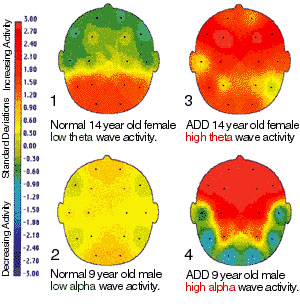
Children exposed to higher levels of mercury or lead are three to five times more likely to be identified by teachers as having problems associated with Attention Deficit Hyperactivity Disorder, according to a scientific study published today.
The study, of Inuit children living in Arctic Canada, is the first to find a high rate of attention-deficit symptoms in children highly exposed to mercury in the womb.
In addition, the Inuit children more often had hyperactivity symptoms if they were exposed to the same low levels of lead commonly found in young U.S. children.
Laval University scientist Gina Muckle said the findings are important because they show for the first time that the effects of mercury in children are not just subtle, but are actually noticeable to teachers. They “may be clinically significant and may interfere with learning and performance in the classroom,” the study says.
For lead, the school teachers reported much more frequent ADHD symptoms at levels far below the CDC's newly developed health guideline. Dr. Bruce Lanphear, of Simon Fraser University in Vancouver, said evidence is mounting that toxic compounds are “shifting children’s behavior...There seem to be a whole host of different toxicants that are associated with ADHD."
One of the most intriguing findings was that mercury was linked to attention deficits while lead was associated with hyperactivity. The difference may be the timing of the exposures: in the womb for mercury and during childhood for lead. The findings "suggest the brain may be sensitive to different environmental chemicals at different times in development," said Harvard epidemiologist Joe Braun.
First, there are no safe levels of lead, but teachers being able to identify ADHD behavior among kids who have levels of exposure "far below" even the new CDC recommendations is disconcerting indeed.
Second, this is why coal plant and cement plant rules to reduce Mercury and lead emissions as much as possible are a good thing and must be implemented ASAP, not delayed.
Third, none of these symptoms have ever been included in an official risk assessment of any cement plant, lead smelter, gold mine, coal plant or any other facility releasing lots of these metals into the environment. EPA regulations lag decades behind the science in terms of plugging in toxicological effects identified in the scientific literature. Over-regulated? No, not even close when you have no idea what kind of health problems your facility is causing.
Finally, the country is seeing an epidemic of ADHD. We express official dismay at this, but as far as we know, little if any attention is being paid by industry or government to try and prevent the condition through limiting exposure to toxins that can cause it, even though, "there seem to be a whole host of different toxicants that are associated with ADHD."
This is not a fatal condition. It's not a disease like cancer, or as serious as a heart attack or stroke. But does anyone doubt the challenges facing a child with moderate to severe ADHD symptoms?
This is one more consequence of pollution you never see in the paperwork, only in real life.
Here’s to Rachael Carson: The First “Hysterical Housewife”
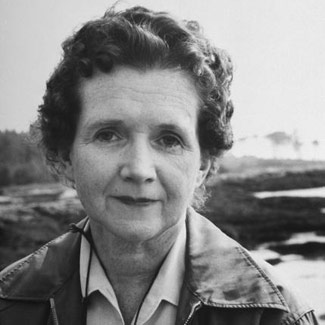 50 years ago this month, Rachel Carson's Silent Spring was published and immediately created a national controversy. It's difficult to put the book in its true historical context now because we take so much of its message for granted, as well as the right of a woman scientist to get it published. But there's no question that in 1962 it was a very subversive act for many different reasons.
There's an argument to be made that Carson didn't invent the modern American environmental movement. That it was the result of many different factors and people. All true. But there's also a compelling case that Carson's fight on behalf of her scholarship became the classic template for how citizens and industry and government would interact with each other in response to any environmental challenge coming from the grassroots for the next half-century.
Exhibit A: The New York Times Magazine piece this week on Carson. Consider:
1) She was the first to popularize the notion that we have a fundamental right to air and water that won't kill us.
“We are rightly appalled by the genetic effects of radiation. How then, can we be indifferent to the same effect in chemicals that we disseminate widely in our environment?
“If the Bill of Rights contains no guarantee that a citizen shall be secure against lethal poisons distributed either by private individuals or by public officials, it is surely only because our forefathers, despite their considerable wisdom and foresight, could conceive of no such problem.' She advocated for the birth of a grass-roots movement led by concerned citizens who would form nongovernmental groups that she called “citizen’s brigades.
As Carson saw it, the federal government, when in industry’s thrall, was part of the problem. That’s one reason that she didn’t call for sweeping federal regulation. Instead, she argued that citizens had the right to know how pesticides were being used on their private property."
2) She was the first to criticize our "modern" way of life as being self-destructive at a physiological level.
When she described the dangers of DDT and other pesticides, she described the threat as "poisons," not "chemicals."
“Silent Spring” was more than a study of the effects of synthetic pesticides; it was an indictment of the late 1950s. Humans, Carson argued, should not seek to dominate nature through chemistry, in the name of progress. In Carson’s view, technological innovation could easily and irrevocably disrupt the natural system."
As she finished the book, she was diagnosed with breast cancer. This gave her writing a more personal edge it probably would not have had otherwise. A biographer is quoted in the Times piece as saying, “She was more hostile about what arrogant technology and blind science could do."
“No one,” says Carl Safina, an oceanographer and MacArthur fellow who has published several books on marine life, “had ever thought that humans could create something that could create harm all over the globe and come back and get in our bodies.
Theo Colborn, an environmental health analyst and co-author of a 1996 book, “Our Stolen Future,” about endocrine disrupters — the chemicals that can interfere with the body’s hormone system — points out that Carson was on the cutting edge of the science of her day. “If Rachel had lived,” she said, “we might have actually found out about endocrine disruption two generations ago.”
3) She was the first to specifically identify young mothers as a key environmental demographic.
At a time when women were still second-class citizens and didn't have much economic clout, Carson specifically wrote in a way to get her female audience motivated to take action. She brought a moral message to what they were seeing in the everyday consequences of DDT use. Here's her writing about a squirrel killed by pesticides:
“The head and neck were outstretched, and the mouth often contained dirt, suggesting that the dying animal had been biting at the ground. By acquiescing in an act that causes such suffering to a living creature, who among us is not diminished as a human being?”
As the article points out, this was exactly the same kind of moral messaging that made Uncle Tom's Cabin the book that started and won the Civil War. Carson knew that women were the key to not only the DDT fight, but to every major environmental cause, and social justice movement. Next time you go to a grassroots environmental meeting or event, look around at the ratio of women to men and decide if she was wrong. Better yet, take a look at who the chemical industry is targeting with their advertising.
4) She was the first private citizen targeted for attack by the chemical industry.
This was the first time an entire industry specifically targeted a person for what they were writing and saying about the environmental and public health impacts of their product.
"Velsicol, a manufacturer of DDT, threatened to sue both Houghton Mifflin and The New Yorker. And it also tried to stop Audubon from excerpting the book in its magazine. The personal attacks against Carson were stunning. She was accused of being a communist sympathizer and dismissed as a spinster with an affinity for cats. In one threatening letter to Houghton Mifflin, Velsicol’s general counsel insinuated that there were “sinister influences” in Carson’s work: she was some kind of agricultural propagandist in the employ of the Soviet Union, he implied, and her intention was to reduce Western countries’ ability to produce food, to achieve “east-curtain parity.
The well-financed counterreaction to Carson’s book was a prototype for the brand of attack now regularly made by super-PACs in everything from debates about carbon emissions to new energy sources. “As soon as ‘Silent Spring’ is serialized, the chemical companies circle the wagons and build up a war chest,” Souder says. “This is how the environment became such a bitter partisan battle.”
In a move worthy of Citizens United, the chemical industry undertook an expensive negative P.R. campaign, which included circulating “The Desolate Year,” a parody of “A Fable for Tomorrow” that mocked its woeful tone. The parody, which was sent out to newspapers around the country along with a five-page fact sheet, argued that without pesticides, America would be overrun by insects and Americans would not be able to grow enough food to survive."
Does any of this sound familiar?
But her courage in the face of the industry's deluge gave others courage, and it still does so now. Think it's hard to do this work in 2012? Try taking on the Status Quo as a single woman with terminal cancer in 1962.
She didn't live long enough to see the multitude of legacies she left behind, but all of us are affected by them. Her call to arms produced the first real wave of popular environmentalism in the US that went by that name. Thanks Rachel.
Breaking: Human Body More Nuanced than Science Thought
 How many times have you heard a local neighbor of a downwinder say something like, "I've lived here all my life and never once got sick from that stuff," even while the block they live on might be a cancer hotspot?
There are lots of reasons for pollution not affecting everyne equally. One is the new science of "Epigenetics," which has discovered that an ancestor's exposure to environmental toxins that never affected them could skip a generation or two and result in disease or illness many decades past the original transgression.
Via the New York Times this week comes another explanation that concludes there are a lot more ways environmental toxins can affect DNA behavior other than corrupting the DNA itself. What scientists believed were mostly unused parts of the human genome turn out to be huge, complex switchboards for the controlling of all kinds of things related to DNA growth, maintenance, and damage.
"Now scientists have discovered a vital clue to unraveling these riddles. The human genome is packed with at least four million gene switches that reside in bits of DNA that once were dismissed as “junk” but that turn out to play critical roles in controlling how cells, organs and other tissues behave. The discovery, considered a major medical and scientific breakthrough, has enormous implications for human health because many complex diseases appear to be caused by tiny changes in hundreds of gene switches.
The findings, which are the fruit of an immense federal project involving 440 scientists from 32 laboratories around the world, will have immediate applications for understanding how alterations in the non-gene parts of DNA contribute to human diseases, which may in turn lead to new drugs. They can also help explain how the environment can affect disease risk. In the case of identical twins, small changes in environmental exposure can slightly alter gene switches, with the result that one twin gets a disease and the other does not."
The article makes the connection between past research that found a likelihood to get certain diseases among those with corrupted DNA patterns, but until now, no one knew that those patterns were from the operation of on/off switches for genes in the DNA. This research, by building a "Google Map" of these switches, fills in the blanks and provides lots of new evidence of how subtle changes that fall short of breaking or damaging DNA can still result in harmful health effects, perhaps including many that are initiated by environmental toxins.
A “Chemical Internet” That Could Save Lives
 Via "Living on Earth" comes news of the electronic inventorying of all known chemical reactions for every chemical known to humankind that "can track the almost infinite number of possible chemical reactions to find the quickest, cheapest and most environmental safe ways to make things."
The creators have nicknamed their effort a "chemical internet."
"What Google did for the internet–searching for names, addresses, companies, and all that–now we, by having created this chemical internet, what we're doing is a sort of a chemical Google that allows a very different way of looking at chemistry, analyzing chemistry, finding optimal synthetic pathways, new ways of making drugs. So it's a global view on chemistry, and it's based not on the knowledge of a single chemist–not on my expertise, not on the expertise of any of my colleagues, but on the expertise of every chemist who ever lived.
Imagine that we don't have to use toxic chemicals, that we can do things instead of doing five reactions, we can do just one reaction at a fraction of the cost, we can synthesize drugs a more efficient, faster way. So it's a global view on chemistry, it's going to streamline and optimize the discipline. It's going to be a very, very useful tool."
A Diet You Can Breathe With
 Last week it was fish oil that protected your lungs against the harm from breathing-in particulate matter, or soot, pollution. This week, it's Vitamin C that "may lessen the harmful effects of air pollution for people suffering from chronic lung diseases."
"Researchers looked at London hospital patients with asthma or chronic obstructive pulmonary disease (COPD), and found that those with low levels of vitamin C had an increased risk of breathing problems on days when outdoor air pollution levels were high.
"This study adds to a small but growing body of evidence that the effects of air pollution might be modified by antioxidants," said Michael Brauer, an environmental health scientist at the University of British Columbia in Canada."
Crohn’s Disease Linked to Lead Smelting Pollution
 Ulcerative colitis and Crohn's Disease are similar debilitating diseases of the digestive system which can include symptoms like severe abdominal pain and diarrhea. About a million and a half people in the US have the condition, which many researchers now believe to be linked to environmental causes.
A Harvard Medical School study recently added to the evidence of such a link when it identified a cluster of suffers in extreme northern Washington state who live in proximity to an old lead and zinc smelter on the other side of the US-Canadian border. That smelter has been the source of complaints about pollution in the US as far back as the 1930's, when compensation for pollution damage was recommended by the Border Commission. Harvard doctors, including lead researcher Dr. Josh Korzenik, asked approximately 120 former and current residents of Northport, Washington to take a health survey. 17 of them had Ulcerative colitis or Crohn's.
“That’s about 10 to 15 times what we’d expect to see in a population the size of Northport,” said Korzenik, director of the Crohn’s and Colitis Center at Brigham and Women’s Hospital, one of Harvard Medical School’s teaching hospitals. “I’m not aware of any other cluster like it.”
But that could be because no one has looked. What kind of health survey logistics would it take to bring a similar study to Frisco, where emissions from the Exide lead smelter have been coating the surrounding areas for almost 50 years? Who would think that these symptoms could be linked to smelter emissions? Respiratory problems, IQ and developmental issues, even deafness, but not chronic stomach ailments. This is just one more disease that Frisco residents will have to try to determine if the Exide smelter is leaving behind as part of its toxic legacy.
Government Toxicity Test Misses Real World Reactions
 Just last week we were posting about the cumulative impacts of air pollution that are never taken into account by EPA risk assement. Now a new University of North Carolina study concludes that the toxic soup of chemicals and particulates found in many metropolitan areas is more harmful to human health than a common test used by government often reveals.
Researchers used a sunlit rooftop chamber to combine car diesel exhaust with a mix of Volatile Organic Compounds (VOCs) simulating urban air. They compared two methods for measuring the concoction’s toxicity: directly exposing human lung cells to particulates in chamber air with an electrostatic system, and a widely used method – that filters the air, resuspends the filtered particulates in a solution, and then applies this mixture to lung cells.
The cells directly exposed to the mix in the chamber experienced inflamation, whereas those that went through the filtering process did not. Based on analysis, scientists attributed the difference in reaction to semivolatile carbonyl compounds, which coat particles in air but are lost during filtration. Formaldehyde is one such carbonyl compound. Sunlight hitting VOCs in the atmosphere can create carbonyl compounds and coat very small soot particles, or Particulate Matter, suspended in air with the pollutants. When you breathe in the soot, you actually breathe in a tiny delivery device for these kinds of pollutants as well.
No risk assessment process incorporates these kinds of real world health impacts and it's just one reson why these assessments are not good models for actual human health impacts from pollution.
Lungs Like Fish Oil
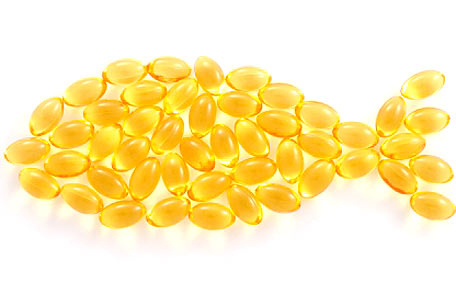 A new study shows that regular use of fish oi supplements in a person's diet can protect against the harms associated with Particulate Matter (PM) pollution.
"Twenty-nine people aged 50 to 72 took either olive oil or fish oil supplements for a month and then breathed concentrated outdoor air that contained extremely high levels of particulate matter pollution. After a short exposure to the high levels of particulate air pollution, heart rate variability decreased significantly in the participants who ate olive oil supplements. In contrast, the subjects on fish oil supplements showed little change. Researchers also found that the olive oil group showed longer repolarization duration and an immediate increase in two types of lipid levels in the blood (very low-density lipoprotein and triglycerides) after the exposures to concentrated air compared to the fish oil group."
Past studies have shown that exposure to particulate matter can lead to a variety of health problems such as asthma, stroke, heart failure, and decreased brain function. PM pollution in California alone is is estimated to cause 9,000 premature deaths per year. New PM emission rules for cement plants that are now being rolled back by EPA would save an estimated 2000-2500 lives per year nationally.
Endocrine Disrupting Chemicals Linked to Endometriosis
 Another example of the insidious nature of endocrine disrupting chemicals is out.
This week saw the publication of a study from the Eunice Kennedy Shriver National Institute of Child Health and Human Development in Maryland that shows an association between women with higher levels of a estrogen-mimicking pesticide and increased incidence of endometriosis.
Women were divided into groups with pelvic pain and no symptoms. Those with pain were more likely to be diagnosed with endometriosis if they had high blood levels of the estrogen-like pesticide hexachlorocyclohexane (HCH). Although HCH has been banned as a crop pesticide in the United States, it builds up and persists in the environment, so it remains in some food supplies.
Women with the highest blood of a sunscreen chemical, benzophenone, in their urine also had a higher risk of endometriosis according to the study, published in Environmental Science and Technology.
“Our studies are beginning to corroborate the idea that environmental estrogen may be associated with endometriosis,” said the Institute's Director Germaine Buck-Louis. But the link has a long toxicological history.
In 1993, the connection between endometriosis and environmental chemicals was discovered when Rhesus monkeys fed food contaminated with dioxins – hormone-disrupting pollutants created by waste incinerators and other industries – developed endometriosis 10 years later. (The Midlothian cement plants and the Exide lead smelter in Frisco have been the the largest industrial sources of airborne dioxin in North Texas over the last decade.)
A 2009 Italian study linked the disease, which stimulates uterine tissue growth in the ovaries or other parts of the body, to PCB and DDT exposure. Both are endocrine disrupters
“It’s certainly plausible that any outside source that alters estrogen levels, even slightly, could contribute to gynecological diseases,” said Dr. Megan Schwarzman, a family physician at San Francisco General Hospital and an environmental health scientist at the University of California, Berkeley who was not connected directly with the Institute study.
With 80,000 chemicals and counting in the marketplace to be exposed to, it's more than plausible.
The Cumulative Impacts Project
 A major flaw in the official government risk assessment process that guides the awarding of new air pollution permits is the lack of accounting for the "cumulative impacts" and interactions in the human body of of multiple sources of pollution and the multiple chemicals in that pollution.
To take the example form the previous post – EPA and TCEQ will not consider whether garbage burning and the phthalate emissions it might cause will impose additional risks for diabetes on a typical Latino woman who's already exposed to a lot of phthalates, and already has a higher risk of diabetes than her white peers. Those agencies don't consider her background exposure to this class of chemicals, or her greater propensity to contract the disease.
Nor do they think how the phthalates interact with the benzene, or the toluene, or the dioxins, or the ozone, or anything else that's not mentioned in the very specific permit request a facility is seeking. With 80,00 chemicals on the market, and only a couple of dozen thoroughly studied for their possible health effects, we're all lab rats.
Now there's an organization and a website that's taking on this short-sighted approach to pollution control. It's called the Cumulative Impacts Project. It was founded by the Science and Environmental Health Network (SEHN) and the Collaborative on Health and the Environment (CHE).
According to its website,
"The primary goal of the Cumulative Impacts Project is to collect the latest science, emerging best practices, analytical tools, and legal shifts that can reduce cumulative harm to our planet, our communities, and ourselves."
Check it out.