Posts by Downwinders At Risk
Risks from Freeway Air Pollution “Very Important” to Consider. Will Dallas?
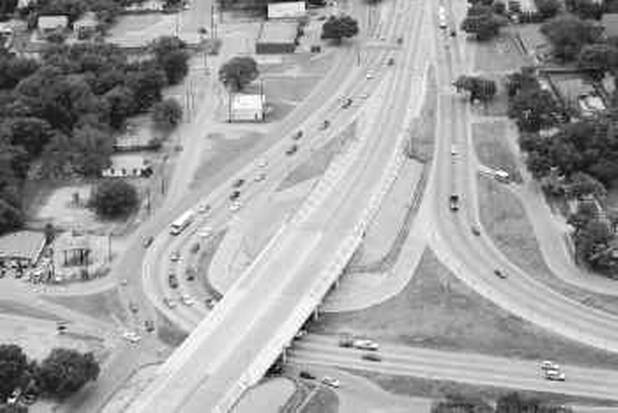 Over the past five years, there's been a significant increase in the amount of scholarship devoted to chronicling what kind of risks are posed by running freeways through communities and exposing adjacent residents to the cumulative air pollution of thousands of tailpipes. For the first time, urban planners are having to consider the public health consequences of transportation choices that still rely on the internal combustion engine.
"Researchers who affirm that children living near freeways are more likely to suffer from asthma are alerting urban planners about the importance of keeping homes away from busy roads.
The asthma-pollution link is especially vital as planners look at clustering jobs, transportation and homes as a way of limiting sprawl, the researchers said in the study published Monday, Sept. 24."
The study in question is from the University of Southern California's Keck School of Medicine. It found that higher air pollution levels less than 100 yards from freeways caused an estimated 27,000 additional cases of childhood asthma in Los Angeles County in 2007, almost 8% of the County's total that year.
Sarah Katz, a research associate at UC Irvine’s Institute of Transportation Planning, said clustering homes near transit, services and jobs is a newer trend in urban planning.
In view of that, Katz said, the USC report is essential reading for planners. The science on the health effects of roadway pollution is relatively new, and not all planners are familiar with it, she said.
“I hope this report gets a lot attention, because it is very important,” Katz said
Indeed. But is anybody at TXDOT reading these studies and paying attention? If so, why does Austin insist on turning the new CF Hawn freeway project in South Dallas, you know, the fixing of the "deadman's curve," into a 6-lane Carmageddon running straight up the middle of the community instead of the less frantic boulevard concept the neighborhood is requesting?
Because of studies like the one from USC, there's now plainly environmental justice and public health litmus tests that can be applied to every new freeway project. Environmental impact statements should have to take this new evidence of air pollution harm into account. But if government won't do that kind of accounting, then the people who are affected need to do it themselves. South Dallas shouldn't have to settle for a 1960's style concrete conduit that's going to act as one big funnel for air pollution when the trend is away from building such dinosaurs.
More Reaction to Ron Curry EPA Appointment
 As news spreads that the Obama administration appointed former New Mexico state environmental chief Ron Curry to take Dr. Al's place as EPA Region 6 Administrator, reaction from stakeholders has been drifting in, including an already suspicious Senator Inhofe (R- Oil and Gas), who says that public comments made by Curry already raise concerns.
Here's an industry take from the Dallas Business Journal that helpfully combines the hucksters at the Barnet Shale Energy Education Council with the Texas Railroad Commission. And here's the Houston Chronicle talking to environmentalists in New Mexico.
While Curry seems to be a good choice, don't expect anything dramatic until after the election. Many observers were surprised the administration acted now to fill the slot instead of waiting until the dust had settled in favor of a second term.
Despite the change, the EPA won't find it any easier to deal with Austin as long as: a) Governor Perry is running for something, and b) Attorney General Greg Abbott is running for governor. Nothing personal Mr. Curry, you're just an ideological cartoon to be used for campaign fundraising.
Male Shrinkage: The Gene Pool is Getting Colder
 We're still trying to run down the original source for this story, but since it hit the wires last week, we'll reprint what's already out there.
A "study from Italy," no details, concludes that the average size of male genitalia has decreased by 10% over the last 50 years. Weight gain, smoking, drinking, and yes, environmental pollutants are all listed as possible factors.
It isn't exactly headline news that chemicals can mess with your male parts in pretty dreadful ways. Endocrine Disruptors like lead, dioxins, and other poisons provide a whole horror movie worth of case studies where males of all species end up with female characteristics or no characteristics at all. Likewise there are now plenty of studies suggesting that modern sperm counts are not, er, up to past standards.
The latest study, depending on its credibility, would only further confirm that we don't have to blow ourselves up to extinguish the human race. We can just slowly but surely make it impossible to reproduce ourselves through chemical exposures.
As His Replacement is Announced, Dr. Al Speaks Out in Austin
 Maybe the EPA knew their former Region 6 Administrator Al Armendariz would be doing a one-on-one interview with the New-York Times-connected Texas Tribune as part of its annual festival on Saturday, or maybe it's just coincidence that the Agency named Armendariz's replacement very late Friday evening.
Whatever behind-the-scenes coordination did or did not take place, the appointment of New Mexico's Ron Curry as the new Region 6 chief gave Armendariz a slightly more removed historical perspective, and maybe willingness to talk, than he might have had otherwise.
Here's a live blogging of the interview that the Tribune's Evan Grant did with Armendariz from the Tribune festival itself in the middle of a forum on energy and the environment (11 am to 12 noon). Elizabeth Souder's recap for the Dallas Morning News is behind the paper's paywall, but here's a peak:
Former EPA regional admin Armendariz said anti-EPA court cases delay the inevitable
AUSTIN — Recent court cases striking down Environmental Protection Agency rules are just delaying the inevitable, said former regional EPA administrator Al Armendariz, who quit after a video surfaced showing him comparing his approach to Roman crucifixion.
Armendariz, who resigned as Region 6 administrator earlier this year and now works on an anti-coal campaign with the Sierra Club, said the agency will just re-write and re-apply the cross-state air pollution rule on coal plant emissions and its rejection of Texas’ flexible air permit rules. Some conservative Texas politicians regarded court decisions knocking down those rules as major victories.
Further, Armendariz said, the court decisions don’t show that the EPA was wrong. No, he said, the decisions show that the courts are wrong.
“They point out to me the importance of getting the President to appoint justices on the federal judiciary that will follow the law,” Armendariz said at a conference held by the Texas Tribune.
“I’m confident those actions, as written, were written completely in compliance with the law, and when those rules are revised that the agency is going to win any future litigation,” he said.
Armendariz defended his former employer and praised his successor at the Saturday appearance. He said the EPA and the White House have been working to implement the Clean Air Act and Clean Water Act, laws passed by Congress decades ago but never fully applied.
He criticized Texas environmental regulators who enable polluters, and called on energy regulators and lawmakers to create a plan to meet the state’s electricity needs with renewables.
Armendariz resigned in April after criticism over his comments in a video. In the video, he makes an analogy about his philosophy of enforcement. He said: “It was kind of like how the Romans used to conquer little villages in the Mediterranean. They’d go into a little Turkish town somewhere, they’d find the first five guys they saw and they’d crucify them. And then, you know, that town was really easy to manage for the next few years.
“And so you make examples out of people who are in this case not compliant with the law. Find people who are not compliant with the law, and you hit them as hard as you can and you make examples out of them, and there is a deterrent effect there.”
Arendariz on Saturday said he had apologized because his analogy offended people, which wasn’t his intent. But he didn’t back off the idea of deterring illegal polluting by punishing lawbreakers.
“I do stand behind the concept of my comments,” he said. “When you find someone who is violating the law, you do, within the boundaries of the law, vigorously prosecute.”
He said doing so ensures that illegal polluters don’t gain an unfair advantage over companies following the rules.
Texas Tribune chief executive Evan Smith said some people regarded the video as confirmation that Armendariz had it in for the energy industry.
Armendariz said such criticism was unfair, since in the video, he says his enforcement philosophy is for companies breaking the law.
Nor did he act alone by going after polluters. He said EPA administrator Lisa Jackson and her Washington staff had been “very involved with what we were doing in Texas.”
But he said leadership at the Texas Commission on Environmental Quality, the state regulatory arm of the EPA, is lax.
“There are some fantastic staff at TCEQ, and I think they’ve got poor leadership. I think the Governor’s appointees at that commission are preventing the staff from doing its job,” he said.
TCEQ chairman Bryan Shaw has criticized the EPA’s recent rules that would tighten regulations on coal plant pollution and greenhouse gas emissions.
And he praised his successor at the EPA, Ron Curry, the first non-Texan to lead the region that covers Texas, New Mexico, Oklahoma, Arkansas and Louisiana. The president announced the appointment last week.
“Ron is pragmatic, he’s very smart. He understands the need for conservation and the need for economic development,” Armendariz said.
Armendariz also said people who don’t believe in climate change are doomed to become irrelevant, just as doctors who don’t believe smoking causes cancer.
“I think the science of climate change is really irrefutable and those folks who are continuing to deny that climate change is a problem are really on the wrong side of history,” he said.
Now, Armendariz leads the Sierra Club’s anti-coal campaign, which aims to keep coal in the ground. He said so-called clean coal plants, which pollute less than traditional coal plants and capture greenhouse gases, are too expensive to justify coal mining.
“Clean coal I think is technically feasible, but I think it’s completely unnecessary,” he said.
He conceded the country will continue to use coal for the next decade. But he said coal isn’t necessary to keep the lights on.
The Electric Reliability Council of Texas has said the state is in danger of outages in the next few years because power plant developers haven’t build enough new generation to keep up with growing demand. The prospect of shutting down coal plants because of stiffer environmental regulations has left some regulators nervous about blackouts.
Armendariz said the reliability problem is due to a “complete lack of leadership and forethought.” He called on regulators and lawmakers to solve the problem with long-term planning and a vision centered on renewables, such as wind and solar.
Obama Names First EPA Region 6 Administrator from New Mexico
 In a Friday news dump, and a sign the administration must feel good about its chances of winning in November, former New Mexico Secretary for the Environment Ron Curry was appointed to be the new EPA Region 6 Regional Administrator, replacing Dr. Al Armendariz who resigned in April.
It's also an indication of how much less political clout Texas has these days. Ever since there have been regional administrators at EPA, there's been a Region 6 that includes,Texas, Arkansas, Oklahoma, New Mexico, and Louisiana and there's always, always been a Texan in charge. The number of EPA-regulated facilities in Texas dwarfs all the other state's combined, but it was the state's once-powerful Congressional delegation and the influence of those facilities in Austin and DC that kept natives form the Lone Star State in the Regional Administratorship, no matter their political affiliation. But no more. Curry is the first person outside of Texas to ever be named Region 6 Regional Administrator. And he comes from the only state in the region likely to go blue in November.
Curry is a strong choice for environmentalists. He was a close runner up to Armendariz in 2009, and has the endorsement of New Mexico's environmental community. His term as New Mexico environmental chief coincided with Bill Richardson's two terms as Governor. He is a confident progressive, an experienced environmental attorney, and described by New Mexico's Democratic Senator Tom Udall as a "pragmatic thinker."
Curry will certainly have his work cut out for him dealing with Governor Rick Perry and his alter ego, the Texas Commission on Environmental Quality, which has been waging an all out jihad against EPA ever since Obama took office and selected a grassroots favorite in Armendariz to head up Region 6. With signs pointing to Perry running for Governor again, chances are things won't get any easier. According to this account in the Texas Tribune, Curry was involved in implementing groundbreaking climate change programs in New Mexico, a sure way to endear him to Perry and Texas Attorney General Greg Abbott.
ADHD Symptoms More Likely in Children with Lead or Mercury Exposures
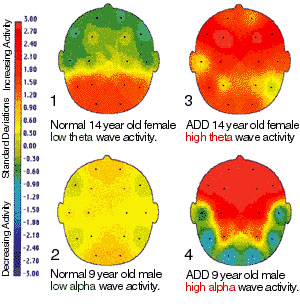 This in directly from Environmental Health News:
Children exposed to higher levels of mercury or lead are three to five times more likely to be identified by teachers as having problems associated with Attention Deficit Hyperactivity Disorder, according to a scientific study published today.
The study, of Inuit children living in Arctic Canada, is the first to find a high rate of attention-deficit symptoms in children highly exposed to mercury in the womb.
In addition, the Inuit children more often had hyperactivity symptoms if they were exposed to the same low levels of lead commonly found in young U.S. children.
Laval University scientist Gina Muckle said the findings are important because they show for the first time that the effects of mercury in children are not just subtle, but are actually noticeable to teachers. They “may be clinically significant and may interfere with learning and performance in the classroom,” the study says.
For lead, the school teachers reported much more frequent ADHD symptoms at levels far below the CDC's newly developed health guideline. Dr. Bruce Lanphear, of Simon Fraser University in Vancouver, said evidence is mounting that toxic compounds are “shifting children’s behavior...There seem to be a whole host of different toxicants that are associated with ADHD."
One of the most intriguing findings was that mercury was linked to attention deficits while lead was associated with hyperactivity. The difference may be the timing of the exposures: in the womb for mercury and during childhood for lead. The findings "suggest the brain may be sensitive to different environmental chemicals at different times in development," said Harvard epidemiologist Joe Braun.
First, there are no safe levels of lead, but teachers being able to identify ADHD behavior among kids who have levels of exposure "far below" even the new CDC recommendations is disconcerting indeed.
Second, this is why coal plant and cement plant rules to reduce Mercury and lead emissions as much as possible are a good thing and must be implemented ASAP, not delayed.
Third, none of these symptoms have ever been included in an official risk assessment of any cement plant, lead smelter, gold mine, coal plant or any other facility releasing lots of these metals into the environment. EPA regulations lag decades behind the science in terms of plugging in toxicological effects identified in the scientific literature. Over-regulated? No, not even close when you have no idea what kind of health problems your facility is causing.
Finally, the country is seeing an epidemic of ADHD. We express official dismay at this, but as far as we know, little if any attention is being paid by industry or government to try and prevent the condition through limiting exposure to toxins that can cause it, even though, "there seem to be a whole host of different toxicants that are associated with ADHD."
This is not a fatal condition. It's not a disease like cancer, or as serious as a heart attack or stroke. But does anyone doubt the challenges facing a child with moderate to severe ADHD symptoms?
This is one more consequence of pollution you never see in the paperwork, only in real life.
The High Cost of Fracking
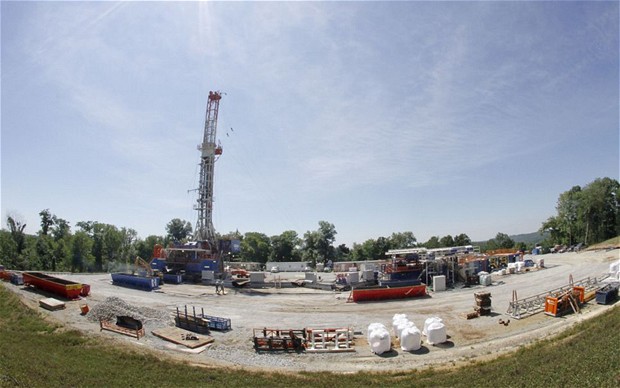 Yesterday, Environment Texas released a new compilation report in Dallas, titled, "The Costs of Fracking." There's not a lot of new information, but it does serve as a convenient catalog of the disadvantages of inviting the gas industry to town, as the Dallas City Council is considering via a new gas drilling ordinance. Every city council member should take a look, although we doubt they will.
The report covers the impact of fracking on public health, water, air, as well as the infrastructure demands of the gas industry. Among the tidbits:
"The truck traffic needed to deliver water to a single fracking well causes as much damage to local roads as nearly 3.5 million car trips. The state of Texas has approved $40 million in funding for road repairs in the Barnett Shale region, while Pennsylvania estimated in 2010 that $265 million would be needed to repair damaged roads in the Marcellus Shale region."
Fracking can affect the value of nearby homes. A 2010 study in Texas concluded that houses valued at more than $250,000 and within 1,000 feet of a well site saw their values decrease by 3 to 14 percent.
The average public health costs of air pollution from fracking operations in Texas’ Barnett Shale region reach $270,000 per day during the summer smog season.
Here's the press release. Here's the report.
Here’s to Rachael Carson: The First “Hysterical Housewife”
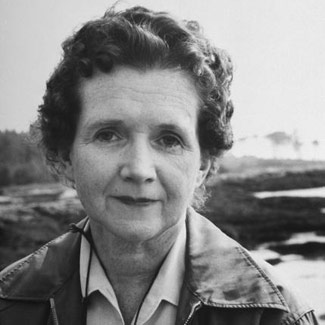 50 years ago this month, Rachel Carson's Silent Spring was published and immediately created a national controversy. It's difficult to put the book in its true historical context now because we take so much of its message for granted, as well as the right of a woman scientist to get it published. But there's no question that in 1962 it was a very subversive act for many different reasons.
There's an argument to be made that Carson didn't invent the modern American environmental movement. That it was the result of many different factors and people. All true. But there's also a compelling case that Carson's fight on behalf of her scholarship became the classic template for how citizens and industry and government would interact with each other in response to any environmental challenge coming from the grassroots for the next half-century.
Exhibit A: The New York Times Magazine piece this week on Carson. Consider:
1) She was the first to popularize the notion that we have a fundamental right to air and water that won't kill us.
“We are rightly appalled by the genetic effects of radiation. How then, can we be indifferent to the same effect in chemicals that we disseminate widely in our environment?
“If the Bill of Rights contains no guarantee that a citizen shall be secure against lethal poisons distributed either by private individuals or by public officials, it is surely only because our forefathers, despite their considerable wisdom and foresight, could conceive of no such problem.' She advocated for the birth of a grass-roots movement led by concerned citizens who would form nongovernmental groups that she called “citizen’s brigades.
As Carson saw it, the federal government, when in industry’s thrall, was part of the problem. That’s one reason that she didn’t call for sweeping federal regulation. Instead, she argued that citizens had the right to know how pesticides were being used on their private property."
2) She was the first to criticize our "modern" way of life as being self-destructive at a physiological level.
When she described the dangers of DDT and other pesticides, she described the threat as "poisons," not "chemicals."
“Silent Spring” was more than a study of the effects of synthetic pesticides; it was an indictment of the late 1950s. Humans, Carson argued, should not seek to dominate nature through chemistry, in the name of progress. In Carson’s view, technological innovation could easily and irrevocably disrupt the natural system."
As she finished the book, she was diagnosed with breast cancer. This gave her writing a more personal edge it probably would not have had otherwise. A biographer is quoted in the Times piece as saying, “She was more hostile about what arrogant technology and blind science could do."
“No one,” says Carl Safina, an oceanographer and MacArthur fellow who has published several books on marine life, “had ever thought that humans could create something that could create harm all over the globe and come back and get in our bodies.
Theo Colborn, an environmental health analyst and co-author of a 1996 book, “Our Stolen Future,” about endocrine disrupters — the chemicals that can interfere with the body’s hormone system — points out that Carson was on the cutting edge of the science of her day. “If Rachel had lived,” she said, “we might have actually found out about endocrine disruption two generations ago.”
3) She was the first to specifically identify young mothers as a key environmental demographic.
At a time when women were still second-class citizens and didn't have much economic clout, Carson specifically wrote in a way to get her female audience motivated to take action. She brought a moral message to what they were seeing in the everyday consequences of DDT use. Here's her writing about a squirrel killed by pesticides:
“The head and neck were outstretched, and the mouth often contained dirt, suggesting that the dying animal had been biting at the ground. By acquiescing in an act that causes such suffering to a living creature, who among us is not diminished as a human being?”
As the article points out, this was exactly the same kind of moral messaging that made Uncle Tom's Cabin the book that started and won the Civil War. Carson knew that women were the key to not only the DDT fight, but to every major environmental cause, and social justice movement. Next time you go to a grassroots environmental meeting or event, look around at the ratio of women to men and decide if she was wrong. Better yet, take a look at who the chemical industry is targeting with their advertising.
4) She was the first private citizen targeted for attack by the chemical industry.
This was the first time an entire industry specifically targeted a person for what they were writing and saying about the environmental and public health impacts of their product.
"Velsicol, a manufacturer of DDT, threatened to sue both Houghton Mifflin and The New Yorker. And it also tried to stop Audubon from excerpting the book in its magazine. The personal attacks against Carson were stunning. She was accused of being a communist sympathizer and dismissed as a spinster with an affinity for cats. In one threatening letter to Houghton Mifflin, Velsicol’s general counsel insinuated that there were “sinister influences” in Carson’s work: she was some kind of agricultural propagandist in the employ of the Soviet Union, he implied, and her intention was to reduce Western countries’ ability to produce food, to achieve “east-curtain parity.
The well-financed counterreaction to Carson’s book was a prototype for the brand of attack now regularly made by super-PACs in everything from debates about carbon emissions to new energy sources. “As soon as ‘Silent Spring’ is serialized, the chemical companies circle the wagons and build up a war chest,” Souder says. “This is how the environment became such a bitter partisan battle.”
In a move worthy of Citizens United, the chemical industry undertook an expensive negative P.R. campaign, which included circulating “The Desolate Year,” a parody of “A Fable for Tomorrow” that mocked its woeful tone. The parody, which was sent out to newspapers around the country along with a five-page fact sheet, argued that without pesticides, America would be overrun by insects and Americans would not be able to grow enough food to survive."
Does any of this sound familiar?
But her courage in the face of the industry's deluge gave others courage, and it still does so now. Think it's hard to do this work in 2012? Try taking on the Status Quo as a single woman with terminal cancer in 1962.
She didn't live long enough to see the multitude of legacies she left behind, but all of us are affected by them. Her call to arms produced the first real wave of popular environmentalism in the US that went by that name. Thanks Rachel.
Imagine That: Local Regulation of Polluters
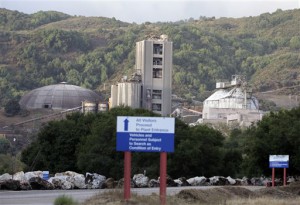 From San Francisco comes word that the area's largest Mercury polluter, the local Lehigh-Heidelberg Cement plant, may be the subject of tougher LOCAL air pollution regulations.
In 2011, the kiln spewed 260 pounds of Mercury into the local airshed and new regulations being proposed for the plant by the Bay Area Air Quality Management District would address not only this pollution, but emissions of dust, ammonia, dioxins, smog pollutants, and hydrocarbons.
In part, the new local rules are being spurred by EPA's own updating (and delaying) of its own air pollution rules for the nation's cement kilns. In part, local pressure from the public is driving their consideration. Bay Area for a Clean Environment collected over 1800 signatures demanding the new more stringent rules.
In California regional air boards are the prime shapers of air quality planning and policy, tailoring measures to their own geographical boundaries and problem areas. Imagine the 10-county DFW non-attainment area for smog (Collin, Dallas, Denton, Ellis, Johnson, Kaufman, Tarrant, Parker, Rockwall, Wise,) having its own air quality agency with the power to enforce new anti-pollution measures without having to get Governor Rick Perry's permission. Local control also means more opportunity for local citizens to have input rather than being blown off by ideologues in Austin intent on scoring political points rather than cleaning the air.
As we've noted before, if DFW officials really want cleaner air, they're going to have to get it themselves.
New Free Service Provides Local Environmental Alerts
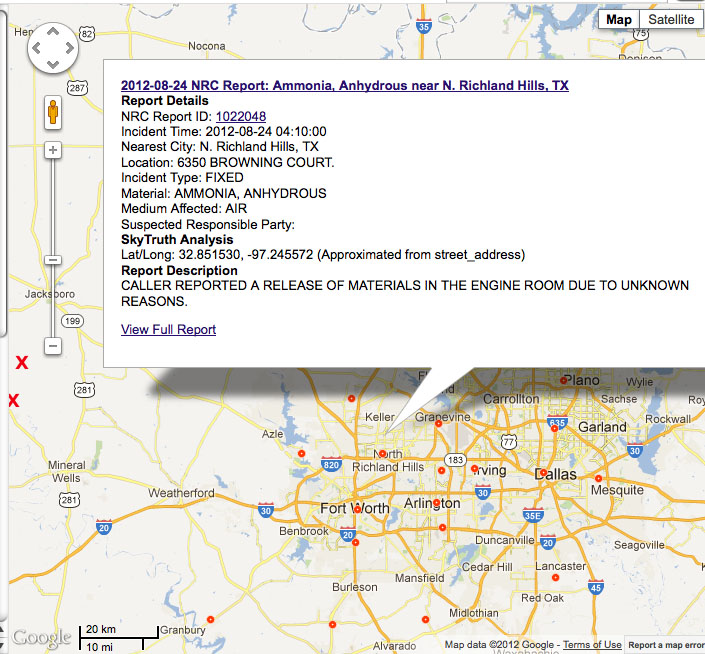 We were just speaking of how invaluable local blogs are and here's a great example. From Susan Read and the Westchester-Grand Prairie Community Alliance comes word of an invaluable service that allows you to track reported events like spills, accidents, and investigations in your area.
"Skytruth" is a free subscribtion service that promises to "delivers real-time updates about environmental incidents in your back yard (or whatever part of the world you know and love)."
The SkyTruth alert system is a free service open to the public that provides daily updates of environmentally significant incidents by geographical area. You can browse the most recent incident reports on a map or in Google Earth, and you can also subscribe to a personalized feed of incident reports via RSS or email
The alert feed currently contains reports generated from ongoing SkyTruth investigations, combined with selected reports from the the National Response Center that have been processed by SkyTruth's automated expert system to clean up problem data and add additional SkyTruth commentary and analysis.
No word on who or what is funding it, or on any Board of Directors or staff. But the infomation feeds are legit and timely. You pick the area you want Skytruth to monitor by zooming in and out on a Google map until you pick the boundaries and clicking. It's pretty darn easy. Check it out.