
Air Quality
PM Follow-Up: the 2005 Spike and the Midlothian Drop
 (Note: Downwinders sent out an air quality alert on Monday urging folks to send their comments 1) into EPA to support the new PM standard, and 2) the federal ATSDR in regards to its "health consultation" in Midlothian. The correct address for the PM comments is "a-and-r@docket.epa.gov" – the same as the alert, but apparently the the whole address didn't get underlined. Use the complete address and you shouldn't have any problem. The ATSDR address for comments used in the alert is cut and pasted from the agency's own website, but was rejecting comments Monday afternoon for some reason. Complaints have been made and we hope they'll actually be allowing comments on Tuesday.)
In covering the PM 2.5 standard announcement, a lot of attention was paid by the media to the fact that only a handful of counties in the US would not be able to meet the new number by 2020. The Obama Administration worked hard to send that message in order to preempt the kind of backlash that killed last year's new smog standards. But what are the actual levels now and how close or far is DFW from ever having to worry about being in non-attainment for PM pollution?
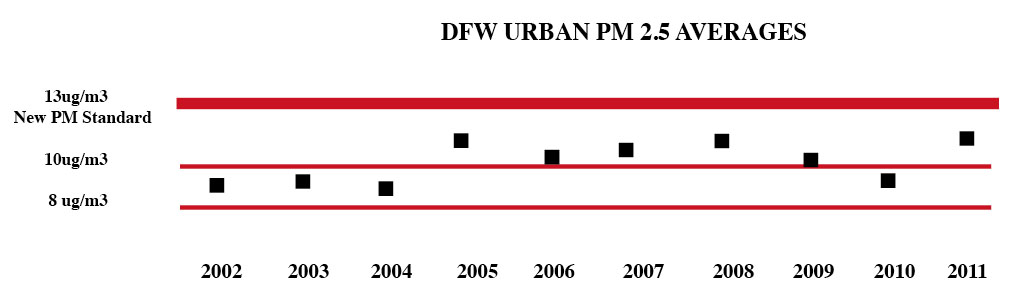
 The new standard is an annual average of 13 micrograms per cubic meter of air, expressed as ug/m3. As far as we can tell from the monitoring records TCEQ keeps online, DFW hasn't come close to exceeding that number. But that's not really as conclusive as it might first sound. There are only two PM 2.5 monitors located in the heart of the DFW metropolitan area. One is on /Hinton Street near Mockingbird and Harry Hines in Dallas and the other is at the Haws Athletic Center location just north of downtown Ft. Worth. All others are in far southern Ellis County, Kaufman County, or Johnson County and act as "background" monitors to track PM pollution coming in or leaving urban DFW. In contrast, there are at least nine ozone monitors located in urban/Suburban DFW .

Tracking the two central city core monitors over the last ten years shows a slow but steady rise in the average PM 2.5 levels being recorded, staring at a little below 9 ug/m3 in 2002 and ending with an 11.01 last year. That's an increase of almost 2 ug/m3 in a decade. 2011 was a drought year and so there was probably more dust in the air. But records show other years where annual averages were in the high-10 to 11 ug/m3 range. What they also show is that these higher levels all come after 2005. In fact, across the board, at all the DFW monitors recording PM levels from 2004 to 2005, there was a statistically significant jump from annual averages in the high 8 ug/m3 range in 2004 to over 11 ug/m3 by the end of 2005. And while some monitors came back down, the two central city monitors have stayed up – particularly at the Ft. Worth site. So what happened in 2005? There was a Mexican volcano eruption that summer, but it ended. The higher PM averages in North Texas didn't. It was too soon to see the effects of urban drilling, although that may play a part in keeping the Ft. Worth levels higher now. Whatever it was, it makes a clear bright line that separates the pre-2005 lower numbers from the post-2005 higher ones.
Last year's average of 11.58 ug/m3 at the Dallas site was the highest at that monitor, or any other, in the last ten years. It's less than 1.5 ug/m3 away from breaking the brand new PM standard of 13. That same monitor has already seen a 2.25 ug/m3 increase in annual averages since 2002.
EPA says don't worry, but we'd keep our eyes on those long term trends.
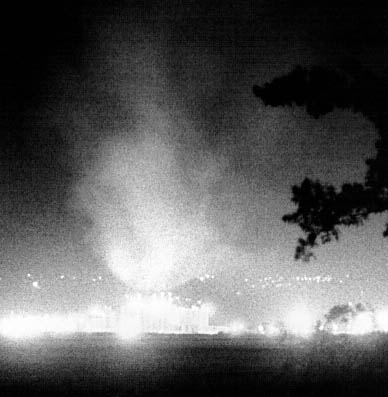 The Obama administration is banking on the impact of new power plant rules, cement plant standards, and other emission-affecting regulations to lower PM levels over the next eight years. And that could be a good bet. One of the things that also sticks out from the limited amount of DFW PM data is how much of a drop there's been at the Midlothian monitor located north of the TXI cement plant over the last five years after reaching a peak in 2008. That was the year TXI decided to shut down its four obsolete wet kilns that burned hazardous wastes and rely solely on its newer and generally less polluting dry kiln. In 2008, the Midlothian monitor recorded an annual level of 10.7 ug/m3. Last year it recorded an annual average of 8.0. That's progress.
EPA Lowers National Particulate Matter Standard, World Doesn’t End
 In what will probably be one of the most important environmental health decisions of the Obama Administration, the EPA is proposing to reduce the national ambient air standard for what are called "fine particles" of particulate matter, or soot, a pervasive form of air pollution that is linked to an increasing number of ailments ranging from respiratory illnesses, to heart attacks, to Autism, and brain damage.
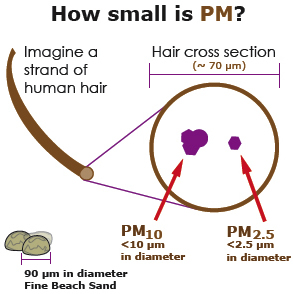
Particulate Matter 2.5, or tiny bits of soot that are 2.5 microns or less in diameter (a typical human hair is 50 microns) comes from the combustion process – gas-powered cars, diesel trucks, cement plants, utility plants, or boilers or furnaces of any kind.
Sand dust, at 90 microns in size, is much, much larger, so we're not talking about "EPA regulating dust." PM is an industrial pollutant. And study after study has shown that it kills and injures people even at levels that up until Friday were considered legal and "safe."
PM is so insidious because not only is it a toxin in its own right, it also acts as a tiny suitcase for all the by-products of whatever combustion made it. Coal or cement plant soot might contain Mercury or dioxins. Car soot could have Benzene residues. And these hitchhiking pollutants are carried deep inside the lung by the soot, where they stay, doing damage for years.
In a Boston Globe piece running thursday night, Dr. Albert Rizzo, chairman of the board of the American Lung Association, was quoted as saying that, "The science is clear, and overwhelming evidence shows that particle pollution at levels currently labeled as officially `safe' causes heart attacks, strokes and asthma attacks.
The new rule would set the maximum allowable standard for soot at range of 12 to 13 micrograms per cubic meter of air. That's the upper level of what the EPA's own panel of scientists recommended (11-13) without breaking the law by disregarding the panel's range as the Bush EPA did in 2006 when it decided to retain the 1997 standard. That annual standard was 15 micrograms per cubic meter. That doesn't sound like much of a reduction (17%), but it's the difference between a standard that embraces the newest science versus a 15-year old one that was not considered protective of human health. It could also mean the difference between metropolitan areas like DFW being given the all clear or classified as "non-attainment" for PM pollution, the same way it's in non-attainment for ozone, or smog pollution.
That would mean the region would have to put together a plan to reduce PM pollution, and of course that could mean opportunities to press for more modern controls on the Midlothian cement plants, east Texas coal plants, and other large PM polluters. One of the first steps will have to be putting more PM monitors in the DFW region – there are only eight now and three or four of those would be considered "background" sites, that is they monitor what's blowing into DFW, but not what residents are breathing.
Since monitoring began in 2000, annual highs in DFW have ranged mostly in the 20 and 30 microgram range, with forays into the 40s and 50's mid-decade. You can use this TCEQ website to track the four highest PM readings in DFW and the rest of the state for each of the last 12 years and this one to track daily readings – although both suffer from an obsolete color-coded alert system that underestimates health damage at lower levels of exposure.
In March, the Dallas Morning News compared DFW's mostly "moderate" levels of PM pollution to the most recent studies and concluded that local populations were at increased risk of heart attacks and strokes. It's not clear yet how EPA will enforce the standard or the timeline it will use but you can be sure it'll be generous since the Administration was forced to release this new standard by court order in an election year. That's because PM pollution is as widespread as ozone pollution and the measures necessary to reduce it could mean a long march toward modernizing many industries. t’s going to be a big step forward,” said Frank O’Donnell, head of the DC-based Clean Air Watch in the Washington Post article the broke the story. “This could help frame the national effort to clean this up for at least a decade.”
Think about how much effort has been directed at reducing smog in DFW over the last 20 years – HOV lanes, vapor recovery systems at the gas pump (put not necessarily at the gas well) and every paint shop, pollution controls on the Midlothian cement kilns, coal plants and other large industries.
It's probably going to take the same kind of all-inclusive slog to achieve compliance with this new standard, so the Obama Administration isn't gong to rush things. Despite opponents claims that these kinds of standards cost jobs, the opposite is actually true. Capital investment goes up because businesses are modernizing and putting on new control and implementing more efficient processes. Local jobs are created when those are installed. Waste is reduced. Operating costs often decrease. Despite being forced into the 20th Century by federal regs and citizen action, the cement industry in Midlothian has reduced emissions while also increasing manufacturing capacity. The same thing has happened in other industries.
Apparently the EPA is counting on the fact that previous rules aimed at other pollutants and problems have steadily been reducing PM pollution as a beneficial side effect, so the ramping up won't be as dramatic as it might have been. The proposed new standard will get published in the Federal Register and then finalized by next December 14th, so that no matter who wins in November, these rules seem to be on track. For a great primer on PM pollution in general and the history of today's decision, go check out Frank O'Donnel's Clean Air Watch website. Read More
Meet a “Minor Source” of Air Pollution in the Natural Gas Mining Cycle
 Despite overwhelming community opposition, Allegheny County (Pittsburgh) is getting its very first compressor station this month. It's tastefully located near a mall in order to process gas being extracted from near-by Marcellus Shale wells. Not considered a great hot spot for the gas itself, the county nevertheless finds itself in close-enough proximity to the gas patch to be of use to operators as a repository for some of its other facilities along their fuel cycle. Along with five compressor engines there will also be three dehydrators, and reboilers, and two 6.500 gallon storage tanks. It will release 35 tons of smog-forming Nitrogen Oxide (NOx), 17 tons of Volatile Organic Compounds (VOCs), 7 tons of formaldehyde (a known carcinogen), and 11 tons of soot/Particulate Matter pollution. The NOx figure alone is the equivalent of something like 2500-3000 cars worth of pollution alone. No mention in the article how much CO2 is being emitted. This facility is considered a "minor source" of air pollution by the Allegheny County Health Department. Everything is relative of course. Compared to the steel mill smokestacks that made up the skyline of Pittsburgh for most of its existence 70 tons of crud a year might strike you as smallish. But when you stick that same 70 tons of crud as close as 500 feet away from a neighborhood or school that's not used to having heavy industry located so close, it doesn't look all that minor. And that's why the Dallas City Council's task force recommendation to allow compressors on the gas well pad itself, restricted only by the same zoning requirements of a drilling rig that produces a lot less pollution, is so nonsensical. Compressors are giant polluters. Their engines can be the size of locomotives. Imagine five of these only 500 feet from your yard or child's school. That's what's being endorsed by the task force and that's what citizens are rejecting out of hand. One of the major issues the Dallas City Council will have to decide as part of its new gas drilling ordinance is how and where these huge, necessary parts of the gas industry infrastructure will be allowed to locate.
Mesopotamia or Midlothian – Burning is Bad
 Here's a great story from Wired that reports the results of the first tests done in and around the places where the military's "burn pits" were located during the most recent Iraq and Afghanistan wars.
Not familiar with "burn pits?" If you grew up in rural Texas you are because it's exactly the way your grandfather got rid of his family's trash – by putting it in a big pile and then putting a match to it. Besides turning a ravine into an impromptu landfill, burn pits are the most popular way of disposing of your garbage when Waste Management just can't get to you.
In the military, burn pits were the disposal option of choice for everything: human waste, paints and paint removers, asbestos insulation, plastic and styrofoam containers, old computers and monitors – any waste you can imagine being generated at a front line military base.
Not surprisingly, troops that spent time around these open-air waste incinerators have been complaining about chronic bronchitis, neurological disorders, and rare cancers – just like people who live dowwnind of waste burning at cement kilns and incinerators. Military spokespersons have reassured these whiners that there was "no specific evidence" of the pits doing any human health damage. To which all of you who've been doing this for a while will respond: "How many times did anyone look for such damage?" The answer is zero – until now. Pulmonologist Dr. Anthony Szema of the Stony Brook School of Medicine, just released the results of an experiment that links the burn pit dust to immune system damage. Dr. Szema exposed 15 mice to the dust from the remains of a burn pit in Iraq. When collected on-site, the pit still stunk with the incinerated remains of animal carcasses, lithium batteries, printers and glues. This lovely cocktail of toxins was then inhaled by the mice and researchers tracked their respiratory system and spleen for signs of strain. And they got them.
Lung inflammation occurred within two hours of exposure, and T-cells dropped by a third. T-Cells are a critical component of the human immune health originating in the bone marrow but then going to the Thymus to finish their development. AIDS and other immune destroying diseases kill T-Cells. After two weeks of being regularly exposed to the burn pit dust, the mice had lost 70% of the T-cells they started with. "I can't even imagine what this date shows when you think about someone coming back from Iraq," Szema says. "these guys weren't inhaling the air once. They were working in it, sleeping in it, exercising in it. For days on end." Despite being limited to mice, Szema is confident that the results are transferable to humans. The symptoms of his mice line up with those being reported by veterans to a database at BurnPits360, a website dedicated to tracking the health of exposed servicemen and women. It's also one more step in understanding why different people react to pollution differently. With your immune system offline everyone is vulnerable to different inherent health weaknesses that are exacerbated. Dr. Szema isn't surprised at the results of his groundbreaking tests. "Based on the patients I've seen, this is a no-brainer. If anyone tries to say, ' Oh dust is just dust,' I can tell them that's simply not true."
Four Years After Kiln Waste-Burning Ends, ATSDR’s “Evaluation” of Midlothian Keeps Going
 Although on any given day there's a lot of competition, the Agency for Toxic Substances and Disease Registry might be the most irrelevant government bureaucracy going. Thursday it announced that the latest installment of its years-long "health consultation" of Midlothian will be the subject of yet another community meeting in that town on Thursday May 24th from 7 to 8:30 at the Midlothian Conference Center. The ATSDR evaluation started in 2005 at the request of Midlothian Citizens when TXI was still burning hazardous waste. It then was the subject of a 2010 Congressional investigation that revealed how the Agency mostly neglected to do any real science in the course of its evaluation. This new meeting concerns an analysis of air monitoring information that "will support public health evaluations for many of the pollutants of concern." Of that we have no doubt. Since ATSDR does no monitoring of its own, it's completely reliant on the monitoring done by theTexas Commission on Environmental Quality. Does anyone know of any instance where TCEQ monitoring has shown anything to be concerned about? If citizens complain about getting sick from industrial pollution, it's TCEQ position that it's the fault of anything but the pollution itself. No amount of empirical evidence collected by citizens in the field from their own sampling or experience can convince Austin otherwise. TXI quit burning waste in 2008. ASTDR's evaluation of Midlothian? It just might outlast the plant itself.
Study: Low Levels of Hydrogen Sulfide Linked to Asthma
 You may not know the name of the chemical, but you know it by smell. "Rotten eggs" is the olfactory indication you're being exposed to Hydrogen Sulfide. There's a reason it smells like that. Biological sources can emit it. Certain bacteria produce hydrogen sulfide as they decompose waste – like rotten eggs. It also occurs in geothermal situations. Hot water, steam and magma from inside the Earth carry heat, minerals and gases – like Hydrogen Sulfide – to the surface, liberating them in springs, geysers and volcanic lava. If you've ever been to Yellowstone, you know the smell. Industrial sources of hydrogen sulfide include oil and gas drilling, refineries, paper mills, large scale livestock production, waste water treatment and landfills. At high levels of exposure, Hydrogen Sulfide is linked with serious neurologic damage – including death. Lower levels can trigger eye irritation, fatigue and headaches…and asthma according to a new three-year study out of Iceland. Measuring levels of Hydrogen Sulfide near major intersections and power plants in the capital city of Reykjavik that turn geothermal energy into electricity and heating steam, researchers found a weak but constant association between the pollutant and asthma medication rates. It's one of the first studies to find respiratory ailments at low levels of Hydrogen Sulfide – much like you'd find in the Barnett Shale or any gas or oil patch. The fact that oil drilling has been around for over a century, and yet only now are we actually studying what happens when people are exposed ti it at exposure levels found in real life, tells you all you need to know about the risks of allowing drilling so close to people.
More Details on the New DFW Smog Boundaries and Timeline
First, if you haven't read our updated post below, please notice the correction to Tuesday's initial story. DFW's "Moderate" classification by EPA under the new 75 ppb ozone/smog standard is actually a more serious ranking than Houston's "Marginal" ranking. In fact, areas with Marginal status are expected to be able to achieve the standard without even having to submit a clean-up plan with special pollution control measures. That's right, for the first time in forever, Houston won't even have to submit a "SIP" – State implementation Plan – while DFW will have to write yet another one, the fourth one in 15 years. According to EPA's announcement, most metropolitan areas were classified as "Marginal," identifying North Texas right off the bat as one of the more seriously smoggy places in America (but still way behind parts of California with an "Extreme" label slapped on the LA basin, and "Severe" for three more separate areas.) Most of DFW's sunbelt peers have fared better than our metormess. Atlanta started out at the same place as DFW 15-20 years ago, but has cleaned up its act enough to rate a "Marginal" in this round. Phoenix is also "Marginal." But of course neither one of those has a major natural gas play in the middle of them. Second, the timeline for the next DFW's next smog plan is known. The clock begins ticking 60 days after the new designations are published in the Federal Register – sometime between July and September of this year. From that date, DFW leaders and the Texas Commission on Environmental Quality have exactly three years – until the summer of 2015 – to design and build a new clean air plan for DFW that will meet the 75 ppb standard. We have a three year running average of 90.6 ppb. Not to worry however. TCEQ has already told us that ozone levels will drop to historic new lows this summer thanks to so many new cars being bought. On the outside chance that doesn't happen, the Rick Perry- driven TCEQ will have to find some other nonsensical rationalization for avoiding new controls on the Governor's industrial contributors – cement plants, the gas industry, and power plants, like they did last year with the new car strategy. But don't look for Austin to even start working on this clean air plan until 2014. There's no rush because the agency doesn't believe the 75 ppb standard is even necessary. The Commission's leadership was vocal in its opposition against it. If local leaders were smart, they'd disconnect their own clean air efforts from the state's and begin doing their own planning immediately, but traditionally they don't move until TCEQ says "jump". Add to this the new element of regional elected officials who, like Governor Perry, not only don't want to impose any new controls on industry, but don't even concede the value of cleaner air, and you already have a formula that's in danger of repeating last year's Worst Clean Air Plan Ever. 2015 isn't that far away, but without a serious overhaul of the regional air quality planning process, hope of meeting the new smog standard seems further than ever. By the way, counting our correction of the original story we ran on Tuesday, we've now published three posts on the new smog boundaries and deadlines. That's three more than any other source that we can find this morning.
Wise County in, Hood Left Out: EPA Declares New Non-Attainment Area for Smog in North Texas
 At around closing time came news that the EPA had finalized the boundaries of the new “non-attainment area” for smog in North Texas that corresponds to enforcement of the “new” 75 ppb ozone standard approved last year. The 9 counties that were already in violation of the older standard are still there: Collin, Dallas, Denton, Ellis, Johnson, Kaufman, Parker, Rockwall, and Tarrant. The only new addition is Wise County, but it’s a huge one given its prodigious amount of gas industry pollution and commuter traffic to Tarrant and Denton Counties. It also means that Wise County will be getting an ozone monitor. If it’s placed correctly by TCEQ – and that’s a big if – it could be giving us a much truer understanding of how high or low ozone levels are really going. Since predominant winds during “ozone season” (April -November) are from the southeast to northwest, much of DFW’s dirty air gets pushed into Wise County, where it then officially falls off the map because there’s no air monitors there to record it. TCEQ likes it that way because ozone readings in Wise – where DFW dirty air meets gas patch emissions – could be significantly higher than in most of the rest of DFW. And that would dampen the Austin happy talk about improving DFW air quality. Also coming to Wise are things like those Vapor Recovery units on gasoline pumps, and other stricter pollution control requirements – although the impact on the entrenched gas industry infrastructure already there is unclear. Hood County was also singled out by EPA for inclusion in the non-attainment area but is left off this final order. It also has a number of gas industry facilities, including compressor stations, although most have shown up over the last ten years as opposed to Wise, which has seen decades of oil and gas production. There was no explanation for Hood exclusion in EPA’s letter. DFW wil be classified as a “Moderate” non-attainment area under the new standard while Houston will get a more severe “Marginal” classification. Why? Because the EPA uses a formula based on percentage above the new standard and Houston has traditionally had higher readings – think Ship Channel “upsets” and belches, even if DFW had just as many. Dallas and Houston remain Texas’ only non-attainmenta areas for smog, although that could certainly change over time. Next up is EPA’s determination of the compliance timeline for all non-attainment areas. The good news is that DFW’s deadline should be sooner than Houston’s because it’s not as severely ranked. The worse the air, the more time a region has to clean it up. The bad news is that it could still mean officials don’t have to get serious about cleaner air until around 2015 for a 2017-18 deadline. That”s been the pattern up to now – keep waiting until the last minute to think about how to dig yourself out of a multi-decade deep hole. And believe us, with this process, 2 years is “the last minute.” There could be all kinds of useful planning and researching going on right now but they’ll be none of that. Because insuring receipt of federal highway dollars, not protecting public health, has been the primary motivating factor behind the clean air machinery in North Texas. Until those priorities are reversed and clean air is sought for its own worth, we’re likely to always be behind the curve, chasing “unattainable” smog standards.
Yep, Diesel Exhaust is Really Bad For You
 In maybe the least surprising air quality news this week, a long-term study involving thousands of participants concluded that exposure to diesel pollution increases your risk of lung cancer significantly. For those most heavily exposed, the risk was three to seven times higher.
Because the subjects were all miners who were working eight or more hour a day in underground chambers full of diesel engines, the results were predictable to anyone tracking the science in the 20 years since the study began. But it was the association of disease with diesel pollution at even “low levels” that will drive the debate over how and where highways are built or expanded. There’ve been a rash of studies coming out over the last year or so linking road traffic pollution to asthma, heart attacks, strokes and all the other ailments caused by bad air.
Perhaps the most interesting thing about the study is that so much energy was expended by the diesel lobby to keep it from ever seeing the light of day. To the point of requiring the the Department of Health and Human Services to turn over documents and be held in contempt for not doing so.